Friday, November 27, 2026
Home Blog Page 3559

Bullying Ethiopia into “Failed Statehood”: A dangerous, but futile adventure

0

By the Queen of Sheba

Since the conflict in Tigray broke out some three months ago, a globally orchestrated assault on Ethiopia has escalated at unprecedented scale. And yet, what triggered the conflict was beyond any doubt—as explicitly acknowledged by both victorious and vanquished forces alike.
The Ethiopian Federal Forces of the Northern Command were callously and cowardly massacred by TPLF cabal forces while in their sleep. The Government, like any other in the world should do, first contained the attack, reorganized its bloodied forces and repulsed and crashed the putsch in one of the shortest such military actions in the world.
The Ethiopian government decisively crashed the mutiny with such bravery and efficiency that it has garnered respect and recognition from all those who know, abundantly well, the bloated TPLF forces and their incessant bravado of fake glory, the unbearably treacherous terrain of the region, and their wicked cruelty.
While the government decisively won on the battlefield and commendably guaranteed the integrity of the country, it has however not matched the orchestrated assault largely fanned in the cyberspace, as I observed in “Victory in the Battlefield, Defeat in the Cyberspace: Ethiopia’s Agonizing Reality”.
One should pose a pertinent question. What would have been the outcome of the conflict had the TPLF cabal succeeded, even barely, in its mutinous and “thunderous” insurrection? One need not be an arm-chair analyst or a student of political science or a conflict entrepreneur to intimate plausible scenarios.
Without too much into it, the army would split into different groups along ethnic lines fighting against each other for dominance. The distended special forces and militias of the respective regions would embolden into action to seize disputed areas, in the process triggering a civil war. Occasional ethnic and religious conflicts, whose ominous signs are already evident, would have simply engulfed the whole country. This would then open the flood gates of killings, sufferings, internal displacement and migration to neighboring countries and beyond in the scale Africa may have never seen before.
Oh, yes Ethiopia, the towering anchor of the Horn, which shares borders with more than half-a-dozen states, claims over 115 million people. To put things in perspective, this would be South Africa, Kenya, Eritrea, Djibouti, Mauritius, Namibia, and Lesotho all put together!
Let me provide a recent unfortunate account. The assassination of a popular Oromo singer in July last year, triggered an instant craze of mass killings of civilians and wanton destruction of property in just a few hours. The attacks, which killed over 160 and wounded and maimed several hundred more, had both an ethnic and religious slant. Only the federal army could quell the scary uprising that nearly ripped the country apart.
The world must celebrate the demise of the cabal force, and express gratitude to the Ethiopian government for efficiently executing and quickly wrapping up major operations of the conflict with limited casualties and destruction. Or else, it could have had to deal with millions and millions of Ethiopian refugees drowning neighboring states and more creating havoc at a global scale.
Good riddance TPLF!
An Avalanche of Attack: Wither “International Community”
The European Union
One of the earliest critiques of the government incredibly while it was still in the midst of putting down the putsch is the European Union. The Union first threatened and then later announced the halting of funds due to Ethiopia.
Accordingly, it has “postponed almost 90 million euros in budget support payments to Ethiopia over the bloc’s concerns of the Tigray crisis”.
The United States
The United States came out forcefully denouncing the attack on the Federal Forces through its former Secretary of State. Similar remarks were expressed by former Assistant Secretary of State for African Affairs, though other contrary views from different power centers there were made.
There are however visible concerns that the new US government might put undue pressure on the government. Already the new Secretary of State and the new US Ambassador to the United Nations have thrown some unduly critical words largely an outcome of distorted information orchestrated by cabal forces and their paid operatives.
The UNHCR
The UNHCR, the global feeder of faulty and fabricated story on the Tigray conflict, has played a sinister role in incriminating the Ethiopian government since the beginning of the conflict. Even after apologizing for its actions, the institution which was a subject of two of my earlier articles, “Dispensing Culpability: UNHCR’s Glaring Double Standard” and “The UN: What is an Apology Worth After Inflicting a Massive Injury?” has actually did not fully cease from attacking the government openly and covertly, which some observers attribute to disproportionate representation of cabal sympathizers in the organization.
The United Nations
There were also reports that the UN was considering to call Ethiopia on the conflict in Tigray earlier on. This, according to some reports, never materialized on the objections of the Chinese government. My other piece “The Rude Outlaw: The UN Staff or the Ethiopian Army?” also attempted to highlight the situation.
And yet, this so called “international community” which enabled, propped up and financed the TPLF cabal during its nearly 30 years of brutal rein turned a blind eye when it massacred 400 men in Agnwak and 196 men, women and children in Addis Ababa; disgracefully stole elections in broad day light and declared 100 percent victory; violently suppressed any semblance of opposition; tortured, maimed and assassinated, declared and potential, political opponents; and more.
One could add the recent heinous crimes to this ugly list: the barbaric My-Kadra massacre of over a thousand civilians, virtually all Amharas, as established by Amnesty International as potential war crime; the crashing of surrendered soldiers with heavy trucks and slaughtering them as they fled; the slicing of throats and cutting of breasts of surrendered soldiers and civilians; the desecration of dead bodies of combatants and civilians; the destruction of roads, air fields, communication; the looting and raiding of schools, offices, hospitals and banks; and more.
The Misfortune of Hypocrisy: Washington vs. Tigray
It is truly tragic that facts are increasingly and brutally smothered by fiction, and truth by lies. Those who have big megaphones and cry foul at their own sins and transgressions get their way big time. Ethiopia’s current situation is a case in point.
It is deeply disturbing, and dizzyingly worrying that such “credible” and “established” media outlets as the BBC, Reuters, Aljazeera, and New York Times are taken for a ride by infiltrated operatives and reckless and negligent reporters. In its latest blatant attack on Prime Minister Dr. Abiy Ahmed, the Washington Post wrote “FIFTEEN MONTHS ago, Ethiopian Prime Minister Abiy Ahmed was awarded the Nobel Peace Prize for ending his country’s conflict with neighboring Eritrea. Now, he may be perpetrating grave crimes against humanity.”
When such a deserving leader is scrambling to contain an insurrection of colossal implications—with a potential to disintegrate the country and create massive havoc in the Horn and beyond—such an allegation is no more than a cheap shot. The hypocritical self-serving Western media which unanimously condemned the recent Washington insurrection in the “strongest terms possible” now willfully accuse Abiy for having done the same, for a much worse action.
A nota bene to those fiction writers and peddlers. Those Washington hooligan insurrectionists only attacked a “civilian” institution; the Tigray thugs cowardly attacked the “indomitable” armed forces by slaughtering them in their sleeps. They must realize that, what is good for the goose is good for the gander. If Abiy was looking for a revenge and intended to “perpetrating grave crimes against humanity”, he need not unleash it on the humble Tigrayan civilians.
As a matter of fact, the action of the army and the government in handling and looking after its surrendered and captured combatants, as witnessed in massaging their fatigued bodies and washing their flimsy feet is not only exemplary to the world, but is biblical.
In Conclusion
It is astounding that a government which has done so much in such a short period of time while being challenged from multiple fronts, both internally and externally, is suddenly a subject of orchestrated attack largely for neutralizing a serious threat of the country, the Horn, Africa and the world as a whole. Those who in the past play-acted censuring, condemning, and even briefly sanctioning this mutinous cabal are suddenly in the folly of subverting it.
A government which deserves support and praise is now facing a massive, orchestrated and unjust attack. This needs to be dealt with systematically and strategically with the urgency it deserves.
Finally, there may be real and potential “failed” states in Africa, and elsewhere. Ethiopia will not be one by its sheer power of enduring gallantry, fierce independence, unshakeable faith and the Grace of God.
Adwa is my witness.

The Queen of Sheba may be reached at QueenOfSheba2020@outlook.com | @TheQueenofSheb5
MICRO INSURING FARMERS

0

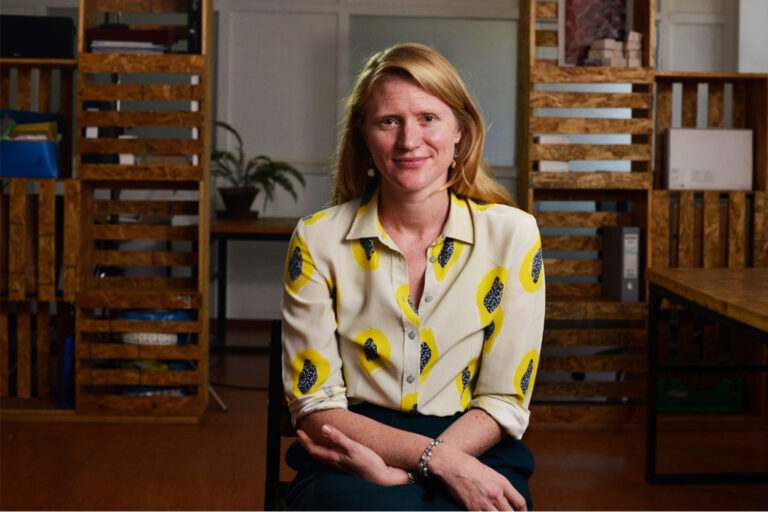
It is often joked that, ‘You do not need a miracle, just have insurance.’ However, insurance covers remain elusive for many as a result of financial strains in life. This is more-so an uphill ask for smallholder farmers whose income fluctuates with the adverse effects of climate change. Trying to close this elusive gap is one, Rose Goslinga, a micro insurer and advocate for creating insurance for small-scale farmers in Africa and Asia. She leads Pula, a company that is radically restructuring agricultural insurance as Co-CEO.
Since its founding in 2015, Pula has been a great catalyst for micro insurance to stallholder farmers. The firm uses insurance and digital products to help smallholder farmers endure climate risks, improve their farming practices, and bolster their incomes over time. Over the period of its existence, 4.3 million smallholder farmers have been reached with insurance products which stretch to 12 countries in both Africa and Asia in partnership with 26 distribution partners across; Governments, input providers and credit lenders.
Rose Goslinga having grown up in Tanzania holds an MSc in Political Economy of Development from the University of London where she graduated with first class honours and a BSc in Business and Economics. Over the past decade, Rose has been part of teams pioneering the agriculture insurance, first with the award winning program ‘Kilimo Salama’- of the Syngenta Foundation for suitable Agriculture and now with Pula, an award winning Insure Tech. She has worked across East Africa at different capacities and at Pula she leads a team that develops and implements data driven financial solutions that assists millions of small-scale farmers across Africa and Asia, safeguarding their crop and allowing farmers to invest in their farms through financial tools that take advantage of the rising use of mobile technology.
Rose’s work in agriculture insurance has been recognized through several international awards, including the Financial Times/IFC Award for Sustainable Finance, Insure Tech 3.0, and the Singapore Fintech Festival. Furthermore, she is a Rainer Arnhold Fellow and Social Innovation Fellow from Poptech and a TED speaker, where she seeds innovation worth spreading.
Capital linked with this energetic social entrepreneur for a microscopic understanding of what her firm does to protect smallholder farmers. Excerpts;


Capital: You specialize in digital and agricultural insurance to de-risk millions of smallholder farmers across Africa. Can you tell us how this works?
Rose Goslinga: Pula an insure tech startup, provides small scale farmers with agricultural insurance to help manage the risk of enduring extreme conditions, pests and diseases. Pula works by sending enumerators to farms to get a representative sample in an area during the beginning of the farming season and harvest period to help gauge the potential of the season’s harvest. Pula’s business model helps insurance companies better understand the risks of small scale farming.
With an average premium subscription of $4 for small-scale farmers in Africa, Pula actually markets the insurance product to governments, NGOs, Banks, Solar companies and off takers rather than directly to farmers.
During the planting season, we send agronomy advice and tips to the insured farmers on better farming tips and also early warnings.

Capital: You recently closed a $6 million Series A fundraise; how can this help your operation?
Rose Goslinga: Yes, we are grateful for the Series A investments from our new Investors Tlcom and Women’s world banking. From this, we will be able to use the funds to expand our footprint in Africa and Asia plus also develop new Insurance products.

Capital: You operate in Ethiopia, can you tell us about the operation in Ethiopia and how it is helping small scale farmers?
Rose Goslinga: We have been able to work in Ethiopia with our partners Mercy Corps, Farm Africa and Nyala to provide to 12,906 pastoralists a takaful livestock insurance cover using an innovative distribution channel and we will continue to assist farmers with strong insurance covers both now and for years to come.

Capital: Insuring farmers is a risky business, how are you coping with climate change?
Rose Goslinga: Climate change is a big threat to smallholder farmers but with Pula, we can be able to offer a safety nest to cushion the impact of climatic change such as drought, floods, cyclone etc. Just the same way there is an increase in road accident, having insurance gives you peace of mind to go on the road because your vehicle is secured. Pula is here to give our farmers the peace of mind needed.

Capital: What are your future plans for African farmers?
Rose Goslinga: Our plan is to continue working with more governments, Mobile operators, development partners and various aggregators so that we can increase distribution of our Area Yield insurance and livestock Insurance so that smallholder farmers can have peace of mind to invest more finances and energy into their farms.
We also believe that we can maximize on the accelerated mobile penetration in Africa by working with Telco’s to offer more agronomical advise and alerts to the millions of smallholder farmers to help increase their productivity.

Capital: You are also looking to expand to Asia, can you elaborate on this?
Rose Goslinga: Pula will be expanding to Asia, targeting smallholder farmers as it has in Africa, with a focus on Philippines, Thailand, Turkey, and Pakistan. What we’ve realized is that African solutions are in no way inferior to Asian, European solutions.

Government sparks to switch to an open electric tariff

0

The government is tracing to come up with a new version approach on the power sector development with an open electric tariff against the current feed in tariff (FIT). The power sector reform needs more that USD 6.5 billion in the coming about five years to electrify major parts of the society from the current one third of power access on grid.
The power sector reform has revised the previous roadmap on the energy sector development, which is critical to assure other economic and social developments that the government tabled to meet by 2030.
To attain the goal for the national electrification program, the government has estimated USD 6.5 billion that will be filled from different sources.
One of that it is the public private partnership (PPP) scheme that the government has implemented in the past couple of years.
But one of the gaps to expand in the private sector involvement on the power generation is the tariff which was not attractive.
Frehiwot Woldehanna, State Minister of Water, Irrigation and Energy, said that there are activities under PPP on geothermal and solar.
“Meanwhile, there are few private companies investing on the sector but it needs to be boosted to reaffirm the ample power production,” he added.
“At the current stage the Independent Power Producers (IPPs) are getting under power purchase agreement on FIT that could not continue in the future,” he explained.
At the meeting with Natural Resource, Irrigation and Energy Standing Committee that was held a week ago, the State Minister said that under the reform the power purchasing scheme is considering introducing a market oriented rate for private generators.
“The reform is included and legal framework and other issues are under development that will be disclosed in the future,” he told the law makers.
Frehiwot told Capital that sometimes the private sector may be interested in short period return to its investment cost, but it will be seen how it will go onwards.
“We will do our best to attract the private sector to invest in the sector with different attractive mechanism,” he added.
The reform has two core components including expanding the on grid power coverage to 65 percent from the current 33 and cover the 35 percent from off grid.
The second component of the reform is to uplift electric service, which is very poor, to international standards.
The reform has given significant attention for debt burden relief on the energy sector that has about 380 billion birr loan.
A week ago the Council of Ministers have ratified a regulation for the formation of Liability and Asset Management Corporation to absorb the outstanding debt of the energy sector and other public enterprises like Sugar Corporation and Chemical Corporation, while the major share stood at the energy sector.
He told Capital that the reform has three major pillars; electrify all corners of the country, service quality, and expand the involvement of the private sector.
To attain the pillars skilled human capital development, financial strength, tariff adjustment, performance improvement and others will be applied.
According to the State Minister, the major problem is expected to be finalized in the coming years, while the financial accessibility has been stated as a crucial and probable challenge.
“It might not be secured at once, but it will be accessed in different mechanisms, in loan and support from different local and international development partners and sources,” he says, “the pace of accessing the finance will determine the performance tabled to achieve in the coming years.”
He said that the government is already working to accessing the finance from different sources.
The PPP is also considered as part of the financer that might share the cost, “The market oriented tariff approach is aiming this,” he elaborated.
In the coming ten year the power generation would be 20,000 MW that includes the contribution of the private sector.
ADELE
The government has proposed Access to Distributed Electrification and Lighting in Ethiopia Project (ADELE) to provide a synergetic package of investments to ensure that reliable electricity services are made available to all Ethiopians regardless of their location and economic status.
The proposed operation will support delivery of energy services with potential to enable productive use in peri-urban, rural, and deep-rural areas.
The delivery of energy services through off-grid solutions can support productive and income-generating activities in agriculture (i.e. irrigation, and processing) and commercial sectors, improving the livelihoods of fragile and vulnerable communities, and opening opportunities for women and youth, disproportionately affected by unemployment and lack of productive opportunities.
ADELE has five components including: network strengthening for improved reliability of supply in urban areas; solar-hybrid mini grids for rural economic development; solar home systems for households, small-holder farmers and small businesses; standalone solar systems for health and education facilities; and capacity building, technical assistance and implementation support.
The project aims at providing 1.45 million Tier 1 and above solar off-grid solutions, and isolated mini-grids.
Under providing access to electricity for households, businesses, and commercial and industrial users through solar-hybrid mini grids, it is estimated that the component will provide access to grid-level electricity to an estimated 240,000 households, and 11,500 businesses, commercial, and industrial users.
On the component solar home systems for households, small-holder farmers and small businesses will directly benefit approximately 750,000 households by providing access to off-grid energy solutions such as solar home systems and income-generating appliances. Out of these, around 120,000 systems will be used in support of small businesses getting access to electricity for lighting and productive uses.
The other plan is to benefit health and educations centers with access to sustainable and reliable electricity. It is expected that 400 health centers and 1,000 schools will be electrified through standalone solar systems.
The project will be implemented by the Development Bank of Ethiopia, Ministry of Water, Irrigation and Energy and EEU. Partners like the World Bank and others are expected to provide their support on electrifying those who will benefit to get power in this project.
ADELE is expected to consume over USD 600 million in the implementation period that is five year.
The recently issued document of the government indicated that the ADELE project implementation scope is widespread throughout Ethiopia including deep rural and underserved regions of the country.

Attorney General initiates investigation on fertilizer saga

0

The has started its investigation on imported blending fertilizer based on the audit report of the Ministry of Agriculture. Government is also currently seeking to sell these blending fertilizers to other countries.
Minister of Agriculture, Oumer Hussein told Capital that the Ministry has done an audit and a report on the overall loss of the purchasing process of the blending fertilizer, “the Ministry of Agriculture has submitted its findings to the Attorney General to bring those who are accountable for the purchase of under standard blended fertilizer,” said Oumer stating that, “the purchasing process lacked clarity, which cost the country millions of birr.”
Suspected individuals related to the purchase bids and distribution of the faulty fertilizer were said to be accused for mismanagement of resources.
Regarding the issue Tesfaye Dahba, Deputy Attorney General told Capital that the federal Attorney General has started its investigation based on the findings of the Ministry of Agriculture. He has however declined to give further information since the case is under investigation.
It is to be recalled that five state-owned fertilizer blending factories was built at a total cost of 140 million birr in 2016 to revamp the industry. After building the blending factories the government has been importing zinc, boron and potassium. For this particular case, an import of 75,000 tons of boron fertilizer from Yara Switzerland for blending by these facilities was what grabbed the attention of government.
The aforementioned fertilizer shipment was found to be below the required standards for blending. The boron fertilizer from Yara was supposed to be granular but was found to be much smaller in size. Yet again, this fertilizer shipment, which was imported in 2014/15 and 2015/16, was distributed to fertilizer blending factories across the country.
However, these fertilizer shipments were a source of trouble to most of the blending factories as they were below the required standards and did not match with what was written on each bag as specification.
“These blending materials are not good for Ethiopian context,” said the Minister of Agriculture. “It therefore cannot be used as planned.”
Back in 2018, the government had decide to lift up the fertilizer blending and 15 factories which were damaged due to the imported substandard fertilizer to lease to the Morocco giant fertilizer company OCP which signed a 15 years lease agreement with Ethiopia to the renovation of the factories and was doing assessment of the factories.
According to the agreement, the group had agreed to make the factories operational and make the materials use and to be fully involved in the skill development of farmers.
Even if the group had agreed to make the factories operational until the end of 2018, however the Ministry of Agriculture said because of the over whelming asking price of OCP the government has stopped its deal with the OCP.
“Since it is a profitable company (OCP) we inquired for an additional offer but we couldn’t afford that. Currently we are deciding to sell the material to other countries,” explained Oumer. The Minister expressed that one of the benefit to selling the material was set to do away with rent cost since for more than 3 years it had stayed in stores costing in millions for rent, which was difficult to continue.
“When we become nationally strong we will start producing,” said the Minister.
On a burdensome unfolding, this mismatch had finally resulted in damaging the blending equipment of the factories managed under Gibe Dedessa Farmers’ Cooperative Union in Oromia Regional State, Merkeb Cooperative Union in Amhara Regional State, Enderta Farmers’ Cooperative Union in Tigray Regional State and Melek Site in Southern Regional State.
Officials from the OCP have declined to comment on the issue.