Documentation Authentication and Registration Agency (DARA) stated that it is at the final stage of making all its operations digital.
DARA, a pioneer of operational digitization in the public service sphere, disclosed that it will roll out a new scheme on processing memorandum of articles and minutes online.
The agency that is responsible for authentication and registration at the federal level has upgraded massively in technology in the support operation’s department. In the recently concluded budget year it has implemented a QR code system for documents that it authenticated.
DARA disclosed that it is finalizing in receiving draft documents and is now gearing to revisit and prepare the final approvals.
Muluken Amare, Director General of DARA, informed Capital that his agency has installed a stronger and faster infrastructure. This upgrade from the previous system has been applied to all its branches including that of Dire Dawa branch.
“All branches have been connected and this interconnection will further make it easier when new branches open in significant locations. These connections lead in the advancement of technological services,” he stated.
Muluken, who was spearheading the digitization scheme as a departmental head a decade ago, explained that Custor Computing PLC has played an integral role in upgrading the new system initially installed in the past. “We have a structure of competent IT experts that are aiding in undertaking the new scheme in house,” he added.
The new scheme will allow for the introduction of online memorandum of article and memorandum of association drafting and approval. Minutes shall also be authenticated in the new scheme.
Muluken emphasized that share companies or other businesses need not come to DARA branches with printed draft documents. Anyone can now use the templates provided by DARA to fulfill any process that they may have.
“If there is any comment on the document it will be sent via email and the customers shall correct it and come for approval only,” the Director General said.
According to Muluken, DARA offers a professional template which is easy to use, even for first time case users.
The new coming scheme will make the agency’s operation fully online when it comes to implementation. Currently, it is in the technical testing phase popularly referred to us ‘Operational Testing.’
“So far we have been focusing on some security concerns and as a result we have successfully introduced the QR code system to strengthen security,” Muluken explained.
DARA’s digitization of most of its systems and creation of digital documents allows for the integration of the agency with the banking industry.
“On matters integration with banks, we are currently connected with five banks and we are planning to expand to ten banks and we eventually want to cover all the remaining financial firms,” Muluken explained.
Fraudulent activities in the banking sector have been observed in the past through illegal and fake power of attorney. However, this will be a thing of the past since with the integration with the banks allows ease of the authenticity of the power of attorney from DARA’s system.
Recently, DARA across its 14 branches introduced a strong transaction confirmation from banks before authenticating any documents in harmony with the National Bank of Ethiopia’s maximum cash withdrawal directive.
DARA nears finalization of its digital operations

Ethiopia unveils new police doctrine
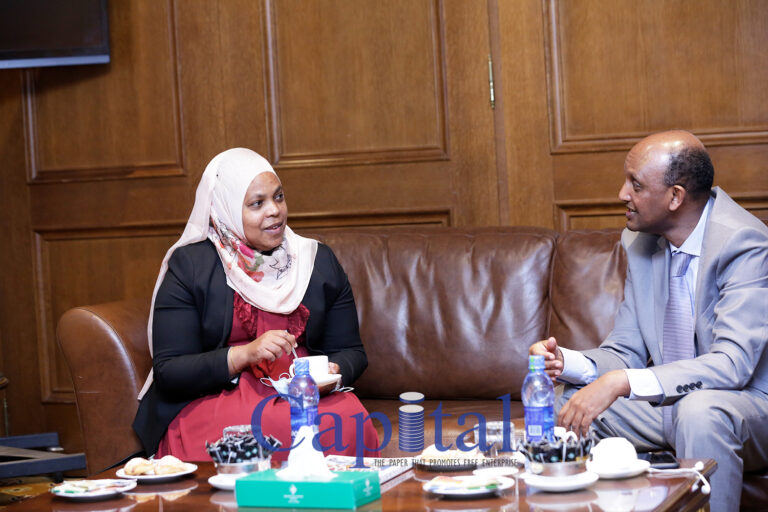
Ethiopia has unveiled a new police doctrine at a ceremony held at the Sheraton Addis on Friday October 9.
Speaking at the event, Muferiat Kamil, Minister of Peace said that police should be impartial and serves the public. Endeshaw Tassew, Federal Police Commissioner, said the doctrine was needed to address weaknesses, ensure rule of law and build modern police force. Preparation of the doctrine took two years, it was noted.
Twelve fold increase in COVID-19 cases, severe weather and locusts creating massive need in Ethiopia, warns IRC
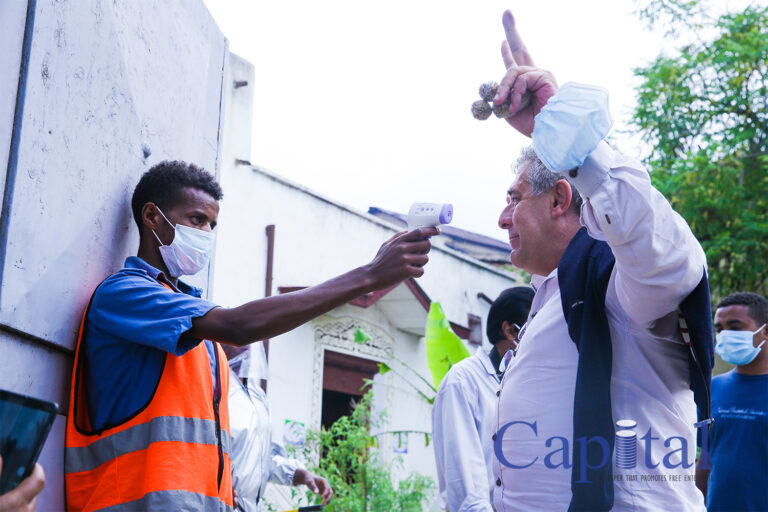
COVID-19, flooding and the locust outbreak are said to be creating a humanitarian crisis in Ethiopia with many people unable to meet their daily food needs, according to the International Rescue Committee (IRC).
“Recent heavy rainfall has led to flooding, resulting in destruction of crops, loss of livestock and displacement. Swarms of multiplying desert locusts have also been destroying pastures and crops, leading to further food insecurity. Some areas are recording admissions for severe acute malnutrition at 50% higher than for the same period last year. A massive twelve fold increase in Covid-19 cases between June and September is further compounding needs as families have been unable to obtain income or access food due to movement restrictions,” reads a statement from IRC. Ethiopia currently holds the highest Covid-19 caseload in East Africa.
The statement further said that IRC is working to safeguard the lives of affected and at-risk communities from the COVID-19 pandemic by raising community awareness on COVID-19 risk factors, providing personal protective equipment, and building and installing water points to help people practice preventative methods. “The IRC is assisting desert locust and flood-affected households with multi-purpose cash transfer and non-food items to fill food security gaps and provide relief,” the statement states.
“The multiple issues of flooding, locusts, intercommunal violence and COVID-19 are highly concerning given the already massive humanitarian needs in the country. The slowdown of the economy and lockdown restrictions mean that people have not been able to access income and there is an upward pressure on food prices,” said Frank McManus, IRC Ethiopia Country Director.
“Over 19 million people are in need of humanitarian assistance in Ethiopia. At four times the number of people displaced in 2019, as a result of the flooding, more than 300,000 people have been displaced in 2020 and have had their homes and livelihoods lost or damaged. A total of over 1 million people have been adversely affected by the floods overall. With the spread of COVID-19, people that have been displaced are amongst the most vulnerable due to the often congested living space, compromised health conditions, and inadequate access to basic services. The IRC is providing essential support through distributions of non-food items, including emergency shelter, household goods, hygiene kits, and cash assistance to over 36,500 affected people.”
“Despite the IRC’s work, the unmet humanitarian needs are still great. With more funding for our work, we will be able to reach even more people with the critical support they so desperately need after losing their homes and livelihoods.”
Ethiopia is one the poorest countries and has suffered decades of drought, intercommunal violence, disease outbreaks and flooding. Whilst grappling with its own development and humanitarian needs, Ethiopia is also a major host country for refugees in the region. In a highly complex humanitarian setting with seven million people who are acutely food insecure, IRC is working to ramp up support to those most in need.
The IRC has been working in Ethiopia since 1999 implementing emergency and development work in rural communities and 21 refugee camps, reaching over 3.2 million clients through programs in environmental health, health, education, child protection, economic recovery and development, and women’s protection and empowerment in six regions across the country.