

Ethiopian Airlines Group hosted the International Airlines Transport Association’s (IATA). More than 23 countries and different stakeholders have been participating on the workshop. According to IATA in the coming years the development of air cargo transportation is expected to be doubled.
Since the demand continues to boost, service givers should also strength their services, improve the system handling, packaging and transporting the goods.
High staff turnover, low retention, shift in compilation has been raised as organizational challenges for the development of cargo transport.
IATA provide different kinds of technical knowledge, products, services and training solutions, to the industry needs on the definition of standards for documentation, handling and training, as well as their promotion and use, contributed to achieving a very high degree of safety in the transportation of dangerous goods by air.
“Development of new products powered by these dangerous goods is driving the demand,” said Fistum Abadi, managing director of Ethiopian cargo, since these goods are dangerous to the environment and human, Ethiopian airlines is working based on the international standards.
Ethiopian cargo and logistic service gives General Cargo services and also provide Special Cargo services like Perishable, Valuable Cargo, Pharmaceuticals, Live Animals, Human Remains, Dangerous Goods and Mail and Courier.
Experts of IATA also cautions airlines, cargo handlers and freight forwarders on the transportation of dangerous cargo by air. Hosted by Ethiopian Airlines at the Ethiopian Aviation Academy, the IATA Cargo Workshop on Dangerous Cargo attracted 60 delegates from 23 countries representing airlines, cargo handlers and freight forwarders.
The growth of cargo globally impacts everyone. IATA sees a global growth of 100 percent in the next 15 years. The cargo industry in Africa, too, is growing. African carriers like Ethiopian Airlines are investing heavily on cargo fleet, cargo terminal and technologies.
In related development Ethiopian Airlines Group secure 800 million dollar from cargo transportation in the last fiscal year of 2018/19 which is 88 percent of its target. The airline was planning to secure 906 million dollar.
Ethiopian is one of the largest cargo network operator and one of the major global cargo players, serving 57 global freighter destinations and over 103 destinations on both freighter and belly hold services.
Ethiopian Cargo & Logistics Services gives airport-to-airport services with 12 dedicated freighters, including 10 Boeing B777-200LRF with capacity to transport 103 tons each and two Boeing B737-260F with capacities of 22 tons each.
Ethiopian operates in major trade lanes between Africa and Europe, Middle-east and Asia providing a convenient and reliable cargo service to and from the continent. Currently, Ethiopian Cargo & Logistics Services operates a warehouse with over 450,000 tons annual capacity in which the air line has the capacity to transport around 1.6million kilograms of goods per day.
IATA expects cargo transportation to be doubled
Abay announces success of its promotion
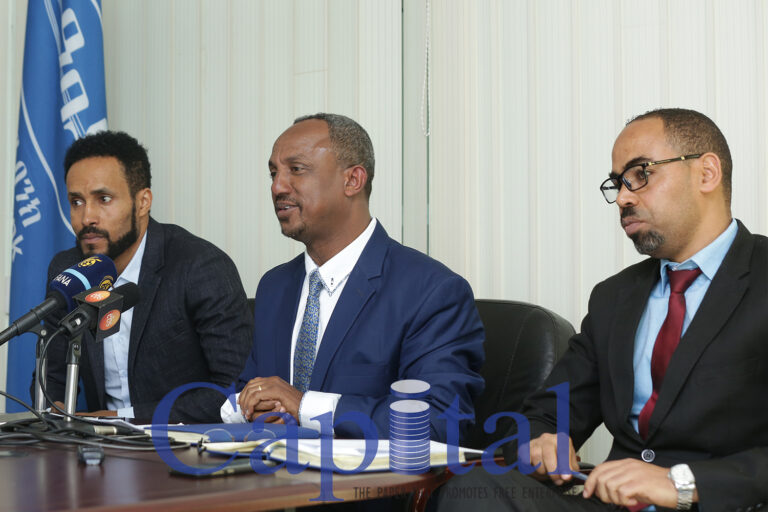
Abay Bank announced that the bank has benefited from its one month long campaign of promotion. The bank is also working to promote itself through different mechanisms. Starting from January 20, 2020, the bank is campaigning to promote the different services it gives to its customers.
To enhance its growth the bank is involved in various ground breaking activities according to Belete Dagnachew Vice President of Corporate Services at the bank. “The one month promotion has resulted in good feedbacks on promoting the services of the bank and increase the number of customers and deposit account,” the Vice president stated.
According to Belete, developing and providing customer centric products to enhance the quality is crucial for the sustainable growth of the bank. “The bank is also working to start bill payment and e-payment,” added Belete.
Chirstian Kassa, Business Development and Communication Director of the bank said that Abay is under the process of negotiation with the government to start bill payment, which the service is being given only at the Commercial Bank of Ethiopia.
The one month campaign of promoting Abay was all over the country by using different promotion methods including media, small sheds in different sides of the county, brochures and using incentives for those who came with foreign currency.
Abay Bank also managed to mobilize a deposit of 1.9 billion birr in the last six month of the current fiscal year.
Abay Bank was established nine years ago, since 2010 until now Abay has been providing five basic products giving 17 different financial services within them. Currently the bank has around 220 branches all over the country. In the last fiscal year 2018/19 Abay has reported a 63 percent rise in its net profit to 683 million birr. The total asset of the bank has also increased to 17 billion birr.
Gates Foundation release 12th annual letter
By Ruth Brook
Twenty years and $53.8 billion dollars in, Bill and Melinda Gates are reflecting on the last two decades of the work done through their foundation – The Bill and Melinda Gates foundation – in their 12th annual letter, released Monday.
The 2020 letter celebrated the last twenty years of the foundation’s existence and the significant progress it has made to alleviate poverty and tackle health issues around the world. This year’s edition, penned by the couple, focused on global health, education, climate change and gender inequality.
The letter gave a breakdown of the titanic sum, revealing that of the $53.8 billion, 45% was allocated to global development, 29% to global health, 16% to US programs and 10% to other charities.
“At the core of our foundation’s work is the idea that every person deserves the chance to live a healthy and productive life,” wrote Bill and Melinda Gates. “Twenty years later, despite how much things have changed, that is still our most important driving principle.”
The letter, titled “Why we swing for the fences”, touches on the last two decades of the foundations work and achievements as well as the setbacks, disappointments and surprises. The title was inspired by billionaire Warren Buffet’s advice to the couple to ‘swing for the fences’ and put their all their efforts and resources behind large scale endeavors to improve lives worldwide.
“When you swing for the fences, you’re putting every ounce of strength into hitting the ball as far as possible,” the couple wrote in their letter. “You know that your bat might miss the ball entirely–but that if you succeed in making contact, the rewards can be huge.”
This is the approach the foundation is taking moving forward, they wrote.
The Gates foundation first made their footprint in Ethiopia in 2000 with grants to support partners’ efforts to improve health and education in Ethiopia. The foundation has more than $265 million in grants to benefit the country. In 2012, the foundation appointed a representative in Addis Ababa to facilitate partnerships with key stakeholders in government, NGO’s and the private sector.
Ethiopia has made great strides in alleviating poverty in the country with a decrease of 46% in poverty rates since 2000. Child stunting rates from malnutrition have also decreased by 25% since 1990. While the country has witnessed improvements, there is still work to be done. Roughly four in ten Ethiopian children are at risk of never fulfilling their potential due to malnutrition. The under-five mortality rate has decreased by two-thirds since 1990 and estimates of maternal mortality are 191 per 100,000.
Melinda wrote “We’ll fund new advances in family planning and maternal and newborn health, and we’ll explore new ways of preventing the scourge of malnutrition. That’s because improvements in health are key to lifting people out of poverty.”
Advancements in agriculture are one of the driving forces behind Ethiopia’s developments. The sector is the cornerstone of Ethiopia’s economy and accounts for 65% of employment and 31 % of the country’s GDP.
However the downturn in climate change coupled with the perpetual increase of Ethiopia’s population means farmers are being pushed to drier areas where crops are harder to grow. This predicament leaves food supplies at risk and puts an obstacle in the way of the country’s progress.
“I’m also hopeful that our foundation’s work on agriculture will play a key role in helping farmers withstand climate change. Over a decade ago, we began funding research into drought- and flood-tolerant varieties of staple crops like maize and rice. These new varieties are already helping farmers grow more food in some parts of Africa and India, and more climate-smart crop options will become available in more places in the years to come,” Bill wrote.
The letter concluded on a positive note with the couple signing off optimistic for the future of their foundation.
“When we first started this work, we were optimistic about the power of innovation to drive progress—and excited about the role we could play by taking risks to unlock it. Twenty years later, we’re just as optimistic—and we’re still swinging for the fences.”
AU wraps up summit with developments on Libya and South Sudan
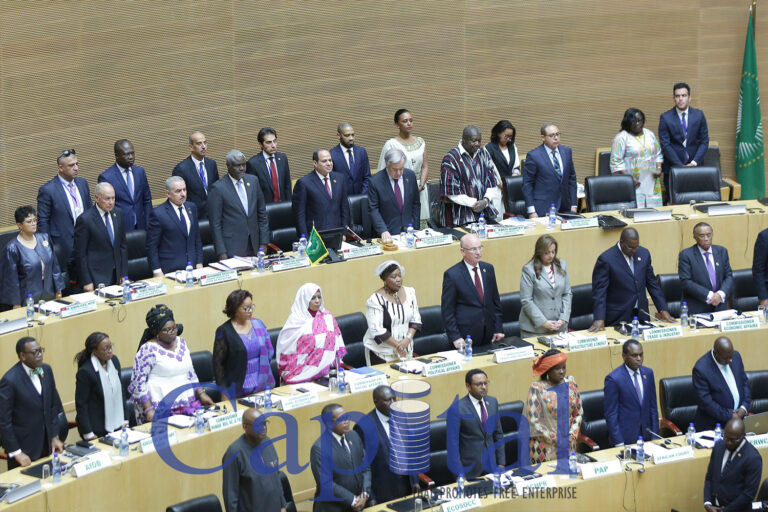
The 33rd African Union Summit wrapped up in the Ethiopian capital even thought the usual conluding ceremony was cancelled after much delay. But the two-day summit tackled the on-going crisis in Libya and South Sudan with promises to find “African solutions to African problems” to other conflicts, all in the name of silencing the guns across the continent.
Following numerous disussion through the summit, the goal now is to take the declarations out of the rooms and put them into action.
This includes the vision of making peace a reality for African people.
But the reality for many in Africa is in fact living through conflict, or living in places where policing authorities are highly armed, making the notion of ‘Silencing the Guns’ hard to fathom.
That’s not to say, however, developments have not taken place during this Summit.
Libyan civil war
Since the ousting and lynching of Libya’s longtime leader Muammer Qaddafi in 2011, the country has fallen into a perpetual state of civil war since 2014 fueled by supporters of rival militia either loyal to Qaddafi, to UN-backed leader Fayez el-Saraj or loyal to Russian-and-Saudi-backed warlord Khalifa Haftar.
The internationally recognized government headed by Saraj versus the self-proclaimed government in the east of the country headed by Haftar are the two main rival camps.
Many saw the 2019 AU chairmanship of Egyptian president Abdelfattah al-Sisi as having created many divisions within the African Union as he openly supported the camp headed by Haftar, while the African Union has traditionally supported the faction headed by Saraj.
Inter-Libyan forum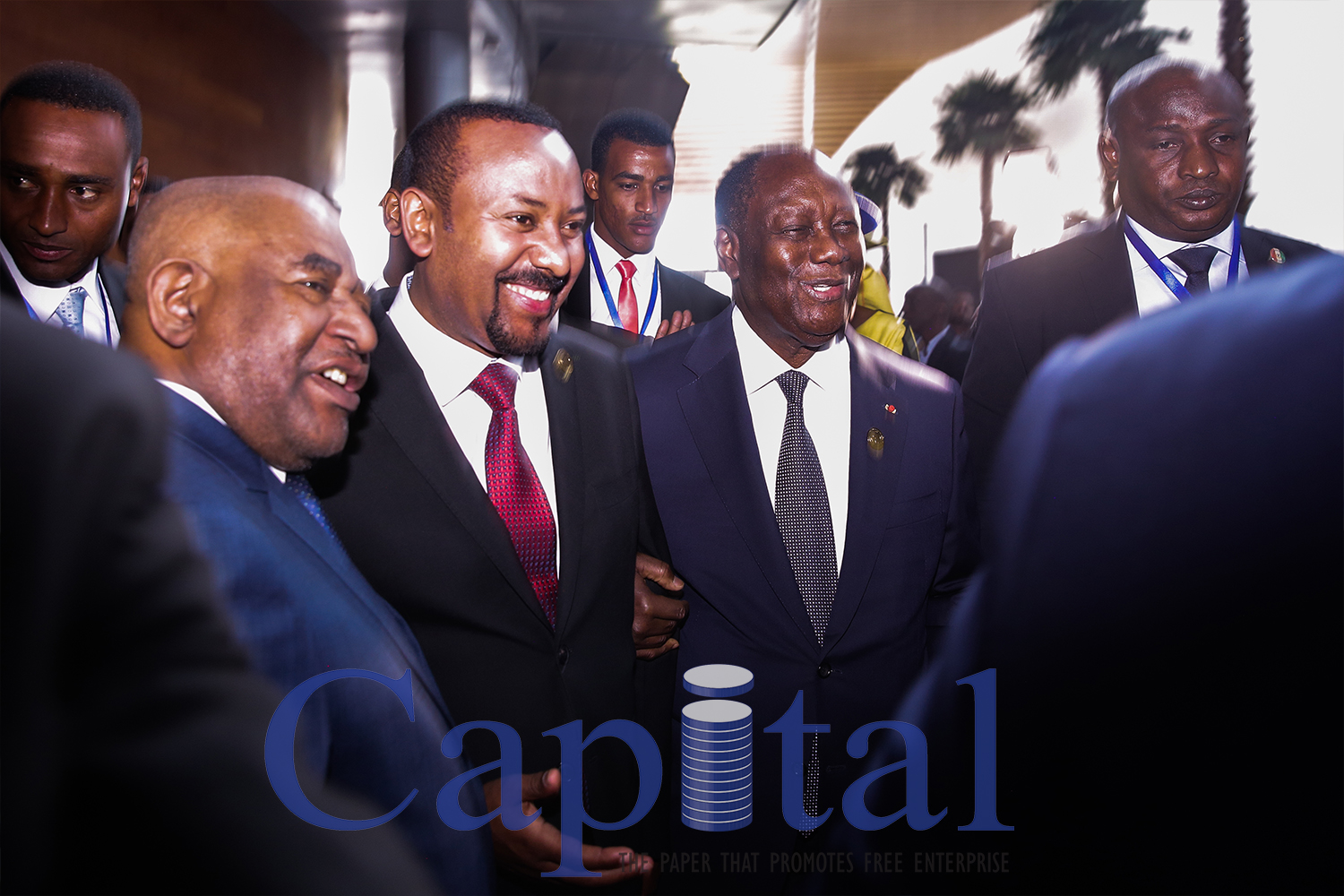
Delegations from both sides attended the lead-up to the Summit, agreeing to an inter-Libyan forum.
The caveat to the creation of this force is the implementation of a long-term ceasefire.
The United Nations in Geneva is waiting for a vote to finalise a ceasefire with UN Secretary General Antonio Guterrez adding earlier today that he believes this will be achieved very soon.
Once this has been formalised, a cross-faction forum will be held, although the location for the meeting has yet to be decided.
Algeria has been involved in the negations and insists that it be held in Algiers, while others want to see it take place in Addis Ababa, since it is considered neutral ground.
Location aside, one point everyone has agreed to is the inclusion of all camps; not just those of Saraj and Haftar, but to open it up to those from the Qaddafi camp and civil society groups.
African involvement
“When the cessation of hostilities becomes officially signed, we want to join the UN [United Nations Support Mission in Libya, UNSMIL] in an assessed mission in Libya to evaluate what is necessary to oversee, to make sure the cessation of hostilities is respected by everybody. And we want also to be part of the observer deployment mission in Tripoli and elsewhere in the country where it is needed,” said Smail Chergui, the AU Commissioner of Peace and Security.
This support from the AU is to undo the feeling of being slighted in all previous mediating efforts pertaining to Libya that have been primarily outside of the continent.
Chergui added that in addition to a ceasefire and the continued enforcement of the arms embargo to Libya, the AU is demanding an “immediate cessation of all external interventions and interferences in Libyan affairs.”
South Sudan
Following the creation of South Suda in 2011, fighting erupted two years later between President Salva Kiir and his then vice-president Riek Machar.
The two are on a tight deadline to make progress in establishing a government of national unity government before 22 February.
On Saturday Kirr and Machar met separately with South African President Cyril Ramaphosa, the new chairperson of the African Union.
And on Sunday, both met with Uganda’s President Yoweri Moseveni and Sudan’s transitional Prime Minister Abdella Hamdok. It’s worth noting, given it was the first time they’ve met outside South Sudan since November 2019.
Sticking point
The problem with this round of talks is the issue of how many states should make up the country.
Initially South Sudan had 10 states, but in 2017 Kiir went ahead and unilaterally created 32 states.
Machar refuses to agree to a national unity government without addressing this problem, but Kiir believes they can agree to form a government and return to this detail at a later date.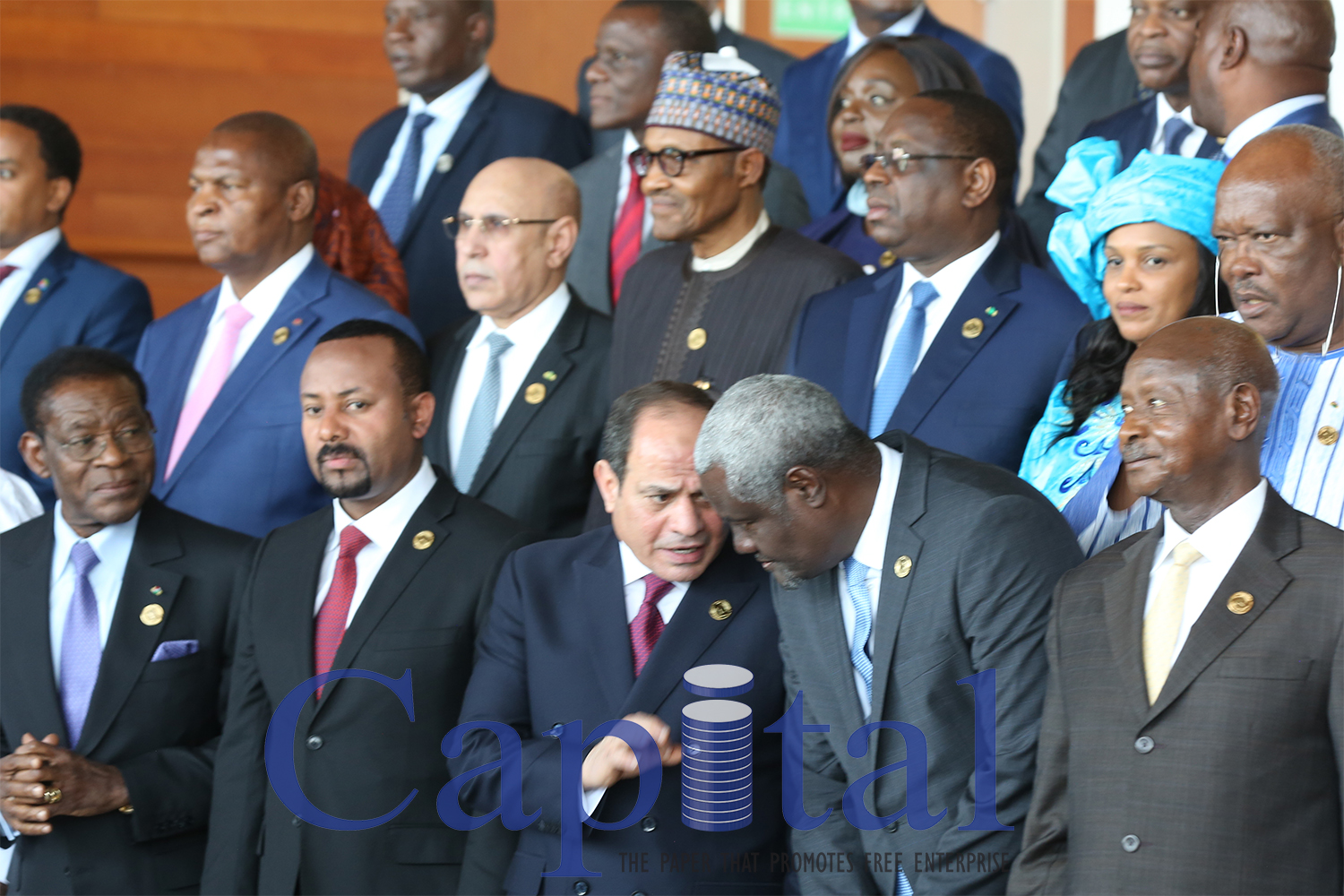
The regional bloc, IGAD (Intergovernmental Authority on Development) and South Africa’s vice president David Mabuza, are alleged to have become frustrated with this latest round of negotiations.
In an effort to move things alone, one source in Addis Ababa has told RFI that IGAD will likely propose a return to 10 states so the deadline for the creation of a national unity government can be maintained.
