

The Addis Ababa Chamber of Commerce and Sectoral Association has presented its written recommendation to be considered on the draft proclamation for the formation of Chamber of Commerce and Industry.
Two weeks ago, the Ministry of Trade and Industry issued the highly anticipated draft proclamation that would replace the controversial Chamber of Commerce and Sectoral Association Establishment no.341/2003.
On the recommendation with 11 pages, the city chamber has provided its opinion and input for about 30 articles of the draft proclamation that has 35 articles.
Meanwhile the draft proclamation was appreciated by stakeholders since its projected to alleviate challenges on the existed 18 years old proclamation; however they have also expressed their concern stating that the draft proclamation has not fully improved the 2003 law.
On its recommendation that reviewed starting from the preamble, the city chamber has provided massive insights that shall improve the under preparation proclamation.
It said that the proclamation should consider the establishment of independent associations with incorporation of democratic framework rather than radiate the formation of regional associations with the structure of national chamber.
It added that the draft opposes the federal structure and the bottom up grass root organizational structure.
It advised the establishment of chambers should be near for members and follow a two tires system.
The city chamber expressed its concern on the preamble of the draft proclamation and said the preamble indicated the economic policy of the country that is against the behavior of chambers that is supposed to be independent from any political ideologies.
“The preamble does not mention the role of chambers, which stand for the benefit of members,” It said.
The term stated at the preamble to expand the revenue of chambers has also been criticized by the document that was sent to the ministry. It said that the chambers main objective is providing service for the business community and gain resources on its service than working to expand its revenue like a profit oriented organ.
It recommended the proclamation to allow the formation of chambers at economic zones and industry parks that are the centre of massive economic activities.
It opposed points stated on the objective of the proclamation that said the creating of ethical and operates based on legal manner, credible, sound and enables to come up with optional policy recommendations.
It argued that the objective of chambers are working to expand commerce and industry in the country, disseminate information regarding trade and industry of the country and the world for its members, establish cooperation and share information with parallel foreign associations, represent members for their benefits at the government organs, and provide services on behalf of the government.
Regarding the establishment, the proposal ridiculed the draft proclamation that stated the formation of chambers will follow the government structure, “Which is unlike others experience and forget the role of businesses at urban areas, industry parks and economic zones that are the concentration area for economic activity,” it stated.
It also opposed the role of national chamber that formed by members but has higher role and power on members.
According to the proposal the membership is supposed to be free than the stated as mandatory on the draft proclamation. It said that it is against the constitutional right and international convention that the country adopts.
It also recommended the acknowledgement of the role of regional and city chambers to undertake massive operations like creating cooperation with international and local partners for the benefit of its members independently.
The draft proclamation gives the right for national chamber massive power to rule and guide regional chambers. According to the draft proclamation, regional chambers are set to go through under the guidance of the higher body to their activities – which were strongly opposed on the discussion held a week ago.
The city chamber has also recommended foreign investors to be allowed to be members at the board of directors since refusing them is illogical, while it advice the presidency and vice position to be protected for Ethiopians.
Further discussion is also expected to be held in the coming weeks. For instance it has been disclosed that on the draft proclamation regional chambers discussion would held on Monday, January 4, 2021.
City chamber presents recommendations for draft proclamation

The dilemma of false COVID test results

Results from Ethiopia rejected globally
Covid 19 test results taken locally which is highly characterized by false positive and false negative continues to be rejected globally as this presents high risks to other countries.
A “positive” test means a person is infected with coronavirus, and a “negative” test means they aren’t infected. As the health officers suggested no test is 100 percent accurate, there will always be some people who test positive when they do not have the disease or test negative when they do have it.
As passengers from Ethiopia to abroad say many countries reject test result from Ethiopia even if it is negative as it is selected countries with lack of accurate test. Many of the heath officers in Ethiopia complain that most of the test kits in the country are gain from china which lacks credibility in their operation.
Dr Markos, Feleke CEO of Washington Medical center also share the idea of no test is accurate, the most important thing to know about the impact of false positives is as he argues the test result depend on the originality of the test equipment’s, “in this case at Washington we use the latest test kit which has certified from the us food and medicine authority” says Markos, adding that Washington is the only one which has three gene detect test kit which is certified from the US Food and Drug Authority. Though there are people who still complain the test result as they get positive when tested at Washington and negative from other medical center.
Adamu Tayachew, National COVID 19 Laboratory Section Chief said even if the false test result occur it didn’t support the idea of originality, rather as he said the government check the quality of all test kits before getting in to the country, but added “though sometime such kind of mistakes could happen for other reasons, and on the other side countries sets different test results depending on laboratory test kits.”
Furthermore, Adamu said the inclusion of the development and implementation of external quality assessment schemes and internal quality systems, such as automatic blinded replication of a small number of tests for performance monitoring to ensure false-positive and false-negative rates remain low, and to permit withdrawal of a malfunctioning test at the earliest possibility provided by the government for the testing centers.
As result of the test incurrence Ethiopian Airlines ban its flight from Addis Ababa to Shanghai Pudong for five weeks, the ban continues until at least January 1st, 2021 as Chinese authorities agreed to an extension as more passengers have tested positive for COVID-19.
In March 2, 2020 the first infected people found in the country testing capacity and therefore the rate of testing in Ethiopia and worldwide has continued to rise, more and more asymptomatic individuals have undergone testing.
Though the number of daily tests jumped from 0 on march to 5000 people on average on December; Even if efforts has been made to decrease low test sensitivity, false negative continue to pose much Consequential threat and hold priority since they have the power to cause devastating spread since the propagation of the epidemic especially by asymptomatic or mildly symptomatic patients remains high.
But false negatives are not the only errors bedeviling coronavirus diagnostics. False positives, which incorrectly identify a healthy person as infected by the virus, can have serious consequences as well, especially in places where the virus is scarce.
False positives are generally very rare among tests that have been vetted but any test can be plagued by contamination, mishandling or technical glitches, leading a device to spot the coronavirus where it is not. Although false positives may seem relatively harmless in comparison with their false-negative.
Hello taxi’s to provide flexible car ownership deals

Hello taxi, a sister company to ‘Hello Mekina’ in cooperation with Debub Global Bank introduced a loan mechanism to its customers to own a car. According to information given by Daniel Yohannes, founder of hello taxi to the press, his company has prepared 70 percent of the loan to its customers if they can afford the remainder of the total price. As he said, this effort improves the living standard of citizens through ease of owning up-to-date vehicles with less carbon emission.
Daniel said that customers will be allowed to pay the 70 percent of the loan within 7 years’ time. Recently, Hello Taxi and O’Clock General Motors have distributed the first round of tourist taxis, which are equipped with language translating devices, to 36 members of taxi associations in the city.

Farmers and millers set to link up to whip wheat deficit
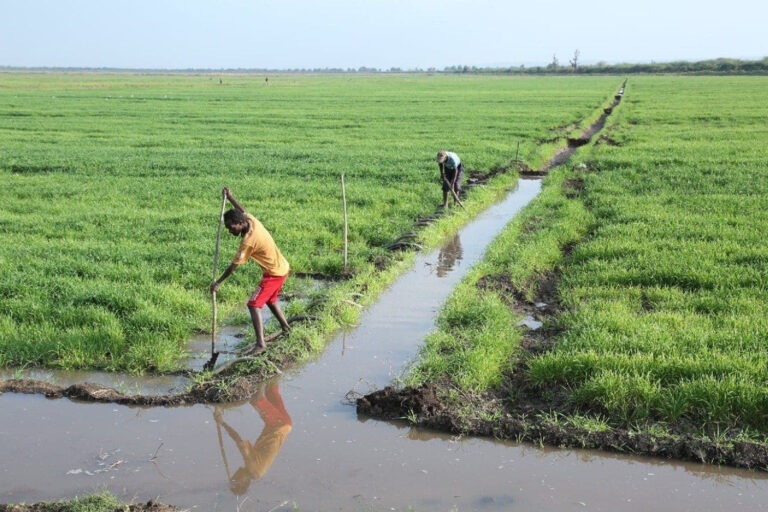
Ministry of Agriculture (MoA) is set to facilitate a market linkage meeting with farmers via cooperatives to wheat millers. Similarly, lowland wheat harvest have achieved on average 40 quintal per hectare, which is a record for the sector.
Omar Hussien, Minister of MoA, said that as per the request of millers in the country the ministry has arranged a discussion with farmers to create market linkage for industries.
He said that on the initiative that the government halts importing wheat from abroad millers, which receive the grain from the government as per their quota, sparks of interests have been shown thus need to contact farmers to access the input for their production if the government stop importing the wheat has become integral.
The country is allocating at least a billion birr to import wheat since the local production is not ample to fill the demand.
Last year the government had introduced an initiative to produce lowland wheat on the irrigation scheme to easy the import that consumed the scarce hard currency. As a result, Lowland wheat harvest achieved on average 40 quintal per hectare, which is a record for the sector.
The ministry has disclosed that in the second year of the initiative, the government targets to cut wheat imports within the maximum five years as they predict that half of the deficit will be filled.
This being the second year of the planned year, the government has targeted to harvest up to ten million tons of wheat, which is more than half of the 17 million ton deficit.
If we continue as per the current path the target will be achieved by next year.
In the current season 250,000 hectare of land is expected to be covered by wheat, while the initial projection was to cover 300,000 which has gone on to change due to the effects of flood in the past rainy season in Afar region.
According to the Minister, for the year wheat production in Amhara and Oromia got a priority, while Afar and Somali lowlands have been included.
Omar said that on the new wheat production scheme over 12,000 farmers will be encompassed.
“On this scheme we have also changed the productivity and research. In the past productivity and research have been undertaken separately but since we started the new scheme researchers and agricultural experts are working together to improve the harvest,” he said.
“Some may think the lowland wheat production is the result of researchers but we are working jointly that is why we registered promising results,” he explained. According to the Minister, this practice will continue on other sectors.
Flour factories also raised their concern when they heard about it.
The lowland wheat production harvest is up to 40 quintal per hectare, while on the rainy season the average production is 29 quintal per hectare.
“For the year as a show case we are planting 500 hectare in Gode, Somali region for wheat cultivation that will expand in the coming year since the initiative mainly focused on lowland areas of the country that are massively focused on Afar and Somali regions,” he told Capital.
The government has stopped most of the duty free schemes since the reformist ruler come to power and in contrary it has opened the importation of tools and machineries on duty free scheme for agriculture to achieve production and productivity.
Omar said that 560 items have been included on the duty free scheme to improve the agriculture sector and enable the country to fully sufficient on agricultural production and expand export for further hard currency earning.
