

Significant personnel and some other expenses augmentation slightly reduced the profit of Bunna International Bank (BIB), meanwhile marvelous achievements were registered in all aspect for the year ended in June.
Bunna, one of the late comers in the financial industry, has announced that in the ended financial year it has been able to expand its deposit mobilization, loans and advances disbursement, included huge number of new customers, aggressive branch expansion and equity increment.
In annual performance for the 2019/20 financial year, the bank has enabled to boost its asset by close to one third or 4.4 billion birr to 18.9 billion birr from 14.5 billion birr of 2018/19.
In the financial year that ended on June 30, 2020, the bank’s paid-up capital has expanded by more than 396 million birr or 22 percent compared with the preceding year. According to the annual financial report of BIB, the paid-up capital has reached at close to 2.2 billion birr from 1.8 billion birr of 2018/19 financial year.
Similarly, the total capital of the bank has reached at about 3.1 billion birr with additional increment of 504 million birr for the year.
For the year, the bank has enabled to mobilize additional 3.3 billion birr deposit and expand the total deposit close to 14 billion birr.
Regarding total revenue in the reported year, BIB has enabled to amass almost 2.2 billion birr that climbed by 18.6 percent or 341 million birr.
From the total income the interest income has stood atop with 1.67 billion birr and followed by fee and commissions that was 415 million birr.
The total outstanding loans and advances have reached to almost 11.6 billion birr with increment of 40 percent by the ended period. In the 2019/20 financial year additional 3.3 billion birr fresh loans and advances have disbursed.
Import export business took the lion share regarding accessing the bank finance by the share of 45 percent and followed by construction and domestic trade by 21 and 19 percent respectively.
In the year the bank has bought a nine floor plus basement building located at Africa Avenue around Bole Rwanda that will now serve as head quarter.
For the year, the total expense has skyrocketed by 32 percent and reached at almost 1.6 billion birr.
The main expense expansion occurred for the year was come from personnel expenses that climbed by 33 percent and reached 532 million birr from over 400 million birr of the 2018/19 operation period.
In the year alone, additional 334 permanent and 331 outsourced staffs were hired at the bank that expanded its employees to 2,043 and 2,142 respectively.
Interest expense that took the major share regarding total expense by 34 percent share has stood at the second level in terms of incremental rate. For the year ended last June, the interest expense has increased by 23 percent and reached at 542 million birr from 440 million birr of a year ago.
Due to high expense growth mainly on the personnel and depreciation of right of use asset side, meanwhile the net operating income for the year have significant increment to profit has shown slight reduction.
According to the report, the net operation income for the reported year climbed to 1.56 billion birr from 1.34 billion birr of a year ago. While the profit before tax has stood at 582 million birr from 625 million birr of the 2018/19 financial year.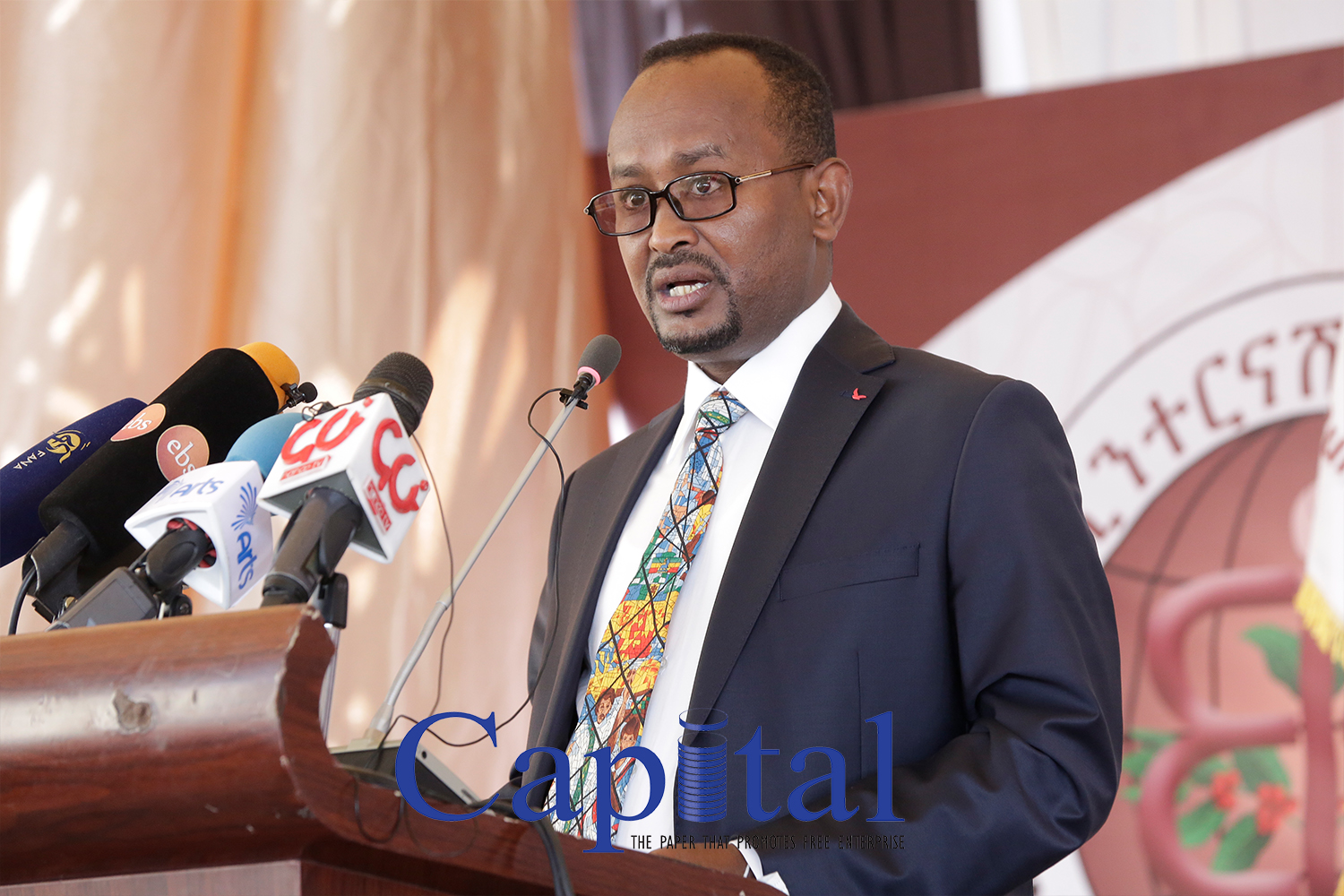
Similarly, the profit after tax has reduced to 440.3 million birr from 461.4 million birr in similar period mentioned above.
This contributed to show slight reduction on earnings per share (EPS) for the year. According to the annual report the EPS has dropped to 22.5 percent from 28.7 percent of a year ago.
For the year, the bank has opened additional 37 branched in the capital and other parts of the country that expanded the number to 424 as of the end of the financial year.
Deposit account holders have grown by close to 50 percent and reached at almost 810,000.
BIB attains splendid achievement despite slip in profits
Crimes against humanity committed in violence occurred following death of Hachalu: EHRC
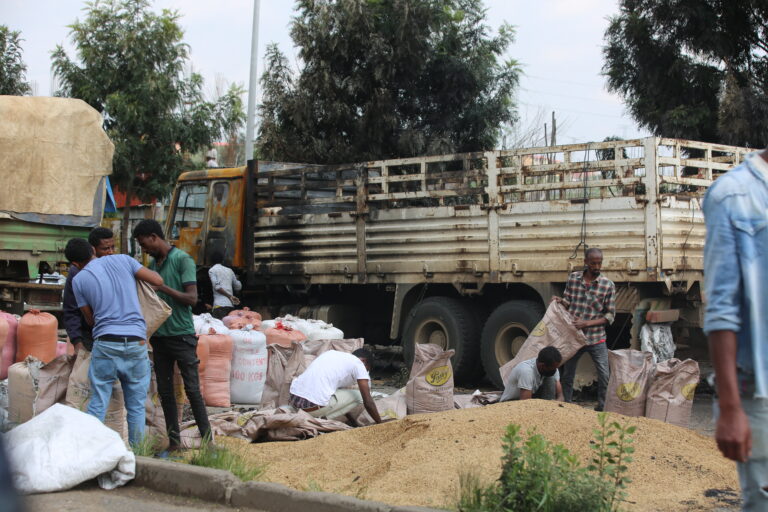
The Ethiopian Human Rights Commission (EHRC) announced it has found that crimes against humanity was committed by individuals and groups who directly participated in the violence and security crisis that swept through Oromia Region following the death of musician Hachalu Hundessa on June 29th, 2020.
EHRC visited over 40 different localities in Oromia Region over the course of several days as part of its investigation into human rights abuses committed there between June 29 – July 2, 2020, findings of which were released on Friday January 1, 2021.
In the 59 pages report, the findings state that attackers moving in groups used axes, knives, machetes, sticks and other weapons to kill and injure civilians in gruesome ways that involved beheadings and torture. Altogether, 123 people died and more than 500 were injured in the carnage that also displaced thousands from their homes.
The findings show that the attacks meet the elements of a crime against humanity with large numbers of people, organized in groups, having selected their victims on the basis of their ethnicity or religion when conducting a widespread and systematic attack in several different areas over the three days.
The report also states, while it is understandable that security forces had the challenging task of restoring order in the face of such widespread violence, the proportionality of the force employed in some contexts is highly questionable. In some instances, security forces employed disproportionate force in their attempt to restore order amidst widespread violence and as a result, passersby, bystanders, young people, elderly people stepping in to mediate, and even police officers lost their lives from gunshot wounds despite having no participation in the unrest.
The Commission in its report stated that finds that the attacks during the unrest and overall commission of the crime by individuals and groups who directly took part in it, constitutes the elements of a crime against humanity. “More specifically, a large number of people, organized in groups for the most part, moved from place to place to kill, bodily and mentally injure and displace people; destroy property; the conduct was committed as part of a widespread and systematic attack against civilian population that extended to at least 40 different localities and over three days from the early hours of June 30th to July 2nd , 2020; Some targets in the attacks were selected on the basis of ethnic and religious identity. Other civilians were attacked with intent regardless of their religious or ethnic affiliation; and the perpetrators knew that the conduct was part of or intended the conduct to be part of a widespread or systematic attack directed against a civilian population,” reads the report.
“On the basis of the above findings, the overall conduct carried out by the attackers who were organized in groups, and the result thereof, is not a simple criminal act but a crime against humanity which is an atrocity crime and a grave violation of human rights,” reads the finding.
The report further states that in the 40 localities where the Commission’s investigation took place, following news of musician Hachalu Hundessa’s death, a large number of people went out into the streets, initially in the form of protest. After an act of burning tires, throwing stones and closing off streets, groups went on to attack people and destroy property in a conduct that took up pace beginning June 30th. 
“In localities where protesters who went out into streets caused unrest and attacks, civilians were attacked inside their homes by individual and grouped perpetrators and were beaten and killed in streets in a gruesome and cruel manner with sticks, knives, axes, sharp iron bars, stones and electric cables. People have also suffered mental and bodily harm; their houses and property were either looted or intentionally burned. People were displaced as a result and both private and public property was destroyed,” the report states.
“While the conduct varied from place to place in scale a nd nature, the attack targeted people of Amhara ethnic origin in localities where Christians constitute the majority of the local population and, inversely, Orthodox Christians where Muslims are a majority,” further reads the report.
The report also blamed security forces saying that the role of the security forces in preventing and stopping the attack on people and property also varied from place to place. “In some of the localities, security forces had appropriate preparedness and successfully managed to prevent, stop or minimize damage. On the contrary, where the security forces had minimal preparedness, such as in Batu, Shashemene, Chiro, Haromaya, Woliso, Adama, Goba, Arsi Negele and Arsi Robe in particular, as well as Dera, Adaba, Agarfa, Kofele, Djadju and Iteya, the damage was extensive,” states the report.
“EHRC found that the localities where the devastation was massive, local authorities and security did not respond to victims’ repeated calls for help, being told instead “that higher ups gave no order to intervene, we are not here to protect private property, we are here to provide security to government development institutions, banks and religious institutions”. Survivors and witnesses also recount how sometimes police stood watching as the attacks took place. “It did not feel like we had a government!” decried one victim the Commission spoke to. Local authorities, security forces and government officials on their part say that the widespread nature of the attacks and the large group of people taking part in them, made it difficult to stop the attacks with sufficient speed and scale. However, the lack of preparedness on the part of the Regional government to prevent such attacks, including in those localities where similar attacks have taken place before, has exposed people to a repetitive cycle of abuses and violations,” reads the finding.
The report also states that there was disruption of medical services. “In some of the localities where EHRC’s investigation was carried out, witnesses describe being barred and prevented from accessing medical services. In Guna Woreda, Negele City, Arsi Negele and Dodola, in total violation of human rights obligations, security forces even went inside medical institutions and harassed, including by threatening medical professionals, and barred victims from getting medical help. Flouting their humanitarian and professional obligations, some medical professionals themselves, in Wolisso in particular, refused to treat victims of the attacks,” the report states.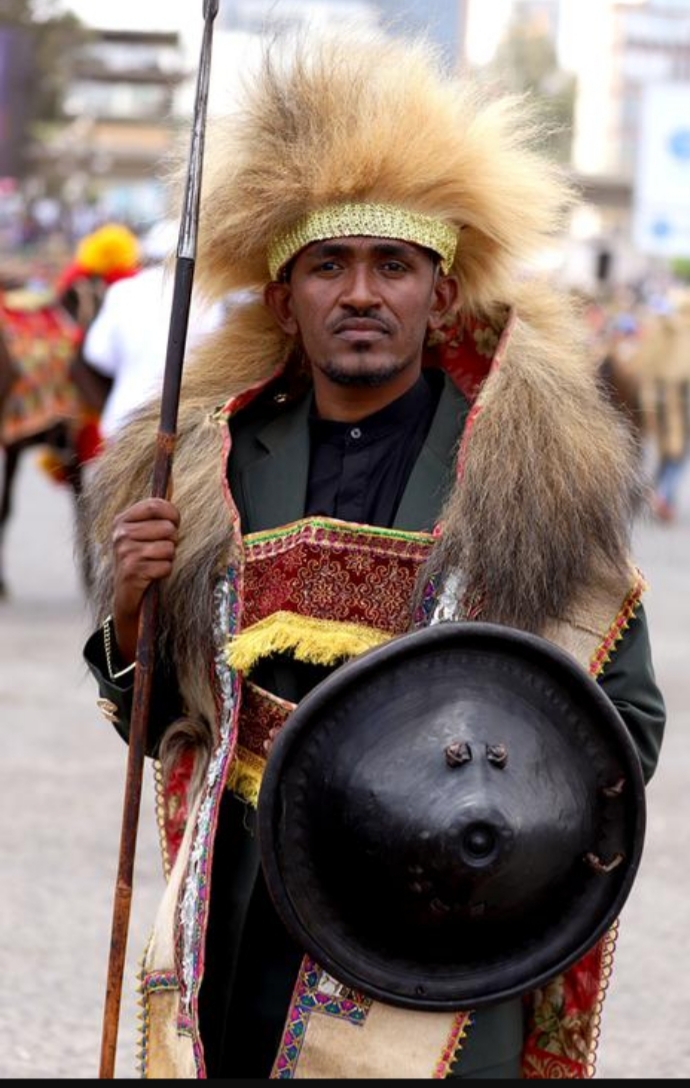
The report recommended to start the process of investigating and bringing to justice and hold perpetrators accountable based on the Commission’s findings of crimes against humanity.
EHRC’s Chief Commissioner Daniel Bekele said, “Given the repeated pattern of atrocity crimes in the country, Ethiopia needs to design and implement a comprehensive national strategy for the prevention of atrocity crimes which aims to address the root causes of the problem”.
From paper to edible oils
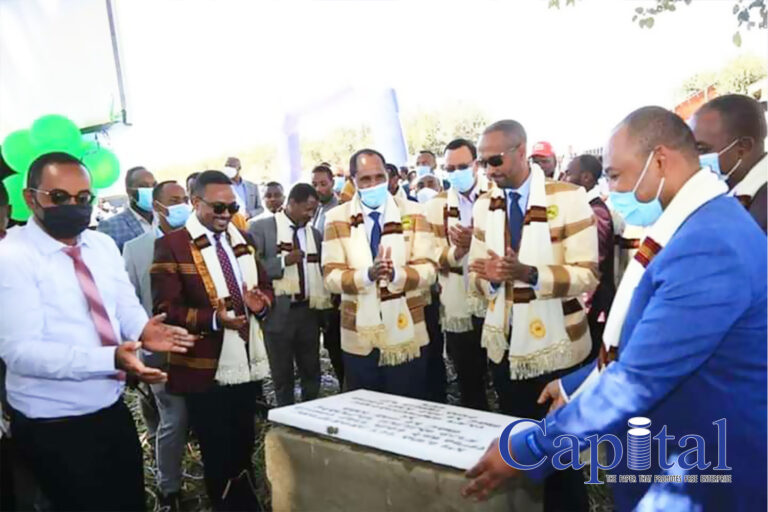
AMA Business Group diversifies to build an oil factory
AMA business group that is engaged in production of paper and paper packaging manufacturing turns its face to construct another big oil factory in Sidama Regional State that is worth 1.7 billion birr.
According to the AMA group, after its construction the factory will have a capacity to produce 300 tons of edible oil and other related inputs per day.
On Sunday December 27, 2020, the foundation stone was laid on a 3,500 square meters of plot in Hawassa which is attended by senior federal and state officials both from the Ministry of Trade and Industry and the Sidama regional government.
The company which has been engaged in producing paper and paper packaging has been operating since 2013 in Hawassa which was the former capital of the South Nation Nationalities and Peoples Region. 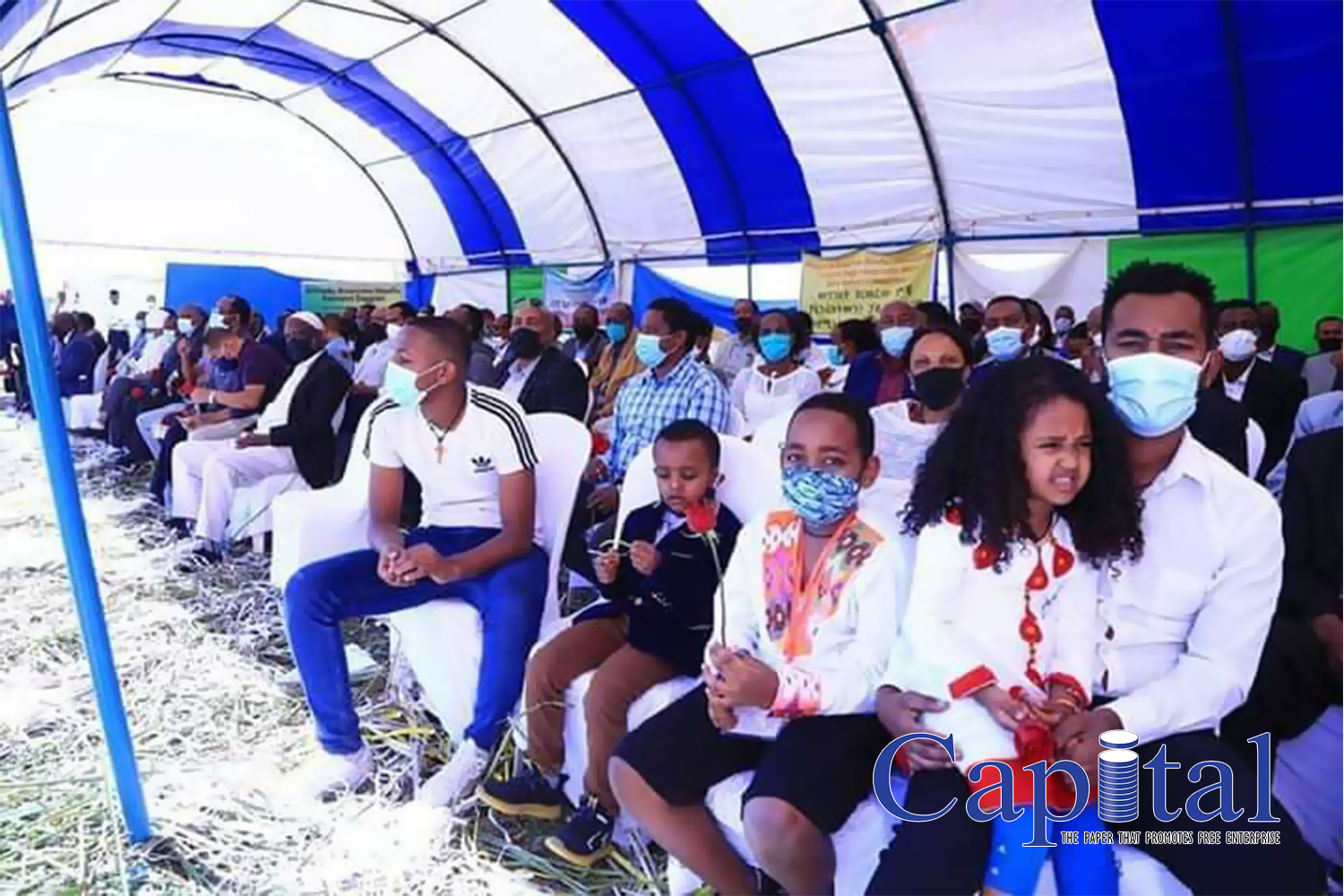
AMA will also build other factories on an area of 100,000 square meters and will include seven projects. These include cooking oil, plastic, cardboard, soap, sacks, tin cans, and coffee mills. The first is the oil plant, which is expected to produce 100 tons of oil a day in the first year. By the end of the second and third years, it will be able to produce up to 300 tons of oil a day.
Behailu Tefera, General Manager of AMA Trade Enterprise said that the first project is designed to meet domestic demand. He said the first phase will start with the importation of palm oil, which will be used in collaboration with the regional government to produce soybean and wool. He further explained that the products of the factories in the industrial park will be interconnected. He also said that a jerrycan factory will be set up there. According to Behailu, factory shades will be built by foreign institutions, but the installation will be carried out jointly by locals and foreigners.
As Behailu said after its completion, the factory will create job opportunities for more than 200 people. He emphasized that the factory will bridge the gap the priorities of the nation to stop imports of edible oil. The factory is set to play a great part and the government is also supporting the construction of the factory.
The government has set to suspend the import of edible oil as of the beginning of Ethiopian New Year after local pressers are at a final stage to commence massive production. Besides Shemu PLC, which is located in Dire Dawa, industries are being constructed in Bure and Debremarqos by Belayneh Kinde and Workqu Aytenew that does have a huge capacity that will use local oilseeds and import crude oil as input. East Africa Holding, Hamaressa Presser, located in Harar is also the other promising industry.
Ministry of Finance revises investment incentives

Ministry of Finance has prepared a new directive for investment incentives and will take over investment board duty.
With the aim of encouraging new private investments, the Government is preparing a new investment incentive draft. Initiated by the Ethiopian Investment Commission, the Ministry of Finance is preparing the draft incentive document.
The purpose of revising the incentive is said to encourage investors in accordance with the new investment proclamation approved in January 2020.
According to Tadesse Kassa /PhD/, legal advisor of the commission, the new draft will have measured shifts on investment incentive, “The first change will be the draft gives the Ministry of Finance power to decide on incentive packages which is the mandate of investment board and also will change amounts of incentives of the different investment sectors.”
As he said, currently using the old incentive directive more than seven governmental offices have the power to decide on the new draft but now only the ministry of finance will have the power to decide.
Including the National Bank, main Department of Immigration and National Affairs, Ministry of Trade and Industry, Ministry of Foreign Affairs, Ethiopian Customs Commission, Ethiopian Investment Commission, Industrial Park Development Corporation, and regional administration currently have the power to decide on incentive package under the Ethiopian investment board chaired by the Prime Minister on the 2012 incentive regulation.
The board has authority to forward recommendation for approval to the council of ministers on incentive related amendments including granting new or additional incentives than what is provided for under existing regulation.
Also as Tadesse said, the change to authorize Ministry of Finance to decide on the package may create confusion since most of the investment related works are done by the investment commission.
Ethiopia offers a comprehensive set of incentives, particularly for priority sectors, such as: Customs duty payment exemption on capital goods and construction materials, Investors have the right to ask a refund of customs duty paid on inputs, Income tax exemption of up to 6 years for manufacturing and agro-processing, and up to 9 years for agricultural investment. Additional 2-4 years income tax exemption for exporting investors located within industrial parks and 10-15 years exemption for industrial park developers;
As part of its promotion of investment in Ethiopia, recently the Ethiopian investment commission has held discussions with ambassadors, government officials, investors from America, Asia, Australia, Africa, and other countries and also with regional investment office representatives on the newly amended investment legislation conducive investment opportunities in the country.
As the commission said, the government is highly working on the growth of investment to increase income generated from export.
By increasing both local and foreign investment the government is planning to enable the country earn nine billion dollar in the coming ten years from export of manufactured products.
As the commission said, besides increasing the investment the government is doing certain due diligence to make the country among the top 50 countries in the world in terms of the ease-of-doing business to boost its quest for industrialization.
In a bid to create a large number of job opportunities, increase the contribution of the manufacturing industry to the GDP and align the development of the industry with the sustainable and green economic development strategy, the government is planning to give a lot of incentives to investors.
Besides the effort to attract new investment, the plan is also aiming to boost the production and productivity capacity of existing firms.
The ministry also identified some of the possible challenges to achieving the plan. Strong competition in the international market in terms of product quality and quantity makes the world competitive.
The commission also invited foreign investors to work in joint-venture with Ethiopian investors particularly in value addition and other investment areas. Improving the quality of exportable products, and focusing on high-tech industries have also been identified as efficient solutions to increasing the competitiveness of the manufacturing industry.
“The new laws aim to increase in-bound investment and address some of the administrative challenges facing investors on the ground.”
In terms of Fiscal incentives the current directive of incentive gives Tax holidays for priority sectors, Duty free import of capital goods, Provision of land with competitive lease prices, Income tax holidays (1 – 9 years), Duty exemption of raw materials used as inputs for export, Investment credit support further accessible and efficient one – stop- shop services at EIC and industrial parks is also consider as benefits for investors.
During the last five months the country has earned 1.1 billion dollar from foreign direct investment as the EIC commissioner Lelise Name said, however as she said certain challenges to the investors has held up the growth such as security challenges, bureaucracy, land and local awareness have been raised as challenges for the investment.
Because of the political instability in the country, as the commissioner said until 2019 more than 400 investments has been burned down and only one percent of them has been reorganized.
