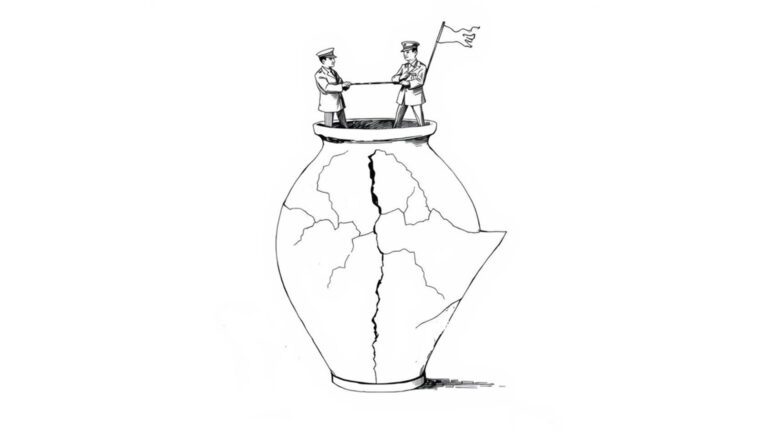
Ethiopia’s coffee industry is increasingly pivoting towards Asian markets, with China rapidly emerging as a primary destination for its flagship agricultural export.
This strategic shift comes as the European Union’s deforestation regulation approaches implementation.
The move is critical for Ethiopia’s coffee sector, which sustains an estimated 20 million livelihoods and generated a record US$3 billion in foreign exchange during the 2025/26 fiscal year. Industry stakeholders are concerned that the EU’s new traceability requirements could impose substantial compliance costs on Ethiopia’s millions of smallholder coffee farmers, despite the country’s long-standing tradition of shade-grown and agroforestry-based production.
In the recently concluded fiscal year, China became Ethiopia’s third-largest coffee purchaser, importing 47,836 metric tonnes valued at US$347 million. This marks a significant increase from the previous fiscal year’s 34,284 tonnes, worth US$219 million. Just two years prior, China ranked seventh among Ethiopia’s coffee export markets, buying only 12,163 tonnes.
The Ethiopian Coffee and Tea Authority (ECTA) anticipates China will become an even more vital market for Ethiopian coffee.
“China will remain one of the new market destinations for Ethiopian coffee, but now we are seeing an increasing volume of coffee shipments heading to China,” ECTA stated recently. “We hope that the country will become the largest buyer of Ethiopian coffee in the next two years.”
The European Union Deforestation Regulation (EUDR) will take effect on December 30, 2026, for large and medium-sized operators. Most micro and small enterprises will follow on June 30, 2027. Coffee is among the commodities subject to this regulation.
Under the EUDR, products entering the EU market must be proven “deforestation-free,” meaning they could not have been produced on land deforested after December 31, 2020. Operators will be required to submit due-diligence statements and provide geolocation data for all plots where relevant commodities were grown.
For Ethiopia, compliance presents a complex challenge. Over 5 million smallholder farmers produce coffee across diverse regions, often through informal supply chains involving multiple intermediaries before reaching an exporter.
An industry expert and major coffee buyer, who spoke to Capital anonymously, emphasized that Ethiopia’s coffee production fundamentally differs from plantation-based systems elsewhere.
“More than 5 million smallholder farmers produce coffee across various growing regions of the country,” the expert explained. “The production system operates under shade trees, as it has since Arabica coffee was discovered in Ethiopia. Local coffee production does not contribute to deforestation.”
Ethiopian coffee is widely associated with permanent shade-based agroforestry systems, where coffee plants thrive beneath native canopy trees. Forest-coffee systems can maintain over 60% canopy cover, while semi-forest systems typically retain between 40% and 60%.
The expert argued that the new regulation might inadvertently burden producers who have preserved tree cover and conserved forest landscapes for generations.
“In other major producing countries, coffee production primarily occurs in open fields and is heavily mechanized,” the expert noted. “Because those countries cleared land long ago, before the December 2020 cutoff date, their risk of non-compliance is lower.”
“Conversely, millions of coffee farmers in regions like Ethiopia, who have maintained agroforestry systems for generations, are being penalized by the EUDR,” the expert added. “This is not due to their contribution to deforestation, but because the regulation’s complex tracking system creates a significant obstacle to proving compliance.”
Europe accounts for approximately 30% of Ethiopia’s coffee exports, making it the country’s largest regional market. Industry stakeholders warn that failing to meet EUDR requirements could jeopardize export earnings and prompt European buyers to source coffee from origins already equipped with traceability systems.
Ethiopia has initiated preparations for the regulation. In late March, the government completed the technical handover of the Ethiopian Coffee Traceability and Management System (ECTMS), a national digital platform developed with support from Germany’s development agency, GIZ.
This system integrates farm-level geolocation data, supply-chain tracking, and deforestation-risk assessment tools. It includes a mobile application designed to collect data directly from coffee producers and trace beans from farms through washing stations, warehouses, and export channels.
However, industry actors indicate that implementation remains a significant challenge.
“Establishing the traceability system required by the EUDR has proven difficult due to the vast number of farmers involved and a lengthy value chain where coffee changes hands multiple times before export,” the expert stated.
This challenge is particularly acute because a substantial portion of Ethiopian coffee is traded through informal channels. Farmers often lack formal sales records, digital tools, and detailed land documentation. Existing data may also be fragmented across government bodies, cooperatives, traders, and exporters.
In remote communities, requests for GPS coordinates can also raise farmer concerns about land rights, ownership claims, and potential future disputes. Therefore, building trust will be as crucial as developing the technical system.
While the EUDR is increasing the urgency of market diversification, the expansion into Asia also reflects growing consumer demand, particularly in China and South Korea.
“The shift toward Asian markets is primarily linked to the recent growth in coffee consumption in countries like China and South Korea,” the expert explained. “The EU’s new deforestation regulation simply provides an additional incentive to pursue these expanding markets.”
China’s increasing role is already evident in Ethiopia’s export figures. According to ECTA data, coffee shipments to China rose by approximately 40% in volume and 58% in value during the 2025/26 fiscal year.
Ethiopia has expanded its coffee exports to 84 countries, adding 20 new destinations in the past fiscal year. While Saudi Arabia and Germany remain leading buyers, growth in China demonstrates the country’s active efforts to reduce dependence on Europe and broaden its foreign-exchange base.
For Ethiopian exporters, the opportunity in Asia extends beyond increasing coffee sales. It also offers a chance to market Ethiopia’s diverse origins, specialty varieties, and coffee heritage to a growing consumer base increasingly interested in premium and traceable products.
Efforts by Capital to obtain further comment from ECTA before publication were unsuccessful.
For many industry participants, however, the central concern remains unchanged: a regulation intended to reduce global deforestation could place a disproportionately heavy administrative burden on smallholder farmers who have protected agroforestry systems for generations. Ethiopia’s ability to meet that challenge while expanding markets in China and elsewhere may shape the future of one of its most vital export industries.