

PM Abiy is getting closer to privatizing Ethio Telecom. I don’t know if this should be a cause for celebration for Ethiopia. For the buyer it’s a boon.
On a whole a sizeable number of urban elites agree on the basic shortcomings and, in some cases, the dire position of Ethio Telecom, and have concluded that ownership transfer of Ethio Telecom from the government to foreign private owner(s) is the only right policy for Ethiopia.
The World Bank, the IMF, other western development institutions also agree with the ‘privatize now’ approach even though conditions in Ethiopia are currently not conducive for the market to work efficiently. Their approach is privatize and things will go well reminds us all of the disastrous Russia and Eastern Europe approach.
I have repeatedly argued for caution on the “easy route” to privatization; once you start selling your prized assets, your growth ambitions become fantasies. What do you tell your children, that you got rid of your telcom infrastructure to develop …what? I still believe the problem of Ethio Telecom is not ownership, but rather misplaced goals and objectives, and not letting the company to operate in a competitive market. The Singapore Telecom case, for example, supports the position that ownership change is not in itself important or sufficient for high performance. Yes, as long as Ethio-Telecom is maintained as an entity to generate income and security control rather than as a strategic resource in a modern economy the company will not generate growth and efficiency.
If there is a real crisis in Ethiopia (and I am limiting myself to the economy), it is the crushing burden of inflation, structural barriers at microeconomic level (excessive regulations, access to land, finance, foreign currency etc), bad laws, failure of imagination, subscale businesses and woefully unproductive SMEs, not Ethio-Telecom.
I claimed earlier that conditions in Ethiopia are currently not favorable for tinkering with Ethio-Telecom? Let me just mention one key technical challenge: the absence of an effective regulatory body.
Privatization that pushes excessively for rapid ownership change while neglecting or insufficiently emphasizing the institutional foundations on which good privatization must be based can lead and has led to failures. Indeed, privatization is more likely to result in increased efficiency and improved equity outcomes if it’s embedded in a set of conceptually appropriate, functioning legal and economic institutions that support and guide market operations. These include: The definition and protection of property rights; contract enforcement and commercial dispute settlement through lawful, peaceful means, or, more broadly, court decisions that are timely and based on the law; a high degree of regulatory capacity; functioning bankruptcy or insolvency regimes; and a public administration that meets minimum standards of predictability, competence and integrity and thus lowers transactions costs. If these institutions are not in place and working effectively, privatization will produce sub-optimal, perhaps negative outcomes.
By default most of our institutions are faltering on all these issues. It is unclear as to precisely how these institutions will attain a state of effectiveness. Nor is it clear just which ones are crucial in what particular circumstances, or in what sequence they should be introduced.
So where does that leave us?
At this stage it is unlikely that the government and its supporters will hold off on the privatization until Ethiopia’s regulatory capacity is enhanced. I suppose it’s going to be “privatize now, regulate later”. In so doing the government conveniently abandons its responsibility to regulate the sector, leaving the field to the foreign firms to regulate their way.
Dear Reader, if this doesn’t strike you as a problem, please check back in a few years.
In whose interest?

Institute blasts banks that allocate foreign currency for import of steel
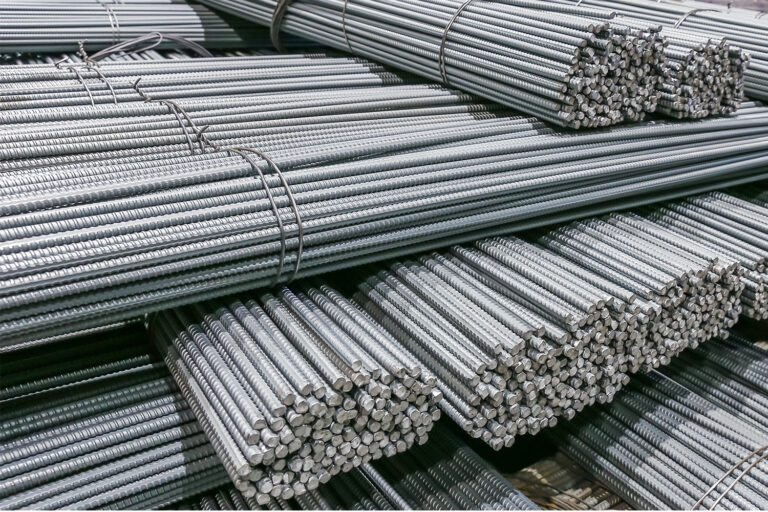
Metals Industry Development Institute (MIDI), blasts on banks that allocate huge amount of foreign currency for import of finished products and recommends the involvement of Ministry of Trade and Industry (MoTI) on the letter of credit (LC) approvals.
The institute has also expressed its disappointment on public enterprises and offices who favored the import of finished products than using local products, which is supported by different government policies.
Tilahun Abay, Planning and Information Management Directorate Director at MIDI, said that the government policy and National Bank of Ethiopia (NBE) has clearly stated that the priorities for local investment on the foreign currency allocation.
He said that it is confusing that meanwhile the country has created ample capacity on rebar industry and fast growing is observed at the engineering sector, to import finished products is the major foreign currency spender.
The sector experts that Capital interviewed said that the import priority is given for medicine, oil and food items at first place and followed by strategic sector like manufacturing industry but at the ground the reality is totally different.
Tilahun supported the claim of the sector actors and said that the central bank directive clearly stated that industries have priority than traders for access to foreign currency.
“Lack of access to foreign currency has become another burden for manufacturers who employs massive jobs.”
“According to the information we secured from Ethiopian Customs Commission (ECC) the import of finished goods with raw material is incomparable,” he added.
“The information shows that the manufacturing sector is totally neglected from access to foreign currency despite the country’s policy and direction that supports it on paper,” he expressed his frustration.
He accused the public enterprises and offices who are importing finished goods; meanwhile the goods can be easily manufactured locally.
Finished goods importers including public enterprises are openly accessing foreign currency from banks to import finished goods that are available in the local industry, who are working with about 5 percent of their capacity.
“Local steel industries like bar manufacturers run less than five percent of their capacity due to that they cannot get foreign currency to import raw material like billet for their production,” he said.
“In the first 11 months of the past budget year 775,415 metric ton of rebar worth USD 334.2 million was imported.”
He said that foreign currency allocated at the stated period for the import of billet, which is an input of rebar, was USD 186.7 million for the import of 372 thousand metric ton of billet, “it shows how the local industry is totally neglected from the foreign currency allocation, meanwhile the local production capacity for rebar is at 5.5 million metric ton per annum.”
“We are really disappointed by public offices, which import rebar, than support local industries, which is a key sector for any country’s development,” he expressed his grievance.
Even though Tilahun did not mention the public enterprises or other offices, one of them is Ethiopian Construction Works Corporation (ECWC) that procured 15,400 metric ton of rebar at the cost of USD 8.5 million recently.
The sector experts argued that procurement of ECWC is not only importing finished goods but it has big price difference from local market.
“The corporation bought a kilogram of rebar by 43 birr that it can get by 36 birr from local manufacturers,” a sector actor says “they paid highly exaggerated price for the import of rebar.”
If the foreign currency allocated for ECWC was given to local manufacturers to import billet they can produce 23,400 metric ton of rebar that will come to an additional 8,000 metric tons besides creating job opportunities.
According to the sector observers besides giving high price the importing process cost the country huge amount for demurrage.
“As the sector actor I estimated that the corporation rebars import costs up to USD 5 million because of extra payment and port demurrage,” a sector expert who demands anonymity explained.
He insisted that the government should re consider its strategy on the import of such huge amount of commodities that consumed the scares hard currency.
Tilahun reminded that in the past public enterprises and government offices have imported steel products for the housing scheme and other projects.
He argued that the government policy force public organizations to give priority for products that are available locally before they look to foreign suppliers.
“We consider the problem is at banks when they allocate letter of credit (LC). As per the direction we have given the list of the industries and their foreign currency demand for MoTI, which is the higher body of MIDI, that transferred the documents for bank,” he explained.
According to the director, the initial problem is lack of transparency at banks, which are not interested to provide a detailed report of their foreign currency approval, “it shows that there is lack of transparency and misbehavior at the financial industry.”
“According to NBE directive after priority import items like petroleum and medicine strategic sectors should get attention but it is not done at the ground,” the sector experts said.
Currently MIDI is undertaking a study that will be tabled for relevant government body to tackle the challenge.
GIZ’s renewable energy competition

The Ethiopian-German Energy Cooperation has introduced the innovation competition held on a virtual event.
The joint energy cooperation targets to enhance decentralized electrification, rehabilitation of existing large hydropower stations with the involvement of the private sector including from Germany and establishment of solar photovoltaic (PV) demonstrational centers in Ethiopia.
Ethiopian-German Energy Cooperation and innovation competition on ‘Decentralized Energy Solutions in Ethiopia’ launched on September 1 on a high-level virtual event with participants from the German and Ethiopian government and private sector as well as the scientific community that included Seleshi Bekele, Minister of Water, Irrigation and Energy (MoWIE).
The innovation competition is open to Ethiopian students, researchers and entrepreneurs who have business ideas for decentralized electrification approaches that demonstrate unique innovation in terms of feasibility and adaptation, scalability, replicability, affordability and sustainability.
The competition, which goes in hand with the National Electrification Plan (NEP), will seek to award its participants with an international recognition, besides giving an opportunity for contribution to the enhancement and modernization of the energy sector in Ethiopia.
According to the statement sent to Capital, the energy cooperation fosters commercial application of renewable energy technologies in Ethiopia.
Ethio Telecom slashes international call tariffs

Ethio telecom offered 50 percent discount on its international outgoing calls. According to the telecom service provider international outgoing calls to USA, Canada, UK, UAE, India, Germany, Saudi, China, Kenya, South Africa, and Australia are selected as beneficiary countries to the tariff discount.
To increase its customers Ethio Telecom also offered several new and revamped services, both local and international.
Last week Ethio telecom has disclosed tariff discount internet package by 35 percent, and voice call package tariff by 29 percent. Furthermore, it is cutting down mobile voice and data service charges by 28 percent, while discounting unlimited premium voice service charge by 21 percent, unlimited data package by 21 percent, and unlimited premium voice and data package services by 20 percent.
On premium plus unlimited package service, Ethio Telecom is making a 16 percent discount, and 61 percent discount on satellite services.
Ethio Telecom is also making a 59 percent discount on its “Stay at Home Package” till the end of 2020, a 53 percent discount on its “Adey Abeba Package”, the CEO said.
Ethio Telecom is the state-owned sole telecom services provider to Ethiopia’s 110+ million people. The Ethiopian government has recently been collecting bids to license two additional telecom services providers with significant discounts; such as the Stay Safe package to lessen COVID-19 impacts with up to 59 percent discount.
Ethio-Avaya, My Ethiotel Mobile App, Ethio e-Care, and a new website have been mentioned as ways in which Ethio Telecom strived to create more convenience for its customers.
In the last fiscal year ethio telecom has generated 47 billion birr revenue Ethio Telecom also aims to generate 55.55 billion birr revenue in 2020/21 the current fiscal year. In the closed fiscal year Ethio telecom announced that its total service subscribers have reached 46.2 million showing an increase of 5.8 percent from the previous period.
Ethio telecom has also planned to increase total subscribers by 13 percent to 51.12 million, Mobile Voice subscribers by 11.8 percent to 49.77 million, Data and Internet users by 16.5 percent to 27.47 million, Fixed Broadband subscribers by 215.3 percent to 669.4 thousand. This is expected to bring telecom penetration to 51.3 percent By engaging in new business streams and shifting revenue sources from traditional to value-added services and by offering 14 new and 21 revamped local and international products and services.
