

By Afua Hirsch
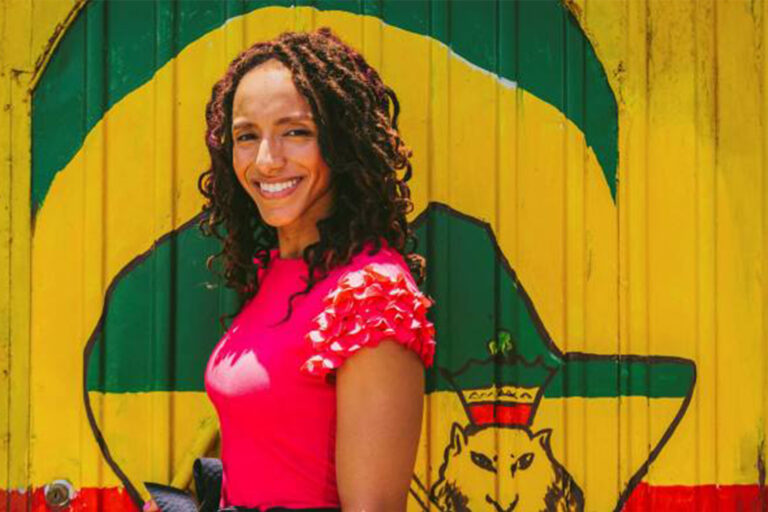
In making my new television series African Renaissance, one question has always nagged me: what would the African continent look like if it had never been colonised? Filming the work of the Ethiopian photographer Aïda Muluneh in Addis Ababa, the question lost its hypothetical quality. As a new arrival in the Ethiopian capital, I was struggling to adjust to the alphabet of Ethiopia’s Amharic, as well as to systems of date and time that shun global convention. As you read this, it is 2012 in Ethiopia, and the time runs on a 12-hour clock beginning at daybreak and again at dusk. I saw how Muluneh styled her model with floor-skimming braids, and dressed her set in trademark primary colours, fusing Afro-futurist art, fashion and photography into her surrealist prints. To me, they served as a portal into the unfamiliar world of her country, one that has never fully succumbed to Eurocentric cultural or administrative traditions. Ethiopia is beginning to overcome the hijacking of its reputation as synonymous with famine and misery, an image omnipresent for as long as I can remember. Drawing attention to the country’s past hardships may have been well-intentioned. But the failure to balance charity appeals with other images of this ancient land has created a misleading single narrative that persists. These days, Ethiopia is becoming a bucket-list destination, one that attracts travellers with its incredible ancient ruins, such as the 2,000-year-old obelisk at Axum, one of the four great kingdoms of the ancient world. Its fourth-century rock churches, carved into mountains at impossible altitudes when Christians faced persecution, casually bear murals of a black baby Jesus, black prophets, saints and angels, at a time when the church in Europe was first navigating its role in spreading white supremacist images of biblical figures.
But my quest in this, and in all the episodes of my series, was to step away from the western gaze that has done so much harm to the African continent, and to see it for what it is, to explore its art, music and culture on its own terms. It is a continent of unimaginable diversity, and the three countries in which we filmed, Ethiopia, Kenya and Senegal, are nothing alike in culture, history or art. There is no “African story” – except perhaps innovation – and it’s the creative beating heart of these countries I wanted to find. My aim was neither to confirm nor reject images projected on to them from the outside, but to discover their own artistic expression. The power of that expression has gained new traction in recent months. It was only a matter of time before the struggle against racism – brought into painfully sharp focus by the killing of George Floyd in the US – segued into global questions about the cultures of people of African heritage, how blackness is misrepresented and commoditised, and why ideas about black creativity, innovation and art continue to be degraded.
The best answer to the prejudice that still plagues majority white societies is to look to the motherland itself. In Senegal, a francophone nation on the far west coast of Africa which I called home for several years in my twenties, resistance against colonial power is still a driving force in art. There is important and vibrant work, from DJ Awadi, founding member of hip-hop group Positive Black Soul, who is reviving the sounds of highlife music in his eclectic fusions, to Germaine Acogny, the legendary choreographer and mother of contemporary African dance. I visit Acogny at Mudra Afrique, her school in the sandy expanse of Senegal’s coastline, where dancers selected from across the continent learn her method, transcending the widest range of ethnic and linguistic boundaries. As Acogny tells me, her mission to fuse the traditional and contemporary is more profound than a form of choreography. “Africa is a force,” she explains. “And here, Africans need to know that as well, and be proud of what they are. People without culture disappear from Earth.” Senegal’s first president, Léopold Senghor, was a powerful proponent of this philosophy, which he and others – notably the Martinican writer Aimé Césaire – dubbed négritude. The poet-president invested a monumental 30 per cent of Senegal’s budget in culture and the arts, a powerful commitment for a new nation, and one from which Britain could well learn.
Modern Kenya too has much to teach us about policy responses to our greatest challenges. The east African nation has positioned itself as a country willing to take bold measures on climate change and sustainability, and that evolution is reflected in its art scene. Arriving in a country that has banned plastic bags – your airline warns you to leave any in your possession on the plane when you touch down — it’s perhaps no surprise that sculptors such as Meshack Oiro are creating fusion pieces that experiment with form and space using metals, plastics and other waste materials salvaged from Nairobi dumps. These contemporary stories have to be understood within the historical context of a country that experienced one of Britain’s most audacious and criminal land grabs. Outsiders’ perceptions of Kenya risk being layered in decades of colonial romanticism over this land – a narrative we unflinchingly explore in the series. I visit the house where Danish author Karen Blixen wrote Out of Africa, a novel that did so much to promote the idea of Africa as one vast, empty savannah, populated by many majestic creatures and a few inconsequential humans. I interview Mau-Mau veterans at the site of one of the torture camps Britain built to “deradicalise” the men and women whose crime was to fight back against the appropriation of their resources and the exploitation of their labour.
The Kenyan painter Michael Soi is emerging as a leading voice in the conversation about the new wave of colonialism threatening so many African nations’ sovereignty – the scramble for influence, credit and resource extraction. Soi’s paintings probe the role of China, as well as Kenya’s political elite, with humour and satire. Seeing Xi Jinping painted in a nappy, Soi-style, is a rare visual treat. Growing up with African heritage in Britain, at a time when it still had a nostalgic longing for colonial greatness, left me profoundly unaware of the true complexity of art in African countries. No single series could really remedy that – the breadth of artistic tradition and contemporary creativity across the African continent far exceeds what hour-long films about three countries can offer. But after a life spent re-educating myself, making this series has taught me two things. The first is that in Africa there is no tension between tradition and contemporary art: African cultures are always reinventing themselves with the same innovative spirit and talent that have earned them the global influence they have today. The second is that, in every one of these countries, I still have so much more to learn.
(Financial Times)
Afua Hirsch on exploring African culture beyond the western gaze
Italy funds archeological missions in Ethiopia
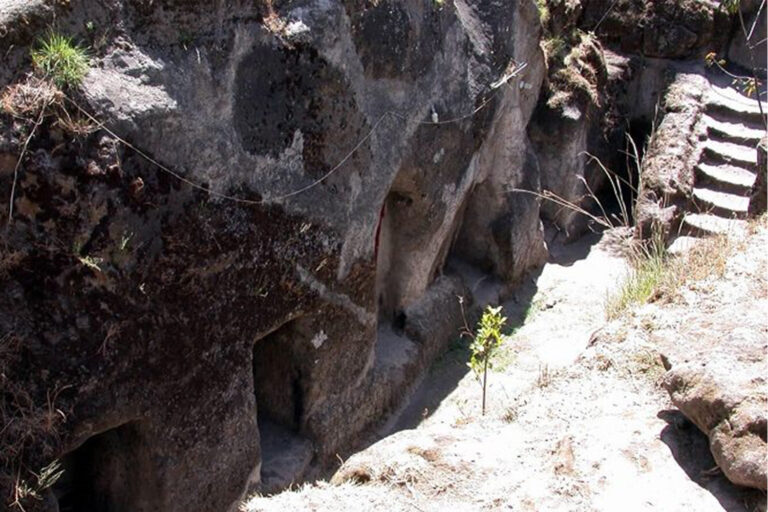
The government of Italy announced that it has allocated new funds for four Italian archeological missions in Ethiopia.
“The Italian Government has recently decided to allocate new funds in favor of four Italian archaeological and ethnological missions in Ethiopia,” the Embassy in Addis Ababa said in a statement.
“This is in spite of the budget constraints caused by the global crisis linked to the COVID-19 pandemic,” the statement reads.
It is an “evidence of the will of strengthening the long-lasting cultural and historical ties between Ethiopia and Italy also during this dramatic global crisis,” the embassy said.
The amount of money is not revealed. It, however, said the mission being conducted by the University of Naples in the area of Axum since 1993 is among the four that benefits from the newly allocated fund. The other three archaeological and ethnological missions will be conducted by the University of Rome – La Sapienza in Melka Kunture, Balchit, in the region of Tigray and in Southern Ethiopia. These missions have been contributing to further highlight and preserve the relevant Ethiopian historical heritage, the embassy said, adding they would create training and work opportunities for local communities, through the activities of study, research, restoration and tourism.
Why Ethiopia should go for GMOs
By Mekonnen Teshome Tollera
In recent years, the production of Genetically Modified Organisms (GMOs) especially crops has become one of the top national development agendas in Ethiopia.
Genetically Modified (GM) crop experts in their resent study “Challenges and Opportunities of Genetically Modified Crops Production; Future Perspectives in Ethiopia, Review” state “37% reduction in pesticide usage and an increase in yield of over 21% was obtained by cultivating GM Crops, which shows an increase in production and environmental benefit at the same time.”
The study also indicates that Ethiopian economy is dependent on agriculture for food, industrial raw materials such as textile industry and export. “However, despite adopting many kinds of production improvement programs, productivity is still very low. This is a critical concept in fostering innovation to transform agriculture sector for more profit and industrialization in Ethiopia” it added.
In developing GM crops, Ethiopia has made strides in adopting favorable legal instruments and introducing some of globally endorsed GM crops – cotton, maize and Enset.
In 2018, the Ethiopian government authorized plantation of BT-cotton with a view to curb the challenge of bollworm (moth caterpillar that attacks the cotton boll). GM Enset (false banana), which is highly affected by bacterial wilt, is the other crop permitted for contained laboratory research.
I believe the current national effort of adoption and growing of selected high value GM crops in Ethiopian must not be discouraged. I can give some details why Ethiopia should go for GM crops:
GMOs Are Safe
Despite the consistent and wide-spread voicing of unproven “Precautionary Principles” and “probable negative effects” of GMOs like lose of biodiversity, food allergies, toxicity, ntibiotic resistance and the like by proponents of Genetic Engineering, no peer-reviewed and agreed studies across the world confirm that GMO foods are unsafe. Rather dependable research institutes are telling us the other way round – GM foods are safe. For example, recently, having examined hundreds of scientific papers written on the subject, the US National Academies of Science, Engineering and Medicine in its report stated: “found no substantiated evidence that foods from GE crops were less safe than foods from non-GE crops.”
Benefits of Genetic Engineering
Genetic Engineering (GE) is an essential scientific tool that addresses the present challenges of humanity such as food security, environmental sustainability, climate change, health care problems and the like. Countries around the world including Ethiopia invest quite a lot of resources to produces genetic engineers to benefit from the scientific process which is now viewed as remarkable outputs of modern education and research.
It is evident that GMOs are helping countries to fight drought and crops insects. The science is now benefiting several thousands of farmers around the world in developing crops that are insect and drought as well as disease resistant. It also enables farmers to produce herbicide tolerant crops and it increases nutritional content of the crops.
Genetic engineering has made several efforts to engineer a wide variety of aesthetic traits in the floriculture industry and speed time to flowering. Development of new varieties through traditional technique methods is very difficult or is not an option if varieties are completely sterile, as in orchids.
The science has also radically improved millions of lives all over the world by helping produce various modern medicines. For example, the production of effective and safe human insulin in bacterial cells is a very remarkable achievement in the history of the global pharmaceutical industry. Previously, diabetic patients were treated with pig insulin. It has also a huge potential in developing laboratory made human organs to effectively conduct transplanting activities on people who might otherwise die due to organ failure as the future holds possible challenges of accessing human organs like kidney and lung by donations from relatives and friends.
The other area transformed by Genetic Engineering is the global industrialization across the world. Cheese-making can be mentioned as a case in point in this regard. Enzymes such as Rennin, a key ingredient in cheese making, were originally isolated from calf stomach. However, it is now exclusively produced by engineered micro-organisms.
Feeding Growing Populations
Many countries in the world are witnessing high population growth at a breakneck pace and exacerbating existed challenges which are even worsened in recent years: chronic hunger. GMO crops could help to relieve this problem by providing increased yields and being more resistant to environmental stressors.
Particularly, the increasing prevalence of drought has prompted the development of crops that are more tolerant of high temperatures. These efforts, however, have afforded mixed results due to the genetic complexity of drought resistance and similar traits. Regardless, continuing to research this type of genetic engineering remains a promising strategy for feeding the world’s growing population.
GE for Environmental Protection
Genetic Engineering plays its own positive role in reducing agriculturally related greenhouse gas (GHG) emissions, reducing soil erosion and significantly decreasing the use of many toxic agricultural chemicals.
David Zilberman and his colleagues in their study “Agricultural GMOs-What We Know and Where Scientists Disagree” published in May 2018 write: “GE technology can positively affect other components of agricultural emissions, particularly by reducing energy and fossil fuel use and by enabling reduced tillage and no-tillage agricultural practices.”
GMOs Are Not New To Human Being
Ever since human beings began farming activities, they have done genetic modifications while cultivating their foods by selecting peculiar varieties and propagating them. Global scientific studies confirm that genetic modifications take place naturally among wild plants. Assorting seeds from the best looking plants to replant the following year has been a method of manual genetic selection for many years. A variety of DNA analyses of evolutionary genetics show that genes have been transferred among plant species.
According to genetic engineering experts, genes can be transmitted by a parasite or pathogen, such as a virus or a sap-sucking insect. Spontaneous or natural mutations are usually induced in three general ways -radiation, chemical and transpose insertion.
These days, it is also very difficult to avoid GMO foods because any food item with ingredients of corn or soybeans are almost produced with GMO components. In the U.S., more than 90 percent of corn or soybeans are bioengineered and many processed foods are made of these crops. Much of the sugar in the US market is also derived from sugar beets which are mostly genetically engineered.
It is really hard to trace the DNA of highly processed products such as fructose corn syrup of GM ingredients and therefore, the U.S. Department of Agriculture doesn’t force manufacturers to put labels to specify bioengineered foods stuffs. Therefore, people might have reflected stereotypical expression towards GM foods while at the same time consuming them.
Globalization
Today, globalization highly connected the world in many aspects and people travel a great deal as modern transportation systems are expanding more than ever before. This situation would facilitate both the illegal and legal movement of GM crops and produces.
To this end, for example, farmers from Kenya or Sudan could simply exchange or transport the products to farmers in Ethiopia through the existing border trade or social connections. Therefore, globalization can be one aspect of transportation and the spread of non-regulated Bt-crops.
So far, various evidences and reports from media show that illegal GMO products especially edible oils have penetrated the Ethiopian market. Moreover, we don’t have the capacity as well as appropriate institutions and mechanisms in place to oversee the transportation of GMO products especially via boarder connections.
Building Local capacity
Ethiopia could focus on building local capacity and generating own technologies to avoid the trap of multinational corporations and not to remain in a vicious circle of their marketing interests. To this end, encouraging activities have been underway by public institutions like the Holeta Biotechnology Institute. In addition, the country could also exploit the potential of highly experienced biotechnologists and genetic engineers in the Ethiopian Diaspora who flee their country earlier due to lack of good governance and democracy to build its own capacity in the field and tackle the challenges coming from international multi-national corporations depending on its own GM technologies.
GM Crops Are Expanding
According to the “Global Status of Commercialized Biotech/GM Crops: 2017” report, 67 countries used biotech crops, out of which 24 (including the two African nations) grew multiple varieties. Global hectarage of biotech crops stood at 189.8 million in 2017, up from 185.1 million in the prior year.
Aside from South Africa and Sudan, 11 African countries – Burkina Faso, Cameroon, Ethiopia, Ghana, Kenya, Malawi, Mozambique, Nigeria, Swaziland, Tanzania and Uganda -sustained biotech crop research, with 14 traits on 12 crops under various stages of development.
Debt relief for poor countries
In certain circumstances, common morality says that creditors should not force their borrowers to pay interest and principal fully and on time. The COVID 19 pandemic and the global economic collapse it has caused are just such circumstances, for both persons and governments. For the poorest countries harmed by the crisis (e.g., Guinea, Haiti, Nepal), the International Monetary Fund (IMF) has developed a mechanism to free governments from debt servicing payments to the IMF. The principle is right, but the country coverage is far too limited and the period of relief too short.
Barry Herman, Senior Fellow in the Graduate Program in International Affairs at The New School in New York City stated that the IMF is trying to mobilize funds from donor governments to extend its debt relief program although they themselves have huge crisis-related domestic spending needs. However, donor governments do not have to fund poor country debt relief from their fiscal budgets. There is another resource available. hey can tap long-unused reserve assets available at the Fund called “Special Drawing Rights” (SDRs). Not only can Special Drawing Rights fund relief from debt owed to the IMF, they can also fund relief from debt due to the World Bank and the major regional development banks. Here is how it could be done:
According to Barry Herman, in 2015, in the wake of the Ebola crisis, the IMF created the Catastrophe Containment and Relief Trust (CCRT). The Catastrophe Containment and Relief Trust is designed to pay the interest and principal due on debt owed to the IMF by low-income and vulnerable countries hit by catastrophes, freeing up government resources for more urgent uses. To receive the benefit, a government requests assistance from the IMF Executive Board. If the Board approves, the Catastrophe Containment and Relief Trust pays the Fund on behalf of the indebted government. Interest and principal payments continue to be made, just not by the debtor country. Moreover, unpaid debt servicing is not postponed and added to debt-servicing payments due in the future. It is cancelled.
Using Special Drawing Rights to fund IMF special programs for low-income countries was suggested by United States Treasury Secretary Steven Mnuchin in April 2020. The important point is that Special Drawing Rights have real value, mostly unused by the richest countries who have most of them. When governments use Special Drawing Rights, it is usually to cover shortfalls in external payments due. However, they must first exchange the Special Drawing Rights for dollars or euros or another freely usable currency. Countries with large reserves simply draw on their foreign exchange holdings.
Barry Herman noted that the countries that the IMF classifies as “advanced” held 126 billion Special Drawing Rights in their reserves at the end of 2019, valued at about $177 billion. Special Drawing Rights could be tapped for the pending enlargement of the Catastrophe Containment and Relief Trust to $1.4 billion to provide two years of relief instead of six months, as currently. The Catastrophe Containment and Relief Trust could well be further expanded to fund comparable relief for middle-income countries hit by the pandemic, such as Ecuador and Pakistan, or hurt by other disasters, natural or otherwise.
Holger Schmieding, Chief Economist at Berenberg Bank in London stated that the World Bank and regional development banks have no facility comparable to the Catastrophe Containment and Relief Trust, but nothing prevents their governing bodies from creating them. Moreover, they are all “prescribed holders” of Special Drawing Rights, meaning that governments can transfer Special Drawing Rights to them. Unlike the IMF, development banks need to exchange the Special Drawing Rights deposited in their trust funds into the currencies of their loans. This would be straightforward as the trust would sell Special Drawing Rights to the country whose currency it needed, e.g., to the United States Treasury’s Exchange Stabilization Fund.
Then, each development bank would pursue its policies on which countries to help and to what extent. On May 28, World Bank President David Malpass, reacting to debt-relief proposals from the Group of 20, expressed his fear that any change to normal debt servicing would negatively impact the Bank’s standing in financial markets, where it issues bonds that finance its loans to middle-income countries. But if the World Bank emulated the IMF’s Catastrophe Containment and Relief Trust, it would ensure uninterrupted debt servicing while providing relief to countries in crisis. Investors in the Bank’s bonds would appreciate that distinction.
According to Holger Schmieding, it is not clear why these proposals have not already been taken up. Perhaps the problem is that Special Drawing Rights are thought about, if they are thought about at all, by monetary authorities rather than by development cooperation ministries. Or perhaps it is inertia. Many governments and the IMF Managing Director support a global increase in Special Drawing Rights which is fully warranted, but will take time.
As Barry Herman noted, a substantial increase in multilateral relief can be organized now, with existing Special Drawing Rights. It is not a lot of money, but the relief it would provide and the distress it would offset is incalculable. For the G20 finance ministers, it is time for them to act.
