

Dubai has launched a unique new programme that enables overseas remote working professionals to live in Dubai while continuing to serve their employers in their home country.
The move offers remote workers – and their families – the opportunity to re-locate, on an annual basis, to one of the world’s leading tourism and business destinations. Remote workers can take advantage of emirate’s strong digital infrastructure, robust connectivity, safe and high-quality lifestyle, global networking opportunities and zero income tax for individuals.
Dubai, and the UAE, have been recognised for setting a global model for dealing with the COVID-19 pandemic. The World Travel & Tourism Council (WTTC) awarded Dubai the Safe Travels Stamp in acknowledgement of its efforts to ensure the highest standards of hygiene and COVID-19 precautionary measures. The emirate also introduced the ‘Dubai Assured’ stamp to certify that establishments have implemented all public health protocols for the prevention and management of COVID-19.
Dubai launches unique virtual working programme for overseas professionals
“Hemming” is not an optimal choice for Egypt on Abay water
By Shimelis Araya
Despite the current challenge that put countries in restrictions, ongoing and endless negotiations are underway between Ethiopia, Sudan, and Egypt on the Grand Ethiopian Renaissance Dam (GERD). Unusually, the popular global media have been reporting the process of these negotiations. Current negotiation processes are in full swing compared to what has been before. When the construction began, Egypt was sending uncooperative messages, “We will use all options” to halt the construction and repeatedly accused Ethiopia’s move in reducing the “historic” water share.
Now, with the exception of the filling, future projects, and drought mitigation issues; it has been reported that most of the points are agreed upon. The speed with which the dam needs to be filled is the major source of the tension. Ethiopia has a plan to fill quickly in rainy seasons to harvest economic gain from energy export so as to accelerate economic growth. For the past years, Ethiopia has been remarkably growing. However, current shortage of foreign currency has created several economic crisis to manage massive youth unemployment, high public debt, rising inflation, and trade imbalances. These are credible concerns for Ethiopia to avoid state collapse and GERD literally solves the existing structural economic problems without putting “significant” harm to downstream countries. On the other hand, Egypt is accusing Ethiopia’s plan to store water very quickly fearing that the move reduces the flow. Egypt is proposing an extended filling period. The Africa Union (AU) is trapped in the middle to bring long-lasting solution for its member states. With that, many are hoping the AU as a transparent mediator with the United States and World Bank are observers.
The Nile and Egypt
Regardless of their internal political differences, Egyptians have similar voice when it comes to the Nile. To the extreme, some even are adamant that the Nile is originating from their own territory. These extreme voices pressure their leaders to preserve the “historic” water rights when they heard about Ethiopia’s plan to build its dam instead of adapting to the existing situations and calling for cooperation. Hence, the deposed Egyptian president by the current administration was once appeared in front of the media and drum words of war, saying “we could go to war if a drop of water lost.”
With this mentality, it is difficult for Egypt to negotiate for a “win-win” solution to establish a new water allocation framework collaborating with the upstream countries. But, where is this “historic” right claim comes from? The “historic” right narrative originated from the two water allocation agreements signed between Egypt with its former colonial master (Britain) in 1929 and later in 1959 with the Sudan. Both treaties excluded the main contributor of the water, Ethiopia. Egypt still wants to impose the unfair colonial legacy on Ethiopia. Abdel Fattah Al-Sisi, in his address to the 75th session of the UN General Assembly this year, said “The Nile River must not be monopolized by a single state. For Egypt, the Nile is an existential matter”. This message seems to keep the old habits.
For years, Egypt has put all political and diplomatic pressure against Ethiopia not to build any dam. Using its relations with the Arab world, a lot has done to show that Ethiopia is an anti-Arab country. Above all, Egypt’s efforts to block any loan supply for Ethiopia were successful. After waiting for generations, Ethiopia had put a cornerstone for GERD by the late Prime Minister Meles Zenaw in 2011 to the build dam using own resources. Contrary to Egypt’s end-less ambition to monopolize the water, Ethiopia has succeeded to complete the project and already achieved to fill its initial plan.
On his part, Prime Minister Abiy Ahmed also addressed the UN Assembly on the 25th of September 2020 “GERD is built with our own local resources. I wanted to make it abundantly clear that we have no intention of harming country. We have indeed guided by the internationally accepted principle of equitable utilization and not causing significant harm in building this dam.” Additionally, the premier noted to world leaders that Ethiopia is facing existential challenges due to poverty and lack of energy. With this, he said that “we cannot afford to continue keeping more than 65 million Ethiopians in the dark.” His words are clear that Ethiopia is going to utilize its natural resources in accordance with international law on Transboundary Rivers without significantly harming others.
In an interesting article published on Foreign Affairs in August 2020 by Professor Michael Woldemariam, titled “Nile is dammed,” the author speculated that “Even once the GERD becomes fully operational and settlement is reached, Egypt and Ethiopia will likely remain at odds. Extra-regional players with influence in the Nile River Basin should therefore focus not just on securing a deal on the dam but on managing the regional effects of long-term strategic competition over the Nile.” Accordingly, the question of why is Egypt so reluctant for cooperation is appropriate.
“Who moved my Cheese?”
The all-time intention of Egypt (assume as human being) has reminded me of one of the characters in the interesting book known as “Who moved my cheese?” written by Spencer Johnson. The story is about four amusing characters – two were mice, named “Sniff” and “Scurry” and another two humans, called “Hem” and “Haw” – how they were dealing with changing situations. They are frequently searching “Cheese”– a metaphor for what we want to survive. The name of the character that fits best with Egypt’s intent is “Hem”. This character is stubbornly stuck and always “Hemming” to keep the status quo. Next, it is about how the amazing story is presented in the book.
Long ago, the little characters ran through a Maze in search of cheese to nourish themselves. The Maze was a labyrinth of complicated corridors leading nowhere. The two mice have a simple strategy. They ran down each corridor quickly until they find one. On the other hand, the humans think they are sophisticated enough but later everything backfires on them (as implied by the title).
One day, on their way all of them discovered a ton of cheese somewhere. The mice are always vigilant. They are always checking to see if the supply is getting lower and ready to move on. The humans instead settle down and want to end up spending time here. The interesting thing is that they didn’t know where this big cheese comes from. But, they want to secure all for themselves. “That’s great and it is enough cheese to last us forever” Hem said. To make themselves more comfortable, Hem and Haw decorated the wall of the Maze with sayings which made them smile. This is just similar to the downstream countries decorated about the unfair Nile water allocation using the1929 and 1959 water agreement. Sometimes Hem invited his friends to show the volume of the “cheese” and points to it with pride, saying “we deserve this cheese.” Sometimes he promises to share it with his friends. After a while Hem’s confidence grew into the arrogance of success.
One morning the mice arrived at the big cheese station and discovered the cheese runs out. They weren’t surprised and move on quickly into the Maze to discover new cheese. Later that same day, the humans arrived in the station. They are surprised by what they found. “What! No Cheese?” Hem yelled. He continued to scream angrily until his face turned red and he screamed at the top of his voice “Who moved my cheese? It’s not fair!” That means Hem believed that he is entitled to the “cheese.” The next day Hem and Haw left their homes and traveled to the same cheese station. The situation didn’t change. They get bitter and blame everything but themselves. Eventually, Haw gets smart and decides to explore the Maze for new cheese. “Things are constantly changing around here, Maybe we need to change and do things differently” Haw tries to convince his partner to go with him in search of new cheese, but he can’t. “Why should we change?” Hem responded.
While humans are trying to decide what to do, the mice went further on their way looking for new cheese. The new “cheese” was the biggest store of cheese the mice had ever seen. In the meantime, the humans were still visiting the old cheese station. They were now becoming frustrated and blaming each other for the situation they were in. Sometimes, Haw would imagine the two mice finding new cheese and enjoying it. “Let’s go!” he exclaimed, all of a sudden. “No” Hem quickly responded. He added “I like it here. It is dangerous out there and I am not interested in getting lost going out here.” But, Haw was getting tired of just waiting for their situation to improve. He began to see that the longer they stayed in the same station, the worse would come. Haw said, “Sometimes, things change and they are never the same again. And so should we.” As usual, Hem objected. Then, Haw wanted to explore into the Maze to find new cheese. Sometimes Haw becomes fearful because of his separation from his old friend. Then, he reminded himself to follow the footsteps of the mice.
Moving in a new direction had freed him. Haw kept thinking about what he could gain instead of what he was losing. Now he starts to realize it is natural for change to occur, whether you expect it or not. Accordingly, Haw is behaving differently than before. When he kept moving, he finally finds a new place deep in the Maze that has a ton of “cheese.” It is the greatest supply in a new station that he has never seen before. He wondered for a moment whether it is real or imagination until he saw the mice. As Haw recalled what he has learned, he wondered if Hem still hemmed in because he would not change. Haw writes a few lessons on the Maze and that reads: Adapt to change quickly!
In this interesting story, Haw was eventually separated from his friend and moves forward to find a sustainable solution. Haw is doing like the Sudan. On the other hand, Hem is arrogant and gets stuck in his old habits. Sitting in the same place and blaming is not optimal solution. Hem was convinced himself that all the cheese is for his luxury. That’s classic behavior. Hem’s arrogance was blinded him despite the dwindling supply of cheese. Hem behaves perfectly similar to the arrogant stance of Egypt about Nile instead of considering the changing conditions and hence to prioritize cooperation.
“Carrot and stick” strategy for Ethiopia
Let’s assume that new water allocation is like finding a new “Cheese.” With cooperation, all parties can establish a win-win rule with a guarantee for benefit. Hence, the risk of violating this rule is low. With competition, each party tried to maximize benefit at the expense of others and the risk of conflict and catastrophe is higher (e.g. war). Accordingly, cooperation is the only viable solution left for all the countries sharing the God given resource to reap the benefits out of it sustainably.
For decades, Egyptian politicians have publicly threatening war against Ethiopia. They were stuck in the “historic” water right narrative for many years. With that narrative, they believed they were “hemming.” Change is natural and inevitable. It is imperative to realize the dynamics. The desire to impose old institutional arrangements that were established for own benefits on Ethiopia (which is historically marginalized) is unacceptable. The Nile basin countries should move on and establish new institutional arrangements that write-off old unfair water allocation arrangements. Egypt should cooperate for a sustainable solution. In this regard, the GERD is an important milestone because it could set a precedent for other upstream countries to ignore Egypt’s old fashioned “historic” claims and start to develop their water resources in line with the internationally accepted principle of equitable utilization. With regard to this, PM Abiy Ahmed noted to the UN Assembly “Ethiopia is conserving water resources that would otherwise have been lost in evaporation in Egyptian deserts.”
As Kofi Annan once said, “Poverty anywhere is a threat everywhere.” A poor Ethiopia brings more liability for Egypt’s survival by degrading forest resources. Egyptians should carefully understand the link between economic development and environmental protection. A prosperous Ethiopia will focus more on forest protection that help to increase the volume of water in the basin. That enhances mutual benefit and economic integration. Ethiopia and Egypt are currently sheltering more than half of the population in Europe. They should cooperate to swim together instead of sinking. Wanting Ethiopia to sink instead of cooperating is a suicide for Egypt in the long-run. A zero-sum game is not an optimal strategy for Egypt.
Many situations are changing quickly across the horn region. Climate and demographic change is further putting pressure to ensure more food and energy security, which are vital for human survival. Unless adapted to the changing situations, the future is dark. History shows that Ethiopia was treated unfairly in the 20th century following the Italian invasion in 1935. Moreover, the country becomes a landlocked nation due to Egypt’s intention of monopolizing the river. It is the responsibility of this generation using GERD advantage to integrate the region and regain access to the sea.
Shimelis Araya (PhD) was a lecturer in the department of Economics at Hawassa University. He has also MSc in Natural Resource Economics and Policy. He can be reached at araya.gedam@gmail.com.
Call for Elevating Audience’s Competency to understand Tsegaye Gebremedhin’s works
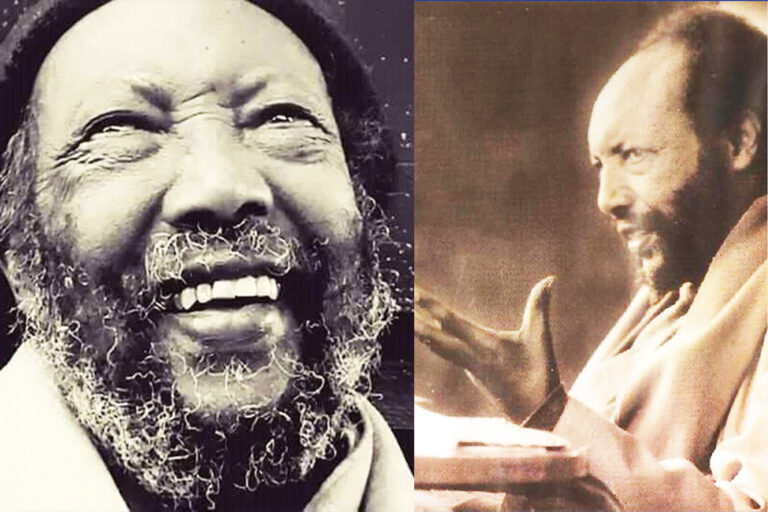
By Eyob Asfaw
On 4 October 2020, the ‘HOHE chapter’ continued the webinar series on the works of Tsegaye Gebremedhin for the third round. Being a last round, the moderator -Wondwosen Adane provoked the discussion with the rare question as to ‘what qualify Tsegaye as a puzzled poet and what departure really made in the literary landscape as observed through his works?’. In reaction to Tsegaye’s critique, the commentator- Michael reacted as Tsegaye’s word power originated from the bitterness feeling he felt and undifferentiated solidarity with his contemporary society.
From its onset, critics and literary families alike characterize the poetry works as a litmus test for Ethiopian social value and pathological test kit for moral decay we are facing as the society. In his 1977 play called ‘Hahu be sedist wer’ (to mean ‘reciting alphabet during infancy’), there is a protagonist Jelu Moro (to mean ‘the Silly ‘Moro’) but ended up to be interpreted differently to the dismay of the author. While Tesgaye meant to immutability of popular voices through subjecting Jelu Moro for non-verbal and silent expression of disappointment. To make matters worse, critics mistook the character ‘Jelu Moro’ to wrongly attribute with Tsegaye’s inability to let his characters speak verbally in artistic manner. On the over-simplification of what authors can face in their defiance to authoritarian leaders, one can remember that former USSR’s Joseph Stalin executed folk poets who sympathized for the then Ukraine. A curious reader can appreciate how Tsegaye stood defiance in the face of Dergue authoritarianism undoubtedly escaped possible sacrifice and torture other than 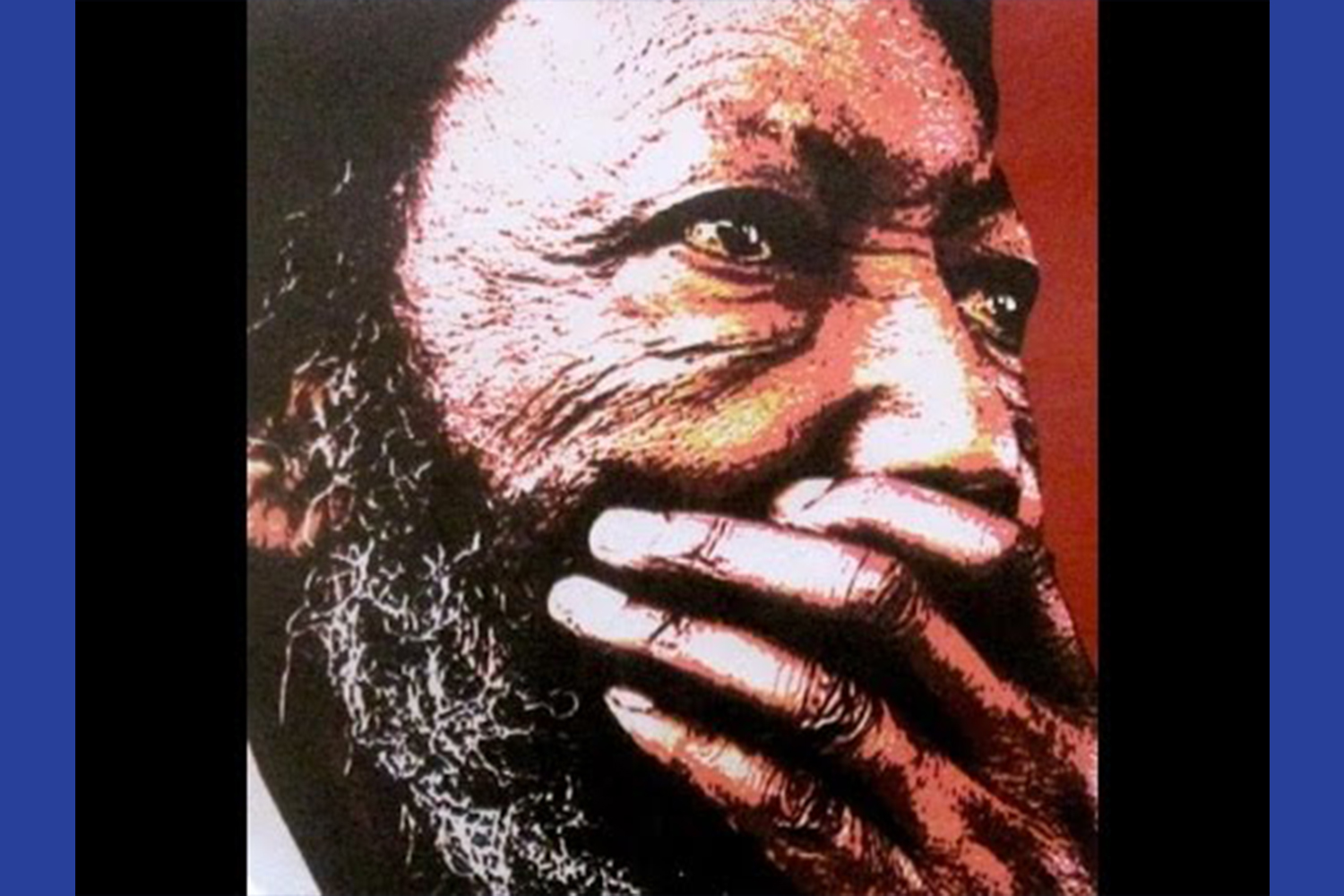 alleging Tsegaye on unfounded and ill criticism. Appreciably, art creates pathways for rebellion against tyranny, avenues for political understanding and solidarity among coalition builders. Understandably, art teaches us that lives other than our own have value.
As antidote to unfounded criticism, the commentator – Michael Shiferaw contended that, It is none other than a futile exercise to belittle Tsegaye as someone deficient of word power and incapable to meaningfully crafts creative dialogue in his play. In a similar resonance, Abera Lema, a seasoned author and friend of Tsegaye, make a compassionate comparison with what Alexander Pushkin (1799 – 1837) faced a critic in his contemporary Russian literary families. By then, his critique repented for their ill-founded criticism. At last, the critiques builds a consensus that Russians ought to elevate their literary capacity to better understand the works of Pushkin other than lamenting on sophistication of his works.
On the second half of the webinar the discussion delved to uncover as to what narrative of Ethiopia was portrayed through Tsegaye’s work. Michael contends that ‘Hahu wey Pepu’ ( to connote ‘alpha omega of the social and political change’) ‘Esat Woy Abeba’( to mean ‘fire or flower and ‘ Pop Peter’ were illustrative enough to understand what Tsegaye’s constantly conveys his narratives. One can recall that the monologue of ‘Pop Peter’ was a eulogy on an Ethiopian bishop (1892-1936) martyred in defiance to Italian fascism in 1936. For Wondwosen, unlike many other authors, Tsegaye works emphasized on national issues embedded in his clear tendency to engage on grandiose super structural issues other than routine infrastructures of social life. For Michael, in much of his works, Tsegaye doesn’t portray unrealistic utopia without healing structural wounds and redeeming national condemnation.
On another treatment, Tsegaye’s works attested his resemblance to Linguistic Anthropologist for his scheme to uncover the folk cultures through the prism of literature. Tsegaye’s ‘Collision of Altars’ and ‘Oda of Oracles’ are notable to admonish Tsegaye’s anthropological lenses where he interplayed old and emergent east religions and animism. To the shame of authors with shallow understanding on the folk culture’s, Tsegaye’s encyclopedic comparison went afar back 1,500 years to enlist the infamous ‘zorastrianism’ to the indigenous Oromo ‘Geda’. Exceptionally, for Michael, through mediating those play’s in English, Tsegaye meant to convey the intangible cultural treasure for the outside world.
In short, much of Tsegaye’s work are neither studied well by scholars nor understood by the folk peoples. On the webinars, in a similar treatment of Pushkin, the ‘HOHE Chapter’ commentators build a consensus to elevate the competency of reader and audience to understand well what Tsegaye intended to convey through his works.
Paperless e-system

Webb Fontaine’s team of international experts and technicians were on the ground for 3 years in Ethiopia to assist the Ethiopian Customs Commission (ECC) staff with the deployment of Webb Fontaine’s eCMS that was designed and customized for this project and rolled out across all operational ECC stations in Ethiopia. It is also available online for all trade users (carriers, declarants, companies, etc.)
The fully paperless e-system caters for social distancing rules without hindering the capacity of customs officers to assess and access submitted documents. In addition, ECC removed the need for physical submission of documents by adopting Webb Fontaine’s facevet Officer Desk module, allowing full digitalisation of documents.
Pascal Minvielle – Executive Director, Technology & Projects Implementation – Webb Fontaine Group is at the heart of Webb Fontaine’s technological innovation strategy. Based in Dubai, UAE, he leads the largest Research and Development centres in the industry in France, Armenia, Philippines and Ukraine. He talked to Capital about the implemnntation of the project. Excerpts;
Capital: Can you tell us what you have done to support Ethiopian Customs Commission?
Pascal Minvielle: In 2015 we were contracted by the Ethiopian Customs Commission (ECC) to digitalize Customs procedures, the project was funded by the European Union. The Customs Commission floated a tender to improve and modernize the Customs procedures for import and exports. Following the tender, we were awarded the contract and started work in 2016.
From day one, this project was a collaboration and partnership with the Ethiopian Customs Commission. Together we reviewed, assessed and then built the new Customs clearance system to address all the project requirements specified by ECC in a Business Project Review (BPR).
The new system has been live and in use for the last two years, and has achieved a great deal for not only Customs and Trade but for the country as a whole. The technologically advanced system modernizes and simplifies Customs procedures. Bringing together faster clearance, risk management, enhanced control through digitalisation, they are now able to have complete and transparent processes, and improved control across the board.
The advantages are clear to see: dwell times are significantly reduced which means the Customs clearance process is two times faster than before. With simpler and optimal processes Customs can clear goods, faster and more efficiently. 
With more control and trade facilitation, revenue has increased dramatically. Ethiopia Customs Commission has been able to increase Customs generated revenue by over 30%, this is a major asset in the context of the economic growth of Ethiopia.
To achieve this, we are proud to have worked hand in hand with the Government during the design and implementation phases as we teamed with the national project team not only in Addis but in all workstations of the country.
Capital: how do you evaluate the capacity of employees of the Customs Commission in terms of the operation of the technology?
Pascal Minvielle: Ethiopia Customs Commission are leading the way in terms of digitalisation. The system is designed specifically on requirements put together by them. Additionally Webb Fontaine has provided more than 1000 hours of training and upskilling for Customs on technical and operational aspects.
They are fully trained and now conversant with risk management techniques, valuation assessment, inspection using the paperless system. ECC is now able to monitor the system and has developed a sense of ownership.
Capital: corruption is the major problem in Ethiopia Customs Commission does your system has on this?
Pascal Minvielle: The system provides complete control, transparency and visibility of all transactions. Goods are now tracked at every step of the Customs process.
Capital: the other problem here in under invoicing, does the system have some kind of way to detect this?
Pascal Minvielle: Customs digitalisation removes all manual steps in the Customs clearance process, this means a reduced chance for errors and fraud. The system itself includes specific tools for tracking irregularities and under invoicing practices.
For this purpose, ECC is actually using one of the system modules called Value Declaration Details or VDD which we have installed and customized for them; it is controlling online all prices which are entered by the traders, so if you declare let’s say 10,000 birrs within your Customs declaration, the system will look automatically into a data base of previous entries spotted though Ai and will send an alert to the customs assessor which will increase back the price so yes, there are internal valuation controls within the system which prevent under valuation, this is one of the contributor that increase revenue by 30 percent. It’s more focused on valuation control and transparency and also trade facilitation.
Capital: Is there anything you want to add?
Pascal Minvielle: Ethiopia is the second most populous country in Africa that has huge economic growth, we strongly believe this country is at the forefront of modernisation and digitalisation in the region. We are proud and humbled to work with such a fantastic team of experts at the Ethiopian Customs Commission. What we have achieved together, the vision that the Ethiopian Customs Commission have is an honour to be a part of.
