Cogent criticisms have been made about the ability of the doctrine of comparative advantage to deal with the obvious global disadvantage of developing countries. The concern here is that ‘in a world of uneven development free trade, or even trade per se, may be inherently unequalising. There is a range of economic arguments that explain why the doctrine of comparative advantage may be unable to deliver its promised welfare benefits to developing countries.
One of the important general arguments in this context is that comparative advantage is created and cumulative, rather than natural, being based on historical development processes, acquired skills, cultivated industry patterns or “first mover” benefits, so it can change over time, can be shaped by governments or industry leaders and can decay through neglect. If this is so, then the cumulative comparative advantage of developed countries will ensure either that inequalities remain or that they take an unacceptably long time to disappear.
Another important school of economic thought postulates perpetual inequalities as a consequence of free trade. According to this argument, where there is low elasticity in demand for the exports of a country but high elasticity in domestic demand for imports, then export prices relative to import prices will result in a continuous trade deficit. As this tends to describe the terms upon which at least some developing countries export their primary products and import manufactured products, it is argued that under free trade conditions these developing countries will remain trapped in a trade deficit preventing them from realising the welfare gains promised by free trade doctrine.
These are not, of course, the only explanations for the current trade deficit and retarded economic development suffered by developing countries. It is certainly the case that the adverse economic position of developing countries has been exacerbated by the fact that they have been denied comparative advantages that they might have otherwise enjoyed. In this respect two factors, in particular, are worthy of note.
The first is that the requirements for the global protection of intellectual property rights, the large scale benefits of which are overwhelmingly enjoyed by undertakings based in the developed world, deny to developing countries any comparative advantage that they may have accrued in the processes or imitation of certain manufactured goods and in incremental innovation. To place this in context, it is essential to understand that many of today’s developed countries once placed extensive economic reliance on the unfettered ability to copy manufactured goods emanating from other more developed economies.
Secondly, the trading position of many developing countries is adversely affected by the fact that developed countries have continued to protect their domestic markets for certain primary products and manufactured goods exported from developing countries. However, the extent to which the opening of developed country markets to such exports would alleviate the trade deficits of developing countries remains a matter of debate amongst economists.
The protectionism of developed countries is a response to what is perceived as a potential flood of ‘cheap imports’ from the developing world. It is not uncommon for industries in developed countries to argue that, in order to survive, they need protection from such imports, which are made on the back of low labour costs in developing countries. From the free trade point of view, this argument denies to developing countries their legitimate comparative advantage. In economic terms, some questions have been raised about the validity of this free trade argument given that many of the employers of low- cost labour in the developing world are multinational corporate interests, which marry high technology with low cost labour in order to achieve an advantage that gives little in the way of welfare benefits to the host developing country.
In addition to this, it is not clear that the developed world market for cheap manufactured imports from developing countries functions in quite the way that classical free trade economists postulate. Theoretically, the comparative advantage of the developing country will be realised when developed world consumers purchase the cheaper imports rather than more expensive domestic products.
However, increasing numbers of consumers in the developed world eschew the products of low-cost labour on ethical grounds. This not only shows the limits of economic theory but also indicates that the debate about free trade should transcend arguments about the validity in solely economic terms of the doctrine of comparative advantage.
Ethical concerns about the exploitation of labour, whether by multinational corporate interests or by domestically based interests, are one of a number of non- economic arguments that may be made about an unfettered free trade regime. What these arguments have in common is the rejection of wealth maximisation as the ultimate measure of human happiness and attainment.
As Keynes famously wrote: “If it were true that we should be a little richer, provided that the whole country and all the workers in it were to specialise on half- a dozen mass-produced products, each individual doing nothing and having no hopes of doing anything except one minute, unskilled repetitive act all his life long, should we all cry out for the immediate destruction of the endless variety of trades and crafts and employments which stand in the way of the glorious attainment of this maximum degree of specialised cheapness? Of course we should not – and that is enough to prove the case for free trade . . . has left something out. Our task is to redress the balance of the argument”.
The critique of free trade based upon the rejection of wealth maximization draws stark attention to the difficulty in attempting to divide the political and the economic. The decision to embrace a free trade regime is not, and can never be, a purely economic one. Rather, it is a political choice involving, amongst other things, economic considerations. Joseph Stiglitz underlines the significance of this point: “There are important disagreements about economic and social policy in our democracies. Some of these disagreements are about values, how concerned should we be about our environment (how much environmental degradation should we tolerate, if it allows us to have a higher GDP); how concerned should we be about the poor (how much sacrifice in our total income should we be willing to make, if it allows some of the poor to move out of poverty, or to be slightly better off ); or how concerned should we be about democracy”.
Overall, the debate on the non-economic merits and de-merits of the comparative advantage doctrine is one that even the most thoughtful modern proponents of free trade. In this, as in so much else, modern free trade theorists appear to be embracing a type of intellectual foreclosure that dates back to the work of Adam Smith. Adam Smith postulated non-economic effects of free trade, both positive and negative. On the positive side, both he and Ricardo cited cosmopolitanism and international harmony as a non- economic benefit of free trade. However, Smith saw that the pursuit of material wealth had less desirable effects.
Free trade and developing countries
European Green Deal
By Von der Leyen, European Commission President
Do we, humans, want to continue living well and safely on this planet? Humanity faces an existential threat – the whole world is beginning to see. Forests burn from America to Australia. Deserts are advancing across Africa and Asia. Rising sea levels threaten our European cities as well as Pacific islands. Mankind has seen such phenomena before, but never at this speed. In addition to climate-induced drought often witnessed, currently, Ethiopia is experiencing untimely rain which compromises its harvesting season Science tells us that we can still stop this epidemic, but we are running out of time. The new European Commission is wasting no time. Today, less than two weeks into our mandate, we present our roadmap for a European Green Deal.
Our goal is to become the first climate-neutral continent by 2050, slowing down global warming and mitigating its effects. This is a task for our generation and the next, but change must begin right now – and we know we can do it.
The European Green Deal that we present today is Europe’s new growth strategy. It will cut emissions while also creating jobs and improving our quality of life.
It is the green thread that will run through all our policies – from transport to taxation, from food to farming, from industry to infrastructure. With our Green Deal we want to invest in clean energy and extend emission trading, but we will also boost the circular economy and preserve Europe’s biodiversity.
The European Green Deal is not just a necessity: it will be a driver of new economic opportunities. Many European firms are already going green. They are cutting their carbon footprint and discovering the clean technologies. They understand that there are planetary boundaries: European companies of all sizes understand that everyone has to take care of our common home. They also know that if they discover the sustainable solutions of tomorrow, this will give them first mover advantage.
What businesses and change-makers need from us is easy access to financing. To pull this off, we will deliver a Sustainable Europe Investment Plan. It will support one trillion euros of investment over the next decade. We will work hand in hand with the European Investment Bank, Europe’s climate bank.
Next March, we will propose the first-ever European Climate Law to chart the way ahead and make it irreversible: investors, innovators and entrepreneurs need clear rules to plan their long-term investments.
While we will promote transformation in how we produce and consume, live and work, we must also protect and accompany those who risk being hit harder by such change. This transition must work for all or it will not work at all. I will propose to set up a Just Transition Fund – and I want it to mobilise, together with the leverage of the European Investment Bank and private money, one hundred billion euros in investment over the next seven years. We will make sure that we help those European regions who will have to take a bigger step, so that we leave no one behind.
Across Europe, people young and old are not only asking for climate action. They are already changing their lifestyle: think of the commuters who take the bike or public transport, parents who choose reusable diapers, companies that renounce single-use plastics and bring sustainable alternatives to the market. Many of us are part of this European and global movement for climate. Last year, Ethiopia reported to have planted more than 350 million trees in 12 hours beating world record and a comprehensive 4 billion trees during the year.
Nine European citizens out of ten ask for decisive climate action. Our children rely on us. Europeans want their Union to act at home and lead abroad. In these very days, the whole world has gathered in Madrid for the United Nations’ conference on climate, to discuss collective action against global warming.
The European Green Deal is Europe’s response to our people’s call. It is a deal by Europe, for Europe and a contribution for a better world. Every European can be part of the change.
CROSSROADS OF SYMBOLS AND SUBSTANCE
“The art of building peace is a synergistic process to change hearts, minds, beliefs and attitudes, that never ceases.” H.E. Prime Minister, Dr. Abiyi Ahmed
One of the most compelling international exhibitions, filled with photos that capture a sampling of a country’s cultural, social and political accomplishments and aspirations, opened to the public on December 12th in Oslo, Norway entitled CROSSROADS ETHIOPIA. In honor of Nobel Peace Prize Winner, Laureate, His Excellency Prime Minister Dr. Abiyi Ahmed, the exhibition was created by the Nobel Peace Center, with the intention to curate a ‘portrait of the Laureate himself…a close-up on change, hope and challenges in his country.’ The exhibition, which remains open through November 2020, features photographs commissioned by Nobel Peace Center from British-Canadian photographer, Finbarr O’Rilley, who traveled to Ethiopia to create a series of photographs of the young Leader and his country. O’Riley said in an interview with Scandinavian Daily, “I had very limited time with the Laureate – just a few minutes to make a handful of portraits. So, I focused on documenting some of the political changes implemented by the Laureate, and how he has positioned himself to lead his country as it heads towards elections scheduled for next year.” The Center’s Program Director, Toril Rokseth, also said, “It is exciting to create an exhibition about an ongoing process. Abiy Ahmed has great ambitions, but he also faces great challenges. Through this exhibition, we want to show how complex and time consuming the road to peace and democracy is, and also the risks involved.”
CROSSOROADS ETHIOPIA was co-curated by the Nobel Peace Center’s Asle Olsen and Liv Astrid Sverdrup, with part of the exhibition equally co-curated by Addis Photo Fest (AFF) Founder and photographer, Queen of Ethiopian Photography, Aida Muluneh. AFF archives provided a supplement to O’Reilly’s visual record on the “political changes” with a narrative of cultural and social actualities seen through the lens of Ethiopians. The photos of AFF alum, emerging photographers, Mulugeta Ayene, Abinet Teshome, Aron Simeneh, Naod Lemma, Nader Adem and Getu Addis Aemero were selected for the prestigious exhibition. Bu there is no surprise here, as AFF is known for its high caliber of photographers and imagery, summoned to Ethiopia by Aida every two years. However, if one picture can say a thousand words, likewise words can paint a picture.
The speech of the Laureate, Dr. Abiyi best expressed the PM and Ethiopia’s visions for justice, peace and progress in Ethiopia, the Horn of Africa and the Continent. H.E. the PM said, “I accept this award on behalf of Ethiopians and Eritreans, especially those who made the ultimate sacrifice in the cause of peace. Likewise, I accept this award on behalf of my partner, and comrade-in-peace, President Isaias Afeworki, whose goodwill, trust, and commitment were vital in ending the two-decade deadlock between our countries. I also accept this award on behalf of Africans and citizens of the world for whom the dream of peace has often turned into a nightmare of war.” These warm words reflected the Pan African spirit of Brotherhood and desire for continental harmony espoused by the Founding Fathers of the Organization of African Unity (OAU) now African Union (AU) including Emperor Haile Selassie I, Ghana’s Hon. Kwame Nkrumah, Kenya’s Hon. Jomo Kenyatta and Egypt’s Gamal Nasser amongst others. The desire for African unity and the protection of sovereignty brought 32 countries together for shared goals in 1963 and we are still coming together here in the 21st century.
Another excerpt of the PM’s speech states, “Peace requires good faith to blossom into prosperity, security, and opportunity. In practice, Medemer is about using the best of our past to build a new society and a new civic culture that thrives on tolerance, understanding, and civility. At its core, Medemer is a covenant of peace that seeks unity in our common humanity…“No justice, no peace,” calls to mind that peace thrives and bears fruit when planted in the soil of justice. The disregard for human rights has been the source of much strife and conflict in the world.” Human Rights Day was commemorated on December 10th at the UNECA, organized by the Office of the High Commission for Human Rights Regional Office with over 200 youth in attendance. They came from various parts of the country from different disciplines, walks and stages of life and I must add, an almost equal representation of male and female participants. Students, social entrepreneurs, tech leaders, lawyers, poets, dancers, painters, media and more came to hear and have a say on the role of youth in Ethiopia as champions for human rights towards ensuring a peaceful and progressive society. Three semifinalists from eighty submissions for the OHCHR sponsored essays contest were read aloud with all “coincidentally” reflecting the Leo Leader’s speech delivered in Norway? No coincidence here at all! We all want peace and we therefore “…must become something we have never been and for which our education and experience and environment have ill-prepared us. We must become bigger than we have been: more courageous, greater in spirit, larger in outlook…” according to Emperor Haile Selassie I 1963 UN Speech. Simply put, we join John Lennon’s in song, “All we are saying, is give peace a chance…”.
Dr. Desta Meghoo is a Jamaican born
Creative Consultant, Curator and cultural promoter based in Ethiopia since 2005. She also serves as Liaison to the AU for the Ghana based, Diaspora African Forum.
Hiwot and Gebretsadik break records in Guangzhou
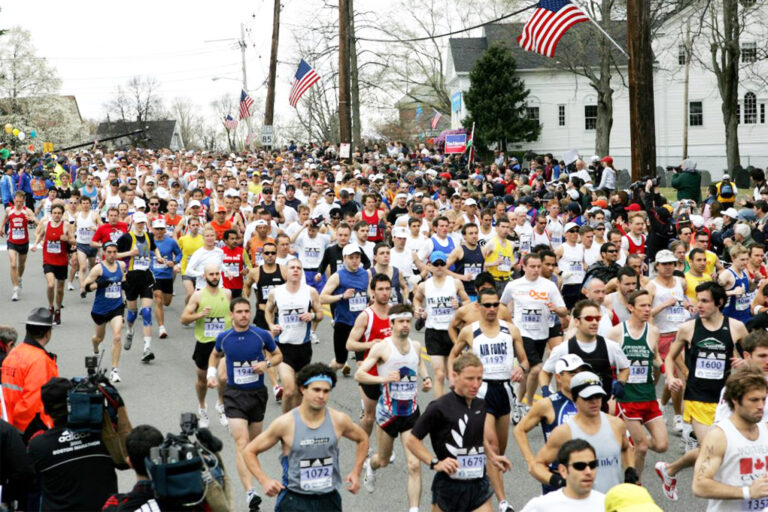
Hiwot Gebrekidan and Gebretsadik Abraha took an Ethiopian double at the Guangzhou Marathon, smashing the course records at the World Athletics Gold Label road race.
The 24-year-old Hiwot enjoyed a comfortable sole lead before 30km and wrapped up her convincing victory with a lifetime best of 2:23:50, smashing the 2:25:12 course record set by compatriot Rahma Tusa in 2017.
Hiwot and Kenya’s Celestine Chepchirchir led the pack side-by-side and when they passed 25km in 1:24:38, they were already nearly five minutes ahead of the chasers and well on track to attack the course record. Then the in-form Ethiopian broke clear from Chepchirchir and continued widening the gap until the finish.
It is Gebrekidan’s second title over the classic distance following her victory two years ago at Lake Tiberias where she achieved her previous PB of 2:25:45.
The 27-year-old Gebretsadik emerged victorious from a three-man battle in the last 10 kilometers to take the top honors in 2:08:04, which is the fastest time achieved by the former Prague and Marrakesh marathon winner since 2014. The leaders were trimmed to 10 by 25km in 1:16:11 and further cut to six after another five kilometers in 1:31:38. Gebretsadik then started his powerful charge, with only Kenya’s Mike Kiptum and Emmanuel Naibei managing to keep up with his pace by 32km.
The 27-year-old Kiptum, a 2:06:22 performer, quit the title contest before 40km. Gebretsadik waited for another kilometer to finally pull clear and never looked back before hitting home in style.