

How can Africa build on the solidarity shown during the coronavirus pandemic to achieve the continent’s development goals in the post-COVID world?
That was the question posed at a webinar hosted by the African Union’s Economic, Social and Cultural Council (AU-ECOSOCC) and the African Development Bank’s Civil Society and Community Engagement Division to mark Africa Day 2020.
Senegalese singer and activist Youssou N’Dour, Zambia’s Minister of Health Dr. Chitalu Chilufya and African Development Bank Vice President Dr. Jennifer Blanke headlined this special session, held on 26 May. Part of a COVID-19 awareness webinar series launched in April that aims to inform and empower African citizens on the appropriate responses to the coronavirus outbreak, the online forum drew hundreds of participants from political, civil society and development spheres who logged in from across the continent as well as north America, Israel, Europe, the Middle East, Asia and Australia.
During the session, Minister Chilufya spoke to the need for coherent coordination among all stakeholders to mitigate the impact of the virus on the health of Africans and to ensure a brighter economic future.
“We believe a healthier population is productive and will drive the financial agenda of a nation. Investing in human capital is imperative now. For this, Zambia has embraced a multi-faceted approach that includes all sectors; civil society organizations, government organizations, political organizations, academia, media organizations, religious leaders, members of public. They all play a role in the sustainability of a country,” Chilufya told participants.
Dr. Jennifer Blanke, the African Development Bank’s Vice President for Agriculture, Human and Social Development, said the COVID-19 crisis could exacerbate inequalities in education, health and employment opportunities that exist on the continent. She stressed the importance of working together after the crisis, focusing on Africa’s youth and women.
“We need to harness Africa’s talent. So many African women have great ideas but cannot obtain finance. The African Development Bank has an initiative that supports talented women entrepreneurs to make their business ideas a reality,” she said.
“Also, young people in Africa are a true force for progress; they see challenges everywhere which are in fact business opportunities. They understand how to use technology to help Africa leapfrog to better services. Just as mobile banking overcame a lack of bank branches, the shortage of doctors in many areas can be remedied with telemedicine solutions and other businesses,” Blanke added.
Thomas Kwesi Quartey, Deputy Chairperson of the African Union Commission, struck a similar note saying “we also have to support women, young people to combat COVID-19. At times like this, solidarity is more important than ever before. [In the words of] Kwame Nkrumah, the forces that keep us together as Africans are increasingly greater than the forces that keep us apart.”
Grammy award winner and former United Nations Goodwill Ambassador Youssou N’Dour said Africa should focus on raising awareness of development goals, using the influence of famous artists.
“We must rely on the cultural sector, on events such as concerts, because they add value. Influential artists can for example help the Bank reach its High 5s. Imagine using well-known artists as ambassadors who work and cooperate with those on the ground, in the field. Imagine the number of people they could reach with their messages,” N’Dour said.
The continent should seize the opportunity presented by COVID-19 to mobilize its resources for the future, said Vanessa Moungar, Director of the Bank’s Gender, Women and Civil Society Department.
“Let’s maintain this momentum and continue building a social and economic development model based on community participation and regional integration. A strong partnership between governments and civil society is essential. Engaging with civil society means being able to reach people at the bottom of the pyramid and improve the impact of development actions,” Moungar told participants at the webinar’s close.
The Bank and AU-ECOSOCC plan two additional COVID-19 awareness webinar series sessions focusing on youth and education in Africa.
Youssou N’Dour, Zambia’s Minister of Health, African Development Bank Vice President headline call to build African solidarity post-COVID-19

Don’t Stop Dancing shares untold stories from the life of Michael Jackson

Everyone knows that Michael Jackson was discovered by Motown Records, the label that launched Michael and his brothers into the recording industry’s stratosphere, right? Not quite, says music producer and history buff Gary Revel, who interviewed former music producers Ben Brown and Gordon Keith for his latest investigative effort, Don’t Stop Dancing: Stranger Than Fiction.
Brown and Keith were two of the founders of Steeltown Records, a short-lived label in Gary, Indiana, and the first label to record a Jackson 5 single featuring the iconic voice of Michael Jackson. The long-held narrative that Motown Records initially discovered the Jackson 5’s immense talent was perpetuated by Berry Gordy (Motown’s founder) and the Jackson Empire, according to Revel’s account in the book.
“Ben [Brown] and Gordon [Keith] had produced the Jackson 5 in Gary, Indiana, before they started making music recordings for Motown,” Revel writes. “The first single record ‘Big Boy’ was produced by them and released on their label, Steeltown Records. It is the first music release on which Michael Jackson sang.”
Even though Michael has been gone for more than a decade, “he continues to sell more albums than many music icons of our time and his fan club still has over 3 billion card-carrying, dues-paying, faithful members worldwide! It’s no wonder that Rolling Stone Magazine deemed him the 12th most important figure in rock music history.” The King of Pop lives on today through his music and videos and “we believe Michael’s billions of fans around the world will want to know the many never-before-told facts that are in this updated edition of the book,” says Revel.
In the early 1990s, Revel, who had investigated the assassination of Martin Luther King Jr., was asked to help expose the truth of the secretive life, music and career of Michael Jackson. But his efforts were put on hold when child sex charges against Michael Jackson took center stage. Later, Revel resumed his research, and he “not only found the truth but he also found those who wanted to keep the truth secret.” Revel says that Don’t Stop Dancing: Stranger Than Fiction “answers all the questions the world has about the life, music and career of Michael Jackson.”
Author Gary Revel was born in Florala, Alabama. After his parents divorced when he was just 5, music became a trusted companion, and he formed his first band when he was 15. After high school, he enlisted in the United States Navy. His Honorable Discharge came, and Hollywood called, then New York, Memphis, Nashville and back to Hollywood. Along the way, Revel investigated the assassination of Martin Luther King Jr. in association with the US Government’s House Select Committee on Assassinations. Revel is currently writing, publishing and developing music, as well as literary and motion picture projects.
Is Ethiopia well prepared for the future rapid urbanization?
By Kassu Hailu
With its three thousand plus years of historical records, Ethiopia passed through magnificent civilizations and the reversal of those civilizations by persistent wars and other reasons. Its ancient and partly medieval period has shown impressive achievements in architectures and formation of cities and towns. The very reason for the formation of urban centers might not be to satisfy the increased number of population unlike the demand of the modern times. The basic reason is to glorify the richness of their kingdom and to satisfy the needs of the higher class of the society. Cities like Axum, Debrebirhan, Harar and etc. are among the earliest ones which were founded in the ancient and medieval periods. Other cities like Addis Ababa, Dire Dawa, Desse, Nazreth and etc. are the ones that are recently founded though some have earlier historical memory.
The objective of this article is not to deal with the historical background of Ethiopian cities. It is rather to show the necessity of planned and well organized urban centers to accommodate the rapid movement of people from the rural to urban areas.
The World Bank 2018 data shows that 79.2 percent of the Ethiopian population is living in rural area where it is 17.7 percent for the USA and 40.9 percent for China. Only about six countries have bigger proportions of rural population than ours namely Nepal, Niger, Malawi, Burundi, Samoa and Papua New Guinea. All other countries have lower rural proportion out of their total population. Therefore, it is logical to predict faster changes in the urbanization processes of Ethiopia in the very near future. As we know, majority of urban activities are highly concentrated in the capital Addis Ababa. Other cities and towns are not much attractive like Addis Ababa if we consider the business returns. But also Addis Ababa is not well planned and properly managed. Rather, it becomes the source of ethnic tensions on the basis of ownership. On the other hand, the demand for residing in urban centers is increasing with each passing day for practical reasons.
Small holder farmers cannot share enough farm-land to their young sons and daughters as the household holding will further decline. So practically there will be people without farm land as land is a fixed input. Moreover, youths these days are not willing to work in the agricultural sector even if their families share them some plot of land. There is very low tendency to work in the rural farms. Therefore, it is inevitable that adults who finish their high school and university will prefer to stay at urban areas even with worse living conditions. This calls for the proper interventions in our urbanization trends. So, what measures should be taken to be well prepared for the future rapid urbanization?
The first and the basic measure should be changing the spirit of ownership of cities. Every citizen who just has the identity card in specific city administrations should be entitled to the ownership of such city with respect to decision making, and other rights and responsibilities. Entitling the ownership of regions (and cities) by specific ethnic groups has created very bad attitudes towards long lasting investment in the cities. How can people be interested to invest in places that exclude them from citizenry rights? Nonsense! Therefore, the first thing is doing structural/constitutional amendments in the way that there will not be any ethnic homeland in Ethiopia. It will create specialization, increases demand and supply, and hence proper urban development.
Secondly, the land tenure system needs to be improved. The Ethiopian People Revolutionary Democratic Front (EPRDF) with the ideology of “developmental state” defined land to be owned by nations, nationalities and people. And practically, land is owned by the government where farmers (or other land owners) do not have the right to sell or present as collateral.
While private ownership of land is now the principle of the world, we failed to exercise it because of calculation of creating ethnic economic elite. Of course, nobody says that the private ownership of land is without problem – it has challenges but they will be solved as we exercise. Especially, if the built ethnic homeland system is abandoned, then the challenges will for sure be minimal.
The immediate cause for the past violent protests was the opposition against the Addis Ababa Master Plan. It was said to cause eviction of farmers from their farm lands while the recompenses are very small. Forceful evictions of farmers is everywhere in the country whether the purpose is to expand urban centers or other “investments”. It is clear that the current lower government compensations neither support the evicted families nor is the process efficient.
If land was free for transaction, there would not be any complain from the farmers, because they would sell their land by the market prices. For that matter, they would welcome the expansion of urbanization and investments as it helps them by raising the price of their land. The farmers would be part of the development of the city. In this context, the market value of land cannot be the same everywhere. This is the best way for inclusive urban development.
The other necessary step is identifying the future proposed urban areas, classifying them and preparing master plans for each city based on the national urbanization demand. Cities need not to be built in arbitrary ways but by plans that can create equitability among different parts of the country. In the master plans, residential buildings, business areas, transportation routes, sources of growth, and energy and other utilities should be defined clearly and in detail. Business companies that build real estates on long time repayment plans should be encouraged. Of course it would be better if it is done by partnership of the government and the private sector.
The last step is related to the implementation of the master plans and other regulations which are necessary for the integrated urban development. It needs political commitment to assign experienced technocrats in the leadership of the cities. The cities need international integration so that they become investment hubs. The city politics should be different from that of the rural – it needs more smartness. Creation of employment opportunities would be the top agenda of the city administrations.
To sum up, it seems that Ethiopia is not well prepared for the inevitable demand for well-planned and properly managed urbanization which needs due attention.
Kassu Hailu is Lecturer at Injibara University. You can reach him kassuhailu133@gmail.com
Hanna Alemu
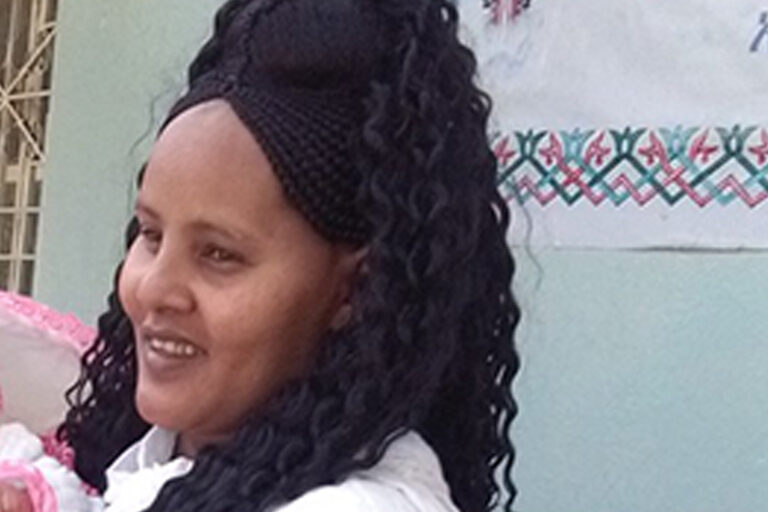
Name: Hanna Alemu
Education: BSC in computer science
Company name: Hulu Baltena
Title: Owner
Founded in: 2019
What it does: Supply food ingredients
HQ: Bishoftu
Number of employees: one
Startup Capital: 10,000 birr
Current capital: Growing
Reasons for starting the business: For more income
Biggest perk of ownership: Self sufficient
Biggest strength: Easily communicate with others
Biggest challenging: Capital
Plan: To open branches in Addis Ababa
First career: Secretary
Most interested in meeting: Anyone who is successful in business
Most admired person: My mother
Stress reducer: Sleeping and crying
Favorite past time: Family time
Favorite book: The Bible
Favorite destination: Jimma
Favorite automobile: Toyota land cruiser
