

The first ever fully remote meeting of Telecommunication Development Advisory Group (TDAG) opened virtually on June 2, 2020 under the theme ‘Let’s seize the momentum to ‘Build back better’ after COVID-19’ and ended on Friday 05 June 2020. The Advisory Group plays a key consultation role in defining the action to accelerate digital development.
Abraham Belay, Minister of Innovation and Technology during his remark at the meeting on June 4 said “what unites all is our commitment to make the world a better place by connecting the unconnected and fast tracking ICT development for all.” He commended the Telecommunication Development Bureau (BDT) Director for successfully leading the important discussions on the World Telecommunication Development Conference (WDTC) reform during the CoVID-19 crisis. He also emphasized that this crisis has highlighted WDTC-21 must make a difference and be solution oriented.
The Minister also reaffirmed Ethiopia’s commitment to the WTDC reform and the ongoing preparatory process. The Minister concluded his remarks by stating that his country supports the hosting of a youth summit in November just before WTDC, expressing his gratitude to the Director of BDT for setting up the WTDC-21 website and stating that he is looking forward to welcoming all participants to Addis Ababa next year and to host WTDC for the first time in Africa.
ITU commends Ethiopia’s digital economy strategy
“The Great Reset”
“The Great Reset” will be the theme of a unique twin summit to be convened by the World Economic Forum in January 2021. The 51st World Economic Forum Annual Meeting will bring together global leaders from government, business and civil society, and stakeholders from around the world in a unique configuration that includes both in-person and virtual dialogues.
“We only have one planet and we know that climate change could be the next global disaster with even more dramatic consequences for humankind. We have to decarbonize the economy in the short window still remaining and bring our thinking and behaviour once more into harmony with nature,” said Klaus Schwab, Founder and Executive Chairman of the World Economic Forum.
“In order to secure our future and to prosper, we need to evolve our economic model and put people and planet at the heart of global value creation. If there is one critical lesson to learn from this crisis, it is that we need to put nature at the heart of how we operate. We simply can’t waste more time,” the Prince of Wales said.
“The Great Reset is a welcome recognition that this human tragedy must be a wake-up call. We must build more equal, inclusive and sustainable economies and societies that are more resilient in the face of pandemics, climate change and the many other global changes we face,” said António Guterres, Secretary-General, United Nations, New York.
ETHIOPIA, TIME FOR “THE TALK”
“Leaving behind nights of terror and fear, I rise. Into a daybreak that’s wondrously clear, I rise.” Poet Laureate Maya Angelou.
“The Talk,” in the USA, is when parents discuss ‘how babies are made’ and other pre-adult matters to prepare their children for body changes and overall youth development. For Black folks in America, “The Talk” prepares you for being pulled over by police; being stopped in a store suspected of shoplifting; and how to address the high school ‘resource officer’ insisting on a ‘random locker search’. The list is long. CNN commentator, Van Jones, refers to “The Talk” as ‘fairy dust we sprinkle over Black children leaving home everyday, praying these words will protect them’. As the mother of 5 Black sons, raised in America, I know it all too well. Now it’s time to have “The Talk” with Ethiopia, and Africa in general, to prepare those not in the know for our desire to come home or at least be seen by Africa.
We watched America – from Wyoming to Washington DC – swim in seas of protest in reaction to the police murder of George Floyd. Responses from Africa spanned a spectrum of sentiments. On one end, ‘destruction is not the answer, this is embarrassing…Blacks in America must build themselves up with education, self knowledge, finance and then gain respect…they don’t appreciate the many opportunities…’. On the other end, ‘African Americans are our children, their ancestors were taken from Africa to build America, for free, burn it down if that’s what it takes to stop the cold blooded killings on camera…’. In the middle is, ‘Wow! We never knew it was really that bad…we should pray for the protestors and white people that God will change hearts and bring peace…”.
“The Talk” was placed on the table when AU Deputy Chairperson, Ambassador Kwesi Quartey, posted on FB, “We may be black but we are people too.” A floodgate of responses from African leaders including Year of Return, Diaspora Reintegration Champion, President Nana Akufo Addo, emphatically stated, “It cannot be right that, in the 21st century, the United States, this great bastion of democracy, continues to grapple with the problem of systemic racism.” The President’s Office and Ghana Diaspora Coalition honored George Floyd at the Diaspora African Forum in Accra on June 5th. Head of Mission, Ambassador Erieka Bennett somberly stated, “George was our son… son of Africa, we’ll place his name on the Sankofa Wall amongst his ancestors and celebrate his short life which ended waking up the world to institutional racism…reminding Africans at home and abroad, we need to be connected.”
Ethiopia, Africa, let’s talk about the artists who so many of us love and appreciate. Bob Marley sang Burning and Looting in 1973, what did you think he was singing about? I remind you.
This morning I woke up in a curfew
O God, I was a prisoner too, yeah!
Could not recognize the faces standing over me
They were all dressed in uniforms of brutality, eh!
How many rivers do we have to cross
Before we can talk to the boss? Eh!
All that we got, it seems we have lost
We must have really paid the cost
Burnin’ and a-lootin’ tonight
Burnin’ all pollution tonight
Burnin’ all illusion tonight.
Remember painter Jean Michel Basquiat’s The Death of Michael Stewart, aka Defacement, created in 1983, a commentary on the 25 year old, black artist Michael Stewart, murdered by New York City Transit Police for allegedly tagging a wall in an East Village subway station? Keep in mind Banksy does the same thing today and sells for millions…jussayin’. Basquiat’s work not only explored black identity but expressed raged against police brutality and state authorities. Then we have Poet Laureate Maya Angelou. Her 1978 “Still I Rise” was recently circulating on FB translated to Amharic. An excerpt reads:
Leaving behind nights of terror and fear
I rise
Into a daybreak that’s wondrously clear
I rise
Bringing the gifts that my ancestors gave,
I am the dream and the hope of the slave.
I rise
Finally, Ethiopia claims two artists who provoke us with images and words that exemplify “The Talk”. Ethiopian fine artist, Prince Merid Tafesse, created a version of “American Gothic” in 2015 inspired by African American photographer Gordon Park’s 1942 acclaimed “American Gothic”, portrait of black female worker, broom in hand with a US flag backdrop; inspired by Grant Wood’s 1930 “American Gothic,” the renowned work with midwestern wife and farmer with pitchfork in hand. Prince Merid’s piece questioned and confronted the tropes of the American dream and contradictions of said. Ironically, the USA Embassy in Addis Abeba is where Merid’s piece is displayed.
On the word sound is power side, 13 year Ethiopian resident, African born in America – I-Timothy -poet, historian, educator and more; has shaken up present day poets in the city, mentoring and providing platforms for a new generation of fresh free voices; contributing to the consciousness of young Ethiopians. A regular at Fendika, I close with his aspirational 2007 poem, “Buju At H.O.B.”
Dreadlock convention
Honorable mention
Walk like a champion
Perfect intention
Love and Unity
Gain the world’s attention
Rastaman Vibration
Brings the spirit injection
Dance Natty Dance
Gather the World together
Positive current
Charge the battery
Love Eternal
Is where we wanna be…
Infinity.
Dr. Desta Meghoo is a Jamaican born
Creative Consultant, Curator and cultural promoter based in Ethiopia since 2005. She also serves as Liaison to the AU for the Ghana based, Diaspora African Forum.
Challenges of intellectual disabilities
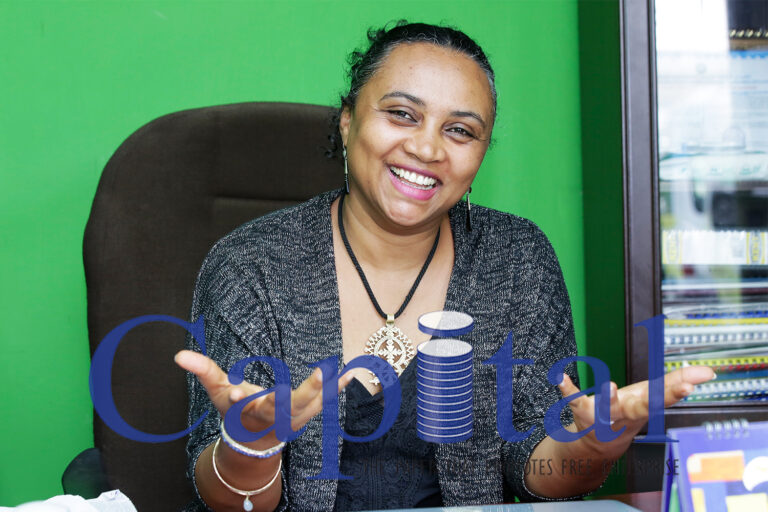
Since the outbreak of the corona pandemic in Ethiopia most nongovernmental organization are facing financial challenges. Fikir Ethiopia National Association on Intellectual Disabilities is one of the NGOs working on intellectual disabilities. The association was established some 25 years ago by 89 parents of intellectually disabiled children. Mihret Nigussei is board chairperson of the association. Mihret started to work at the association after her immediate younger brother was born with intellectual disabilities. She started to work at Fikir Ethiopia as a volunteer and climbing up to become president of the association. Mihret says the association is facing challenges because in the last 25 years they were focusing on their work rather than promotion. Mihret said that the association is facing difficulty in the current situation and needs immediate help. Excerpts;
Capital: Can you tell us about Fikir Ethiopia National Association on Intellectual Disability?
Mihret Nigussei: Fikir Ethiopia was established 25 years ago by parents of intellectual disabilities. At the time there was no center for intellectually disable children except Mekane Eyesus church and Kokeb Atsebeha schools. Even those who got the chance to get in were obliged to leave after they reach their 18th birthday, they were not able to get the chance like other children to get enrolled in high schools and universities or technical and vocational schools. So after they turn 18 they are forced to stay home and this always make them face social, psychological and economical challenges. For example sexual harassment, an unexpected pregnancy, isolation from society and moreover some will be hidden by their parents in their home which results in additional distress. 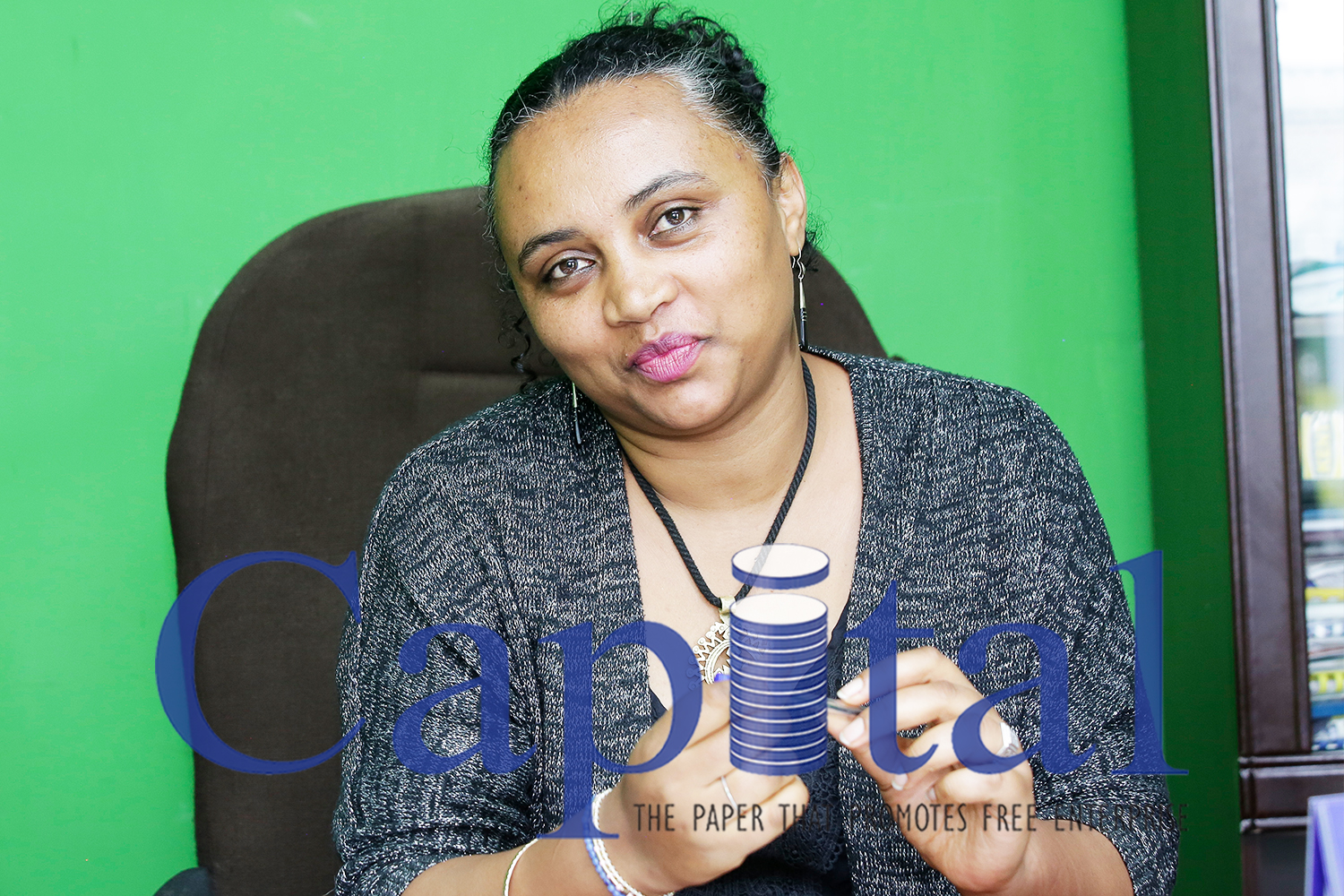
These things causes social crises, which led parents to establish this association as a solution for their children to interact and communicate with each other and with others.
More than 80 percent of our members are women. Mostly when this kind of children came to the family most families collapse and single mothers will be forced to stay with their children that caused them to face financial challenge to help the children.
Capital: How many centers do you have and how many children are you helping now?
Mihret: More than 3 percent of the world population is intellectually disabled which is around 200 million and from these numbers around 80 percent are expected to live in under developed countries like ours. So around 3 to 4 million intellectual disabilities are expected to live in our countries.
Even if our association was founded in Addis Ababa we have been trying to see other parts of the country. We understand that there are millions of intellectually disabled people living in our country and in a serious condition.
We have been working in 17 cities of five regions; we called for parents to work for their child and we try to bring them together and give different kind of support and assure their participation and beneficiary. In Addis Ababa we have two centers one found around the so called ‘Ferencay Legasion’ which is for kids bellow 18 years and the other found around ‘ Megenagna 22’ it is for adults above 18 years. In this center more than 90 intellectually disabled people came on a daily basis they are between 18-45 years old.
Capital: How are you treating them, is it easy to train adults above 18 with intellectual disability?
Mihret: It is very difficult; we find children isolated for a long time and sometimes they even cannot walk properly and speak, they don’t know how to communicate with others so they may disturb others. But there is one thing, they always think that everyone loves them and care for them and the good quality we have in our association is love. Since they came to us we always show them love and we will try to communicate with them.
Parents bring their children daily and we give them different kinds of trainings based on their potential.
And there is a peer influence, most of our staff are experienced and have been working for a long time with us so they know how to treat them based on their status.
We always try to make them think everyone has accepted them. Before we start the education we try to show them discipline and the system of the society.
Sometimes we get some children who don’t want to get training, but we try different methods to teach them.
Capital: Where does the association get financial supports to its activities?
Mihret: We get an annual support from the Ministry of Labor and Social Affairs since we are an association under the Ministry; however it is not enough to cover all our expenses so we always look and contact with individuals, companies, and stakeholders. For example if you see Fresh Corner have been with us for a long time by providing the children’s lunch; and Dibora Foundation is also helping us in different things. But it is not enough to fulfill their need. We know we cannot address all their problems.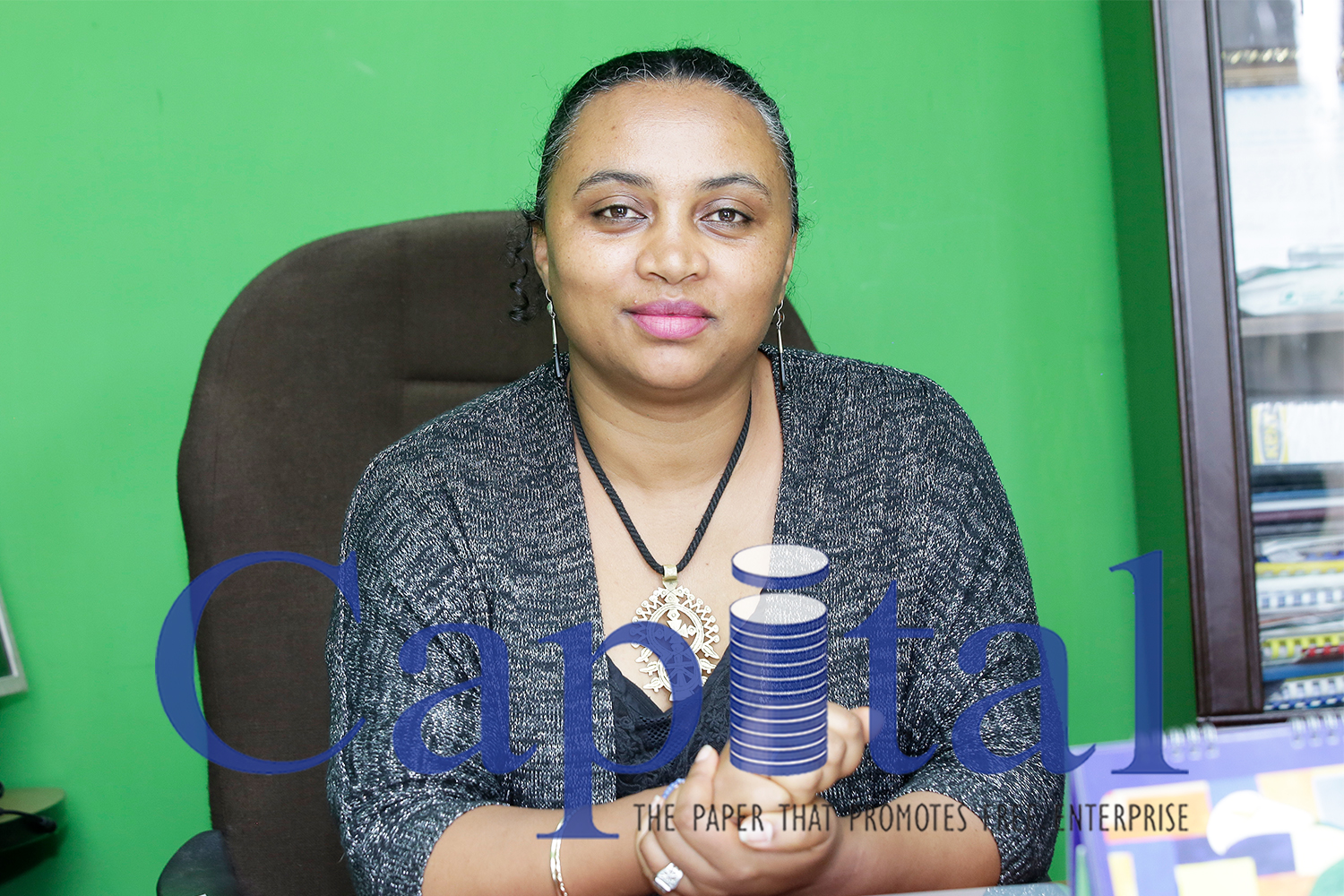
Capital: What are the main challenges you are facing?
Mihret: In its 25 years of operation the association passed through several difficult times. It was very difficult to find a place, many people don’t want to rent their place for such kind of kids. The other is you cannot easily find schools, special need schools. Now it is improved for the kids but difficult for the adults.
The other challenge is the society has very low acceptance for the kids, government policies and strategies are not inclusive of these kids.
The first thing we take as our success is what we do is on schools, we have created a way to our kids to get education like other kids, we have been working with the government and have made an impact on increasing special needs education in more than 20 governmental schools. When parents came with their kid we give them counseling to send their kids to school, and if they did not find schools with special needs education we try to force the government with petition to open one, which is in fact successful and we are happy with the government’s response.
We have been working with the Ministry of Education to have policy and strategy on special needs education, we try to copy other countries’ experiences on the schools and we support them financially and technically. We also have been supporting parents in certain issues and help them to send their children to school.
Our association has been influencing to start special needs education starting from diploma up to PHD. Not only in Addis Ababa but also in other parts of the country even if it is still low.
The other thing we holdup because of the pandemic is that we have trained our kids and have been contacting with some companies to hire them.
The other success is through Special Olympics, which we formed at the national level to gather the kids and show their abilities on sport. We try to impact policies as a national level, every time there are activities on disabilities.
And recently the Deputy Mayor Takele Uma visited us and has given us a plot, so we are planning to build a big resource center.
Capital: How are you coping with the current pandemic?
Mihret: It is one of my biggest fears. We are trying to address parents to protect their children. The kids are forced to stay at home and they are frustrated with this. They are facing psychological seclusion, so parents always call to us and made us to tell them about the situation. For example the state of emergency prevent a lot of things, but there has no effort made to address these kids so they may do something that may led them to be arrested and attacked by police.
The other thing is, because of covid most of the parents are forced to stay home with their children and they need financial support but we cannot support them all.
Human resource, so the society needs to come and help us by everything they can it can be technical support, management, promotion, anything. We need them now badly. We are forgotten.
