Saturday, October 3, 2026
Home Blog Page 3714

COVID-19: UNESCO and ICOM concerned about the situation faced by the world’s museums

0

13% of museums around the world may never reopen

On the occasion of International Museum Day, two studies by UNESCO and the International Council of Museums (ICOM) confirm that museums have been especially affected by the COVID-19 pandemic, with nearly 90% of them, or more than 85,000 institutions, having closed their doors for varying lengths of time during the crisis. Furthermore, in Africa and the Small Island Developing States (SIDS), only 5% of museums were able to offer online content to their audiences. Nearly 13% of museums around the world may never reopen.
The two studies, involving Member States and museum professionals, were aimed at assessing the impact of COVID-19 on museums and museum institutions. They also aimed to find out how the sector had adapted to the pandemic and explore ways to support institutions in its aftermath.
“Museums play a fundamental role in the resilience of societies. We must help them cope with this crisis and keep them in touch with their audiences,” said UNESCO Director-General Audrey Azoulay. “This pandemic also reminds us that half of humanity does not have access to digital technologies. We must work to promote access to culture for everyone, especially the most vulnerable and isolated.”
Within the framework of its ResiliArt movement, UNESCO launched in mid-May a series of debates devoted to museums. The first three debates, in partnership with Ibermuseums, will focus on the situation in the Ibero-American region and will explore strategies to support museums and professionals. The ResiliArt movement aims to support artists during and after the COVID-19 crisis and to analyse the issues at stake, through high-level exchanges between international professionals from the cultural sphere.
The study conducted by ICOM highlights the fact that museums that have been deprived of their visitors will face a decrease in their income. Professions related to museums, their operations and their outreach could also be seriously affected.
“We are fully aware of and confident in the tenacity of museum professionals to meet the challenges posed by the COVID-19 pandemic,” said ICOM President Suay Aksoy. “However, the museum field cannot survive on its own without the support of the public and private sectors. It is imperative to raise emergency relief funds and to put in place policies to protect professionals and self-employed workers on precarious contracts.”
Among the priorities indicated by States in their responses to the UNESCO study are capacity building, social protection of museum staff, digitization and inventorying of collections, development of online content, technical assistance and the equipment of conservation laboratories, all of which require the mobilization of resources.
It should be noted that the number of museums worldwide has increased by almost 60% since 2012 to some 95,000 institutions, according to the UNESCO study. This increase demonstrates the important place that the sector has taken in national cultural policies over the past decade. However, the study reveals wide disparities, with Africa and Small Island Developing States together accounting for only 1.5% of the total number of museums worldwide.

Deterring the Debt Vultures in Africa

0

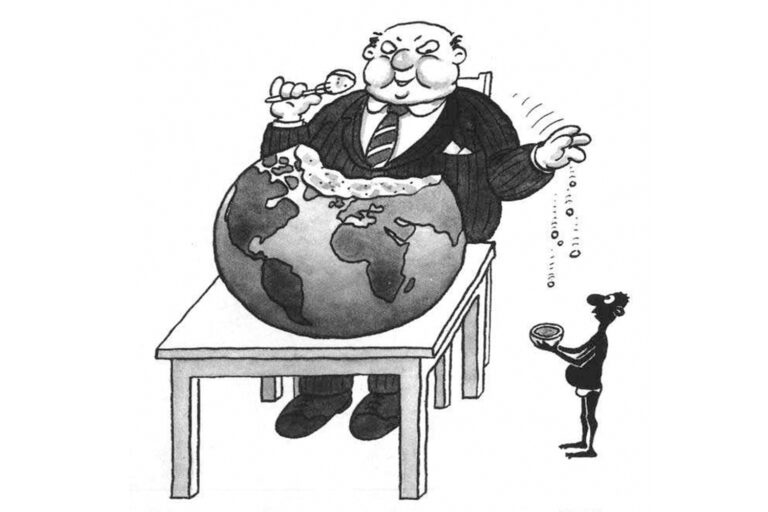
The COVID-19 pandemic threatens to make African countries even more vulnerable to aggressive sovereign-debt speculators. But the crisis also presents financial institutions with an opportunity to change the way they do business and play their part in helping the continent’s economies to recover.

By Daniel D. Bradlow

COVID-19 is creating Sub-Saharan Africa’s worst social and economic crisis since World War II. The region’s economy is set to contract by 1.6% in 2020, its worst performance on record. Global merchandise trade could shrink by 13-32% this year, which will hit Africa hard. And the World Health Organization warns that the number of coronavirus cases in Africa could increase to 29-44 million in the first year of the pandemic, with up to 190,000 deaths.
If these predictions turn out to be accurate, the pandemic would overwhelm African countries’ health systems, devastate their economies, and threaten millions of people with unemployment, hunger, and homelessness.
Mindful of these potentially horrific consequences, 18 African and European leaders recently warned that, “only a global victory that fully includes Africa can bring this pandemic to an end.” Among other measures, they called for “an immediate moratorium on all bilateral and multilateral debt payments, both public and private” until the pandemic has passed.
The international community is beginning to respond. At their recent virtual meeting, G20 finance ministers and central-bank governors agreed to suspend debt-service payments by the world’s poorest countries on all official bilateral credits from May 1 until the end of 2020, and left open the possibility of extending the repayment freeze. Some G20 governments are also contributing to efforts to help the poorest countries meet their obligations to the International Monetary Fund.
The Institute of International Finance, which represents over 450 of the world’s largest financial institutions, has expressed support for a temporary debt-service moratorium for poor countries. But neither the IIF nor its members have specified the terms on which they would implement such a suspension. Moreover, they have given no indication of whether they would commit to suspend trading in poor countries’ debt instruments during the crisis.
This is a problem, because some $117 billion of Sub-Saharan African countries’ roughly $150 billion in long-term debt to private creditors is in the form of bonds. Debtor countries owe the bondholders about $8 billion per year. And markets are clearly not confident that these countries will meet their obligations: Angolan and Zambian sovereign bonds were recently trading at around 35 cents on the dollar, for example.
This situation is ripe for so-called vulture funds to exploit. These speculators have previously made enormous profits by buying deeply discounted debt in the expectation that they will be able to demand full repayment from debtor governments – and to sue any that demur. Vulture funds have used this strategy against about a dozen African countries and a number of other sovereign debtors, most notably Argentina.
Some countries have passed laws to discourage such activity. But these funds are adept at using their bond holdings to intimidate sovereign borrowers into prioritizing the debt owed to them over other obligations, including to their own citizens.
To mitigate the risk of such speculation, the international community should establish a Debts of Vulnerable Economies (“DOVE”) fund. The fund could be based at an African institution such as the African Development Bank, but should be managed by an independent board representing all stakeholders, thereby demonstrating its independence from both debtor countries and creditors.
Governments, international organizations, foundations, financial institutions, private firms, and individuals could all contribute to financing the fund. For example, rich countries could donate a portion of their unused Special Drawing Rights to the IMF, which would convert them into foreign exchange that it then contributed to the DOVE fund. The IMF membership could also agree to sell part of the IMF’s gold reserves, currently valued at $138 billion, to finance the fund.
The DOVE fund would have two main roles. First, it would buy African sovereign bonds at market prices (that is, with the current steep discounts) and promise to implement a repayment standstill on this debt until the global health crisis abates.
The DOVE fund would also pledge to work with African governments to ensure that their debt does not unduly burden their economic rebuilding efforts when the global economy starts to grow again. It would stipulate that any future debt renegotiations be consistent with all applicable international standards, such as the United Nations’ Guiding Principles on Business and Human Rights, Principles for Responsible Investment, and Principles on Promoting Responsible Sovereign Lending and Borrowing. These measures, and their possible positive impact on African sovereign-debt prices, should help to deter speculators.
Second, the DOVE fund would urge all other private-sector creditors to commit to a standstill on African debt payments and trading for as long as the crisis lasts, and, on a case-by-case basis, to consider renegotiating this debt thereafter.
After all, leading financial institutions such as BlackRock, and influential groups including the US Business Roundtable, have recently argued that firms (including financial institutions) should serve the interests of all their stakeholders, instead of putting shareholders’ interests first. Financial institutions’ stakeholders include their borrowers and innocent third parties – such as citizens – who are affected by their actions and decisions. Moreover, many of the institutions that hold African country debt have environmental, social, and human-rights policies requiring them to comply with all relevant international standards.
The COVID-19 pandemic threatens to make African countries even more vulnerable to aggressive sovereign-debt speculators. But the crisis also presents financial institutions with an opportunity to change the way they do business and play their part in helping the continent to recover.

Daniel D. Bradlow is Professor of International Development Law and African Economic Relations at the University of Pretoria.

The inevitable post COVID 19 change in trade relations among Asian countries

0

Shihoko Goto, Senior Associate for Northeast Asia at the Woodrow Wilson International Center for Scholars recently stated that South Korea has been winning over international public opinion as a successful role model in keeping the coronavirus outbreak under control. It achieved this with its extensive testing and monitoring policies.
But now, as Financial Times reported it three weeks ago, by agreeing to sell 500,000 COVID 19 test kits for $9 million to the state of Maryland, Korea’s relations with the United States may have reached an unprecedented public opinion high. As nations grapple with the prospect of establishing a new trade order as they climb out of the post-pandemic economic slump, South Korea will undoubtedly be able to capitalize on its special relation with the United States East Coast state and beyond.
According to Shihoko Goto, Maryland Governor Larry Hogan’s decision to reach out directly to the government of South Korea and strike a deal with LabGenomics to purchase their kits has been heralded as a success by governors across the United States, including New York Governor Andrew Cuomo. But while other states will likely follow in Maryland’s steps and look to strike deals with specific countries on their own, it is worth noting that Governor Hogan’s Korean-born wife Yumi Hogan played a critical role in reaching out to Seoul and acted as a bridge between the two sides.
Shihoko Goto noted that the fact that personal relations played such a pivotal role in securing much-needed medical supplies is worth bearing in mind as governments look increasingly inward to protect themselves. Since the outbreak of the pandemic, nearly 80 countries, including member nations of the European Union as well as the United States, have introduced some kind of restrictive measures. Their goal is to keep healthcare devices such as ventilators and medical-grade masks for their own domestic needs. This happens much to the dismay of long-standing allies.
John West, Executive Director of the Asian Century Institute in Japan stated that with medical supplies becoming the most sought-after commodity amid a health crisis, countries that are opening up to exporting medical supplies are beginning to yield a new form of influence on the international stage. It has certainly been an effective way for Asian governments to expand diplomatic as well as commercial ties. Granted, China’s initial overtures in exporting medical equipment have actually backfired. Its suppliers have shipped too many defective ventilators, masks and other supplies to European markets. This has reinforced prevailing views of the unreliability of Chinese products, a reputation which the PRC had labored hard to overcome.
Taiwan, on the other hand, has elevated its standing on the international stage as it donated 10 million masks worldwide, including 2 million to the United States. Like South Korea, Taiwan’s ability to keep the spread in check and make use of big data in particular to monitor infections has been seen as one of the few successes in tackling the COVID 19 outbreak.
John West noted that new economic values are emerging as a result of the pandemic. Governments and businesses alike have been forced to reconsider what the priorities of the future global supply chain should be. This has become necessary because their inclination to focus too heavily on cost effectiveness and depending too much on the Chinese market has now backfired.
According to Shihoko Goto, Japanese Prime Minister Shinzo Abe, for instance, has taken one of the most notable steps to date to stave off the trend of over-dependence on China. As part of its stimulus package to jump-start the Japanese economy from the fallout of the COVID 19 outbreak, Japan has earmarked $2.2 billion to encourage Japanese manufacturers to shift production out of China and return to Japan or to move outside of China’s borders.
Even though multilateral corporations begin to focus on hedging risks and enhancing resilience as much as possible, keeping costs low also remains an important priority. In all likelihood, though, they will look increasingly towards sourcing closer to home rather than across continents. That will incentivize Asian companies to base more of their production sites in North America, if not the United States itself, to meet the demands of the United States market.
John West stressed that in that race, some United States will be more attractive than others for Asian companies. A total of 10 states, California, Texas, Illinois, Colorado, Missouri, Massachusetts, Connecticut, New York, Virginia and Florida, currently account for over three-quarters of FDI into the United States.
It is a well-known fact that international companies on average provide high-paying jobs. At a time when the United States is confronting severe unemployment, the race among United States to attract lucrative FDI deals will likely intensify. States like Maryland with a strong connection to specific countries may be able to help foreign investors feel more confident and certainly more welcome in doing business in the United States than dealing with the federal government.
The long game for Asian companies will be to reposition themselves in a global trade landscape that has already changed significantly since the coronavirus outbreak. As they seek to hedge their risks in operating in the United States market, how they are welcomed by individual states may well be as significant a factor as tax breaks and other financial incentives that may be offered. For United States governors, the race to attract the most lucrative deals from Asia may have only just begun.
To conclude, COVID 19 will likely also change trade relations among Asian countries themselves, as well as between the United States and Asia. This won’t just apply to dealing with China or the export and import of medical equipment.

Ethiopian athletes raise funds to fight virus in virtual run

0

Tirunesh Dibaba ran in an empty stadium and Kenenisa Bekele inside his own home as the former Olympic champions raised funds Saturday for Ethiopia’s fight against the coronavirus outbreak.
The Ethiopian athletes were joined by amateur runners from across the world. Participants ran on treadmills or on the spot inside their homes, or around their gardens.
The event was streamed live online and runners connected on Zoom, Facebook Live and YouTube in a virtual fundraiser.
Tirunesh, who won three gold medals in the 5,000 and 10,000 meters, ran at an empty National Stadium in Addis Ababa with sisters Genzebe and Ejegayehu, also top athletes. Kenenisa, also a three-time Olympic champion, ran inside his home with members of his family seen in the background on his video stream.
Organizers said money raised will be donated to two Ethiopia-based non-profit organizations that are helping the country’s efforts against the virus.
Grand African Run, an annual fun run usually held in the United States, and the Ethiopian Athletics Federation combined to organize the event. It attracted runners from across the globe, mostly Ethiopians. There was no specified distance or duration for the participants to run.
