

The Clean Technology Fund (CTF), managed by the Climate Investment Funds (CIF), has extended a $10m concessional senior loan for development of the 50 MW Tulu Moyo Geothermal Power Plant project in Ethiopia.
The CTF approved the loan on April 20, 2020 for the project, which is seen as a critical step to the East African country’s drive to harness sustainable and resilient energy resources to support its economy and livelihoods.
With this investment, CTF becomes the first progressive geothermal Independent Power Producer (IPP) in Ethiopia.
Anthony Nyong, Director of Climate Change and Green Growth at the African Development Bank, said: “We welcome the participation of CTF in this project. This concessional resource will be instrumental in helping the country to diversify its energy mix by facilitating the deployment of renewable energy technologies while supporting Ethiopia in meeting the targets under its National Electrification Plan 2.0.”
The project entails the design, construction, commissioning and operation of a 50 MW geothermal power plant under a Build, Own, Operate and Transfer (BOOT) scheme, and marks the first phase of the Ethiopian government’s plan to build cumulative generation capacity of 150 MW by 2024.
The project will include a sub-station and an 11 km transmission line.
Antony Karembu, Principal Investment Officer and Renewable Energy Specialist at the African Development Bank noted that as the first progressive geothermal Independent Power Producer in Ethiopia, CTF will leverage climate finance options in mobilizing private sector operators for the project.
The project is expected to curb greenhouse gas emissions by over 10 million tonnes CO2 equivalent over its lifetime, and will create around 600 jobs, Karembu said.
CTF will catalyze the deployment of renewable energy technologies in Ethiopia and will underpin future investments into the sector as first-mover risks are reduced and compliance requirements are better understood to all market participants, Leandro Azevedo, Principal Climate Finance Officer and CIF coordinator at the African Development Bank, said.
The CTF funds will be drawn from the Dedicated Private Sector Program III designed to provide risk-appropriate financing for high-impact, large-scale private sector projects in clean technologies.
Through its Clean Technology Fund (CTF), CIF is globally investing more than $5.4bn to build and scale up low-carbon technologies that help developing countries prevent long-term greenhouse gas emissions.
Supported by co-financing in excess of $46bn, as of December 2018 CTF initiatives are on track to install nearly 24 gigawatts in clean energy capacity, save some 10,330 gigawatt-hours per year, and reduce annual carbon dioxide emissions by 64 million metric tons.
Clean Technology Fund backs geothermal power plant project in Ethiopia

Zemen cuts interest rate for hospitality, tourism and manufacturing industries
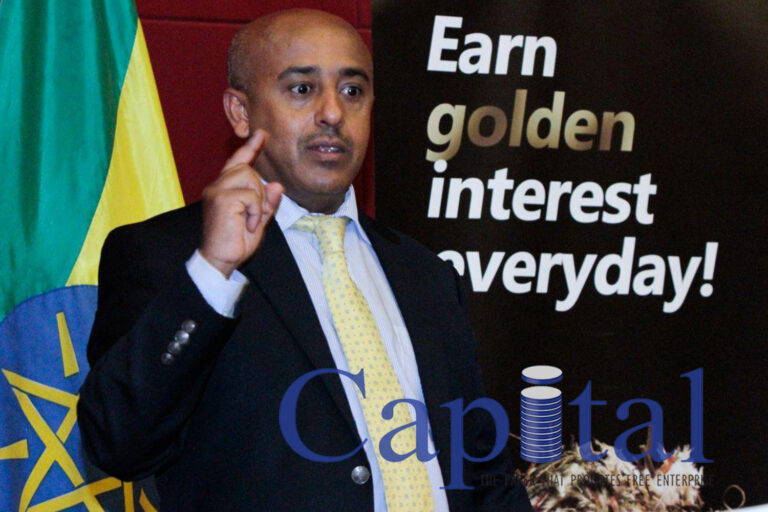
Zemen Bank a pioneer in lowering loan interest rate for the horticulture industry now adds the hospitality, tourism and manufacturing industries in its scheme.
Dereje Zebene, President of Zemen Bank, said that his bank has cut the interest rate for hospitality, tourism and manufacturing industries from 0.5 to 3 percent.
He said that the cut will continue for two months until the end of the financial year, June 30.
“From the total loan portfolio of the bank the three sectors took 42 percent or four billion birr,” Dereje said.
Even though he declined to give the exact figures that his bank will lose because of the interest cut, he said it is significant. “It is unethical to use it for advertisement and disclose clients business secret, but we will lose millions of birr,” Dereje says adding “it is our responsibility to take such measures to tackle this uncertain situation.”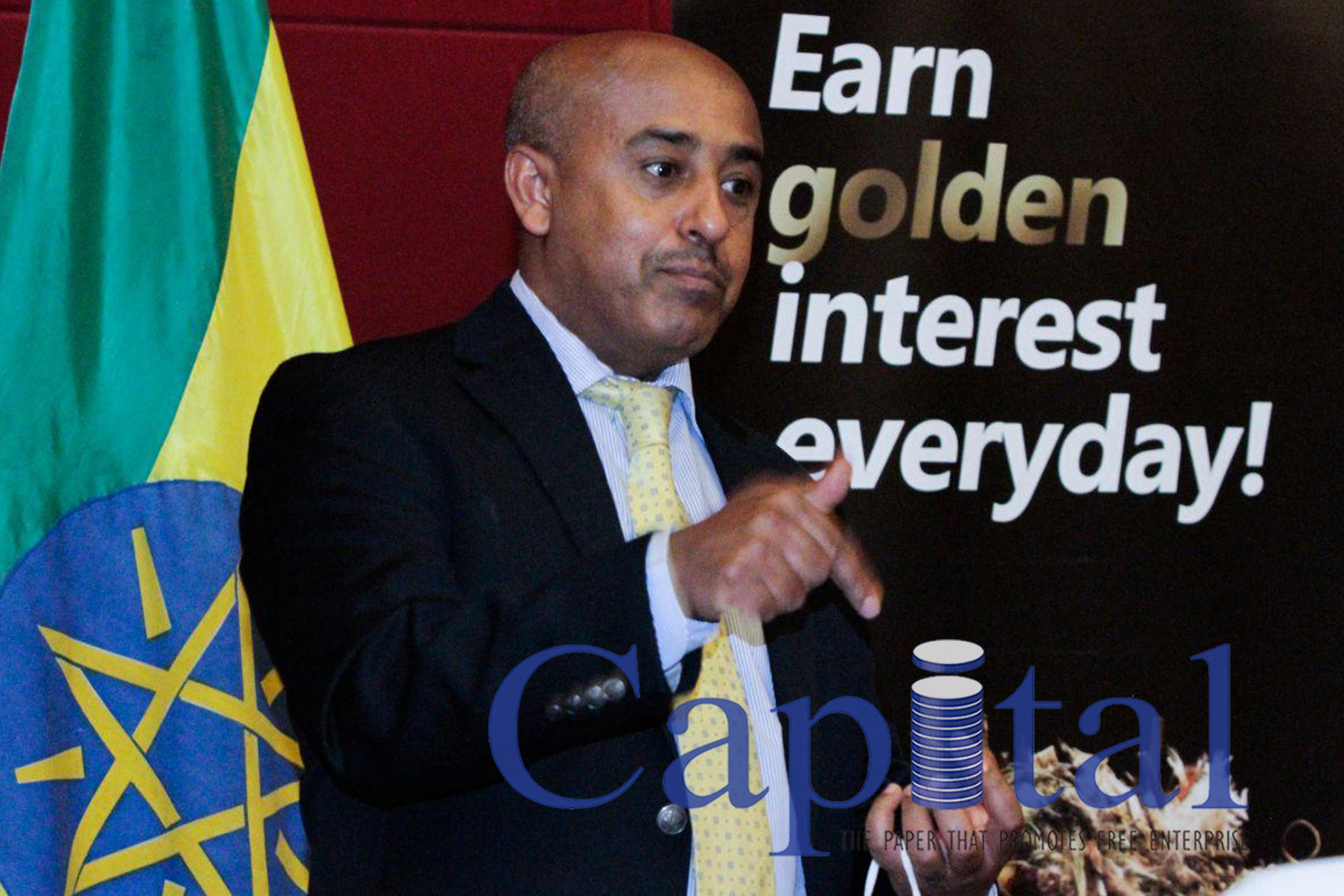
Such measures will contribute for healthy loan settlement in the future since customers will keep their capacity as normal because of interest rate cut, according to the president.
Zemen Bank froze three months interest rate for the horticulture industry which is worth half a billion birr.
“Totally the loan portfolio that gets interest rate cut at Zemen is 4.5 billion birr,” Dereje added.
He reminded that the decision of the bank is considering the status of the bank that will not affect it.
Such decision is besides the measure of rescheduling loan for customers. The bank stated that it is providing loan reschedule for any interested customers since the central bank supports the idea.
“We do want health business for our customers due to that we are providing supports as much as we can,” the president stated.
From the total portfolio that is included on the interest rate cut the 2.7 billion birr is directed to the manufacturing sector.
Few weeks ago Zemen donated five million birr to fight the outbreak and one million birr that will go directly to the Ministry of Health for the support of health workers.
International air transport, tourism bodies appeal donors to support Africa’s Travel and Tourism sector

Five international air transport and tourism bodies have launched an appeal to international financial institutions, country development partners and international donors to support Africa’s Travel and Tourism sector which employs some 24.6 million people on the African continent. Without urgent funding, the COVID-19 crisis could see a collapse of the sector in Africa, taking with it millions of jobs. The sector contributes $169 billion to Africa’s economy combined, representing 7.1% of the continent’s GDP.
The request is being made by the International Air Transport Association (IATA), the World Tourism Organization (UNWTO) of the United Nations, the World Travel and Tourism Council (WTTC), the African Airlines Association (AFRAA) and the Airlines Association of Southern Africa (AASA).
These organizations are jointly calling on international financial institutions, country development partners and international donors to support the African Travel and Tourism sector through these tough times by providing USD 10 billion in relief to support the Travel and Tourism industry and help protect the livelihoods of those it supports directly and indirectly; access to as much grant-type financing and cash flow assistance as possible to inject liquidity and provide targeted support to severely impacted countries; financial measures that can help minimize disruptions to much-needed credit and liquidity for businesses including the deferral of existing financial obligations or loan repayments; and ensuring that all funds flow down immediately to save the businesses that need them urgently, with minimal application processes and without impediment from normal lending considerations such as creditworthiness.
“The impact of the COVID-19 pandemic is being felt across the whole tourism value chain. The sector and the millions of livelihoods it supports across the world, including vulnerable communities are particularly exposed. International financial support is key to ensuring that tourism can lead to wider economic and social recovery in these communities,” said UNWTO Secretary-General, Zurab Pololikashvili.
Some African governments are trying to provide targeted and temporary support for hard-hit sectors such as Travel and Tourism. However, many countries lack the necessary resources to help the industry and the livelihoods it supports through this crisis.
“Airlines are at the core of the Travel and Tourism value chain that has created quality jobs for 24.6 million people in Africa. Their livelihoods are at risk. Containing the pandemic is the top priority. But without a lifeline of funding to keep the Travel and Tourism sector alive, the economic devastation of COVID-19 could take Africa’s development back a decade or more. Financial relief today is a critical investment in Africa’s post-pandemic future for millions of Africans,” said IATA’s Director-General and CEO, Alexandre de Juniac.
“The situation is now critical. Airlines, hotels, guesthouses, lodges, restaurants, meeting venues and related businesses face mounting losses. Typically, tourism is comprised of 80% of small and medium-sized enterprises (SMEs). To preserve cash, many have already begun laying off or placing staff on unpaid leave,” a statement from IATA reads.
“The Travel and Tourism sector is in a fight for survival, with over 100 million jobs losses globally and nearly eight million in Africa alone due to the COVID-19 crisis. Travel and Tourism is the backbone of many economies across Africa and its collapse will lead to hundreds of millions of livelihoods being impacted and enormous financial pressure for years to come. Now, more than ever, it is vital that governments work together on a global coordinated approach towards a swift recovery and ongoing support for Travel and Tourism. It is critical that the most vulnerable communities receive international help. The speed and strength with which the international community comes together and responds through international financial institutions, country development partners and international donors will be paramount to provide support to the many millions of people whose livelihoods are heavily dependent on our sector,” added Gloria Guevara, WTTC President and CEO.
“Air transport and tourism industries are among the worst impacted by the COVID-19 pandemic. Air transport is critical for the economic development and integration of the African continent. As such, support to the airline industry will aid in a faster economic recovery. An end of operations by African airlines would trigger a host of serious financial consequences, while replacing the air service provided by the airlines would be a challenging and costly process. Urgent, immediate and consistent measures need to be taken for the survival and rebound of the industry,” said AFRAA Secretary-General, Abdérahmane Berthé.
“The impact of COVID-19 in Africa continues to be brutal. Air travel and tourism have essentially shut down. Now, more than ever, international countries need to come together to help those communities that are most vulnerable. The survival of our industry and its allied sectors has serious ramifications for Africa’s entire air transport system,” said AASA CEO, Chris Zweigenthal.
New WHO estimates Up to 190,000 people could die of COVID-19 in Africa if not controlled
Eighty-three thousand to 190 000 people in Africa could die of COVID-19 and 29 million to 44 million could get infected in the first year of the pandemic if containment measures fail, a new study by the World Health Organization (WHO) Regional Office for Africa finds. The research, which is based on prediction modelling, looks at 47 countries in the WHO African Region with a total population of one billion.
The new estimates are based on modifying the risk of transmission and disease severity by variables specific to each country in order to adjust for the unique nature of the region. The model predicts the observed slower rate of transmission, lower age of people with severe disease and lower mortality rates compared to what is seen in the most affected countries in the rest of the world. This is largely driven by social and environmental factors slowing the transmission, and a younger population that has benefitted from the control of communicable diseases such as HIV and tuberculosis to reduce possible vulnerabilities.
The lower rate of transmission, however, suggests a more prolonged outbreak over a few years, according to the study which also revealed that smaller African countries alongside Algeria, South Africa and Cameroon were at a high risk if containment measures are not prioritized.
“While COVID-19 likely won’t spread as exponentially in Africa as it has elsewhere in the world, it likely will smoulder in transmission hotspots,” said Dr Matshidiso Moeti, the WHO Regional Director for Africa. “COVID-19 could become a fixture in our lives for the next several years unless a proactive approach is taken by many governments in the region. We need to test, trace, isolate and treat.”
The predicted number of cases that would require hospitalization would overwhelm the available medical capacity in much of Africa. There would be an estimated 3.6 million-5.5 million COVID-19 hospitalizations, of which 82,000-167,000 would be severe cases requiring oxygen, and 52,000-107,000 would be critical cases requiring breathing support. Such a huge number of patients in hospitals would severely strain the health capacities of countries.
A survey of health services in the African region undertaken in March 2020 based on self-reports by 47 countries to WHO revealed that there were on average nine intensive care unit beds. These would be woefully inadequate. Additionally, the physical access to these services to the general population is very low, suggesting many people would not even have the chance to get to the needed care. Diseases that could be managed could easily become more complicated as a result.
The study recommends that countries across Africa need to expand the capacity particularly of primary hospitals and ensure that basic emergency care is included in primary health systems.
“The importance of promoting effective containment measures is ever more crucial, as sustained and widespread transmission of the virus could severely overwhelm our health systems,” said Dr Moeti. “Curbing a largescale outbreak is far costlier than the ongoing preventive measures governments are undertaking to contain the spread of the virus.”
Containment measures, specifically physical distancing and hygiene improvement, aim to slow down the transmission of the virus so its effects happen at a rate manageable by the health system.
All countries in the WHO African Region are using these results through the WHO country offices to inform their containment actions. The detailed methods and results are currently in press at the British Medical Journal-Global Health after extensive peer review and validation.
Dr Moeti announced these new projections during the WHO Africa Media Leader virtual press conference today which was held with the support of the World Economic Forum. The other speakers were Dr Amit Thakker, Executive Chairman of Africa Health Business and President of the Africa Healthcare Federation and Stephen Karingi, Director of Regional Trade and Integration, Economic Commission for Africa.
