

Price distortion is one of the major pillars of late capitalism or cronyism for short. When there is no agreed upon standard to measure something, it is relativity and arbitrariness that take over the whole task. For the obvious reasons, these two cannot serve as the foundation of a system of rational measurement/metrology. In our current capitalist global economy price is supposed to measure almost everything that is in play. However, since 1971, incoherent relativeness and ineffective arbitrariness were systemically introduced into the global economy by way of measurement. This situation came into being when the Bretton Woods Agreement collapsed, i.e., when the US government officially abandoned the Dollar’s convertibility to gold. At the time all other currencies were pegged to the US Dollar, hence, by extension to gold. After 1971, prices of goods/services became prone to the built-in-inflation of state’s policies!
Price is the most crucial signal that facilitates production, services and trade in a capitalist world economy. When prices are distorted, including the pricing of money itself (because of various manipulations) the system loses its most celebrated function, namely the efficient allocation of capital! 1971 ushered, explicitly/implicitly, economic policies based on unearned phony money. This economic lunacy, implemented and operating at the global level, started to create fictitious prices worldwide and ended up dictating the allocation of resources, including the non-renewables! Useless and unproductive projects proliferated the globe as a result of this intentional mispricing, fully anchored on phony money. The world is now paying the price for such shortsighted policies. The abandonment of the gold standard, amongst many other things, encouraged nation states to indulge in the excessive manipulation of the market. The result; inflation became the foundation of all economic policies in each and every country of the world. Deficit financing, which has become a currency in the nation states budgets, owes its modern existence to the fiat/phony money system. At times, states conviction of ‘inflate or die’ can get pretty much out of hand (Argentina, Zimbabwe, etc.) forcing the intervention of multilateral institutions likes the IMF, ECB, Etc.
Ironically, it was the socialist states that undermined, rather intentionally, the logic of price discovery in their planned economies. The political orientation of the ‘socialists’, i.e., USSR, China and others, was primarily ethical and was not obsessively concerned about efficiency, which of course the market mechanism excelled at. Ultimately, it was the incapacity of the socialist economies to appreciate the centrality of the price mechanism in the world economy that did them in, so to speak! The current systemic distortion of prices that took over the West’s imagination after 1971 will also have the same effect, sooner than later. By comparison, the depth of intentional price distortion in the West is more cynical and malicious than the socialisms of the bygone era. When a country allows its banks, under the auspices of the central banks, to print/digitize money with abandon, inflation is bound to be the outcome. The systemic inflation created all over the world is paid by the sheeple (human mass). The continuous pauperization of the sheeple (human mass) and its general livelihood is one way of paying for the excessive money printing. This is exactly what happened in the West, in late 1970s and early 1980s. To thwart off the dangerous adventure, the then FED (the late Volcker) raised interest rate to about 20% and directed the world capital into savings, thereby creating havoc in the periphery/third world. Don’t forget, at the time the US dollar was the sole global reserve currency!
In 1985, the Plaza Accord was signed by the major core countries of the system to depreciate the US dollar, particularly against the then emerging giants of production, namely Japan and Germany. The Japanese bubble thus created (compliment of the yen’s appreciation) gave rise to an immense misallocation of capital. For example, just before the burst of the Japanese bubble, the Tokyo Palace of the emperor was valued more than the whole state of California! In 1989 the Japanese economy collapsed and it has not regained its mojo since then. In 1989 the Nikkei index constituting the top 225 companies in Japan, was about 40,000, today it is below 20,000! Germany was probably saved because of the two unions, East Germany & European Union. The Deutsch Mark became the currency of united Germany, while the DM became the template and the anchoring currency behind the euro. The Euro was supposed to benefit from the Bundesbank’s traditional emphasis on guarding against excessive inflation. Today the Mediterranean countries of Spain, Portugal, Greece and Italy as well as the smaller nations like Ireland, are facing the brunt of this Euro policy. Since these countries cannot print their own fiat currencies, but are nonetheless forced to live and compete in a fiat world, they faced economic dislocation. For instance, Italy has lost over 25% of its industrial capacity since joining the Euro currency. Even in these days of pandemic, the monetary conservatives, (Germans, Dutch, etc.) are not willing to accept the issuances of certain bonds (by the EU) to help countries like Italy and Spain. In fact, only few days ago, the German Supreme Court lent its support by upholding German/Dutch position, against the protestation of Brussels’ bureaucrats. More and more, the project of the European Union is becoming untenable!
The fiat currency regime impacted the African economies in ways that was not easy to reverse. Unsustainable mode of development, based on the export of non-renewable resources, was taunted as a solid foundation for resilient and sustainable progress that will bring decent livelihood to Africa’s sheeple. However, the reality was and still remains very different, notwithstanding the idiotic rhetoric of the global establishment and its local lackeys. Extreme dependence on external institutions of economic governance, (like the BW institutions, EU, etc.) both for policies and finance, has left the nation-states of Africa without reliable bearing. Africa’s youth must start interrogating our lopsided integration into the world system, which is based on perennial unequal exchanges. Without rectifying this centuries old regime of exchange (unequal exchanges), there will be no meaningful and equitable development in Africa. See our Covid-19 update next column and other articles on page 30.
“In the absence of the gold standard, there is no way to protect savings from confiscation through inflation. Deficit spending is simply a scheme for the ‘hidden’ confiscation of wealth. Gold stands in the way of this insidious process. It stands as a protector of property rights.” Alan Greenspan. Good Day!
DISTORTING ECONOMIES

DBE gets significant capital injection
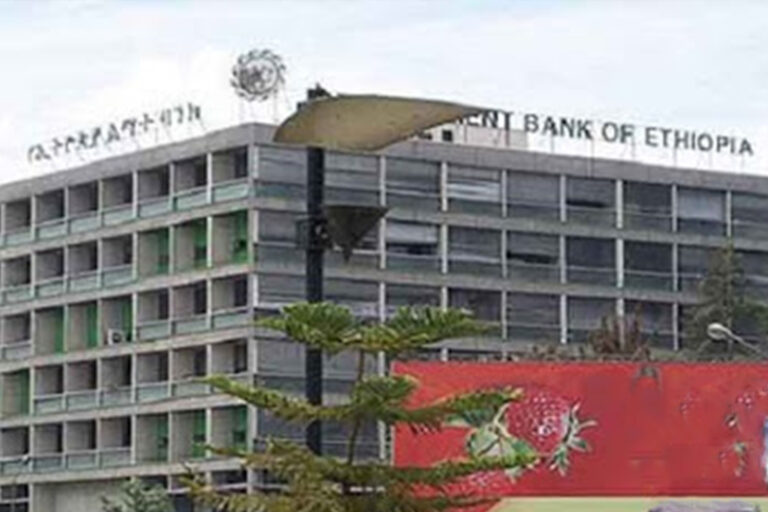
The Council of Ministers has approved to increase the authorized capital of Development Bank of Ethiopia.
According to the report released by the Council of Ministers it approved to increase the authorized capital of the bank to 28.5 billion birr by adding 21 billion birr. Currently the authorized capital of the Bank is 7.5 billion birr.
The decision by the cabinet reasoned that, “as the Development Bank of Ethiopia is a policy bank, and as such it needs to have the capacity to effectively implement the nation’s developmental policies; it is then imperative that its capital is raised sufficiently.”
“The new administration of the bank has been asking the government to increase the capital of the bank,” said Hayleyesus Bekele President of the bank adding that this will help it to increase the lending capacity of the bank.
The state owned development financial institution is supervised by the Public Financial Enterprises Agency and supports developmental projects mainly agricultural, industrial, manufacturing and foster the investment of private capital for productive purpose. One of the mandates of the bank is the provision of development credit to viable priority projects along with technical support through mobilizing resources from domestic and foreign sources.
Priority area projects financed by the Bank include commercial agriculture, agro-processing, manufacturing and extractive industries. DBE also extends a special line of credit for borrowers that operate in the textile, garment and leather and leather product industries. As an additional special line, the Bank offers credit for the procurement of raw materials in the pharmaceutical industry and to companies that supply products to corporate government entities.
The bank has reported that it has earned 951.6 million birr profit before tax during the last six months of the current fiscal year which is 228 percent increase from the last year same period.
The bank has also disbursed 4.4 billion Birr loan and collected birr 4.51 billion.
According to the president, the performance has shown increment in loan approval and collection by 4 percent and 125 percent, respectively, as compared to same period last year.
DBE has started implementing its five-year strategic reform plan based on studies. The strategic reform plan was designed by taking into consideration the homegrown economic reform of the country and the objective realities of the bank.
The bank’s NPL stood at 34 percent in the first half of the current fiscal year. In last fiscal year 2017/18, nonperforming loan ratio was at 40 percent.
“Increasing of the non performing loan of the bank and the amount of capital has been limiting the bank to give loan for other important sectors” said Haileyesus.
Shortage of foreign currency, termination of agricultural loan and political unrest around the country were point out as reasons of the rising ratio of NPL in the last fiscal years.
Rain fed agriculture investment and failure of rain fed commercial farms in some regions of the country is also one big player for the rapidly growing non-performing loan. As one of these reasons the bank has banned to give loan for rain fed agriculture starting from 2017.
Ethiopian airlines to see 1 billion dollar revenue loss
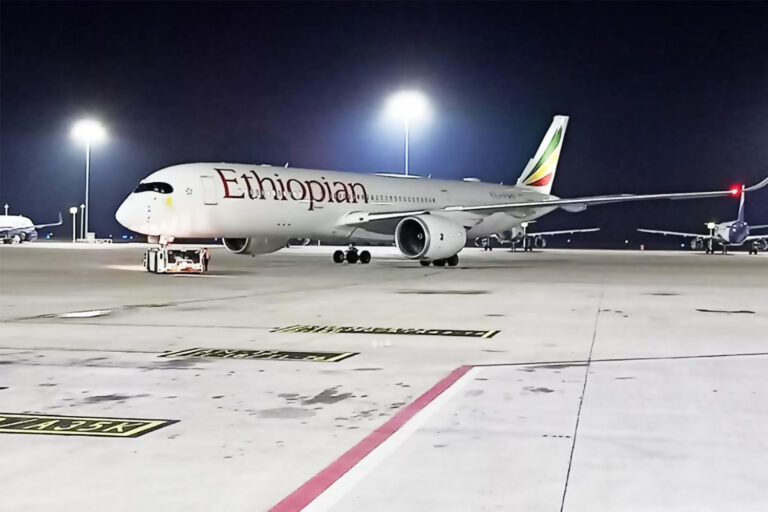
Vows to support cash-strapped African carriers
The biggest African airlines, Ethiopian airlines group is going to report around one billion dollar in revenue loss in the first six months of 2020.
According to sources the airline is losing about 1 billion dollar from ticket sales starting from January up to June after the global pandemic brought passenger travel to almost zero.
Recently Ahmed Shide, State Minister of Finance announced that, the government will support the airline and also international institutions are also egger to support the airline including World Bank, International Financial Corporation and African Development Bank. “Additional to the support of the financial institutions, the government will also give support based on the economic response plan to help the airline through these difficult times,” Ahmed said.
Recently the international air transport association (IATA) forecasts in 2020 African airline industry will see 51 percent airline passenger revenue drops compared to 2019 because of the Covid 19.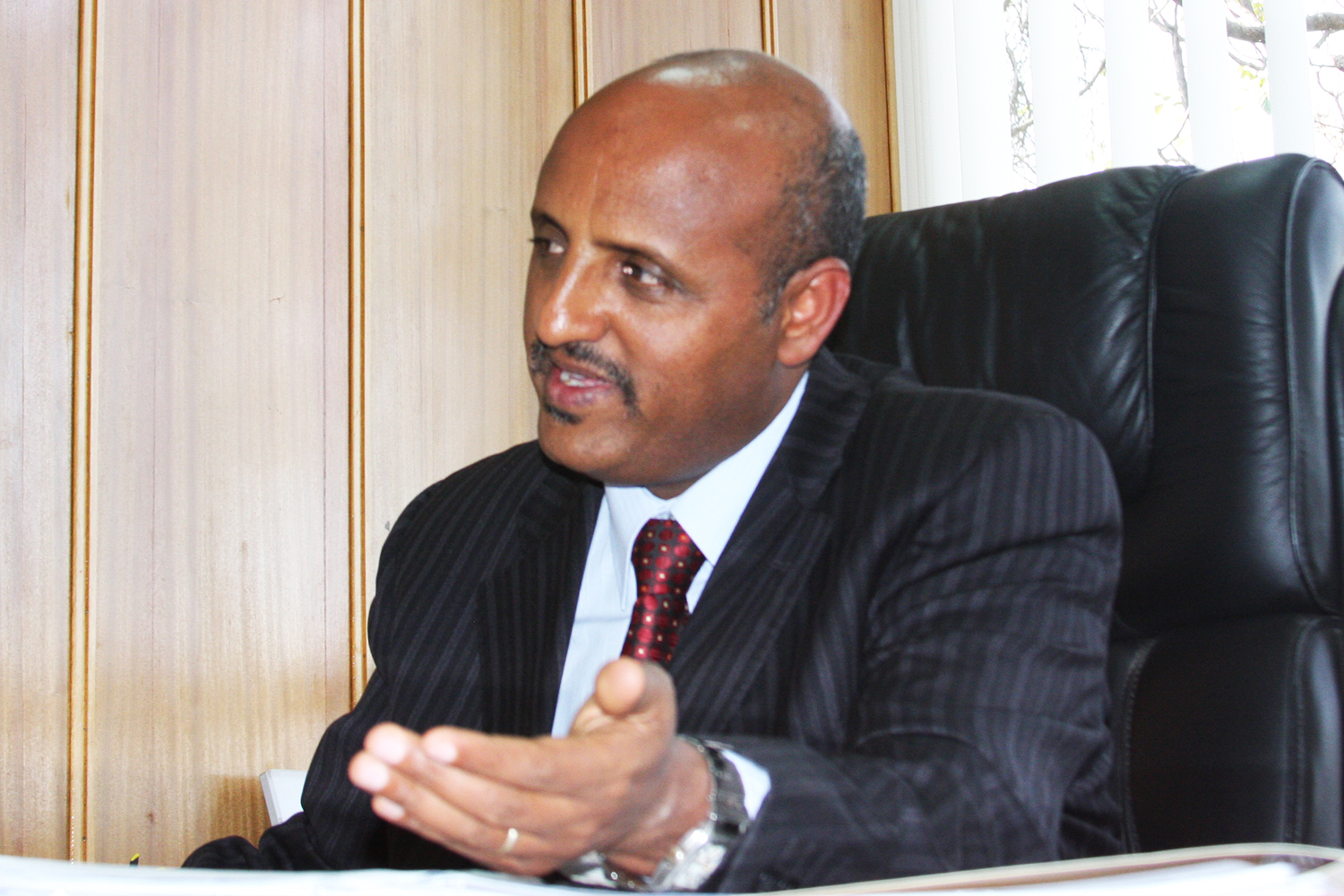
According to the revised report launched by the association African airlines will lose six billion dollars in revenue compared to the last year as if international travel restrictions are assumed to be reduced more slowly, with only 50% and continue by the fourth quarter of the year. And since Ethiopian is the largest airline in the continent it will have the lion’s share of that loss.
Ethiopian Airlines was Africa’s busiest carrier, making more than 350 flights per day to more than 120 destinations.
To survive from the damage the air line is doing new stream of income, including the cargo and MRO business and recently the airline has converted its Boeing passenger aircrafts to cargo.
In related development Ethiopian Airlines is prepared to come to the rescue of stricken carriers around Africa, even as the continent’s biggest airline deals with its own mounting losses and grounded planes due to the Covid-19 pandemic.
As per Bloomberg, the airline is in talks with the government of Mauritius about the revival of Air Mauritius, which was put into administration last month, Ethiopian CEO Tewolde GebreMariam said. And while there are no negotiations currently taking place with South Africa, Tewolde would be open to a conversation about that country’s bankrupt national airline.
Air Mauritius has joined the insolvency league in April as the company’s board of directors announced that the carrier would be put into voluntary administration. The airline which completed 50 years in 2017, hosted the African Airlines Association’s (AFRAA) 8th Aviation Stakeholder’s Convention and 51st AFRAA annual general assembly (AGA) & summit in 2019.
“The Mauritian government is thinking of restarting that business with Ethiopian Airlines,” Tewolde said. “We are at the initial point of the discussion to see what kind of partnership or joint venture it will be.”
The global airline industry has been thrown into a historic crisis by the coronavirus outbreak, which has led to the grounding of almost all aircraft as governments close borders.
South African Airways (SAA) is out of cash and in the middle of a tug of war between government, unions, and administrators over its future.
Ethiopian last held discussions with South Africa’s government about SAA in early January, the CEO said, and the carrier would be willing to take part in a proposed revival of the national airline.
Bankers blasts greedy private sector actors
The COVID-19 pandemic significantly affects the Ethiopian economy like others since the case is a global problem.
Experts said that the country’s economy has been affected by the virus since the first case was reported in mid-March in Ethiopia.
They said that meanwhile the first case in Ethiopia is reported in the country about two months ago the economic effect was experienced before that since the country is directly related with global actors.
For instance Tamirat Wondyrad, a project engineer at the industrial scale bakery, Sheger Bread Factory, recently told Capital that the factory that is now in the last stage of commissioning has been affected because of the outbreak of the virus.
“The coronavirus affects our activity,” Tamirat says, adding “the transformer that will be planted at the factory with a capacity to bake 80,000 million loaves of bread per hour, was procured from Wuhan, a Chinese city that the first case of COVID-19 reported.”
“Most of other works are finalized, while the bakery that consume over 5MW needs sustainable power supply. However the transformer is delayed because of the pandemic,” Tamirat told Capital.
He added that the number of workers at the project site located at Qality has reduced to keep the social distancing that has also affects the activity.
Similar effects have been observed in other areas. Recently the hotel association in the capital city stated that its member’s hotel occupancy rate has dropped to 2 percent that contributed to millions of dollars loss in the hospitality industry.
The hospitality industry challenge is similar for the tourism sector, while the effect in the horticulture industry is much higher.
Tewodros Zewdie, Executive Director of the Ethiopian Horticulture Producer Exporters Association, told Capital that the pandemic is a disaster for fresh flower sector.
He said that it has damaged the sector heavily as companies are unable to run their usual export.
The government also immediately came to action particularly for the horticulture sector that followed by hospitality and tourism sector.
It lifted some kind of taxes for selected sectors. Laeke Ayalew, Minister of Revenue, said that the government revenue mainly from import export sector would be dropped because of the virus effect.
It has cut several expenses for the sector to keep their employees and bypass the disaster. At the same time financial institutions are taking initiatives by themselves and are also forced by the central bank, National Bank of Ethiopia (NBE) to be part of the mitigation plan.
But they are not comfortable by the private sector who demand more measures from the private banks.
“We understand businesses are highly affected by the outbreak, but they are operational for almost eight months of the budget year until the outbreak was reported in Ethiopia,” a banker told Capital.
“For instance the peak season for the hospitality industry, which has several incentives by the government, has passed before the outbreak but they did not consider that and exaggerated and claimed that they are on bad condition to pay salaries and other expenses,” observers said.
A bank president stated that it is relevant expecting more from banks by the government but the private sector is demanding extraordinary measures.
“If you see the manufacturing industry that was highly affected by several factors like power shortage and lack of adequate input access or foreign currency to import raw material before this crises, but it did not get such kind of support,” the bank president said. He added that the manufacturing industry is similarly heavily in debt even more than the hospitality sector that demands high relief because of COVID-19.
According to the bank president, at the same time the manufacturing industry is also affected by the virus.
“Now some private sectors are making their profit private and socialize their losses,” a banker criticized the behavior.
Recently the private sector claimed that it did not get finance from banks, meanwhile the government provided private banks 15 billion birr to keep their liquidity in good condition.
“Such as recently the private industry claimed for NBE that it did not get additional finance from banks, even though the government injected 15 billion birr. This indicates how some private sector actors demand using the opportunity to abuse the system. Even some of them expected a debt cancelation, which is amazing,” the bank president said.
Few weeks ago on their virtual conference with central bank officials the bank leaders expressed their disappointment that the private sector is misunderstand the government’s initiative.
“I don’t mind the interest of the government who demands more action from banks as they are better than other economic actors but the savage behaviors from some private sector actors is very disappointing,” another bank president told Capital.
“Some of the customers for example are demanding a three year extension for loan settlement. The problem might be solved in the coming six months or it will be extended if the case is continued, but it is strange to demand such incentives as of today on public money,” a banker expressed his disappointment.
“The case is in early stage but the private sector actors exaggerated the challenge they faced after they operated almost for two third of the budget year,” he added.
At the same time the government is highly responsible to control the health of the banking industry, according to finance sector experts, since they are expected to continue on their profitability for the health of the country and the overall economy of the country.
It may be a time to go on the breakeven level for these few months but it is not similar for banks like other sector. “We might be working for 8 months of the year but if the effect will continue we would not declare dividend even if the banks registered profit,” another bank president told Capital.
“We would see the impact of the current effect in the coming year. If the problem continues and the default rate increased we will use the dividend as compensation for the loss that is why we said the profitability of banks is crucial for the country’s economy,” he added.
Bankers said that even though the government put pressure on banks it is acceptable. “It is a behavior of poor country and government. Since it does not have a capacity it is looking on the better actors of the economy.”
