

Dubai-based independent hotel management company, Aleph Hospitality, took over the management of the Ramada by Wyndham Addis, in Addis Ababa, Ethiopia earlier this year. Due to the Cornoavirus outbreak, which followed soon after takeover, the hotel was partially closed but fully re-opened on 22 June, 2020.
In support of Aleph Hospitality’s brand values and the company’s “count on us to put safety first” campaign – featuring best in class health and hygiene protocols in line with the guidelines and regulations of the World Health Organization and local health authorities – the hotel has re-opened with a complete set of measures to protect the safety and wellbeing of its guests.
Since the management takeover, Aleph Hospitality has been looking at ways to enhance the hotel experience for guests and to optimise the property’s revenues with the addition of new facilities, including an extension of the gym, a new executive lounge, meeting room and a spa, set to open in October 2020.
The hotel, which has been operating since 2016 on Bole Road just minutes from the city’s international airport, becomes Aleph Hospitality’s second property in Addis Ababa, following the company’s takeover of the 115-key independently-branded Getfam Hotel in July 2018.
Aleph Hospitality re-opens the Ramada by Wyndham Addis
Ethio Lease hands over $7 m worth agricultural mechanization equipment to farmers
Ethio Lease, the first foreign-owned leasing company, handed over 16 combine harvesters to farmers and unions. The agricultural mechanization equipment are delivered to the farmers in line with the government’s strategy and the collaborative Memorandum of Understanding, Ethio Lease signed with the Ministry of Agriculture and the Agricultural Transformation Agency. The agreement came to effect to enable smallholder farmers who will not afford to buy agro-mechanization equipment by themselves. The latest delivery of combine harvesters to the farmers brings the total number of agricultural equipment being delivered to farmers to 100 with a total worth of more than $7 million fulfilling the commitment the company made to the farmers and the agricultural sector. The Company is also finalizing the import of dozens of combine harvesters worth $10 million which are expected to arrive in September and October. These combines are intended for the main harvest season. Girum Tsegaye, Ethio Lease CEO said “the continued arrival of these agricultural equipment demonstrates our commitment in supporting the country’s agricultural mechanization endeavour in lieu of solving foreign exchange issues to import such critical equipment.” He further stated “Sustainable agricultural mechanization can play a key role in enabling recovery and building long-term resilience of the farming community. Mechanization can improve efficiency, productivity and income in agriculture endeavour, and enhances food security and livelihoods of farmers.”
Customer service

Aschalew Tamiru works with Dashen Bank, as Director-Marketing and Customer Experience. He is among the first Marketing Management graduates of the Addis Ababa University. He has a total of 16 years of working experience. He has also been a lecturer of Marketing and Management courses in various Universities and Colleges for more than eight years.
His industry experience started when he joined Commercial Bank of Ethiopia as a first post graduate management trainee and served the Bank in different capacities including marketing, Branch manager and internal trainer. Currently, he conducts trainings for the National Bank of Ethiopia and other institutions. He is also on the jury of Dashen Kefta Entrepreneurship contest, Dashen Bank’s Ethiopian talent power serious which is part of Dashen’s corporate social responsibility initiative. He is also the founding member of Ethiopian Marketing Professionals Association. He recently authored a book titled “Make a difference with customer service” that focus on marketing and customer service. He talked to Capital about his new book and other branding concepts. Excerpts;
Capital: Can you please give us an overview about your new book?
Aschalew Tamiru: The book has a total of four parts. The first chapter discusses about basics of customer service, external and internal customers, customer personality style and other related facts.
The second part rises ‘why customer is top priority for companies?’ and presents practical facts and responses. Customer service principles, what do customers ever buy, positive attitude and customer service and building high performance team for good customer service are the other issues discussed in the chapter.
Chapter three is about how companies or businesses operating in the same industry with the same services or products to sell to the customers use customer service as a tool to make a difference and stand out from the competition. That is customer service and sometimes it is the only differentiating factor between organizations that contributes to greater customer retention loyalty and long term profitability. Furthermore, issues such as Customer’s First Impressions Effective Communication and Customer Service, Conversation over the Telephone, Business Email Communication and Major Do’s and Don’ts of Customer Service are well addressed.
Under the final chapter of the book customers of various types are discussed and it lends tools to deal with these customers. Issues like communicating with unsatisfied customers, dimensions of customer service, solving customers’ problems, customer service recovery, moment of truth, follow-up with the customer, quality customer service and benefits of good customer service are presented.
Capital: What is your reason to publish the book?
Aschalew: I have taught marketing and management courses at various universities, marketing as a profession gives top priority for customers.
Companies practicing Marketing philosophy in their work place, believes that customer is the most important person who pays everyone’s salary and who decides whether a business is going to succeed or fail. In fact, the customer can fire everybody in the company from the chairman (CEO) on down, and he or she can do it simply by spending his money somewhere else. Literally, everything we do, every concept perceived, every technology developed and associate employed, is directed with this one objective clearly in mind – pleasing the customer.
As a marketing and branding professional, I always question myself about my contribution and role in bridging the gap between this marketing thoughts and principles and what customers are practically experiencing at most companies of the country.
Ethiopians have thousands of years of hospitality culture in welcoming guests at our home, why this is not reflected and practiced at work place is the other reason that pushed me to write the book.
Capital: How do you evaluate our working culture and customer handling?
Aschalew: As a society, Ethiopians are very hospitable and friendly in welcoming guests to their home, but this may not be always true while one is visiting companies operating in the country. I strongly believe that the hospitable culture of the society that is only limited at home should be extended to every company and practiced as well. This enables the companies to satisfy customers with their services, to make a difference and win customers.
Capital: You have been a lecturer at higher education institutions. Do you think there are suitable lessons regarding customer service?
Aschalew: Well, customer service is the one and main aspect of marketing; generally marketing is the young discipline around the globe. Marketing is everywhere. In every walk of our life, we deal with marketing. I strongly believe that comparing to other disciplines, marketing has received the least attention among companies. Following this, most companies’ marketing departments are led by non-marketing professionals.
When one sees our universities, their marketing department didn’t have customer service course in their curriculum. Only some aspect of customer service is enclosed in some courses of marketing. Universities should incorporate separate customer service course in their curriculum and deliver it to the marketing students.
Capital: What will your book contribute to the field?
Aschalew: Whether one is new to his/her service role, looking for a job as a service provider, need a good refresher in the basics of exceptional customer service, or a trainer, this book will be helpful and an input in need.
Industries such as Banks, Insurances, Hotel and the likes whose services or products are somehow similar, may make a difference among themselves by working more on customer service. 
Customer service is not a department, rather is an attitude. Customer facing staff must have a positive attitude towards serving customers. Once the staff has a positive attitude, their knowledge and skill gaps can easily be bridged through customer service trainings and reading. In this regard, the contribution of this book is invaluable.
Capital: How is the feedback?
Aschalew: The feedback is very encouraging. The first five thousand copies have been sold out and the second round of publication is under way and it will be in the market by this week.
I’m receiving a phone call from various distributors to distribute the book; so far Jafar and Ha-Hu book stores are the main distributors. To make the book more accessible to the readers I’m advising the main distributor to distribute it to all book stores and walk in retailers. Besides, the book will be available in super markets soon.
Capital: Do you have any other work in the near future?
Aschalew: I have been determined to contribute my part to bring changes in the marketing of companies operating in Ethiopia; publishing the Book entitled ‘Make a Difference with Customer Service” is part of this effort. In addition to translating the book to Amharic and make available to the market, I have finalized my preparation to publish practical salesmanship book.
I also want to take part in the promotion of volunteerisms in the country. To this end, from the sales of the book, I decided to donate 10% to charity organizations.
Non-existence of proper customer service is already a problem in most places. The problem is more serious in public government organizations. To contribute my part as a Marketing and Branding professional, once the book is published in Amharic and COVID19 is eradicated; in collaboration with media and my marketing fellow friends I’m planning to organize a campaign to deliver customer service trainings to selected customers facing employees of public government organizations for free.
Exquisite photographs by African photographers display Africa On the Move on Wikipedia
Wiki In Africa, the international organisers of the 6th Wiki Loves Africa photographic and media competition announced the international prize-winners of the 2020 competition.
The competition takes place annually and calls for submissions along themed lines.
Both amateur and professional photographers and filmmakers are called to share the world they see every day; life recorded and observed from within their own communities. Their contribution forms a collection of royalty-free images about Africa, a continent that is often the subject of an external gaze and many subsequent stereotypes.
Initially intended as a month-long intervention, Wiki Loves Africa 2020 took place as the COVID-19 crisis hit Africa. It launched on the 15th of February, and the deadline was extended from 15th March to 15th April to facilitate the significant life changes wrought as the COVID lockdowns impacted each country after another.
Over the eight weeks of the competition, 1904 people contributed just shy of 17,000 images, 2 sound and 202 video files that broadly capture the 2020 theme of Africa on the Move! across the continent.
An international jury of photographers from across Africa and Wikimedia specialists from around the world deliberated on the 16,982 images. The quality of images was a key criterion in the selection, as was the encyclopedic value of the image, and also that it was visually arresting and well framed. Of equal importance was the quest to ensure that the unexpected was featured. As a project, Wiki Loves Africa is focused on obliterating the ‘single story of Africa’ by visually displaying the myriad of experiences that make up daily life on the continent. In this case, the thousands of images represented Africa in all its dichotomy through the theme of transport, from donkeys and potholed roads to high-speed trains, cargo and ferry boats.
After an exhaustive jury process that lasted several intense weeks , they decided on the following winners:
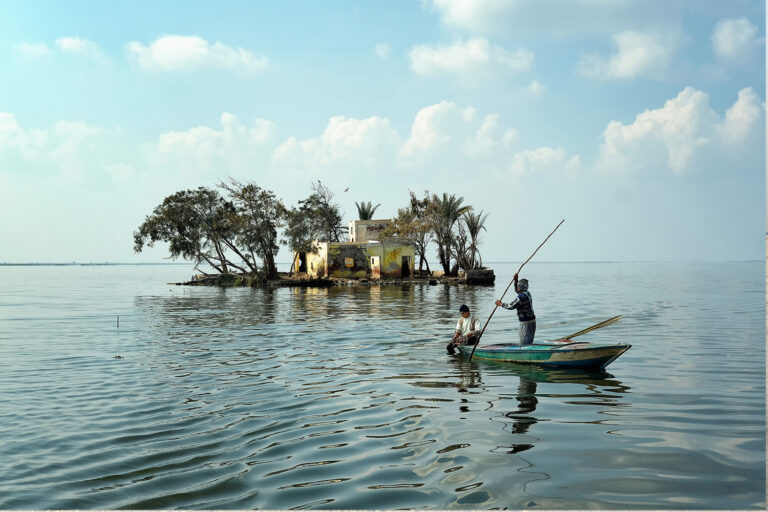
1st prize goes to the image My Homeland (Lake Burullus, Egypt) by Mohamed Ahmed Yousry
Mohamed said how he came across this image “I heard a lot about the virgin islands scattered along Lake Burullus. One particular image of an island called Shakloba haunted me. It might be the stunning image I saw on Facebook or the strange name of the island. But either way, curiosity got the best out of me and my travel companions and we decided to explore the island. Shakhloba is one of over a dozen small, mostly uninhabited islands in Lake Burullus. The magnificent lake, the largest in Egypt’s Delta, is located in Kafr El-Sheikh governorate. Lake Burullus has a very rich landscape. It is nestled in the green fields of the Delta, bordering it from the south, with Nile’s Rosetta branch towards the east and the Mediterranean to the north.”
2nd Prize goes to Bread delivery bicycle by Abd Elhamid Fawzy Abd Elhamid Tahoun also taken in Egypt.
Abd said that his motivation to take this shot was “because the boy attracted me for his great effort during work at midday, then I noticed the light and shadow and decided to take the shot.”
3rd Prize goes to A Mess by Summer Kamal Eldeen Mohamed Farag.
Summer is a return winner for 2020. She won 2nd prize in the 2019 contest. She took the photo during lockdown “because I like to shoot from the top when there are suitable configurations”.
Every year the contest looks for an image that represents ancient traditions within a modern context, with this in mind the following image won the Traditional Culture Prize.
Traditional Culture Prize went to Salt transport by a camel train on Lake Assale (Karum) in Ethiopia by Olivier.
The final prize goes to the new video category. The video prize goes to Bouba Kam’s Le Transport Lagunaire à Abidjan (STL) réalisé par Bouba Kam’s that displays an unexpected element to transport in Africa by taking us on a ferry ride across Abidjan’s Ébrié Lagoon.
The winning video was chosen by the competition organisers for its quality imagery and the simple, contemporary way of sharing the journey on board Abidjan’s Lagoon Ferry.
The encouraging entries from across Africa, events were held by local Wikipedia volunteers to encourage people to contribute photographs, and share information on the specifics of Wikipedia licensing and how to upload their entries.
