



Defeating coronavirus in one region isn’t enough

This is probably the most difficult situation the world is going through in our times. The Corona virus is testing us all. Here in Ethiopia, the virus is showing insignificant gains, but everywhere Federal and regional governments are taking increasing measures to lock down their cities, and now close down their borders. People are scared, and are not sure what to think. Public health experts are confused. The virus doesn’t always act as you think it should.
Globally the number of casualties is showing rapid growth. In Italy deaths from coronavirus continue to soar. The number of casualties in the U.S. is already greater than those in China. Despite the rising number of cases in the world, so far the number of reported cases in Africa remains low. In Ethiopia the number of confirmed cases is still less than 30. I suppose this puts the country in Phase 1 of the pandemic, meaning that all the cases are people who recently returned to the country or came into direct contact with somebody else who had.
Looking at these figures how can Ethiopia be scared of COVID-19?
Four months since the outbreak, Ethiopia seems to be one of the few best places to ride out coronavirus. And yet the country is in partial lockdown. Unfortunately, an unintended, although perhaps expected, consequence of the lockdown has been virtual paralysis of large part of the economy.
In reality what we should be scared of is the loss of reason and wave of fear that has induced our leaders into taking drastic measures suffocating our communities economically. What we should be scared of is the impact of the decision of the regional states to put up more borders to kill our brotherhood spirit of compassion.
Yes, desperate times call for desperate measures, but guys (i.e. region presidents) no need to go into Total War mode… To the barricades!… locking down the economy and restricting travel for fear of importation of no cases and no carriers… doesn’t make sense!!
Rather worry at the lack of coordination between the Federal, regional states, and our failure to enroll the Kebeles to prepare them to deal with such unexpected emergency. Worry that lessons are not being shared to make it easier to defeat the virus. Worry about how to make the COVID-19 test widely available. Worry at the lack of any clear strategy on whether to continue current social isolation measures…. Beside, do we know if they even work?
The only effective long-term solution against the coronavirus is a coordinated response at the federal level with a clearer statement of the goals of its activity, good judgments, and an understanding of the facts.
Right now, I believe the country needs to coordinate in six key ways:
1. Agree on the type of lockdown that is needed – if indeed anything is needed.
2. Look at all appropriate sources to get the basic equipment and material needed (masks, gloves, testing equipment etc.) to fight the coronavirus.
3. Avoid, and where necessary correct, exaggerated portrayals of the coronavirus crisis. Such exaggeration runs counter to the interest of citizens, because it leads to paranoia.
4. Encourage people to be frugal, and hunker down while reaching out to others.
5. Mobilize and build capacities of kebeles and organized communities to take lead if, and when, the need to contain the spread of the disease and strengthen solidarity within communities arises.
6. Ensure a gradual return to normal working life, so the behavior known as “social distancing” may stick around.
This is a funny war. Even though not that many are dying from the Covid 19 – compared to the 2002-03 SARS epidemic, caused by a different coronavirus – the measures taken to combat it are killing the economy. Surely, here in Ethiopia, if we don’t start getting people back to work over the next one to two weeks, we may not have an economy to return to.
Economic asymmetries in Africa
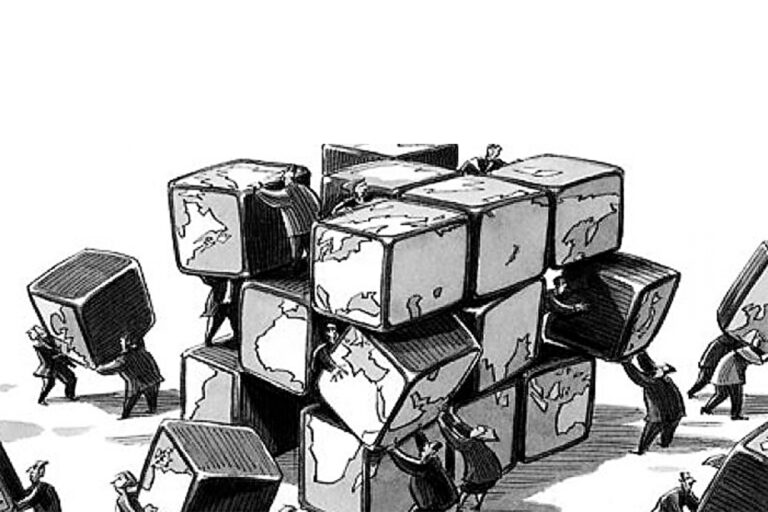
Today, African companies compete with producers from all over the world. African firms no longer produce within the protective borders of their own country, but rather are exposed to competition from producers all over the world. The use of new technologies, which could, in principle, trigger a surge in industrialisation, is limited by rising capital costs, a lack of research and development and low levels of human capital.
The consequences of lagging behind in global competition like this are manifold. African countries require more Foreign Direct Investment (FDI) in their agriculture and industry and also higher local investment. This inflow of FDI could bring foreign technology and knowledge. It could also create world market access, stimulate local entrepreneurship and lead to growth in medium-sized enterprises. FDI can stimulate industrial processes and promote the modernisation of agriculture. It can also promote linkages between foreign and domestic enterprises if the appropriate economic policy measures are taken at the same time.
FDI, however, still flows largely into the extractive sectors; these are large-scale investments that often have few linkages with local industries. The G20 Compact with Africa focuses on these capital-intensive investments and thus contributes to the formation of enclaves and the development of Special Economic Zones which also tend to have less of a positive impact on subcontracting to domestic companies. The data suggest that these investments will not facilitate any real catching up. Exports of manufactured goods are of marginal importance and their share in Africa has fallen rather than risen. Reducing the high trade and transport costs (ports, land transport) and the high non-tariff trade barriers in Africa, the EU, the USA and China will encourage export opportunities for African countries.
According to the recent IMF report, intra-African trade remains limited. The African Continental Free Trade Agreement (AfCFTA) could boost trade inside Africa. It is a huge opportunity and a big step in the right direction. If properly implemented, it will increase Africa’s economic growth and reduce extreme poverty more than any other single factor over the long term.
The conditions for expanding local industries are severely limited, companies are mostly small and medium-sized enterprises are only just beginning to gradually emerge. But there are many ways to promote rather than hamper African entrepreneurship. This can be achieved by removing the numerous obstacles, for example, putting a stop to favouritism, providing unrestricted access to electricity, improving financing opportunities and eliminating tax disadvantages for small and medium-sized enterprises, and by supporting start-ups, improving the Ease of Doing Business indicators, fostering Business Development Services and promoting industrial clusters.
The World Bank “World Development Report 2020” indicated that African companies are poorly integrated into global or regional value chains. However, a slight trend reversal has been observed for some years now. African enterprises have managed to join Global value Chains in the apparel, food, car production and automotive industries as well as in some business services. Global value integration is still constrained by traditional trade policy barriers. The African Continental Free Trade Agreement should thus make eliminating these barriers a top priority.
But African countries remain minor players in the global economy, accounting for just three per cent of global trade in intermediate goods. African countries’ exports tend to feature at the very beginning of Global value Chains where a high share of their exports enter the value chain as inputs for other countries’ exports, reflecting the still dominant role of agriculture and natural resources in their exports.
Industrialisation in Special Economic Zones is not really a panacea for most countries as the prerequisites for successful operations are usually lacking. But some countries, such as Ethiopia and Ghana, have shown that Special Economic Zones can be successful. Richard Newfarmer and Finn Tarp argued that it may be necessary to go beyond investment in the manufacturing industry with its low-skilled jobs and instead to invest in promoting qualified jobs in the service sector and in what are referred to as ›industries without smokestacks.
A breakthrough in Africa’s industrial development is unlikely to occur in the medium term. Many African countries have even deindustrialised, including some Compact with Africa countries. Most small countries, landlocked states, Least Industrial Countries and fragile states should not have high expectations of sufficient FDI or significant local industrial development, even if they pursue an industrial policy. Only a few larger Compact with Africa countries, such as Morocco, Tunisia, Egypt, Ethiopia, Ghana and Senegal may have the opportunity to develop industrial hubs. The stronger the local medium-sized enterprises, the better this will work. These companies will play a key role in economic growth and employment. FDI could play a complementary role in technology transfer through the integration of lo- cal enterprises into value chains.
There continues to be significant differences between the countries in Africa. There are some emerging countries, such as Ethiopia, Kenya, and Rwanda which are con- verging, or at least keeping up. The majority of countries, however, face low growth and high poverty. The Least Industrial Countries tend to stagnate, which is partly due to particularly high population growth in these countries. A convergence club of around 20 African Least Industrial Countries and/or countries with high or even rising poverty is emerging. It is also unlikely that many African countries will be able to create internationally competitive industries, which is linked to the fact that productivity growth lags behind that of other regions and global competition is extremely high. When it comes to the digital revolution and robotisation, Africa is failing to catch up.
Whether the Compact with Africa countries end up forming a club of emerging Middle-income countries cannot yet be foreseen. They are characterised by high growth resulting from numerous reforms Nevertheless, the potential of most Compact with Africa countries is far from being fully exploited. The extent to which the high growth actually indicates a structural transformation is not certain. Structural change is slow, the modernisation of agriculture is sluggish, informality and thus the poverty economy prevails.
Despite the opening of African markets to a large extent, foreign trade has not developed favourably. There are still strong asymmetries, diversification in foreign trade has progressed only slowly and integration in value chains is weak. This means that knowledge and technology diffusion currently only play a marginal role at best, partly also because African educational efforts and research activities lag behind those in other regions. Africa’s efforts to innovate are limited to initial attempts to imitate the abilities of successful countries and to use growth successes by importing modern goods to generate innovations in local companies.
The implication could be to focus on the endogenous development that can be promoted by a developmental state through reasonable protective measures and incentive systems. In his book entitled “Premature Deindustrialization” Dani Rodrik stated that asymmetries between the world’s leading countries and Africa are deepening and, consequently, the postulate of ›endogenous development‹ will have to be revived through selective dissociation policies.
To summarise, the Compact with Africa takes into account the links between macroeconomic framework conditions, business frameworks and financial frameworks. The measures envisaged by the Compact with Africa are important building blocks for the development of infrastructure, the flow of FDI and the debt situation. However, the Compact with Africa does not adequately factor in the links between good governance, Ease of Doing Business and other similar indicators, and business dynamics. On the contrary, asymmetries are reinforced rather than addressed. The focus on large-scale investments leads to structural distortion rather than inclusive and sustainable growth, which would be necessary to help reduce poverty and unemployment.
