

Renewable energy sources can play a crucial role to ensure health, food and education to the African population in the Covid-19 recovery phase. This is the outcome of the study “The impact of Covid-19 on Africa’s energy sector”, developed by RES4Africa Foundation and the United Nations Economic Commission for Africa (UNECA), in partnership with SDA Bocconi and with the support of the Southern African Power Pool (SAPP) and Ethiopian Women in Energy (EWiEn). The study was presented during a virtual event, which saw the participation of relevant representatives of the European and African energy sector, international agencies and organisations.
Even if the spread of Covid-19 is lower than in other continents (2.67% of global infections and 1.2% of the global death rate), the research shows that the pandemic heavily impacted Africa’s economies, that are suffering severely for their dependency on other economies, by the collapse of commodity prices and for the shutdown of commercial activities in response to the lockdown measures. As a result, the 2020 African GDP growth rate is expected to decline from 3.2% to 1.8% (with a contraction of 1.4%); however, if the shock level is heightened, the GDP contraction could reach up to 2.5%. This slower growth of Africa’s economies will have major implications on poverty reduction and employment growth, possibly causing from 5 to 29 million people falling back into extreme poverty.
In such a time of crisis, electricity access plays a fundamental role in securing basic needs and services such as health, food and education; however, the impact of Covid-19 on the African energy industry is likely to have dramatic effects on the progress made in recent years in expanding access to energy. The global economic crisis that causes a decrease in energy consumption makes it harder for existing customers and businesses to pay for their energy services and African utilities, some of which were already in difficult financial situations, may further struggle to run their business. At the same time, slowed supply chains and reduced investment flows are causing energy companies to run out of cash, putting many jobs at risk and reducing the customers’ access to energy.
The RES4Africa-UNECA study explains in detail that, in this scenario, the deployment of renewables-based solutions can be a pivotal contribution to Africa’s post-Covid recovery and to improve the quality of life of millions of people, even long after the end of the pandemic. African leaders and policy makers face a historical opportunity to coordinate their recovery initiatives in response to the pandemic in order to increase their efforts in achieving the Sustainable Development Goal 7: this implies building more robust and efficient energy infrastructure systems as well as implementing decentralised energy solutions using renewable energy sources.
“In this emergency, we must take the opportunity to rethink global systems and accelerate towards an economy that is more sustainable and more attentive to everyone. It’s time to finally unlock Africa’s potential and provide renewable energy to its population” states Antonio Cammisecra, President of RES4Africa Foundation and CEO of Enel Green Power, “Covid-19 is not a signal to slow down, but a signal to speed up”.
“The investments in sustainable energy will help mitigate the impact of climate change, while widening access to energy” continues William Lugemwa, Director of the Private Sector Development and Finance Division of the UNECA, “It will be essential, thanks to the economic and financial stimulus that will follow this crisis, to build and strengthen the energy system in a clean and sustainable way, pursuing a deep de-carbonisation and to prepare a more resilient socio-economic system to external shocks such as Covid-19”.
“Placing renewable energy at the heart of Covid-19 recovery measures is crucial to bridge the energy access gap and build a resilient and sustainable economy” comments Rabia Ferroukhi, Director Knowledge, Policy and Finance of the International Renewable Energy Agency (IRENA), “With the right policy frameworks in place, investments in renewables will bring much needed jobs, GDP growth and welfare gains – key to Africa’s long-term prosperity”.
“The IEA’s new Sustainable Recovery Plan shows it is possible to simultaneously spur economic growth, create millions of jobs, put emissions into structural decline and provide a substantial boost to the resilience of energy systems” adds Maximilian Jarrett, Africa Programme Manager of the International Energy Agency (IEA), “It’s a plan that could significantly benefit the energy sector and wider economy across Africa”.
“Renewables, thanks to their decreasing costs and greater resilience, as demonstrated during the coronavirus pandemic, are helping with the energy transition on a global scale, enabling society to make progress on several of the seventeen Sustainable Development Goals” concludes Matteo Di Castelnuovo, Professor of SDA Bocconi and Director of its Africa Lab.
Study highlights the role of renewables for a sustainable recovery

Prime Minister Abiy Ahmed has launched the construction of Bus Rapid Transit Lane (BRT)
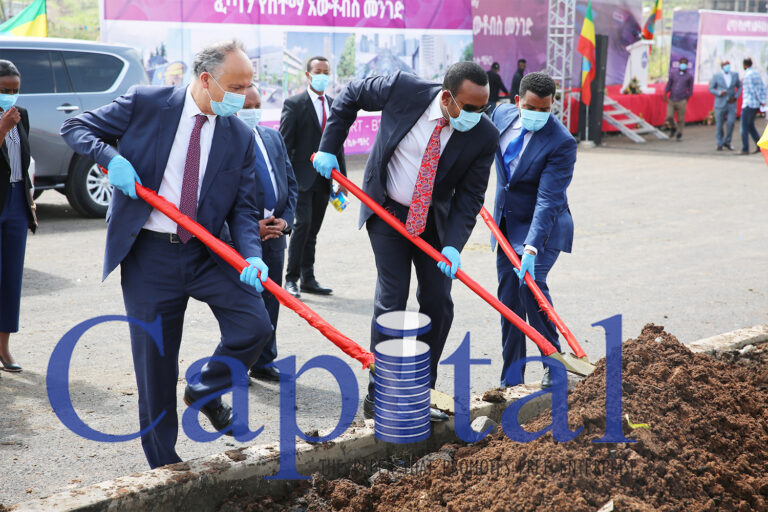
Prime Minister Abiy Ahmed has launched the construction of Bus Rapid Transit Lane (BRT) from Jemmo to General Wingate along with Deputy Mayor Takele Uma and French Ambassador to Ethiopia Frédéric Bontems.
The Bus Rapid Transit is said to have 20 Km length and will have bus stops at places in Addis Ketema, Lideta, Kirkos and Kolfe sub cities. Addis Ababa has a plan to build 20 more supplementary Bus Rapid Transit across several parts of the capital.
Agence Française de Développement Group (AFD) the French Development Agency, has been supporting the Addis Ababa municipality for the construction BRT. Two soft loans amounting to 85 million euros were extended between December 2014 and December 2015 for the construction of the BRT Lane. The construction of the BRT will be carried out by a French Contractor.
Standing Committee orders Finance Ministry to revise budget of NEBE
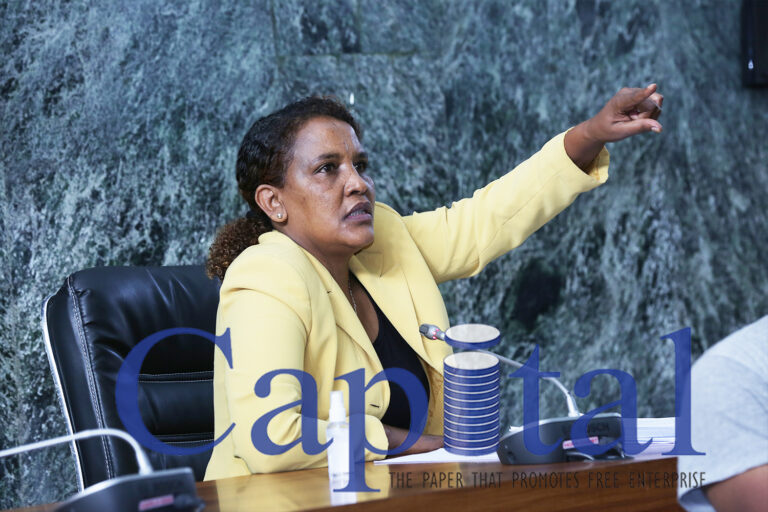
The Revenue, Budget and Finance Standing Committee of the House of Peoples’ Representatives ordered Ministry of Finance (MoF) to correct the National Electoral Board of Ethiopia (NEBE) budget allocation.
At the draft budget hearing held on Wednesday June 24 the standing committee, which is responsible to evaluate the budget proposal for democratization institutions like NEBE, Institution of the Ombudsman, Ethiopian Human Rights Commission, Supreme Court and the Office of the Auditor General, ridiculed the reduced budget that MoF proposed for the electoral board.
The information that Capital obtained indicated that MoF has reduced the budget for the board, while it is supposed to directly put the value that the parliament recommended weeks ago.
Initially NEBE requested a recurrent budget of 119.3 million birr, while after the detailed evaluation and joint discussion with the standing committee 85.1 million birr was approved by giving priority areas and postpones some of the requests.
According to the information, the Ministry gave a maximum of 76.3 million birr budget limit for NEBE for the year but the proposed budget that come from the ministry only allocates 27 million birr.
Nafekush Zewde, member of the committee at the hearing, said that the public property should be managed properly, but the standing committee has asked the ministry for comment on the electoral board budget request and considered the feedback of MoF for approval.
“We have evaluated detailed request and looked the technical issues and reduced over 34 million birr from the original request of NEBE,” she said at the session.
“For instance we have cut the requested salary costs for new employees, machinery maintenance, professional fees and others,” Nafekush said.
At the same time the ministry has also proposed the board to use the budget that was allocated but not used for the year after the national election was postponed because of COVID 19. A year ago NEBE secured 2.4 billion birr for the national election that was supposed to be held at the end of August.
At the same time for the election that will be held in the future the board requested over 4.26 billion birr and after detailed evaluation the standing committee, which is responsible to evaluate and approve the budget unlike other budgetary offices, approved close to 4.14 billion birr including over 393 million birr that will come from donors.
Members of the standing committee told Capital that the amount that MoF proposed is not acceptable and it is not its mandate to evaluate and revise the budget that the standing committee proposed on the democratization institutions.
Eyob Tekalign, State Minister of MoF, said that the ministry just tabled its technical assessment, while the final say is up to the parliament.
“Just for the record our technical recommendation is the amount that MoF proposed is sufficient, but it is the mandate of you,” he added.
He recommended that the standing committee will revisit the situation, while the standing committee ordered the ministry at another event to come up with the original proposal of the committee.
On the budget public hearing held on Friday June 26 the standing committee chaired by Lemlem Hadgu ordered the ministry to correct its budget and come up with the budget allocation that the committee proposed for the board in the 2020/21 budget year that will start on July 8.
Lemlem told Capital that MoF was not expected to revise the budget proposals that the standing committee proposed for the democratization institutions. “MoF will consult us but not revise the budget,” she said.
According to Lemlem, except NEBE the budgets for other democratization institutions are tabled as per the proposal of Revenue, Budget and Finance Standing Committee.
The Ministry is expected to revise its original proposal and come up with the recommendation of the committee.
T Bill to fill budget deficit
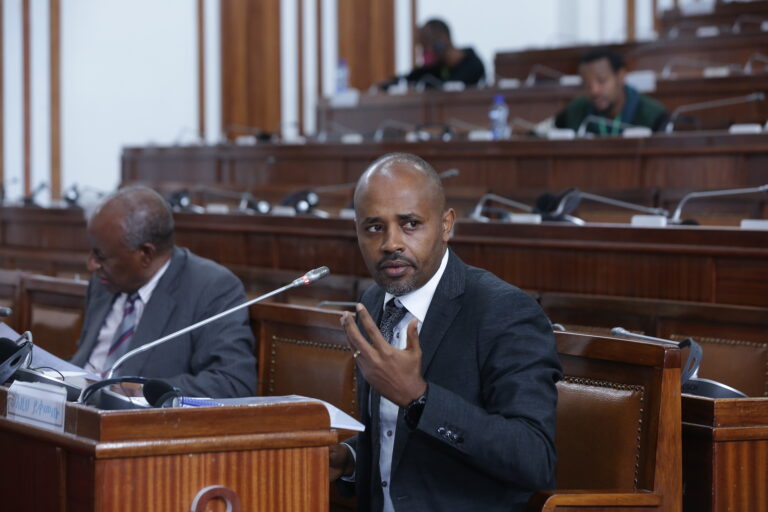
For the coming budget year the government targets to fill the major share of the budget deficit from Treasury bill (T bill) against direct borrowing. The tax collection from indirect taxes is also set as a major source for the period.
It has been recalled that Minister of Finance (MoF), Ahmed Shide, delivered his budget speech for the 2020/21 for parliament few weeks ago. For the budget year that will commence on July 8, 476 billion birr was tabled for ratification that has an increment of 7 percent from last year’s budget that includes the supplementary budget.
From the total budget tabled for the year the deficit is 126 billion birr, which is less than three percent of the gross domestic product (GDP) and of this 48 billion birr will be covered from external borrowing, while 78 billion birr will be filled from domestic borrowing.
During the hearing at the Revenue, Budget and Finance Standing Committee held on Wednesday June 25 Eyob Tekalign, State Minister of MoF, explained that the major share from domestic borrowing will be taken from T bill that the country reintroduced this budget year with attractive interest rate.
He said that the direct borrowing from the National Bank of Ethiopia (NBE) will not exceed 30 billion birr. International financial institutions advice that the budget deficit should not exceed from three percent of the country’s GDP and mostly the deficit for Ethiopia does not reach the percentage stated above.
At the same time filling the budget gap from direct borrowing from NBE is one of the instrument that hike the inflation since it is direct finance pump or money print.
This time around he said that the government is mainly using the finance sucked from the market than direct borrowing from NBE. He argued that for the budget year that is ending the central bank has traded 20 billion birr at the T bill auction, which is way much higher than the target. The target was to collect about 6 billion birr from T bill auction.
“It shows how the government will cover the major share of the budget deficit from T bill than money print,” he explained.
The NBE T bill that commenced in December last year with features and market base interest rates attracts private actors like financial institutions besides the traditional pension funds.
Eyob told Capital that in the 2020/21 budget year the government is expected to get up to 45 billion birr from T bill market. “It will make the direct borrowing to reduce from 25 billion to 30 billion birr,” the State Minister added.
“We reformed the T bill to collect liquidity from the market and our target was to amass 6 billion birr until the end of the budget year that will be closed on July 7 but the actual result is close to 20 billion birr until now,” he elaborated.
The T bill auction is held every two weeks under NBE. The domestic loan that is in total of 78 billion birr is 1.8 percent of the GDP.
On the session the standing committee members raised that the current COVID 19 effect would reduce the tax collection for the year of the coming budget year, while the budget proposal stated that the tax collection will cover 271.7 billion birr that has an increment of 11 percent compared with the projection for the current budget year.
“The current condition affects the economy and how could you collect the stated amount of tax for the year,” the standing committee members asked.
Eyob, who agreed with the concern, said that the government will focus on indirect tax than corporate tax. “You are right the corporate tax (income tax) will be reduced in the coming year due to the effect of the virus but the tax collection from indirect sources will fill the expected tax collection targets,” he explained.
In his speech presented on June 11, Ahmed said that the value added tax reform will be applied besides improving the tax administration. “Tightening the tax incentive management will also improve the government revenue collection for the year,” he added.
“The tax projection is of course ambitious but realistic,” Eyob said this week. In the year the government has also targeted to introduce property tax.
The tax GDP ratio will be at 6.6 percent at real market value, according to Ahmed. It indicates that the country tax collection growth rate compared with the GDP is not going proportionately and even it is reducing year to year.
The country tax to GDP ratio is very low compared with peers in the region. The government is interested to boost the ratio as high as 17 percent, while in actual terms the performance is reducing from time to time.
In the budget, as usual the Ethiopian Roads Authority (ERA) secured the biggest budget allocation with 50 billion birr from public coffer and 9.6 billion birr from international loan and donation.
“Our proposed budget for the year in total is 59.6 billion birr that has a 29 percent increment compared with the 2019/20 budget year,” Samson Wondimu, Public Relation Head at ERA, told Capital.
According to the State Minister of MoF, the budget allocated for debt settlement is 37 billion birr that has an increment of 12 billion birr from the current budget year.
