

African countries have made progress toward eradicating malnutrition and stunting but need to do more to hit United Nations malnutrition targets by 2025. This was the main message of a meeting that took place during the 33rd African Union Summit.
Speakers at a meeting of the African Leaders for Nutrition (ALN) included the heads of state of Madagascar, Cote d’Ivoire and Sierra Leone, national ministers of health as well as African Development Bank President Akinwumi Adesina, head of the African Development Bank.
Leaders acknowledged the scope of the challenge but sounded a note of optimism. “We can conquer hunger in Africa,” said Madagascar’s President Andry Rajoelina, one of five African Leaders for Nutrition champions. “I call on all our partners to continue to work with us to address hunger and malnutrition.”
Ivorian President Alassane Ouattara said leaders should take it a step further. “I have proposed for the AU to focus on tackling malnutrition as a theme for 2021,” he said.
Stunting has declined by eight percentage points across Africa since 2000, an advance on one of the UN’s 2025 targets. African countries have also shown strong progress toward achieving the target of 50% of the world’s children being exclusively breastfed for the first six months of life. The other targets are: halting the epidemic of obesity; reducing anemia in women of reproductive age; reducing low birth weight and reducing wasting.
African leaders call for action to end malnutrition by 2025
The Act of Living
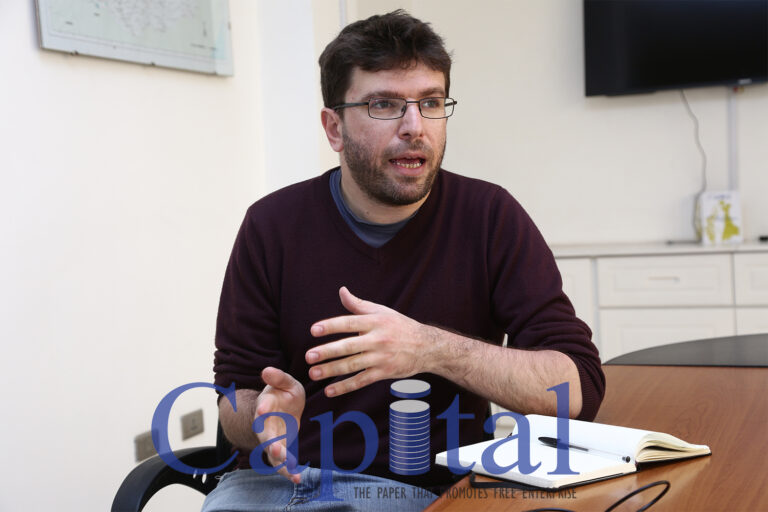
Marco Di Nunzio is an anthropologist and ethnographer from Naples, Italy; he lives in London and currently teaches at the Department of African Studies and Anthropology at the University of Birmingham. Marco holds a DPhil in Social and Cultural Anthropology from the University of Oxford and previously worked at the Université Libre de Bruxelles and the London School of Economics.
Marco spent the last decade researching urban change, the street economy and the politics of city space in Addis Ababa (Ethiopia), Lagos (Nigeria) and his hometown Naples (Italy).
He wrote a book entitled The Act of Living – Street Life, Marginality and Development in Urban Ethiopia. The ‘Act of Living’ was released in 2019 and follows the story of two men, Haile and Ibrahim, born in Addis Ababa between the 1960s and 1970s. The book narrates the biographies of Haile and Ibrahim as they navigated through their poverty and marginality as their country prospered. He talked to Capital about his book. Excerpts;
Capital: Can you tell me how you got started in Ethiopia and what lead you to writing this book?
Marco Di Nunzio: I’ve been doing work on cities for a while, even before coming to Ethiopia. I’m from Naples, in the southern parts of Italy and I’ve been carrying out the research between the street economy in Naples and activism and the way activists are trying to deal with those economies. I came to Ethiopia by chance, I was doing my first degree in archaeology and some of the archeologists suggested I come here. From there, I went to Axum and then I stopped by Addis and I thought I could do research similar to the ones I’ve done before. I’m interested in understanding urban change and the law of change happening in a city but also the effects and how it produces forms of exclusion and how the exclusion is experienced.
I came here in 2009; my interest at the beginning was to understand narrative and discourses about the unemployed youth. There were a lot of narratives about associating unemployment with crime. My work there was trying to make sense of this connection and somehow even challenge the assumption. The beginning of the research looked at how those criminalizing narratives on unemployed youth don’t help us make sense of those experiences. The research focused on Piassa and Arada. I lived in Piassa for two years doing research on youth.
Capital: What are the themes the book covers?
Marco Di Nunzio: I began doing my research on these narratives giving jobs to the unemployed youth around 2009 when the small scale enterprises had begun to respond to the riots and demonstrations in 2005. Those narratives that were used by outsiders and government officials used unemployed youth was a blanket term to understand various things that were happening. So I went to Piassa and spent time hanging around the streets and I realized that most of those people that were seen as unemployed youth, in reality were busy doing things. And the way they were describing it as hustling. The beginning was doing a lot of research with street tour guides, the way in which is they were taking tourists around. They saw me, a foreigner, and said “why don’t you hang out with us?” When they realized I was doing research, it turned into a long-term interaction. The other dimension is that meanwhile people were doing other things as well for instance most of them were involved in the comparatives of parking guys and these comparatives were somehow as a result of the small scale enterprise programs. So these guys were combining brokerage running on the side to working in parking. 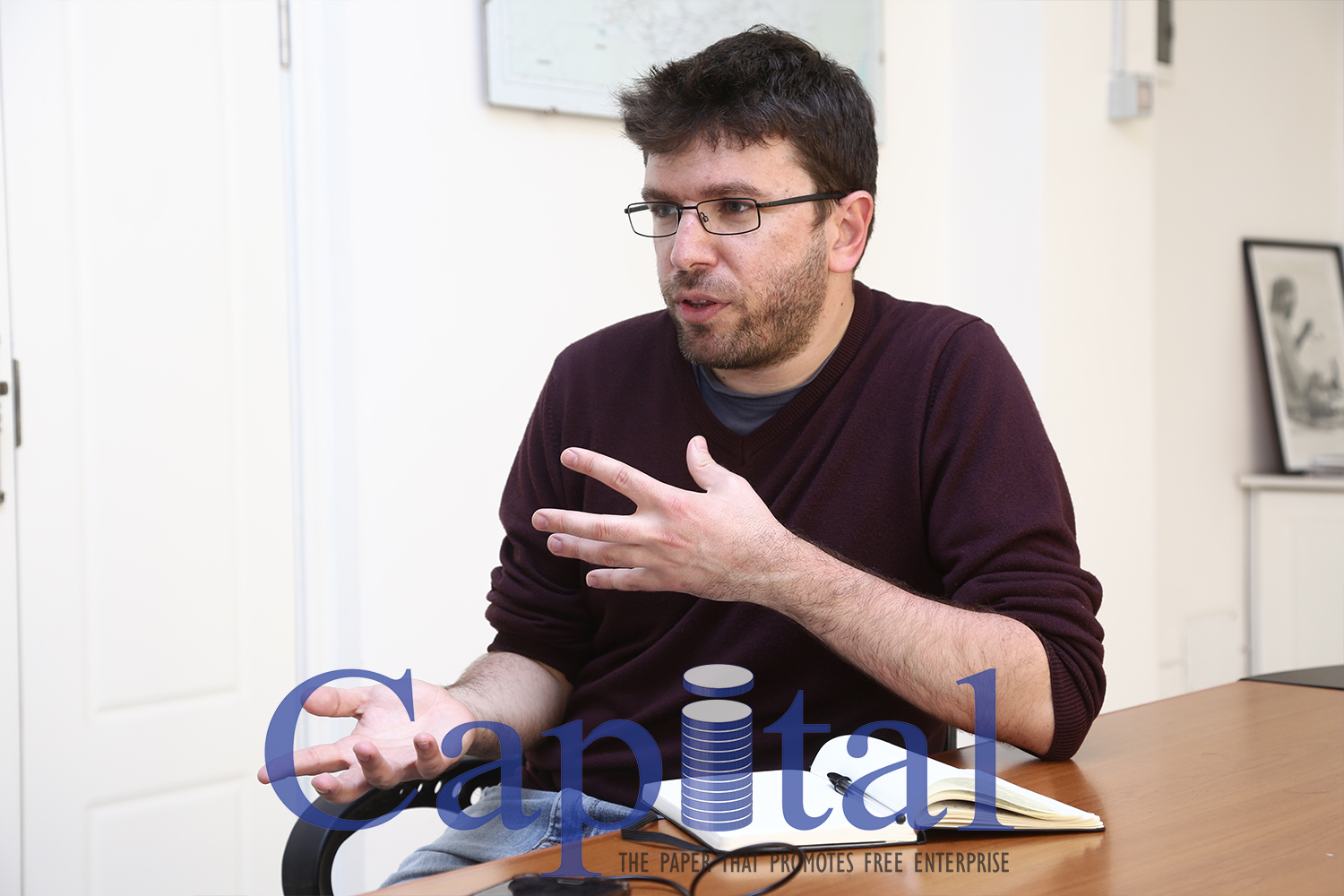
The street tour guides became the first group of people and then it became a range of various people from a small level of brokerage and delalas. It was an entire economy that from outside seems criminal but instead it was highly organized but was mainly seen as illicit. What is interesting is a lot of them describe themselves as arada, there is a long engagement in the city, to do these things you need to ebe smart. The book became something about being arada from a different perspective. The book tells the story of that and the engagement with petty crime. There is also this engagement to street life and going back and forth between something licit and illicit. The book became about this, the way in which exclusion and poverty persists but also people try to claim a sense of respect and recognition in the community. In a sense it became about criticizing these criminal narratives.
Capital: Can you speak on Haile and Ibrahim’s relationship and how you formed a friendship with them?
Marco Di Nunzio: These are the protagonists of the book and they are good friends, they know each other very well. They grew up together. One is a little bit older than the other. I met Ibrahim at the beginning of my research, I was trying to figure out the connection between how small scale enterprises can try to engage with unemployed youth and then I found myself in the kebele, woreda youth meetings. Ibrahim clearly didn’t expect a ferenji to be there, we just started chatting and he told me that if I wanted to know about these things, I should hang out with him. Then I met Ibrahim at his work place and he introduced me to his friend Haile. I’ve known them since 2010 and that’s the people who made the connection between arada because on one end they’re doing this job but they’ve gone through different experiences. Ibrahim and Haile have a long history, a long life. When they were young they managed video houses when they started blooming in the 90s, they hustled on the streets and then in some cases had short sentences in prison as well as trying migration and coming back. They’re very good friends and their lives have somehow gone parallel despite an age difference of 10 years between them.
Capital: Is there an intended audience for this book?
Marco Di Nunzio: One end is this predicament – I’m a lecturer at the university in Birmingham so in a way there is this predicament of academic writing. The book was written as a story and then being an academic publisher I was advised to inject a lot of theory. So if people read the book, I always say don’t read the introduction, just go to the story straight away. So in a way, there is an element of academic writing which is me arguing about existence and how it is to live in a condition of exclusion which is a little more theoretical, but the rest is a story. So the intended audience is anyone who is up for listening to a selection of stories. The first chapter is from Addis in the 1960’s, Ibrahim and his friends growing up, born between the 60s and the 90s. So in a way, the intended audience is someone who wants to be interested in Addis, it’s much more about the stories. These stories matter, maybe listening to the stories will help us make sense of the various constituencies of urban development. In a way the introduction is written for the academic public but the rest is for a wider interest public, who are up for reading about the stories between three guys.
Capital: The story is written from male experiences of street life, do you think this makes for a one sided narrative?
Marco Di Nunzio: It’s true; I usually say this is the story of men. The reason being, it’s something intertwined with both sex work and getting by and so on. I find that some spaces are quite gender segregated so I kind of realized that me doing research, it’s not about doing interviews but more about hanging out with people. I realized on one end that I could have been a bit braver in my approach but at the same time I also realized that the spaces of sociality were really divided. In a way, it says in the book, this is a partial story. I’m not talking about arada in the wider sense; I’m talking about duriye arada male. It’s partial, it’s about men but there was a lot of criminalizing narratives that were concerned with the place of male unemployed people on the space of the streets, especially with parking guys, even if in the parking comparative there are women as well. The thing is there was trying to make sense of this criminal male focus. It tells a story that is gendered.
Capital: What are the challenges you faced in doing your research?
Marco Di Nunzio: On one end there is this element, which the way I make sense of it, the stories that people were telling me is of wider relevance. Being an outsider put me in a position of “we can trust you because you’re an outsider”; “we can tell you things because you’re not going to tell other people”. So in a way there was this element which was unexpected. Of course the challenge of when I started the research, I wasn’t a lecturer then, I was a broke student. And there were a lot of these expectations about sharing. It’s a lot about this economy of sharing, lunch and dinners and so on. It’s about living with those communities and understanding your ability to share moments together; we’re understanding how it is to be a part of this society which is a lot about this element of sharing things together. Also this element of being an outsider and how to deal with it, which is always an open ended question – especially when you do research. For example when I do research in my hometown, it’s the same; here, I’m a foreigner, there I’m somebody from the university. There is always this insider, outsider kind of logic.
And of course there is also the language barrier and homesickness.
Capital: Did you draw any parallels between street life in Addis and street life in Naples?
Marco Di Nunzio: The way in which I grew up in inner city Naples, so in the city center where it was really dense with old neighborhoods and buildings. So for me, at the beginning I wanted to reside in Kirkos in 2009 but then with the language barrier, it was a little bit challenging for me. Piassa is a little bit more of a hub of people moving around and also is more of an inner city environment. It was somehow paradoxically quite familiar in a way; it was comfortable to be in a place like that. So this kind of vibe of the inner city and the way most city center are, they are almost always There is the idea of all of these city centers being under threat and hoping that the value of a place like this, the soul of a city is kept. For instance in my home town it was happening, the soul of the city is kept but there is a large process of touristification of the city center, it’s a form of gentrification in Naples that is lead for tourists with Airbnb’s, guest houses and so on. So it remains the same but it’s becoming unaffordable.
Capital: Do you think the stories of Ibrahim and Haile are representative of many people’s stories in Addis?
Marco Di Nunzio: I don’t see something as representative, there are many guys like them but I think they are kind of exceptional people in the way they have done so many things in their life. The way I was writing about them, its stories that might make people think. Maybe they’re not representative but they are eloquent, because their life has been so intense, they have been doing many things including prison, hustling and in the Ethiopian-Eritrean war. These are exceptional stories and the point of the book is to make people think, so they’re not necessarily representative of the majority. I’m very careful of assuming, it’s more about the stories that make people think and challenge assumptions. The assumptions are that if you use criminalizing narratives about those kinds of people that you see on street corners, it really doesn’t help you understand what life is about. Life is about there is an element in which they all constantly try different things, at some point they opened a small shop, then parking then construction work and then hustling on the streets. And these are all attempts are trying to change their lives. But life never changes because there is a significant amount of inequality and people not trusting them. Usually in these kinds of narratives people blame the poor for their own poverty but they don’t realize that those people are constantly trying.
1st Ethiopian Film Delegation Heads to the European Film Market

Ethiopia’s first official export mission under the banner of Ethiopia Creates is going to the European Film Market (EFM) and Berlin International Film Festival between February 20 to 28 2020. The directors attending to present their films are Abraham Gezahagne, Beza Hailu Lemma, Hiwot Admasu Getaneh, and Moges Tafesse and as well as producers Mehret Mandefro and Tamara Mariam Dawit.
The delegation will also be joined in Berlin by staff from the distribution company habeshaview and
Biniyam Tsegaye, Director of Tourism Destination Development at Tourism Ethiopia.
“Tourism Ethiopia is supporting this delegation as part of our effort to make Ethiopia a go-to film destination in Africa. Our participation aims to support the growth of film and tv projects between Ethiopia and other countries through increased collaboration on production and setting up co-production treaties,” said Biniyam Tsegaye, Tourism Ethiopia
Over 10,000 representatives of the international film industry will be doing business at EFM. The Ethiopian delegation will be based at the Africa Hub, a section of the EFM that focuses on the trade and promotion of African film content. The Ethiopian mission is focused on activities designed to generate international sales, financing, project development and co-production opportunities for the Ethiopian film industry. Selected filmmakers all have film/tv projects which are export-ready and will be meeting with sales agents, distributors, film festivals, funding agencies, and producers.
“I am proud to represent Ethiopia as part of our delegation to the European Film Market. This is an important opportunity for Ethiopian films to be recognized globally. For filmmakers like me who have had success in Ethiopia, this program is key to helping me access the global film market,” said filmmaker, Abraham Gezahagne
“I have previously attended Berlinale as part of the Berlinale Talents program, and it has been a wish of mine to show a film at the festival. Attending in 2020 to screen A Fool God with so many other Ethiopians coming together as a team is a dream come true. Ethiopia has such great potential to produce films that can be successful internationally and this trip is the beginning of something priceless for our industry,” said filmmaker, Hiwot Admasu Getaneh
The export mission is made possible through the support of Tourism Ethiopia, habeshaview, IEFTA, Goethe Institute, Gobez Media and Area 51 Films. The mission has been organized by Ethiopia Creates a national public-private partnership to develop and promote the creative industry to international markets and showcase Ethiopian creative talent.
The economic consequences of the Coronavirus

The Chinese government’s measures to tackle the coronavirus epidemic are handicapping the country’s economy and disrupting supply chains and tourism across Asia. Sharing information with the public may be more effective in containing the outbreak than draconian restrictions on freedom of movement – and less economically damaging.
BY Akira Kawamoto
Since a new type of coronavirus was reported in Wuhan, China, last December, the number of people infected worldwide has soared to over 44,000, and the death toll now exceeds 1,100. The virus is spreading across Asia – including to Japan, South Korea, Singapore, Thailand, Vietnam, and Malaysia – and also to countries in Europe and North America, although only one death has been reported outside China so far.
It remains to be seen how lethal this new virus ultimately will be. At the moment, it is certainly less severe than the 2002-03 SARS (severe acute respiratory syndrome) epidemic, caused by a different coronavirus. The new bug has killed more people, but SARS was deadlier, killing almost 10% of the 8,096 people worldwide known to have been infected.
Nonetheless, on January 23, Chinese President Xi Jinping’s government announced a lockdown of Wuhan, a city of 11 million people. Since then, the number of Chinese cities under quarantine has risen to 16, and more may follow.
The quarantines and other compulsory measures aimed at containing the disease are severely handicapping the Chinese economy, with knock-on effects elsewhere in Asia. Wuhan, for example, is the capital of Hubei Province, one of China’s industrial centers. Leading Japanese carmakers Honda and Nissan have factories there, as do several of their European rivals. Producers of car parts, electronic components, and industrial equipment also have important manufacturing facilities in the region. Many of these factories have had to halt production, because their employees have been unable to return after the Chinese New Year holiday.
These shutdowns constitute a major shock to global companies’ supply chains across Asia. Based on the value of its exports to mainland China and Hong Kong relative to GDP, Taiwan is likely to be the hardest hit, followed by Vietnam, Malaysia, and South Korea. Regional employers face a further supply shock because many Chinese working in Japan or other Asian countries will not or cannot return from China. Furthermore, the coronavirus outbreak will disrupt exports of Chinese products to Japan, in particular processed food and clothing. All these factors will cause supply shortages and thus dampen economic growth among China’s trade partners.
The coronavirus also will cause a large demand shock, not least because Chinese travelers have been a great boon to many countries’ tourism sectors. Chinese tourist numbers are now falling sharply as China bars its citizens from group tours abroad, and many countries refuse or restrict the entry of Chinese. Judging by the size of Chinese visitors’ expenditures relative to GDP, popular destinations such as Thailand, Vietnam, and Singapore will take the hardest hit. Japan will be especially concerned should the outbreak persist, because the Summer Olympic Games are scheduled to start in Tokyo on July 24.
But even if the virus is a long way from reaching its peak, China can mitigate the negative aggregate-demand shock with stimulus measures such as the one announced by the People’s Bank of China on February 2. Other governments and central banks in the region can take similar steps if necessary. Companies can substitute disrupted supply chains with alternative sources of inputs, and consumption may shift further online. Some of these changes may turn out to be permanent.
Although it is not clear how quickly an effective coronavirus vaccine can be developed, the duration of the current crisis will depend on two main factors. The first is whether and when the Chinese authorities can bring the situation under control. With the death toll still mounting, it is hard to tell, but if the government quarantines more cities, then the economic downturn will certainly steepen.
The second question is whether other countries can contain the virus’s spread. Some Japanese medical experts say that a substantial number of Japanese must already be infected, given that people arrived freely in the country from China for a month after the outbreak began. Unlike in China, however, the virus has caused no deaths in Japan so far, which raises questions about to the nature of the disease and how best to prevent and treat it. In order to determine the best public-health response as quickly as possible, China and other affected countries should share their current experiences immediately.
In fact, medical experts recommend shifting preventive resources from countries’ borders to the interior, by giving people easy access to self-inspection kits. Those who are infected should then be ordered to stay home and avoid contact with others.
As in the case of influenza, sharing information with the public may be much more effective in minimizing the spread of the coronavirus than draconian restrictions on freedom of movement, which are very costly to humans’ physical and psychological health, as well as to the economy. Other governments currently considering national responses to the new virus should bear this in mind. And the Chinese authorities should consider reviewing their approach to future outbreaks.
Akira Kawamoto, a former deputy director general in Japan’s Ministry of Economy, Trade, and Industry and a former OECD principal administrator, is a professor at Keio University.
