Sunday, September 27, 2026
Home Blog Page 3822

How does our body function during physical activity

0

By Elias Abichacra (Phd)

Our body is a permanent playground between two contradictory biological processes: one is notorious for building and we call it the Anabolic process while the other takes an opposite stand because it destroys and is named the Catabolic process. As long as a human being is alive, these two processes continue to live together. This permanent biological action of construction and destruction activity happening in the human body is called Metabolism. Depending on which process dominates you have an appreciable modification of physical fitness and by extension health.
Our body at rest is governed by a physiological principle called Homeostasis which means internal body stability with its’ best indicator being the constant body temperature of our body fixed at 37, 2° Celsius. At rest each person has a fixed Rest Heart Beat (RHB) which depends on age, physical status and physical condition. The number of respirations is also regular and doesn’t vary. Everybody has a theoretical Maximum Heart Beat (MHB). There is a slight difference between male and female persons. The MHB for a female person is 226 – (minus) the age of that person. For the male person it is 220 – the age. So if you are 20 years old woman, your MHB 226-20 = 206 and if you are a man it is 220-20 = 200. This is a theoretical value which means that some people can be above or under these fixed results. Every year unfortunately we lose one heart beat. I don’t mean to provoke our Heavenly Father, but what about the MHB of Abraham and Mathusalem? Certainly a biological and physiological mystery!
Strangely, physical exercise has a positive effect only on the RHB that lowers especially if you practice endurance sports and exercises. The record RHB is detained by Miguel Indurain, a 5 times Tour de France winner, with an astounding 29 RHB per minute. Marathon runners, Triathlon athletes have the lowest RHB results. People with an increasing body weight with the percentage of body fat augmenting; see their RHB which increases. The difference between a person’s RHB and his MHB is called the Heart Beat Reserve. The lower the RHB, the bigger the reserve. People who have a low heart beat recuperate quickly after performing a physical activity. When this speed of recuperation is fast, it is a correct indicator of good health. On the contrary when the speed of recuperation is sluggish, the person is not fit to practice a physical activity safely. To know the RHB of a person, it is important to measure it just after waking up in the morning after a night sleep while lying and avoiding any type of movement. The person takes the measurement for 15 seconds and by multiplying it by 4 gets the RHB per minute. This measurement must be reproduced every morning for several days until a constant result is found. It is useful to know that the RHB varies when the position of the body changes. When a person sits or stands the value of the RHB evolves by increasing. That is why to speed up physical recuperation it is usually advised to adopt a lying position.
The number of heart beats per minute as well as the number of respirations at rest is constant. These values change instantly when a person performs a physical activity breaking the physiological status quo. The heart beat can reach its peak result if the exercise is strenuous. At the same time the number of respirations which is usually 10 to 12 per minute can easily double and sometimes reach 24 to 30 respirations per minute. The breathing which in normal times is inaudible gradually becomes clearly audible. This change in the heart and respiration activity means that muscles must be constantly provided through the circulating blood with Oxygen and energy nutriments in order to sustain physical activity.
When a person wants to start training on a regular basis it is advisable he/she knows his/her starting point. Simple physical tests exist that can give a good indication of one’s physical status. No need to go to a gym to measure the physical status because it can be done at home. The RHB is a simple test and a quite good indicator. Then you have the easy but controversial Body Mass Index (BMI). You have others that give you a quite good indication of the fitness level of a person. I shall develop each method in the forthcoming articles that can help each person willing to do a physical activity regularly practice safely.
Don’t forget health is wealth.

You can contact the writer on this e-mail address: elias.abichacra@yahoo.com

Betelhem Adugna

0

Name: Betelhem Adugna

Education: 10+

Company name: Beti designing

Title: Owner

Founded in: 2019

What it does: Design and manufacture different kinds cultural clothes

HQ: Addis Ababa

Number of employees: 2

Startup Capital: 5,000 birr

Current capital: 80,000 birr

Reasons for starting the business: To change my ability

Biggest perk of ownership: Hard working

Biggest strength: Not giving up

Biggest challenging: Capital

Plan: To have my own brand

First career: Designing hand crafts

Most interested in meeting: Mulualem Tadesse

Most admired person: My husband

Stress reducer: Shopping

Favorite past time: Watching movie

Favorite book: “Leginet” Bealu Girma

Favorite destination: Bahirdar

Favorite automobile: Toyota Rav 4

Authoritarianism vs Public Health

0

The coronavirus which originated in Wuhan, China, continues to spread around the globe. New cases are being discovered every day. This past week, the first domestically transmitted cases were reported in Japan, in the United States and in Germany. New cases also recently emerged in Singapore, the Philippines, India and other countries. In light of those developments, the World Health Organization declared the virus a global emergency and the United States State Department warned Americans not to travel to China.
The nations of Southeast Asia have extensive trade, transport and border links to China. It was thus no surprise that the region was one of the first outside of China and Hong Kong to face coronavirus cases. It is highly probable that no level of regional preparation would have stopped some spread of the virus.
Southeast Asia is one of the biggest tourism destinations for Chinese travelers and, because of the Chinese New Year’s holiday, many people had already left Wuhan before the city began to shut down. It certainly did not help that the Chinese authorities were initially slow to release information to other countries. It seems that only Singapore gets the job done
But even if the Chinese side had been far more circumspect, the fact remains that several Southeast Asian governments have responded poorly to the spreading pandemic. This, in turn, has raised the risk of larger outbreaks in their countries. In fact, many Southeast Asian governments, with the exception of Singapore, have not responded effectively. Singapore, of course, is not only just a city state, but also very rich by comparison to all its neighbors and has an extensive track record in organized public health campaigns.
Joshua Kurlantzick, Senior Fellow for Southeast Asia at the Council on Foreign Relations stressed that not all of Singapore’s poorer cousins are fully at fault. Some regional states, like Cambodia and Vietnam, have limited public health resources. The areas of mainland Southeast Asia which are near the Chinese border are by their nature very porous when it comes to human flows. Moreover, in some cases like the Myanmar-China border, those places are not even under central government control. As it happens, Myanmar has been lucky to date as it has not yet had a confirmed case, although cases have been confirmed in Cambodia and Vietnam.
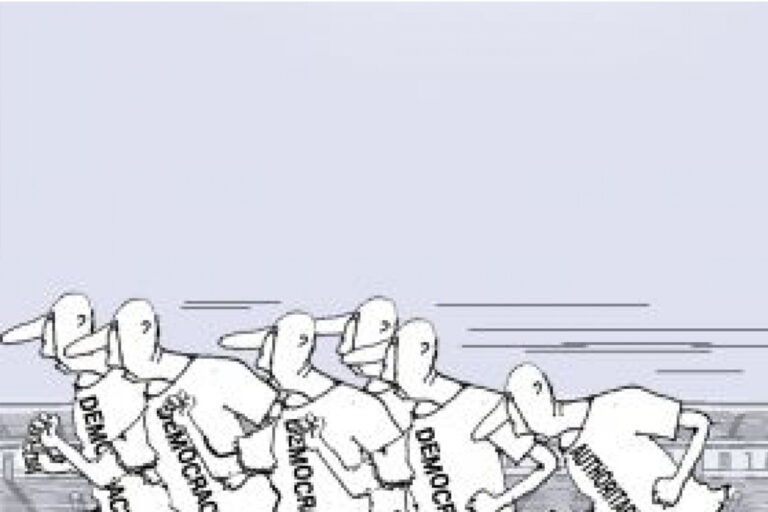
But caution as to the actual factual situation is warranted. Mainland Southeast Asian states that are authoritarian are not used to sharing information. In fact, the authoritarian governments in mainland Southeast Asia worry that any transparency will spark public anger. Indeed, they are often more afraid of their own publics than of an outbreak of the coronavirus. Joshua Kurlantzick noted that understandably enough, their inability to share information, as well as the lack of urgency in putting in place effective control measures, is scaring their citizens. The attempt to engage in information control is also making it more likely that the virus will spread. Under pressure, in order to combat the coronavirus more effectively, Vietnam last week finally took some tougher measures. It shut part of its land border with China and cracked down significantly on tourism from China.
Wu Jianmin, Former Chinese Ambassador and Professor at China Foreign Affairs University stated that even in wealthier Southeast Asian states, the response often has been ineffectual and slow. Indonesian authorities have dragged their feet. The country’s Health Minister Terawan Agus Putranto affected a strange air of nonchalance about the virus. He told the public, “Don’t be anxious. Just enjoy it”, although he seemed to mean enjoy life, not enjoy the virus. He also reminded Indonesians to pray and to think good thoughts. At least he also told his fellow Indonesians to wash their hands.
But Thailand has been the prime example of a Southeast Asian government flunking the Coronavirus test. The kingdom, whose tourism economy relies heavily on Chinese visitors and whose biggest companies have extensive trade and investment links with China, now has the most cases of the virus of any country other than China. All of these cases are Chinese visitors, but a local outbreak is possible. Thailand moved slowly to shut down links to China, probably for fear of hurting diplomatic ties with Beijing and undermining a lucrative tourism connection. The government also dragged its feet on establishing information centers to teach the Thai people about the virus. It also failed to pass out pertinent information about protection at all.
According to Wu Jianmin, the probable cause for this stance is that, although Prime Minister Prayuth Chan-ocha’s government is technically democratically elected, it was effectively installed in power by the 2014 coup regime. It thus only has a narrow mandate. Prime Minister Prayuth remains less popular with the public than the leading opposition leader, and his coalition only took control of parliament following extensive irregularities during and after last year’s election. Even with the power of the military behind him, Prime Minister Prayuth’s own coalition remains unwieldy.
Here, there is the issue of self-defeating information policies in the countries. When it has informed the public, the Thai government often has put out misinformation that confused people or underestimated the virus. Government officials seemed angered that they even had to be transparent about how they were handling the outbreak. The results have been scary. Thai authorities are warning that there could be virus outbreaks in big tourist centers, like Bangkok and Phuket, which would quickly lead to a spike in cases. When Prime Minister Prayuth came down sick earlier last week, his Health Minister even rushed to assuage concerns that the he had come down with the coronavirus. As the virus spreads, the kingdom’s initial fumble could cost it dearly.

WORDS

0

“I awakened from a nightmare…where the world used up all its words like natural resources…” Of Sadness by E. Stanley Richardson

Words, like art, are filled with multiple meanings – impacting, influencing even inciting…. On February 13th the Ethiopian Parliament approved a bill on hate speech causing quite a stir here and abroad. The new law is said to ‘prohibit the dissemination of fake news on electronic, print or social media using text, image, audio and video that incite violence, promote hatred and discrimination against a person or a group.’ As a jurist and writer I am prone to pause and reflect on the old adage, ‘the road to hell is paved with good intentions.’ But what does one do when words are indeed the source and vehicle of division of hate and of harm to ones’ life and livelihood? Is it really the words or is it who and how the words are used? Such simple and even elementary questions will be deliberated when such cases appear in Ethiopian courts in the near future. After all if ‘necessity is the mother of invention’ then the need to protect the population from harmful use of words is clearly the inspiration. I am sure we would all agree to this sentiment. We even teach our children about appropriate words from the day they began to speak.
The new law, like everything else in Ethiopia and Africa for that matter, well… we’ll figure it out. We must figure it out. My concern is less about the law and more about the wordsmiths/authors and the responsibility and relationship we have with words. I have poet laureate, African American E. Stanley Richardson to thank for the topic today. Richardson is the State of Florida, Alachua County’s first poet laureate; an honor meant to educate the community about writing amidst addressing social issues. His poem “Of Sadness”, made me think deeper about words which he likens to natural resources.

Of Sadness
by E. Stanley Richardson
Moments ago
I awakened from
A nightmare of
A dream
Where the world
Used up all its
Words
Like
natural resources
and
the people
could
no longer
poem
only
sigh.
I think of the voiceless whose words will never be heard if not for authors or artists expressing on their behalf, unbeknownst to them. I think of the words or images that provoke a brother to burn his neighbors’ business and home. I think of the words that need to be said though painful as the “truth may be an offence but not a sin.” I think of the words, like natural resources that should be used wisely and with a clear sense of responsibility and foreseeability. Most of all I think of the wordsmiths who should never be limited but always responsible and ready to pay the price for the precious right to express oneself freely, as in some countries that is just not the case.
Words are precious and for those who subscribe to the scriptures, we are taught the very world exists because of the word, eg. ‘the Most High SAID, let there be light and there was light…’ I love words and the ability to write and read. I do realize that words are not a natural resource and are indeed unlimited, powerful and poignant. However, like natural resources we have a responsibility to care for our words and the way in which we use them. This does not mean limiting ones words on a particular matter. Instead it means that we have a duty to use words responsibly, all things considered, just as we must be accountable for our role and impact on our natural resources. Consciousness and consideration are key and hopefully we will find a way to use our words to reconcile and build as we provoke thought and dialogue, ousting the need for legislation that leads to slippery slopes.

Dr. Desta Meghoo is a Jamaican born
Creative Consultant, Curator and cultural promoter based in Ethiopia since 2005. She also serves as Liaison to the AU for the Ghana based, Diaspora African Forum.