

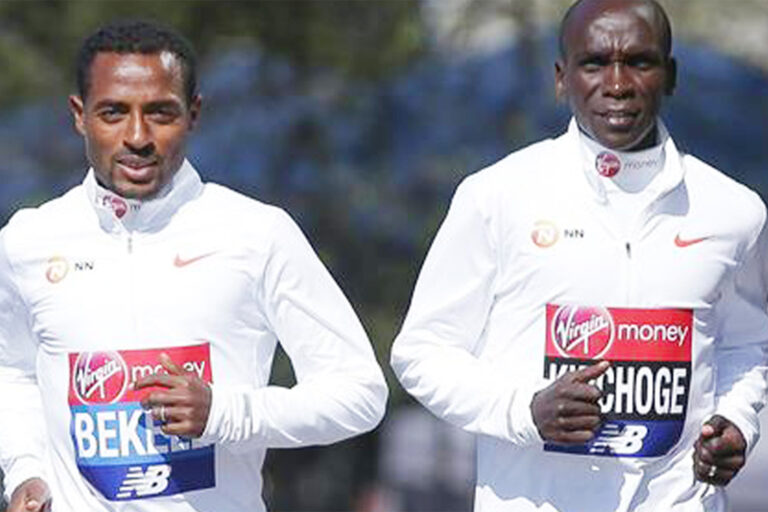
Runners from around the world will have the chance to team up with the likes of marathon superstar Eliud Kipchoge next month as the NN Running Team has announced a worldwide virtual team relay event involving some of its top athletes.
While traditional races have been cancelled and postponed due to the coronavirus crisis, virtual events are experiencing a boom. Now the NN Running Team has launched ‘MA RA TH ON’ to take place on June 6 and 7, giving participants the opportunity to run against, or even possibly with, athletes such as Kipchoge, Kenenisa Bekele, Joshua Cheptegei and Geoffrey Kamworor to complete a marathon.
The event involves each runner in the four-strong teams completing 10.5km. Runners can enter as complete teams of four, or if entering solo they will be teamed up with runners from around the world. The NN Running Team athletes will be randomly added to 10 of the participating teams.
“I can say that myself and my teammates are really looking forward to join the relay in this wonderful initiative,” said world marathon record-holder Kipchoge.
“It has been an unusual time whereby all runners had to readjust their plans after having prepared well towards their own goals for this past spring season. We all look forward to a positive future and I believe that this a great first step in that direction.
“Marathon is a sport whereby elite athletes and fun runners are actually all racing in the same race. It’s what makes our sport unique and I find the essence of this to be beautiful. Every runner has their own pace, their own background and their own motives to why they run.
Eliud Kipchoge, Kenenisa Bekele to run in worldwide virtual relay marathon
Solidarity and Cooperation is the Most Powerful Weapon for Africa to Defeat COVID-19

What the Mankind is facing is the most serious global public health emergency since the end of World War II. Chinese people have identical feelings about the challenges posed by the spread of COVID-19 in Africa and are deeply concerned with Africa’s response. China has provided cash and material assistance including medical masks, protective clothing and testing kits to the AU and African countries in multiple batches. China has increased 200 million dollars loan to the African Export-Import Bank to alleviate the impact of the pandemic. China has sent anti-pandemic medical expert teams to Ethiopia, Burkina Faso, Djibouti, Côte d’Ivoire, Zimbabwe, Democratic republic of Congo, Algeria and other countries to work with local government departments and medical institutions to help with the prevention and control efforts. China has organized anti-pandemic experts to hold about 30 times video meetings to exchange prevention and control strategies and share experience with the AU and African countries. China has also mobilized nearly a thousand Chinese medical team members in Africa to participate in the fight against pandemic in their host countries, conducting nearly 400 training activities with more than 20,000 personnel trained. China also assisted the African countries to purchase relevant materials in China. At the same time, many Chinese private institutions, enterprises and local governments have donated money and materials to African countries on many occasions. Jack Ma Foundation and Alibaba Foundation alone have offered three batches of supplies to every country in Africa, totaling 10.6 million masks, 2.6 million kits, 1 million pairs of medical gloves, 460,000 sets of protective clothing and surgical masks, 4,000 forehead thermometer and 800 ventilators.
China’s support and assistance to Africa is a manifestation of international humanitarian spirit guided by the vision of a community with a shared future for mankind. Such help does not come with any political conditions, or any intention for selfish geopolitical gains. China comes to Africa with sincerity and experience, fund and technology. By contract, some people are just dictating African countries on what they should or shouldn’t do and rejecting any efforts of them. Some people are trying to politicize the pandemic, label the virus and attack and smear China in order to shift the blame for their own inadequate response to the pandemic. Some people who have demanded reparations from China are trying to make a fortune through blackmailing. And some are even stirring up trouble in Africa, deliberately trying to undermine and drive a wedge between China-Africa cooperation in fighting against the pandemic. But Africa is not a hunting or testing ground for anyone. Only Africans have the final say on African affairs and their international cooperation. China and the Chinese people are trustworthy teammates in this battle, not rivals of Africa or even the international community. We have confidences that African brothers will firmly guard against attempts to make use of the virus to discredit China or sow discord between China and Africa.
COVID-19 is a common challenge to all mankind. We need to choose confidence instead of panic, cooperation instead of shirking the responsibility, and unity instead of division. International cooperation is a ‘booster’ and a sure way through which we, the people of the world, can defeat this novel coronavirus. Around the world, we know better than ever that our destiny is shared. We need to look out for each other, pull together as one and live up to our responsibilities to jointly build a community with a shared future for mankind and to forge extraordinary synergy in the fight against COVID-19.
A few days earlier, Chinese President Xi Jinping made a statement at the Virtual Event of the Opening of the 73rd World Health Assembly, announcing five measures to boost international cooperation against COVID-19. China will provide US$2 billion over two years to help with COVID-19 response and with economic and social development in affected countries including African countries. China will work with the UN to set up a global humanitarian response depot and hub in China. China will establish a cooperation mechanism for its hospitals to pair up with 30 African hospitals and accelerate the building of the Africa CDC headquarters to help the continent ramp up its disease preparedness and control capacity. China will make COVID-19 vaccine development and deployment a global public good when available. China will work with other G20 members to implement the Debt Service Suspension Initiative for the poorest countries.
China always supports the AU as a banner of solidarity and cooperation of Africa and attaches significance to its important role in fighting the pandemic. China will help the AU and African countries to strengthen their disease preparedness and control capacity as always, and stand firmly with all our African brothers until the pandemic is fully over on the continent.
The traditional friendship between China and Africa has stood the test of international vicissitudes. China’s friendly policy towards Africa has never changed and never will. In the fight against the pandemic, China and Africa need to unite as one and support each other more than ever. Solidarity and cooperation is the most powerful weapon for Africa to defeat the pandemic.
NBE to table secondary market directive by June
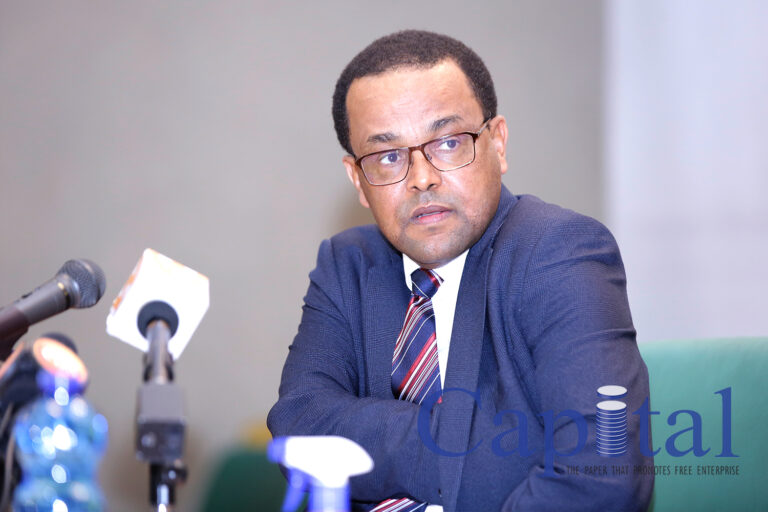
The National Bank of Ethiopia (NBE) that targeted to introduce the secondary market this month has stated that it is working to table the issue for cabinet by next month.
Late last year Yinager Dessie, Governor of NBE, stated that the central bank is preparing the document to table it to the Council of Ministers for approval.
Now he said that the document and relevant preparation works are not yet finalized so far. “The work is not easy and it forced us to delay the launching of the capital market,” he said.
“We are trying our best to finalize the preparation work,” he said at a press conference held on Tuesday May 19 at his office.
“The work is very bulky and we are working to table for the cabinet by June,” Yinager told Capital.
In December last year the Governor told Capital that the secondary market will be finalized in this month.
“We would push the commencement period because the preparation in not finalized,” he said but did not give a specific time frame when the highly anticipated stock market would be introduced in Ethiopia.
Introducing the new market is one of the reform agendas that are being done under NBE. 
Ethiopia actually had a stock marked before most other African countries, some 60 years ago but when the Derg took over that stopped.
Currently finance is only accessible in a primary market that is directly related with banks for the private and public sector or through treasury bills (T bill) for the government.
In December the central bank restarted the T bill with the aim to attract private banks and other private sector players and to make atransition for the biggest market.
The central bank will deliver the draft document to the council of Ministers and they will decide whether it would be started by regulation or proclamation.
If the council of Ministers approve it as a regulation the starting time will be short, but if the council decides the law should be ratified as a proclamation it would be sent to the parliament.
In the last two years NBE introduced several new schemes in the financial industry that includes allowing the diaspora to enter in the banking and insurance business.
It also enacted a bill to access finance on movable assets, improve agent banking directive and interest free banking are the new entrants under the NBE reform.
Improving the credit information database of individuals or companies is also improved.
Part of the reform cash withdrawal limit, which will tackle illegal acts and frauds, is also introduced this week. The National Bank of Ethiopia stated that companies can only withdraw a maximum of 300,000 birr per day and/or 2.5 million birr per month. Individuals can withdraw a maximum of 200,000 birr and/or 1 million birr per month.
Gov’t to benefit front line health worker
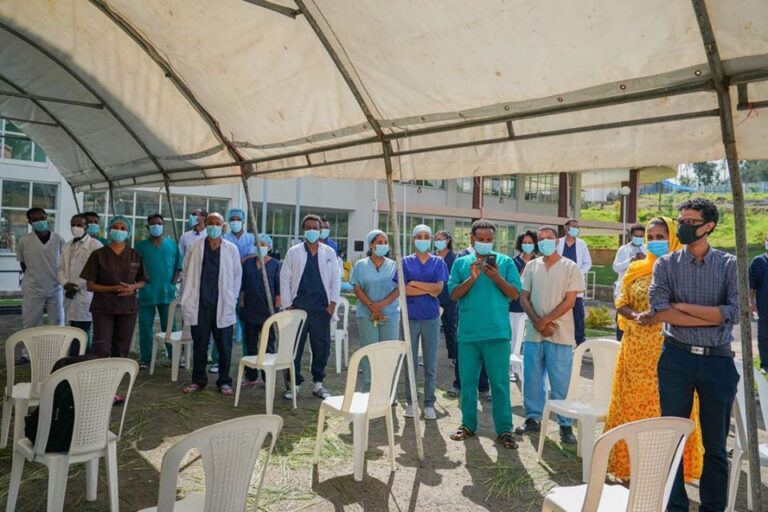
Incentive from 600 birr to 1,120 birr per day
The Council of Ministers in its regular session held on May 22, approved a draft directive that allows health workers to get incentives aimed at encouraging those who are the most vulnerable in the fight against COVIOD 19.
The Council in its communiqué stated that these frontline health workers are integral to the response of COVID-19.
Minister of Health, Lia Tadese told Capital that the incentive is for those who are working in COVID 19 treatment centers, isolation centers, laboratories, rapid response teams and others directly working in relation with treatment of COVID 19. According to sources the minimum bonus for these health workers is 600 birr per day and the maximum is 1,120 birr per day based on their position.
The draft was prepared by the Ministry of Health in February to pay additional bonus to those who are working on the protection, control and response of the pandemic.
“It is for all the professionals and support staffs working on COVID 19,” said Dr Lia.
As the statement from the prime minister stated health workers are risking their life and their families lives and stressed that several professionals working on the fight against the pandemic are remaining at high risk.
The spread of corona virus in Ethiopia is growing fast with 34 cases reported on Friday alone bringing the total count in the country to 429, with an overall test count of 73,205.
Due to the high spread of the virus globally medical workers are more strained than ever.
Last month the government has provide life insurance for the health workers that are in the forefront of the fight against COVID-19. The insurance grant also includes members of the Rapid Response Team.
The Ministry of Health has also prepared two selected hospitals fully accommodated with materials to give treatments to patients and is also preparing temporary residential homes for health workers over fears that physicians could bring the virus to their homes.
“Health workers are at the front line of the COVID-19 outbreak response and as such are exposed to hazards that put them at risk of infection. Hazards include pathogen exposure, long working hours, psychological distress, fatigue, occupational burnout, stigma, and physical and psychological violence,” says the World Health Organization (WHO).
