

Only 30 per cent of Ethiopian migrants seeking to find work in Saudi Arabia are aware that Yemen – the one country they must cross -is in its sixth year of conflict, while less than 50 per cent know of the dangers of boats capsizing at sea. This is according to a new study – ‘The Desire to Thrive Regardless of Risk’ – by the International Organization for Migration (IOM)’s Regional Data Hub which is largely funded by the EU-IOM Joint Initiative for Migrant Protection and Reintegration in the Horn of Africa.
The research found that many of the young Ethiopian migrants on the Eastern Route to the Middle East remained unaware of the risks of the journey. These include the high likelihood of experiencing hunger, dehydration, or contracting waterborne and gastrointestinal diseases in transit, along with the possibility of being abused.
The study is based on interviews with over 2,000 young Ethiopian youth in Obock, Djibouti, trying to reach Saudi Arabia.
Since 2017 at least 400,000 Ethiopians have crossed to the Arab Peninsula, where IOM maintains an outreach programme advising young migrants of the perils ahead. Last year over 120,000 migrants were returned from Saudi Arabia to Addis Ababa.
Most migrants were moving for socio-economic reasons. Many expected to earn seven times more pay in Saudi Arabia than in Ethiopia. Fifty per cent of migrants reported making about USD 61 per month back home, while the median expected monthly income in Saudi Arabia would be USD 453.
Researchers spoke to 18-year-old Bourhan, who was looking to earn a lot of money in Saudi Arabia. It took him a week to get from his village in Ethiopia to Obock. He still had to pay smugglers USD 150 to get him across the Gulf of Aden, and another USD 200 to reach Saudi Arabia.
“I have friends who have earned money in Saudi Arabia and now have beautiful lives in Ethiopia. We want to have what they have,” Bourhan said.
His story is typical. Ethiopian youth are egged on by a strong migration culture. Aspiring migrants can easily identify brokers and returnees in their communities. Many migrants are aware of families within their communities who have improved their living standards with remittances from Saudi Arabia.
The researchers found that families were more involved in the journeys of women (36% received support from their families to cover costs, compared to 21% of men), while 64 per cent of migrants have attempted the journey at least twice before.
Fifty-nine percent of first-time migrants did not inform their families prior to migration. The decision to migrate is usually made quickly: 83 per of first-time migrants made this decision less than one month prior to departure.
IOM Regional Director for East & Horn of Africa Mohammed Abdiker, said “this report shows us just how misinformed many Ethiopian youth who embark on these dangerous journeys are. They are ill-prepared, ill-equipped, and often put their lives in harm’s way, opening themselves to abuse and exploitation. The report will enable IOM to better target its work with this community to dispel some of the myths of irregular migration.”
The research follows the launch in 2019 of a multi-stage research project aimed at better understanding the experiences, decision-making, perceptions and expectations of young Ethiopians (15-29) along the Eastern Route to Saudi Arabia.
New study on Ethiopian migrants to the gulf finds many unaware of dangers

Tencent donation will increase Ethiopia’s capacity of testing COVID 19
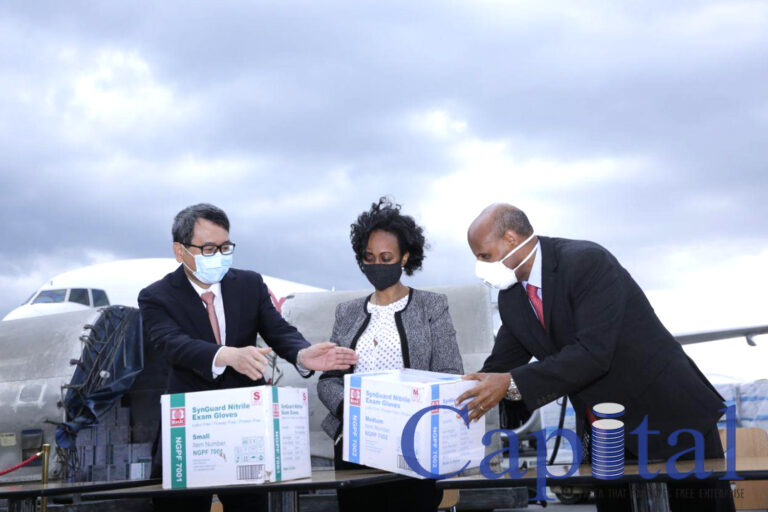
Ethiopia received 100,000 testing kits and 2 million gloves from the Chinese Tencent Foundation in support to the fight against the COVID 19 pandemic.
“The donation is important which helps us to grow our strategies we have in fighting the pandemic,” said Dr Lia Tadesse Minister of Health, adding that “expanding testing is one of our strategy in responding to the pandemic, we are working very hard to increase our daily testing capacity over the country.”
“We are working to increase our capacity in testing trying to get through donations and to buy from the market” said Dr Lia.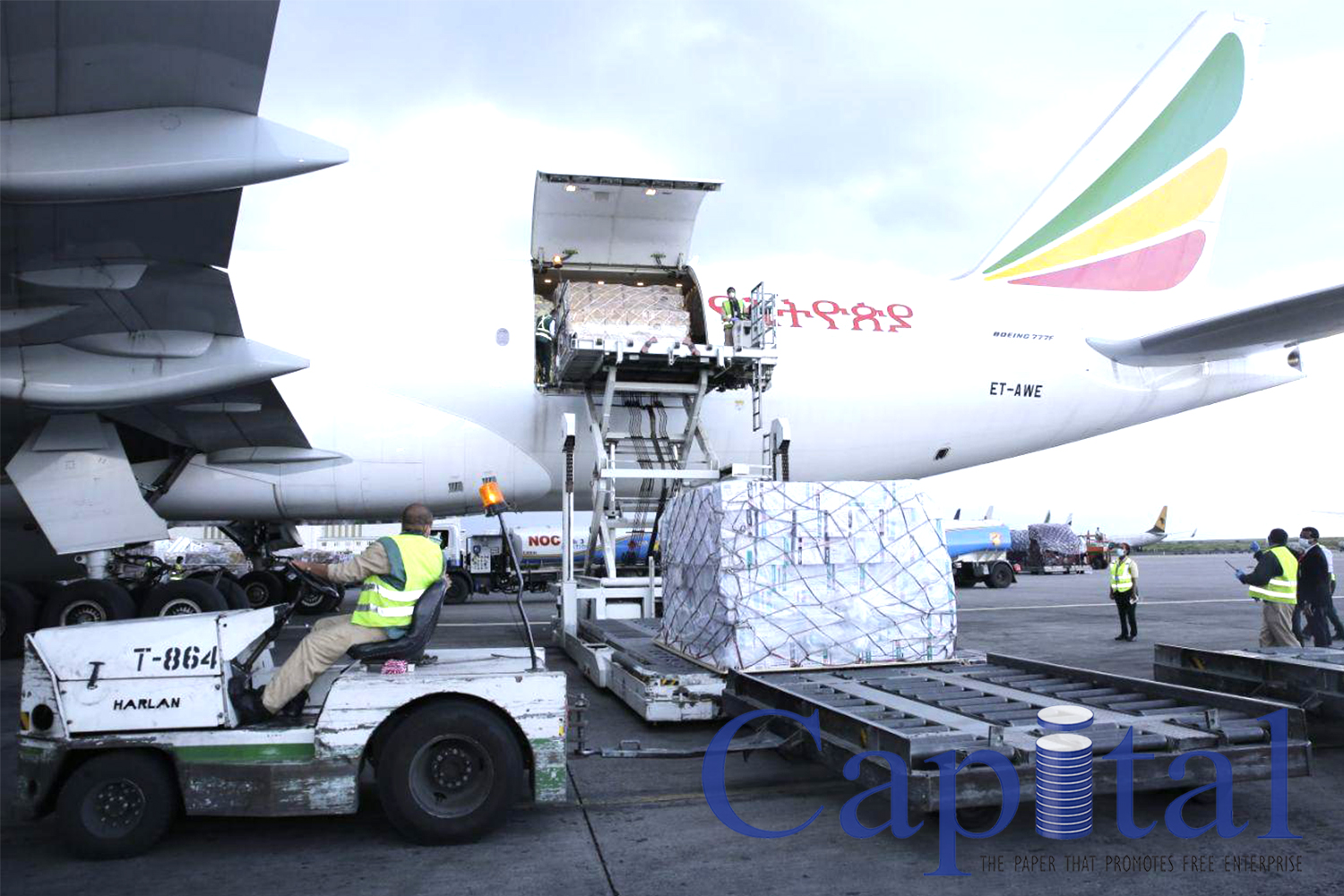
The equipment is transported by Ethiopian Airlines from China, Guangzhou to Addis Ababa on May 21, 2020.
After the outbreak of the virus in Ethiopia Prime Minister Abiy Ahmed called for global support to the whole Africa. Since then Ethiopia has been receiving donations from different institutions, from all over the world.
“We have been transporting different donations from all over the world but Chinese donation is much greater,” said Tewelde Gebremariam CEO of Ethiopian Airlines.
China and Ethiopia have maintained close partnership supporting each other and sharing experience since the Covid-19 outbreak.
“China is always ready to support Ethiopia’s effort in fighting the Covid 19 pandemic,” said Ambassador Tan Jian. “From the beginning Ethiopia and China has been working together, even when the whole world cut flights to China Ethiopian Airline sayed with us,” the ambassador said.
On April 16, Chinese task force with urgent medical supplies, including surgical masks, personal protective equipment, “non-invasive” ventilators and traditional Chinese medicine, arrived in Ethiopia.
Also following Prime Minister Abiy’s call to combat the spread of the virus and support the response in Africa, the Chinese billionaire and co-founder of Alibaba group Jack Ma has made three batches of donations to the continent. The three round donations mainly includes millions of masks, swabs and test kits, ventilators, sets of protective clothing, face shields, temperature guns, body temperature scanners, and pairs of gloves that were distributed to Africa Center for Disease Control and the 55 African countries through Ethiopian airlines.
The Tencent Charity Foundation was founded in June 2007 operating under Tencent Holdings Ltd. which is a Chinese multinational conglomerate holding company founded in 1998, whose subsidiaries specialise in various Internet-related services and products, entertainment, artificial intelligence and technology both in China and globally.
EPHI, CDC lab experts conducting a COVID-19 lab test at the EPHI Reference lab
Ethiopian Public Health Institute (EPHI) and CDC lab experts are conducting a COVID-19 lab test at the EPHI Reference lab. During the current COVID-19 pandemic, CDC is working closely with the Federal Ministry of Health, EPHI and other public health partners to ensure the people of Ethiopia have access to better diagnostic services to protect them from COVID-19 and help prevent the further spread of the virus. As part of this effort, CDC experts are working on the frontlines with EPHI leadership as part of the national emergency COVID-19 response team, providing support to improve and expand laboratory testing, epidemiology and surveillance, infection prevention and control, and planning.
Through these response efforts, CDC has embedded two senior laboratorians to provide direct hands-on technical assistance at the national COVID 19 testing laboratory. CDC’s direct support has helped the national laboratory to build its capacity to develop a national testing algorithm for COVID-19, conduct verification of multiple testing kits, and implement quality assurance activities during rapid expansion and decentralization of testing. CDC is also supporting the procurement of supplies for COVID-19 testing to maintain and expand capacity.
Just three months ago, Ethiopia had to send its COVID-19 samples abroad. Now the country is typically testing more than 4000 specimens a day and is planning to open more laboratories in Addis Ababa and in various regional states that are capable of conducting routine COVID-19 testing. This is a critical step in being prepared given the importance of early detection and response during outbreaks of pandemic potential like COVID-19.
CDC Ethiopia has invested more than $64 million to build the capacity of Ethiopia’s laboratories and health facilities to strengthen the country’s public health infrastructure over the past two decades.
Locust swarm will multiply 20 times in coming years if not contained

The locust swarm in horn of Africa is expected to grow by another 20 times more over the coming years if the fight against the locust does not increase from the current state in the areas.
According to the Food and Agriculture Organization of the United Nations (FAO), more needs to be done to prevent a food security crisis, as the ongoing rainy season not only provides livelihoods for farmers and pastoralists but also favorable conditions for locusts to breed in the countries which are experiencing high level of food insecurity.
Ethiopia, Somalia and Kenya has been the hotspots of the locust activity and FAO estimated that more than 20 million people will suffer from food insecurity in the second half of the 2020. Also in Yemen where locusts have been reproducing in hard-to-access inland areas, an additional 17 million people will be acutely food insecure.
The Director-General of FAO, Qu Dongyu said “more people are at risk of losing their livelihoods and worsening food security in the coming months.”
According to the UN agency preliminary estimation indicate that 720,000 tons of food has been saved in ten countries by preventing the spread of desert locust which is enough to feed five million people. An additional 350,000 pastoral households have been spared from distress.
The Desert Locust is considered the most destructive migratory pest in the world and a single swarm covering one square kilometre can contain up to 80 million locusts. FAO’s Desert Locust appeal, launched in January, now covers ten countries – Djibouti, Eritrea, Ethiopia, Kenya, Somalia, South Sudan, Sudan, Uganda, Tanzania and Yemen.
While locust control and surveillance operations are led by national governments, FAO is providing critical support in the form of pesticides, bio-pesticides, equipment, aircraft and training.
“We can and must protect vulnerable people from the impact of multiple crises: conflicts, climate extremes, desert locusts and COVID-19, which threaten to cause a further dramatic deterioration in the food security,” Qu said. “To do this, we need to intensify our efforts further and focus not just on controls but on supporting the livelihoods of farmers and pastoralists so they can get through this.”
Since FAO launched its desert locust response in January, its appeal has been funded with $130 million, the report said. However, funding has concentrated on locust control activities and much more backing for livelihoods support activities is needed.
In related development Ministers responsible for Agriculture and Livestock of the Member States of the Intergovernmental Authority on Development (IGAD), including representation from Saudi Arabia and Yemen, held a virtual ministerial meeting with key desert locust control organizations to upscale desert locust control operations and boost coordination efforts between IGAD and the Middle East region.
Discussions revolved around current control operations, surveillance, contingency plans, infestation mapping and impacts. Also present were representatives from international and regional organizations involved in Food Security and Nutrition, and Desert Locust Control Operations (DLCO-EA, CRC, ICIPE, FAO and other UN Agencies, Development Partners and Non-Governmental Organizations).
The objective of the inter-regional meeting was to provide a platform for IGAD Member States, neighbours, regional and international partners to share experiences in pest control, deliberate on establishing a Joint Inter-Regional Contingency and Response Action Plan, that will guide the upscaling of cross-border and cross-regional control operations, improve coordination and join efforts to contain the desert locust invasion both in the IGAD region as well as in the breeding areas of the Arabian Peninsula.
