

Tirunesh Dibaba ran in an empty stadium and Kenenisa Bekele inside his own home as the former Olympic champions raised funds Saturday for Ethiopia’s fight against the coronavirus outbreak.
The Ethiopian athletes were joined by amateur runners from across the world. Participants ran on treadmills or on the spot inside their homes, or around their gardens.
The event was streamed live online and runners connected on Zoom, Facebook Live and YouTube in a virtual fundraiser.
Tirunesh, who won three gold medals in the 5,000 and 10,000 meters, ran at an empty National Stadium in Addis Ababa with sisters Genzebe and Ejegayehu, also top athletes. Kenenisa, also a three-time Olympic champion, ran inside his home with members of his family seen in the background on his video stream.
Organizers said money raised will be donated to two Ethiopia-based non-profit organizations that are helping the country’s efforts against the virus.
Grand African Run, an annual fun run usually held in the United States, and the Ethiopian Athletics Federation combined to organize the event. It attracted runners from across the globe, mostly Ethiopians. There was no specified distance or duration for the participants to run.
Ethiopian athletes raise funds to fight virus in virtual run

Postponed races leave elite East African runners with no income during pandemic
Like other top athletes, the long distance runners of East Africa are feeling the impact of the coronavirus pandemic. Runners from Kenya, Ethiopia and other countries are missing out on months of group training, competition and income. Some have to find other ways to make a living.
Ethiopian runner Mimi Belete competes internationally for Bahrain and was training to participate in her third Olympics this summer.
With training camps being shut down because of the coronavirus, Belete is now training by herself, on the outskirts of Ethiopia’s capital, Addis Ababa.
“It’s difficult. When you’re training with the group it’s much easier. When you’re training in a group you feel powerful. Training alone sometimes I feel very weak, hopeless sometimes,” she said.
While Belete is missing out on potential prize money and starting fees, she feels fortunate that Bahrain is paying her a salary.
Michel Boeting, a Dutch manager of more than 30 Kenyan athletes, said less prominent runners and those just starting out don’t have that kind of cushion.
“Most African countries don’t have a stipend for their athletes. So, the alternatives to make money they really have to look outside the athletics. In East Africa, many athletes and especially in Kenya, have like a small farm or they have small businesses that they have opened up and some focus more on that now. But running wise, there’s very little you can do to make money,” he said.
The pandemic forced the postponement of the top spring races, like the Boston Marathon. The Olympics were due to take place in Tokyo in July and August, but that too was postponed.
There is a small chance some of the fall races might take place – although the Berlin Marathon, an important one for top athletes, has already been cancelled.
The cancellation of the races has Ethiopian runner-turned-coach Getaneh Tessema worried. He is a coach with a Dutch-based agency, training top athletes such as Birhanu Legese, who won the Tokyo Marathon twice.
Getaneh is not only worried about the condition of his runners now that they train by themselves, but also about their financial future.
“You can say there are three kinds of group in this case: athletes who won a lot of prize money, they don’t have a problem at all. And athletes who went abroad and won some races. And thirdly there are upcoming athletes, and they don’t have an income at all. And that group, they are really hurting right now with income,” he said.
The Tokyo Summer Olympics are now scheduled for 2021 – if the pandemic is brought under control. Mimi Belete had initially qualified to run for Bahrain. But now she is unsure if she has to compete in new races to confirm her spot on the Olympic team.
The Bitcoin Revolution in Ethiopia

The technology today enabled us to gain access to products and services we never thought were possible. One of the coolest modern inventions is the Internet, a virtual place where we can shop, hire certain services, conduct payments, etc. Since the Internet revolutionized the world, some unique inventions came with it. One of the best was the cryptocurrency, most notably Bitcoin.
Bitcoin has penetrated every corner of the Earth and millions of people are trading with it these days. If you would like to know more about this process, make sure you check out this Bitcoin trading site. One of the most popular markets for this cryptocurrency is Africa and Ethiopia has become the primary target. We decided to give you a small insight and explain why Ethiopia is a wanted market for Bitcoin.
Why is Ethiopia Open To This Cryptocurrency?
It is no secret that Ethiopia is one of the countries that do not have financial power. A bit portion of the population lives in poverty, which is exactly the reason why they wanted to try something new and explore ways to make money. After the news of the Bitcoin revolution spread, the people started being surprisingly open to trading with it. They finally had the chance of earning money. Let’s name some of the reasons why they loved it.
Decentralization
Unlike the Ethiopian birr (the national currency) that is controlled by the banks, Bitcoin is a hugely decentralized currency. It’s not regulated by any authority. This comes as a big advantage when it comes to escaping hidden fees and other administrative payments. Its decentralization helps Ethiopian people save a lot of money and considering the fact that they are not financially powerful, every saved penny counts.
Huge Value
The current market price of Bitcoin is around $9,500, which is a lot. But, one interesting fact is that Bitcoin reached its peak in December 2017 and its value was far bigger than that. The highest measured value for this cryptocurrency was recorded on 17 December 2017 and it was over $19,000. If you want to check the full history, follow this link.
Can be Traded For Anything
Even though authorities were convinced that Bitcoin will not reach its fame, they were wrong. Thousands of e-commerce sites, gaming sites, etc. have added Bitcoin as a payment method. The biggest benefit by it is that this currency is fully optimized for online use and all transactions are instant, which means that effectiveness and efficiency are gained by using it.
Anonymity
Lastly and probably the biggest advantage that Bitcoin has is its anonymity. All transactions with this cryptocurrency are done anonymously, thus increasing the safety and decreasing the chances of theft for the people trading with it. Tracking the transactions down is also extremely difficult and it makes it harder for governments to keep an eye on you.
Commission to refocus priorities of 10 year development plan
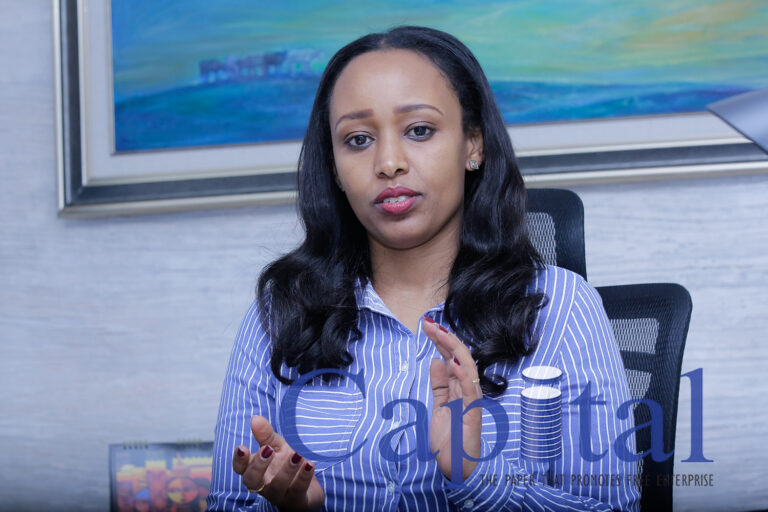
Planning and Development Commission (PDC) reveals that COVID 19 forced it to redefine its Ten Year Perspective Development Plan that was expected to be tabled for consultation two months ago.
It is recalled that the government under PDC is conducting a strategic plan that will be implemented in the coming decade.
The plan targeted to attain crucial and tangible changes in the economy, social and political arena in the coming years.
Fitsum Assefa, Commissioner of PDC told Capital that COVID 19 has given a lesson to redefine the six strategic pillars stated in the Ten Year Perspective Development Plan.
“In every plan we are forced to redefine our targets. For instance we gave emphasis on technology and innovation, research and development, and develop resilient system,” she told Capital.
“We have been working to reforming data system to change it in real time and improve the frequency and relevance but COVID 19 showed us to work on it more,” she explained how the pandemic forced them to refocus on the strategy.
“We need to allocate appropriate investment on research and development, and real time data development to give fast decisions for any challenges and come up with concrete solution,” she added.
She also indicated that because of the outbreak investments on some sectors like tourism will be revised and reoriented.
“We are discussing on tourism, which is still a major focus areas under the plan, to reschedule investment on the sector and transfer to other areas until the outbreak effect calm down,” she added.
She said that some of the reforms not the plan are rescheduled; “now we are focused on saving life than going to the reform.”
The Ten Year Perspective Development Plan is different compared with the recent past similar plans and also looking in detail the failure of the previous development plans and continuing the high growth trajectory, according to the Commissioner.
For the last two years 12 different studies have been conducted as an input for the ten year development plan.
Sectors augmented by PDC have been engaged by themselves to come up with their own plan. Several discussions with stakeholders for every sector were undertaken from inception level for drafting the ten year development strategy.
High standard and independent consultants and experts were involved on commissioning the studies. “When we see the Growth and Transformation Plan (GTP) I and II most of them were developed in PDC, meanwhile sectors to some extent were involved. But on the latest case PDC set the macroeconomic framework, which is our mandate, and the rest under the bottom up approach; relevant government bodies conducted their plans under the PDC framework,” she said.
At the same time sectors are also synergized each other to keep the linkage of sector like agriculture and industry.
“Spatial dimension that will support to keep the balanced growth rate based on areas is also the other new point included under the current plan,” she added.
It is real we have been growing in the past years but there was a problem on the source of growth that was only focused on public investment, according to the commissioner.
She said that quality economic growth and fair distribution of growth are crucial that are understood by the public.
Enabling environment like sustainable development finance, improve competitiveness and productivity are also strategic areas to reach at the expected achievement.
Institutional transformation include improving public policies, cultural shift and mind set shift is also one of the pillars in the ten year plan.
Real involvement of the private sector in the economy should be ensured at this ten year plan and it is one of the strategic pillars to be achieved in the period.
Resilient economy against the climate change is also a strategic pillar of the plan.
Job creation is the major target for the government to be achieved in the coming decade. According to the plan at the end of the ten year plan the unemployment rate should be below nine percent. To meet the target every year at least 1.36 million new jobs should be created.
“At the stage we were going to kick off the public consultation the pandemic is reported in Ethiopia, meanwhile the new plan should be matured and will be introduced in the coming year since it is new year after the end of the five year plan, GTP II, that will end in July 7,” Fitsum said.
“COVID 19 does not only halt consultation but gave us a lesson to revisit the plan, and internally we raise issues like should we retouch the targets, do we need to look implementation instruments again, do we need to refocus on priorities, and redefine strategic pillars,” she said.
PDC conducted the short and long term impacts of COVID 19 that indicates the targeted growth rate will drop by 2.8 to 3.8 percentages from the original target of nine percent for the year.
This year growth will be between five to six percent. Recently the International Monetary Fund (IMF) has forecasted that the effect of global outbreak of COVID 19 will contract Ethiopia’s real GDP growth to 3.2 percent in 2020.
She said that initially the government’s projection for the year is different with IMF and the government expected the economy to grow by nine percent and IMF estimates 6.2 percent.
“Nobody understands our economy more than us. The IMF and other similar organizations and our indicators shall differ since they are considering the least developed countries under similar views but our assumption on productivity is considered as our own experience and achievements,” she explained.
“Some small boost on productivity has big impact. When they said Ethiopia will grown by 6.2 percent they considered that the country is under reform that means the public expenditure and government investment will drop. But the government expenditure will be diverted to the agriculture and private sector development that will boost the economy,” Fitsum said.
“Our production functions and the IMF school of thought on the area are also differing,” she added.
From 705,000 to 1.1 million jobs, mostly at the service sector, will be severely affected because of COVID 19.
According to the study of PDC, if the government does not intervene the impact of COVID in the economy will continue for the coming two and more years.
“But we witnessed that the government is intervening like injecting liquidity to the financial sector, sharing costs and allocating supplementary budget to mitigate the impact,” she said.
