

The government and stakeholder boldly reflected their own interest mentioning number of jobs created, safeguarding the health of the community and boosting the revenue from tax in the mid-week at the parliament public hearing session on the draft bill of excise tax that is referred to parliament Revenue, Budget and Financing Standing Committee on December 17, 2019 for further discussion.
Revision of the excise tax proclamation has become necessary to collect and impose tax on goods and services that are believed to be luxury, hazardous to health, causing social problems as well as on basic goods which are demand inelastic, the draft states.
According to the Ministry of Revenue, Ethiopia collects below 0.7 percent of excise tax to GDP ratio, which is well below the 1.4 percent in Sub-Saharan countries. The government is working on modernizing the tax collection system and revising the excise tax law would increase tax revenue and help achieve economic and social goals.
Officials believe second-hand cars as one of the major reasons for increasing road accidents in the country. The bill tabled proposes an introduction of 500 percent excise tax on vehicles that are used for over seven years.
Though officials echoed used cars result in environmental issues connected to climate change, scholars argues the 500 percent tax on used cars and climate change doesn’t have correlation in existing situation.
“The government better use other mechanism like banning used cars rather than levying 500 percent tax,” said Tadesse Lencho who attended the hearing.
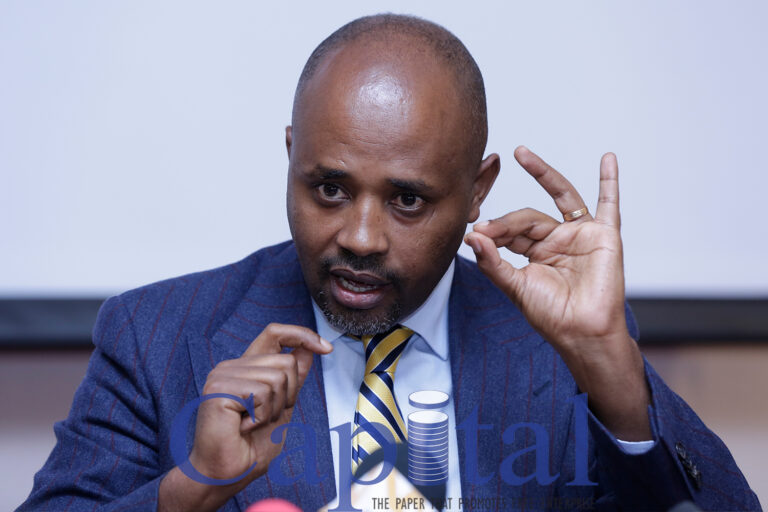
“The objective of the bill is not only to discourage secondhand cars import through tax increase but is to also help to attract multinational companies like Volkswagen and others that showed an interest to open an assembly here in the country” said Eyob Tekalegne, State Ministry of Finance.
According to the data from the Ministry of Finance, over 35,000 vehicles have been imported last year into the country and the majority of them were secondhand.
Apart from cars, beer exclusively produced from imported barley and malt will be subjected to a 35 percent excise tax while a beer that uses local raw material of which excluding water is at least 75 percent by weight of its constituents will be subjected to 30 percent excise tax.
“We obliged to reconsidering our future investment including the one in pipeline” representatives of beverage and alcohol companies echoed in unison.
“The current collection system is far more complex to administer and liable to undervaluation particularly with beer companies,” said Mulay Weldu, Tax Policy Director of the Ministry of Finance.
The National Tobacco Enterprise, the monopoly cigarette producer and importer is the only company with no complaints on the proposed tax, rather asks the government to fight contraband.
Tobacco and tobacco products will be subjected up to 30 percent excise tax.
It also proposes a 40 percent excise tax for all types of wines including fortified wines, fermented wines and other types of alcoholic beverages obtained by fermentation of fruits. Drinks with 40 percent alcoholic content could be subjected to an 80 percent excise tax.
Representative from the health association argues that the proposed excise tax on tobacco and beer is less when compared to neighboring Kenya.
“No need to compromise the issue of health, where 52 percent of the people are dying in non-communicable disease because of alcohol, cigarettes and junk food,” said Wendu Bekele from Ethiopian Cancer Association adding that the government allotted 6.7 percent of the total revenue for the health sector which is the lowest in sub Saharan African countries.
A new bill has been introduced by the Ministry of Finance to amend the nation’s excise tax law in an effort to standardize taxation. Commodities liable to the proposed law includes fats and oil up to 50 percent, sugar and sugar confectionery up to 30, soft drink powders 25, non-alcoholic beverages 20 percent, salt 25 percent, mineral fuel and oil and their product 30 percent, rubber tire 5 percent, perfumes and cosmetics 100 percent, plastic shopping bags (40 birr/kg), human hairs and wigs 40 percent, carpets 8, TV and Camera 10 percent and more.
Stake holders held heated discussion on new excise tax
IFC invests € 50 million in Habesha for local sourcing

By Ruth Brook
The International Finance Corporation (IFC) announced an investment of up to € 50 million in Habesha Breweries S.C. in a press release earlier this week. The sizeable loan from IFC – a member of the World Bank Group – is intended to help the expansion of Habesha Breweries operations, create 500 jobs and increase local barley sourcing from smallholder farms.
The loan is co-funded by the Dutch Development Bank (FMO), Dutch Banks Cooperatieve Rabobank U.A. (Rabobank) and ING Bank N.V. (ING).
“Our partnership with IFC and other lenders is timely and key to growing the malt barley supply chain in Ethiopia. We aim to increase smallholder farmers from 1,000 to 14,000 in the next five years and improve household incomes.” said Zewdu Negate, CEO, Habesha Breweries, in Monday’s press release.
With the Ethiopian brewing industry growing rapidly, it serves as a key contributor to economic expansion. That said, up to 90 percent of malt barley is imported, according to IFC. This project aims to grow the local malt barley supply chain and increase farmer productivity with improved access to agricultural necessities such as seeds and fertilizers. It is predicted to create a hike in income for 15,000 smallholder barley farmers.
“Programs that support local sourcing are critical to linking smallholder farmers to large supply chains, thus creating more economic opportunity and jobs for vital parts of the country’s agriculture sector,” said Jumoke Jagun-Dokunmu, IFC Regional Director for Eastern Africa, in the press release.
In October of this year, IFC formed a similar partnership with Soufflet Malt Ethiopia – under the French company Groupe Soufflet – investing €20 million in the company with the parallel mission of boosting local malt production and supporting farmers.
IFC is no stranger to titanic investments. For nearly six decades, the corporation has been investing $25 billion in African businesses and financial institutions. Neighboring countries Kenya and Tanzania have recently partnered with IFC for loans in their education and health sectors respectively.
In the last five years alone IFC put down $317 million in new investment commitments and $50 million in several areas of interest including agribusiness and manufacturing. Ethiopia is a key market for the corporation.
“This investment has a purpose and feels like the right thing. I am extremely proud that we are able to continue to build and grow the brewery in partnership with the barley farmers and residents.” said Negate.
Ethio Telecom to provide pocket money for university students in need

By Ruth Brook
Ethiopia’s sole telecommunications provider, Ethio Telecom, announced the launch of a financial aid program of 16 million birr geared towards helping university students in need of financial support. As part of their Corporate Social Responsibility program, the company’s financial aid will assist 4000 students in 45 Public Universities across the country, in the form of a monthly stipend of 400 birr per student in need.
The inauguration ceremony which took place on December 31, 2019, was attended by university presidents, high government officials and other invited stakeholders.
This program is an extension of an existing support initiative by Ethio Telecom which has aided 840 students from 13 universities since 2006. Seeing the success of this program called for growth, hence the expansion, said Frehiwot Tamru, CEO of Ethio Telecom.
Recognizing that to some 400 birr might not be a substantial amount, Frehiwot voiced that the company has seen the extent to which their funding has helped students in the past. A documentary showing recipient students at Jigjiga University expressing how much the pocket money eased their financial burdens was played, echoing the statement of the CEO.
While assisting students in tertiary education is the aim of this program, Ethio Telecom has previously launched initiatives for students in both primary and secondary education. The company provided a dozen notebooks to each student from 93 schools nationwide, totaling 32,974 students. School uniforms and bags were also provided for more than 5000 students.
The ceremony concluded with university presidents and representatives expressing their gratitude and appreciation to Ethio Telecom for the establishment of this project, many stating that the telecommunications company has a shared vision with the receiving universities.
One such incumbent was Firew Tegegne (Phd), President of Bahir Dar University, who praised the intervention of Ethio Telecom. He expressed that the university noticed the academic performance of female students was 3% lower than that of their male counterparts. He suggested that the reason for this was economically driven and a program such as this one would benefit students immensely. Firew further stated that the university would ensure frequent follow ups on students after receiving the aid.
With a seemingly strong focus on education, Ethio Telecom has also sponsored a six-month fashion design training program for 100 women from the sub-cities of Addis Ababa. The aim is to economically empower them to create a sustainable income, supporting themselves and their dependents alike.
In addition to their philanthropic efforts in the education sector, Ethio Telecom has financially contributed to the Sheger Beautification Project and has supported the Green Ethiopia initiative, with 17,000 Telecom employees planting more than 1.5 million seedlings in 174 areas across all regions.
Ethiopia’s newest ride hailing app

By Ruth Brook
A new rideshare app is in town, offering services from transportation and food delivery around Addis Ababa to moving services and everything in between. Tribe, an “all in one transportation solution” is set to launch in two weeks’ time.
The first of its kind in Ethiopia, Tribe’s all inclusive service offers a scope of support that goes beyond getting customers from point A to B, said Yonatan Awel, Tribe General Manager. Passenger service, carpooling, food delivery, moving trucks and cranes are a few of the services offered by Tribe. The vehicle categories span from Bajaj’s and motorcycles to luxury cars and SUV’s, depending on the required service.
There was a need for a transportation service that covers different sectors, he continued. Likening it to a company like e-commerce giant, Amazon, Yonatan explained that the aim of Tribe is to be a one stop shop for customers in need of transport services. Tribe hopes to make travel easier by cutting down time spent waiting for public transport and the cost of fuel, tires and spare parts for vehicle owners, he said.
With the launch date fast approaching, the startup company is currently in the process of registering 1,500 drivers, with hopes of registering more in the near future as part of their goal to help decrease unemployment rates, Yonatan said.
The company operates on a commission based system, whereby drivers take 90% of the earnings from each ride. Each vehicle type is allotted a certain amount of money in the form of a deposit; a Toyota Vitz for example is allocated 1,500 birr whereas a Bajaj is allocated 750 birr. To ensure a more streamlined and efficient process, Tribe will take the 10% from the deposited amount. The amount varies depending on the vehicle type, explained Betelhem Girma, Tribe Brand Ambassador.
In terms of accessibility, all transactions are carried out on the app. Customers have the option of paying with cash; alternatively they can opt for cashless transactions by paying with CBE Birr using the app’s ‘Tribe wallet’. The app also has a loyalty program, where customers get 5 birr for every 5km they travel with Tribe.
Aside from the expansive services the company offers, Tribe hopes to make a social difference as well, said Yonatan. With positivity and fraternity being part of the company principles, employees are encouraged to fulfill at least one act of kindness a day, which will then be posted on the company’s social media pages to further promote their vision.
Complementing the slogan of “going together”, the name Tribe was a conscious one, said Yonatan. “We wanted to remove the negative connotations around the word tribe, given the current state of our country. Our image is to be united by one vision and idea. We want to promote an image of a collective that thinks for and looks out for one another,” he concluded.
