Thursday, November 26, 2026
Home Blog Page 435

Ethiopia Finalizes Landmark Child Law Outlawing All Corporal Punishment

0

The Ministry of Women and Social Affairs (MOWSA) has announced the completion of the draft Integrated Child Law, a transformative legislative framework designed to unify and strengthen the protection of children’s rights across Ethiopia. By consolidating scattered provisions from existing criminal, civil, labor, and family statutes into a single instrument, the new law aims to eliminate legal inconsistencies. Its most significant and debated feature is an explicit, strict prohibition of all forms of physical and mental punishment, marking a historic shift in the country’s approach to child welfare.

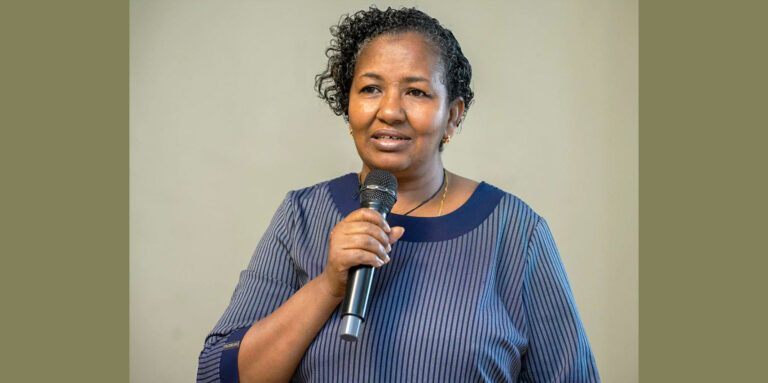
Zebider Bogale, Lead Executive for Child Rights and Protection at MOWSA, told Capital that existing laws have failed to keep pace with modern challenges. The new proclamation specifically addresses contemporary threats such as cyberbullying, online grooming, and technology-facilitated abuse—areas previously left in a legal vacuum. Central to the draft is the “Best Interests of the Child” principle, which requires all judicial, legislative, and religious institutions to prioritize a child’s safety and well-being independently of family interests. Historically, treating children’s issues merely as an extension of family matters has hindered independent legal protection.

Article 47 of the proclamation serves as its most radical element, outlawing any act intended to punish, correct, or control a child that causes physical pain or discomfort. The ban is absolute, regardless of whether the punishment is deemed “light” or “severe.” The law further prohibits mental punishment, including belittling, mocking, or any action that inflicts fear or a sense of inferiority. In place of force, the draft requires parents, teachers, and guardians to adopt positive discipline and counseling methods.

Despite its humanitarian goals, the draft has met with significant resistance from parents who view physical discipline as a cultural and religious necessity. Asgedom Gebremariam, a father of seven, expressed deep concern over potential state interference, citing traditional proverbs like “A child who is not punished will not learn.” He warned that the threat of up to three months’ imprisonment for parents could destroy traditional family boundaries. Similarly, Woyneshet Kefyalew, a mother of five, argued that the law clashes with spiritual teachings, stating that correcting a child is a “commandment from the Creator.” She expressed fear that the proclamation imposes foreign values and could lead to children intimidating their parents with legal threats.

MOWSA’s extensive impact assessment preceded the draft, finding that existing laws often conflate children’s issues with adult perspectives. The new prohibition applies to parents, guardians, teachers, and anyone responsible for a child’s care. Instead of force or humiliation, the draft mandates the use of counseling and positive teaching methods. It defines a child as anyone under 18 and mandates special protection for vulnerable groups, including children with disabilities, those with chronic illnesses like HIV/AIDS, and displaced minors.

The law also introduces a holistic framework for protection, formally recognizing Children’s Parliaments to grant minors the right to be heard. It establishes legally binding accountability for alternative care systems, such as adoption and foster care, and requires child-friendly environments in police stations and courts to reduce psychological trauma during legal proceedings.

The drafting process was a collaborative effort involving the Ministry of Justice, Federal Police, and the Human Rights Commission, with technical support from SOS Children’s Villages Ethiopia. The draft, which underwent five rounds of public consultation, is now in its final stages. It will soon be presented to the Council of Ministers and the House of Peoples’ Representatives for approval. While the law marks a major step toward meeting international human rights conventions, officials acknowledge that the real challenge lies in shifting deep-seated public perceptions through ongoing awareness campaigns.


IMF Hunts for New Africa Chief as Abebe Selassie Set to Retire

0

The International Monetary Fund (IMF) has formally opened the selection process for a new director of its African Department following the announcement that Ethiopian economist Abebe Aemro Selassie will retire on May 1, 2026. This marks the conclusion of a pivotal decade for the department, as Abebe has served at its helm since 2016, navigating the institution through some of the most significant global economic disruptions in recent history.

Throughout his tenure, Abebe oversaw the IMF’s engagement with 45 countries across sub-Saharan Africa. His leadership was particularly critical during the COVID-19 pandemic, during which the Fund provided approximately $60 billion in financial support to the region. Managing Director Kristalina Georgieva credited him with reinforcing the organization’s role as a trusted partner and significantly expanding the continent’s influence within the institution, most notably through the addition of a 25th chair to the IMF Executive Board.

Abebe’s career at the IMF spanned 32 years, beginning in 1994. Before leading the African Department, he held various high-level roles, including Deputy Director, Mission Chief for South Africa and Portugal, and Senior Resident Representative in Uganda. His work also extended to programs in Turkey, Thailand, Romania, and Estonia. Georgieva highlighted that his strategic vision and dedication helped align the Fund’s mission with the aspirations of Africa’s people—particularly its youth—for good governance and lasting prosperity.

The search for a successor comes as the IMF prioritizes several critical initiatives for the continent. These include reforming the global financial architecture to ensure stability and equity, specifically by addressing high borrowing costs that see African nations paying significantly more in interest than advanced economies. The Fund is also pushing for quota reforms to better reflect Africa’s $3.4 trillion collective GDP, as the continent currently holds less than 5% of voting shares.

Other key areas of focus for the incoming director will involve unlocking investments for sustainable growth and job creation. With Africa’s working-age population projected to reach one billion by 2050, the IMF is looking toward the African Continental Free Trade Area (AfCFTA) to boost intra-African trade and create millions of jobs. Furthermore, the institution remains committed to climate finance and debt relief, acknowledging that while Africa contributes less than 4% of global emissions, it suffers disproportionately from climate-related disasters.

As the selection process begins, the IMF seeks a leader capable of maintaining the momentum of Abebe’s visionary leadership. The legacy he leaves behind is one of strengthened multilateral cooperation and enhanced global engagement, strictly in alignment with the aspirations of Agenda 2063 for inclusive growth across the continent.

Ethiopia to Adopt International Standards for Measuring Investment Impact

0

Ethiopia is set to adopt internationally recognized standards and impact measurement frameworks to better assess the social and environmental outcomes of “Impact Investments” made across the country.

The initiative is part of a broader strategy to position Ethiopia as a leading hub for impact investment by 2030. It is also expected to play a key role in addressing the $600 billion annual financing gap needed to achieve the Sustainable Development Goals (SDGs).

According to Nasreen M. Adem, an Investment and Impact Advisor at ACE, the absence of a standardized definition and consistent measurement system has posed a major challenge to Ethiopia’s investment sector in recent years.

“One of the biggest hurdles has been the lack of a unified taxonomy and a coherent system for measuring impact. While many investors use their own internal metrics, there is a pressing need to adopt globally accepted standards such as ESG—Environmental, Social, and Governance—and IFRS to define and report impact in a clear and consistent manner,” Nasreen explained.

Although many companies engage in corporate social responsibility activities, international investors have often struggled to access reliable data that would allow them to verify the impact of these initiatives and commit funding accordingly.

“It’s not just about financial returns. We must be able to measure the positive impact of investments on society through scientific and internationally accepted methods,” Nasreen added.

With the International Sustainability Standards Board (ISSB) set to release new guidelines in 2026, Ethiopia’s early adoption of these frameworks is expected to unlock significant opportunities to attract global impact funds, which currently manage over $1.1 trillion in assets.

The announcement was made during a workshop organized by ACE Advisors in partnership with the Global Steering Group (GSG) for Impact Investment and ALX Ethiopia.

One of the key outcomes of the consultative forum was the plan to establish a national “Deal Room”—a digital platform designed to connect capital providers directly with entrepreneurs and startups seeking investment. The platform aims to reduce information asymmetries and ensure that investment flows more equitably across all regions of the country.

Nasreen noted that the ongoing macroeconomic reforms in Ethiopia have created a conducive environment for the adoption of these modern investment measurement tools.

Prime Minister Abiy Ahmed recently projected that Ethiopia’s economy would grow by 10.2% in the 2025/26 fiscal year, with private sector participation and digital transformation playing central roles in driving that growth.

Despite the optimistic outlook, a study presented during the workshop highlighted persistent challenges within Ethiopia’s investment landscape. Currently, the country accounts for only 4% of impact investment deals in East Africa—a figure that lags behind regional peers such as Kenya.

Key obstacles include macroeconomic volatility, fragmented procedures, and a lack of reliable data. In response, stakeholders have formed a National Partner Task Force comprising representatives from both the public and private sectors. In its first year, the task force will focus on aligning international impact investment definitions with Ethiopia’s local context.

If implemented successfully, the roadmap is expected to pave the way for Ethiopia to join the Global Steering Group (GSG) for Impact Investment by early 2026. Membership would place Ethiopia among more than 40 countries committed to building an inclusive and sustainable “Impact Economy.”

Real Estate Giants Face Off in Federal Court Over Trademark Infringement

0

The trademark dispute between Jambo Construction, a long-standing leader in Ethiopia’s business and real estate sector, and Jenboro Real Estate, a newer competitor, has reached the Federal First Instance Court.

Jambo Construction filed a lawsuit alleging, “My name and trademark have been imitated, resulting in a loss of 1 million birr.” In response, Jenboro Real Estate submitted its defense to the Commercial and Investment Bench, arguing that the lawsuit is “legally baseless and barred by the statute of limitations.”

The case, which has drawn significant attention to property rights within Ethiopia’s expanding real estate sector, centers on the claim that the name “Jenboro” is phonetically and orthographically too similar to the well-established “Jambo” brand.

Founded in 1996, Jambo Construction states that it has built a reputation over nearly three decades in the construction and real estate industries. The plaintiff seeks protection for its trademark, which is registered with the Ethiopian Intellectual Property Authority under international classes 36 and 37.

According to Jambo’s lawsuit, the defendant’s use of the name  “Jenboro Real Estate ” in the same line of business creates confusion “in sound, spelling, and intonation” with its registered brand. Jambo further alleged that this “brand hijacking” has confused both the media and the public, leading to a financial loss of 1 million Birr.

In a detailed response recently submitted to the court, Jenboro Real Estate presented a strong defense and called for the dismissal of the charges. The defendant’s lawyers raised a preliminary objection based on the statute of limitations.

Jenboro noted that it obtained its business license and entered the real estate sector in 2020. While the plaintiff filed its claim for compensation in 2024/25, the defendant argued that under the Civil Code, claims for damages must be filed within two years of the alleged harm occurring. Since Jenboro has been using the name for over six years, they contend that the claim is time-barred.

Additionally, Jenboro argued that the plaintiff only registered the trademarks “Jambo” and “Jambo + Image.” They asserted that a lawsuit cannot be brought over a trademark that has not been explicitly registered, citing a binding precedent from the Federal Supreme Court Cassation Division.

Regarding the meaning and origin of the names, the defendant explained that “Jenboro” has its own deep significance. It is an indigenous name rooted in the owners’ birthplace—specifically, the name of a village and a school in the Gumer Woreda of the Gurage Zone in Southern Ethiopia, meaning “Sun” or “Light.”

In contrast, the defendant argued that the plaintiff’s name, “Jambo,” is neither Amharic nor Gurage but a Swahili word meaning “Peace” or “Hello.” Therefore, the two names share no linguistic relationship or connection in meaning.

Visually, Jenboro pointed out that its logo consists of seven letters, includes the slogan “Enter on Time,” and features a “J” symbol. In comparison, the Jambo logo has five letters and its own distinct imagery, making the two clearly distinguishable.

The defendant further contended that because purchasing real estate requires significant capital and a high level of caution, buyers are “prudent” consumers who thoroughly investigate a developer’s identity, credibility, track record, and contract details. Such consumers are unlikely to make a purchase based solely on a similarity in names.

Finally, Jenboro Real Estate claimed that the plaintiff’s lawsuit was filed in bad faith with the intent to eliminate a competitor from the market.

Accordingly, the defendant has requested that the court dismiss the 1 million Birr compensation claim, rule that its trade name and trademark do not resemble the plaintiff’s, and order the plaintiff to cover the defendant’s legal fees and other expenses. The court’s final decision on the matter is still pending.