Saturday, April 11, 2026
Home Blog Page 487

Invitation to Bid for rendering audit services for Nib insurance Company (S.Co)

0

Bid No. PPFMS 0014/2024-2025

Nib Insurance Company (S. Co.) invites all interested authorized audit firms for rendering audit service for nib insurance company S.co for the year ended June 30, 2026, June 30 2027 and June 30, 2028.

Interested bidders can collect the Terms of Reference (TOR) up on presentation of renewed trade license, VAT Registration certificate, Taxpayers Registration certificate (TIN),Commercial Registration Certificate, Tax Clearance certificate and payment of non-refundable birr 100.00 (One hundred birr) from Procurement, Property & Facility Management Service ,located at Dembel City Center, 11th Floor (Please use Lift No. 2 or 3), during office hours (morning from 8:30am to 12:00am, afternoon from 1:00pm to 5:00pm) starting from April 28,2025.

All bid must be accompanied by a bid security of birr 20,000.00 (Twenty Thousand Birr) in the form of a Cash Payment Order (CPO).

            Bid closing date: May 19, 2025 at 10:00 am

            Bid opening date: May 19, 2025 at 10:10 am

The Company reserves the right to accept or reject all or parts of the bid.

                           Nib Insurance Company (S. Co.)

                    Tel   011 554 0176

                            011 554 4999

                           Addis Ababa

TECNO and UNHCR expand partnership to boost education for African refugee children and youth

0

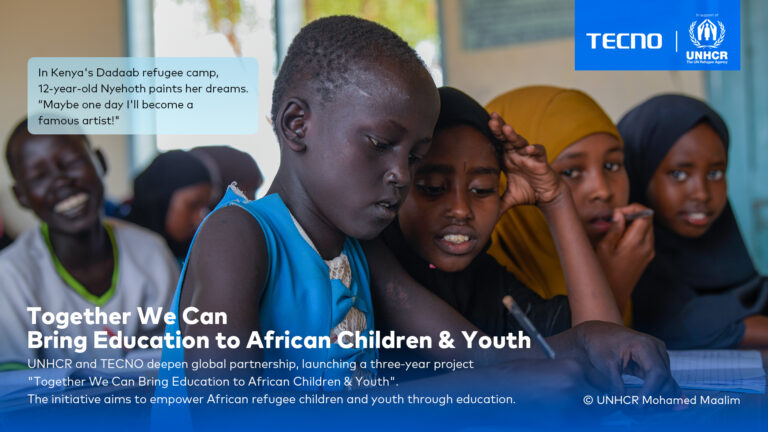
TECNO Mobile has announced the expansion of its global partnership with UNHCR, the UN Refugee Agency, launching a new three-year initiative titled “Together We Can Bring Education to African Children & Youth.” The program aims to provide quality education to more than 54,000 refugee children and support 15 DAFI (Albert Einstein German Academic Refugee Initiative) scholars across Africa, strengthening efforts toward sustainable development on the continent.
The renewed partnership, first established in 2020, has already benefited over 17,000 refugee children and dozens of scholars by supporting primary education, teacher training, and school infrastructure in countries such as Kenya and Uganda. With this new phase, TECNO and UNHCR will focus on enrolling out-of-school children in primary schools, particularly in refugee-hosting regions like Kenya’s Dadaab and Kakuma camps, which together house more than 217,000 school-aged refugee children.
Initial support in 2025 will reach at least 18,000 refugee children and five DAFI scholars, with the broader goal of enrolling over 55,000 children in the coming years. The initiative will provide scholastic materials, hygiene kits for girls, infrastructure upgrades, and resources for teachers and school activities.
The partnership is aligned with the UN’s Sustainable Development Goals, particularly Goal 4, which calls for inclusive and equitable quality education for all. By combining resources and expertise, TECNO and UNHCR aim to create safe, stimulating learning environments and help refugee children unlock their full potential.
Kenya, currently hosting more than 774,000 refugees and asylum-seekers, is among the key beneficiaries of the initiative, with thousands of new students expected to benefit from the program in 2025 alone. The partnership also supports higher education opportunities for refugee scholars, helping them build brighter futures and contribute to their communities.

Electric infrastructure suppliers demand price revision as inflation drives up costs

0

Domestic manufacturers supplying Ethiopia’s electrical infrastructure are urging the Ethiopian Electric Utility (EEU) to revise its pricing structure, citing the severe impact of soaring inflation, rising import costs, and currency fluctuations on their operations.

The call for price adjustments was made during a recent consultative forum organized by the EEU, which brought together local manufacturers and suppliers of key electrical components such as transformers, cables, and conductors. Participants voiced growing concern that the current pricing model is unsustainable in the face of escalating production expenses.

“The current inflation in the country has become more severe than we anticipated. The price of our raw materials is increasing at an alarming rate, making the existing pricing approach unsustainable,” one manufacturer stated. Many noted that most inputs are imported, and the combined effect of fluctuating exchange rates and higher transportation costs has significantly raised their production costs.

Another supplier emphasized the need for a comprehensive revision of the EEU’s pricing system, explaining, “When we set the prices for our products, we take into account everything from the cost of raw materials to profit margins and other operational expenses. However, the constant fluctuations in the exchange rate are having a major impact.”

Manufacturers also called for greater transparency and responsiveness from the EEU regarding price adjustments. “The EEU should have a clear assessment and price schedule in place. With the current high inflation affecting the country, their response to these price hikes is slow, which is severely impacting us manufacturers,” a participant asserted.

In response, the Ethiopian Electric Utility stated that it considers all factors related to domestically produced electrical infrastructure inputs, including the cost of raw materials. The utility acknowledged the reliance on imports and affirmed that costs incurred from procurement to delivery are taken into account.

“Our pricing has historically considered domestic production costs, profit margins, and other operational expenses. Price revisions are typically made when significant changes occur, such as fluctuations in fuel prices or currency exchange rates. Our ‘flat rate’ pricing is mostly reviewed annually. We hope to work on this in a clearer manner,” the EEU said.

Reluctance to enhance due diligence on PEPs hampers KYC compliance

0

Despite the need for enhanced due diligence on Politically Exposed Persons (PEPs), reluctance continues to challenge KYC compliance in Ethiopia’s financial sector.

The Commercial Bank of Ethiopia (CBE) asserts that it has bolstered its compliance measures in accordance with regulatory standards. However, during the 4th KYC Compliance Day celebration at CBE headquarters, the National Bank of Ethiopia (NBE) pointed out ongoing difficulties in meeting compliance requirements, despite continued improvement efforts.

An NBE representative presenting a study on the matter noted that one of the major obstacles to effective KYC implementation is the difficulty in keeping PEPs lists current. “Banks, including CBE, struggle to maintain an up-to-date PEPs list,” he remarked, urging that “relevant authorities should regularly provide banks with updated PEPs lists.”

Additionally, a lack of cooperation from PEPs when banks request further information poses another significant challenge, despite their legal obligations to comply.

PEPs, who are individuals that hold or have held prominent public positions, present heightened risks of corruption and money laundering, which necessitate stricter scrutiny by financial institutions.

The NBE representative also identified several systemic challenges, including the absence of a centralized national ID system, a lack of accessible databases for legal entities, poor integration among government agencies, insufficient stakeholder cooperation for enhanced Customer Due Diligence (CDD), limited investment in KYC technology, a weak focus on compliance units, and high operational costs.

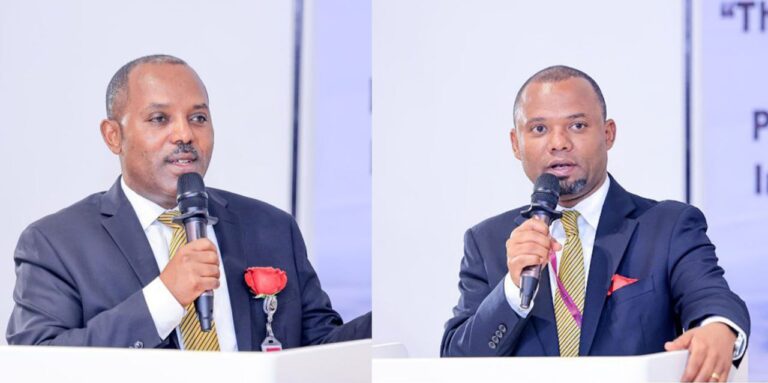
Under the theme “The Future of KYC: Powered by Innovation,” CBE President Abie Sano stressed that compliance with regulatory laws is vital for protecting the financial sector.

Firew Gebreselassie, CBE’s Vice President of Risk Management and Compliance, reported significant progress in compliance over the past four years, noting that the bank has strengthened its processes in alignment with regulatory standards.

The NBE conducts regular assessments through both onsite and offsite examinations to ensure KYC compliance. “We are approaching full compliance, though this remains an ongoing journey. Our policy is zero tolerance for noncompliance,” Firew stated.

To enhance compliance, CBE has implemented several technological solutions, including the Financial Crime Mitigation Solution, which screens clients, including local and international PEPs, and links to global sanction lists (UN, EU, OFAC, UK); NG Screening for Profiling, which helps assess customers’ creditworthiness and risk profiles; and the Analytic x Boutique (NFRM System), which aids in risk mitigation.

“With 43 million customers, technology is crucial to our operations, and we continually upgrade our systems,” Firew added.

Despite these advancements, Ethiopia’s financial sector still faces challenges in achieving full KYC compliance, particularly concerning PEPs and systemic inefficiencies.