Thursday, March 5, 2026
Home Blog Page 5

GERD: Africa’s energy Project of the Year

0

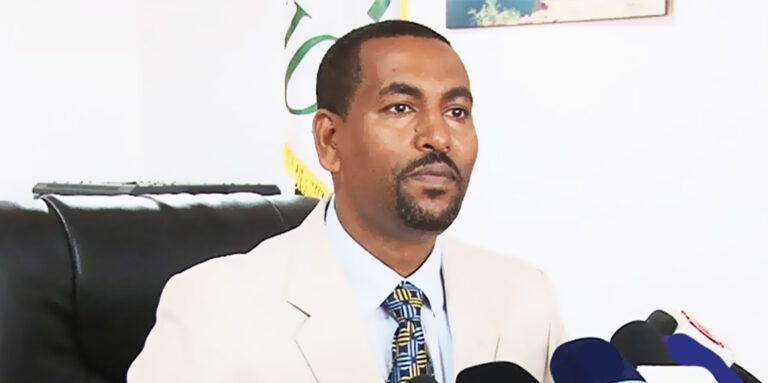
The Grand Ethiopian Renaissance Dam (GERD) has reached a new pinnacle of international recognition, officially being named the “Industrial Energy Project of the Year 2026.” At a prestigious ceremony held in late January at the Kempinski Gold Coast Hotel in Accra, Ghana, the Africa Trade Chamber honored the dam for its transformative impact on the continent’s industrial landscape. This award, received on behalf of Ethiopian Electric Power (EEP) by Ambassador Asaye Alemayehu, serves as a powerful validation of Ethiopia’s sovereign energy strategy and its flourishing role as the “Clean Energy Hub of Africa.”

More Than a Dam: An Industrial Engine

The Africa Trade Chamber’s decision to honor the GERD was based on its unprecedented contribution to Africa’s industrial base. With an installed capacity that has now reached its operational stride of 5,150 MW, the project is no longer just a source of domestic light; it is the cornerstone for large-scale manufacturing, agro-processing, and regional value chains.

By providing reliable, low-cost renewable energy, the GERD is solving the single greatest barrier to African industrialization: the high cost and intermittency of power. As noted during the award ceremony, the project is a strategic investment that strengthens long-term energy security and enables Ethiopia to act as the primary stabilizer for the Eastern Africa Power Pool (EAPP). In the 2024/25 fiscal year alone, Ethiopia earned $118.1 million from regional electricity exports to Kenya, Djibouti, and Sudan—a figure that is projected to quadruple as the Ethiopia–Kenya–Tanzania interconnection reaches full capacity and trial runs to South Africa begin.

Perhaps the most significant aspect of this recognition is the “indigenous” nature of the project. The GERD stands as a global-scale infrastructure success built entirely without external loans or foreign aid. This “collective national triumph,” as Prime Minister Abiy Ahmed described it during the dam’s official inauguration on September 9, 2025, demonstrates to the world that Africa possesses the institutional and financial capacity to execute world-class infrastructure independently.

The dam’s renewable output is projected to generate 15,760 GWh annually, creating a multi-billion dollar engine for national development. This revenue is already being reinvested into the grid, supporting the modernization of Ethiopia’s manufacturing and service sectors.

Regional Integration and the African Single Electricity Market (AfSEM)

The GERD is not merely an Ethiopian asset; it is a continental value. Under the framework of the African Union’s Agenda 2063, the dam serves as proof of the goal to integrate the continent’s infrastructure and stands as a symbol for the African Single Electricity Market (AfSEM). By harmonizing technical standards and infrastructure across the EAPP, Ethiopia is helping create the world’s largest integrated electricity market.

Current statistics show that Ethiopia’s energy leadership is backed by diverse renewable resources:

  • Hydropower Potential: 45,000 MW (The second-highest in Africa).
  • Wind Potential: 1,350 GW, with the Aysha-1 Wind Farm (300 MW) currently leading the transition to a more balanced energy mix.
  • Geothermal: An estimated potential of over 10,000 MW, with projects like Tulu Moye and Corbetti moving toward base-load contribution.

Powering the Green Revolution: E-Mobility and Beyond

The energy surplus generated by the GERD is fueling a radical shift in Ethiopia’s domestic policy. In early 2024, Ethiopia became the first nation in the world to ban the import of non-electric passenger vehicles—a move supported by the massive, low-cost renewable energy output of the GERD.

  • EV Adoption: The number of electric vehicles in Ethiopia surged from 7,000 in 2022 to over 115,000 in 2026.
  • Green Hydrogen: Leveraging the GERD’s affordable electricity, Ethiopia is now exploring the production of Green Hydrogen, with detailed studies underway to replace fossil fuels in heavy industry and transport.
Energy SourceCurrent Share (%)2030 Target (MW)Primary Goal
Hydropower92.3%14,436Base load & regional exports
Wind7.1%1,350+Seasonal balance
Solar/Geothermal< 1%Increase to 27%Diversification & Resilience

Architecting the Future of Agenda 2063

As we look toward the 2030 goal of nearly 20 GW of capacity, the GERD remains the crown jewel of Ethiopia’s commitment to the AU’s vision. It proves that economic growth and environmental protection can advance hand in hand. The revenue from power exports—which reached $86.3 million from Kenya alone in the last year—is providing the foreign currency needed to stabilize the national economy and fund further infrastructure.

From the newly named Nigat Lake of GERD reservoir to the humming industrial parks of Addis Ababa and the cross-border lines stretching toward the Southern African Power Pool, the GERD is proving that Ethiopia is no longer a region of potential, but a source of power. This award is not just a trophy for a building; it is recognition of a new era where Africa powers its own industries through its own strength.

The Blueprint of a New Era: Africa’s Industrial Heartbeat

As Ethiopia prepares to host COP32 in 2027, our role in the global green transition is undisputed. It underscores a shift in the global narrative: Africa is no longer just a victim of climate change, but its most ambitious architect of solutions. The GERD is the laboratory where the aspirations of the African Union’s Agenda 2063 are being tested, proven, and scaled. It stands as a living testament to Goal 10 of the Agenda—the creation of “world-class infrastructure that crisscrosses Africa,” achieved through the principle of self-reliance and domestic resource mobilization.

We are showing the world that an integrated Africa is not a distant dream; it is a reality being built one turbine, one transmission tower, and one industrial park at a time. By anchoring the African Single Electricity Market (AfSEM), the GERD ensures that the hum of industry in Addis Ababa, Nairobi, Dar es Salaam, and Khartoum is powered by the same clean, renewable heartbeat. With the Ethiopia–Kenya HVDC line already generating over $200 million in annual revenue and trial runs extending toward the Southern African Power Pool, the dam has successfully converted hydraulic potential into a stable, hard-currency engine for the region.

The Horn of Africa is no longer defined by its past challenges. Today, thanks to the “Industrial Energy Project of the Year,” it is defined as the power source of Africa’s future. From the shores of the newly named Nigat Lake to the diplomatic halls of the AU, Ethiopia has proven that when a nation invests in its own strength, it does not just light up its own homes—it illuminates the path for an entire continent.

Moges Mekonnen is a seasoned media expert with over 25 years of experience, including 18 years at the Ethiopian Broadcasting Corporation (EBC) as a senior editor, investigative journalist, and program host. Currently the Corporate Communication Director and Spokesperson for Ethiopian Electric Power (EEP), he leverages his deep editorial background to lead the narrative on Ethiopia’s energy sovereignty.


Yohannes Names Backroom Staff Following National Team Reappointment

0

Yohannes Sahle, who was recently reinstated as the head coach of the Ethiopian national men football team, has officially announced his backroom staff.

The coach, who returned to the helm early last month, unveiled his chosen assistants on Friday evening.

According to a statement from the Ethiopian Football Federation (EFF), the appointments were made in accordance with the terms of his agreement.

The federation’s communication confirmed that the selection of assistant coaches was delegated to Yohannes, who has now finalized his choices.

The statement emphasized that all appointments adhere to the Confederation of African Football’s (CAF) guidelines, which require coaching staff to hold a CAF A coaching license or higher.

Adhering to these criteria, Yohannes has appointed Belete Gebrekidan as his assistant coach and Mohammed Jemal as the goalkeeper trainer. Both individuals formalized their contracts by signing at the federation headquarters on the same day.

Belete Gebrekidan, a former player for the Ethiopian youth national team, Belete transitioned into coaching in the year 2007.

He has accumulated extensive experience, having served both as a head coach and as an assistant on numerous occasions.

Notably, he previously worked with the senior national team as an assistant to coach Ashenafi Bekele in 2017. His most recent role was at the helm of the Mechal under-20 team.

Mohammed Jemal, A former goalkeeper for clubs including Jimma City, Adama City, and Addis Ababa Police, Jemal transitioned into specialized coaching in 2012, beginning with Jimma City.

Prior to this appointment, he has been serving as the goalkeeper coach for Dire Dawa City. He also brings prior national team experience, having previously worked with Ethiopia’s under-15 and under-20 sides.

The restructuring of the technical team comes as the national team, nicknamed the Walia Ibexes, prepares for competitive action. Ethiopia is scheduled to face São Tomé and Príncipe in the preliminary round of the Africa Cup of Nations in March.

Yohannes, a seasoned tactician who was most recently coaching Ethiopian Premier League side Fasil Kenema S.C., signed a two-year contract in January to lead the national team.

He steps into the role following the departure of Mesay Teferi, whose contract concluded in November. Mesay has since returned to coach his former club, Wolayta Dicha.

This marks a return to the national team setup for Yohannes, who previously managed the Walias for nearly a year approximately a decade ago. He takes over at a challenging time, following the team’s disappointing performances in recent qualification campaigns.

Ethiopia finished fifth in Group A of the 2026 FIFA World Cup qualifiers, securing just nine points from ten matches (two wins, three draws, five losses). Their Africa Cup of Nations Morocco 2025 qualifying campaign was even more challenging, as they finished at the bottom of Group H with only four points.

No More Midnight Transactions: Ethiopia Steps Into the Light

0

I remember sitting in my office in 2019 with a foreign investor in floriculture who was ready to invest in Ethiopia. The feasibility study was done. The land was identified. The bank guarantees were in place. Then came the question that killed the deal. “And when we make profit, how do we get our money out?”

I gave him the honest answer. The process existed on paper. But in practice, dividends repatriation required NBE approval, which required layers of clearance, which required patience most investors never have. He walked. Ethiopia lost a USD 25 million investment that day. Not because the economics didn’t work. Because the exit wasn’t believable.

That was six years ago. Today, I read the National Bank of Ethiopia’s latest Foreign Exchange Directive – FXD/04/2026 – and thought of that Dutch exporter. I wondered if he knows that the exact bottleneck that killed his deal no longer exists.

For decades, Ethiopia operated a foreign exchange regime built on scarcity and suspicion. The underlying assumption was that if you gave businesses and individuals freedom to hold, use, or move foreign currency, they would abuse it. So the system was designed to gate-keep, to approve, to delay. Every dollar was treated as though it were trying to escape. The result was not discipline. It was distortion. A parallel market flourished not because Ethiopians are dishonest, but because the official system was unusable. When you cannot pay for imports, education, or medical care through the bank, you find another way. That other way became a multi-billion dollar shadow economy operating outside the central bank’s visibility, setting exchange rates the official market could not ignore.

What the NBE has done with this new directive is not incremental reform. It is a fundamental shift in philosophy. The underlying assumption has flipped from “how do we prevent leakage?” to “how do we facilitate legitimate flow?” That single shift changes everything.

Consider an exporter. Under the old regime, exporters were required to surrender a portion of their earnings to the central bank within a fixed period. This was framed as patriotic. In practice, it created an incentive to keep money outside the system entirely. Why bring dollars home if a significant percentage will be converted at an unfavorable rate and the remainder subject to withdrawal limits? The rational actor moved money offshore and kept it there. Now, an exporter can retain one hundred percent of earnings indefinitely. That dollar can sit in an Ethiopian bank account, available for future imports, transfers, or investment. The incentive to park money abroad has not been reduced – it has been eliminated. Money that would have remained in Dubai, Nairobi, or Shanghai can now return to Addis and actually work.

This is where the parallel market begins to lose oxygen. The parallel market exists because demand for foreign currency exceeds supply at the official rate, and because the official process is too slow and unpredictable for urgent needs – medical treatment abroad, school fees, and time-sensitive imports. People do not prefer the parallel market. They tolerate it because it delivers when the banks cannot. Every provision in this directive that speeds up, simplifies, or decentralizes access to foreign exchange through formal channels is a direct drain on the parallel market’s customer base.

The mandate for banks to issue internationally recognized cards against forex account holdings, including for e-commerce, means Ethiopian professionals no longer need to beg friends abroad to pay for software subscriptions or online courses. The ability to pay for spouse and children’s education and medical expenses directly from a forex account removes one of the most common justifications for parallel market purchases. The right to send USD 20,000 in advance payment for medical or education services without visa and ticket requirements eliminates the delay that drives families toward informal channels. Every transaction that can be completed in ten minutes at a commercial bank is a transaction that does not feed the parallel market.

Then there is the question of investment. Foreign direct investment is not just about capital. It is about confidence. Investors need to believe that when they generate profit, they can access it. For years, Ethiopia asked investors to accept this on faith while retaining NBE’s final sign-off on every dividend repatriation. Faith is not a scalable model. This directive removes NBE from the repatriation approval chain entirely. Commercial banks, which are regulated, supervised, and accountable, now handle dividend outflows based on submitted documents. No central bank queue. No political risk. No ambiguity. This single provision will do more to attract institutional capital than a dozen investment summits.

But the benefits are not only for multinationals. This reform quietly opens the door for Ethiopian companies to invest abroad. This is how economies mature. Ethiopian firms can now acquire technology, expand regionally, and build global footprints while remaining headquartered in Addis. The profit those foreign subsidiaries generate can be repatriated. This is not capital flight. This is Ethiopian capital learning to compete internationally. Every thriving economy has companies that operate across borders. That door is now open.

The reforms to forex bureaus are technical but telling. Releasing Birr 30 million in security deposits to operational bureaus and increasing cash holding limits to 25 percent of capital is an explicit recognition that a functional foreign exchange market requires private liquidity. Bureaus cannot narrow spreads if they cannot hold meaningful inventory. They cannot compete with the parallel market if they run out of dollars by midday. These changes are not about enforcement. They are about competition. A well-capitalized, competitive formal market will naturally attract volume away from informal channels.

I have spent nearly twenty years watching Ethiopian economic policy move in stops and starts. There have been moments of genuine reform followed by long plateaus of caution. This feels different. Not because the provisions are radical – other countries have had these policies for decades – but because they are internally consistent. They share a thesis: that Ethiopian businesses and individuals, when trusted with their own foreign currency, will act rationally. That thesis has never been tested here, because we have never extended that trust. This directive is the test.

The parallel market will not disappear overnight. Habits are sticky. Some users will remain out of inertia or because they operate in entirely informal economies that cannot access banks. But the trajectory is now clear. Every month that these provisions are in effect, more transactions migrate from the shadow system to the formal one. Every exporter who brings dollars home instead of parking them abroad adds liquidity to the official market. Every professional who pays for a subscription with a bank-issued card learns that the formal system can work. Every investor who repatriates dividends without NBE approval tells five other investors that Ethiopia is open for business.

That floriculture investor I mentioned? He built his greenhouse elsewhere in Africa instead. But the next one – the one evaluating Ethiopia today – will read this directive and ask a different set of questions. Not “Can I get my money out?” but “Which bank has the best corporate forex service?” That is not a small shift. That is the sound of a parallel market losing its reason to exist.

Befikadu Eba is Founder and Managing Director of Erudite Africa Investments, a former Banker with strong interests in Economics, Private Sector Development, Public Finance and Financial Inclusion. He is reachable at befikadu.eba@eruditeafrica.com.

 DISCLAIMER ….

Yekatit 12: The Unforgettable and Unrecognized Massacre of Ethiopians

0

In the shadow of a history often whispered but seldom reckoned with, a new international initiative is working to ensure the world never forgets the blood spilled on the streets of the capital 89 years ago.

Family members and descendants of the victims are raising their voices, demanding that this history be openly acknowledged and that the fallen receive the honor they deserve.

In February 1937, Addis Ababa witnessed one of the most horrific colonial atrocities in African history. What began as an act of resistance against the fascist occupation triggered several days of mass killings that claimed the lives of thousands of citizens and devastated the country’s intelligentsia.

The catalyst for this brutal massacre was a grenade attack on February 19, 1937 (Yekatit 12, 1929 Ethiopian Calendar), during a public ceremony at the historical imperial palace, Genete Leul Palace, situated near Sidist Kilo.

Although two young resistance fighters, Abreha Deboch and Moges Asgedom, targeted the Italian Viceroy Rodolfo Graziani, he survived the attack. However, the response from the Italian occupying forces was calculated and genocidal in its severity.

Over the following three days, Italian “Blackshirts” and colonial soldiers engaged in indiscriminate mass killings across the city. Historians estimate that between 19,000 and 30,000 Ethiopians were murdered.

The cruelty was not limited to the capital; in May of that year, over 400 monks and pilgrims were executed at the Debre Libanos monastery, situated 110 km north of Addis Ababa, as part of a systematic campaign targeting the educated class to leave the country without leadership for future uprisings.

Despite the scale of this atrocity, descendants of the victims argue that the international community and domestic education systems have allowed this history to fade.

The association From Oblivion to Memory (FOM) is an international initiative bringing together descendants, historians, researchers, and educators.

The group highlights a painful irony: while Ethiopia struggles to memorialize its martyrs, Rodolfo Graziani—known for his cruelty as the “Butcher of Fezzan”—was honored in 2012 with a monument in his hometown of Affile, Italy, funded by the public budget.

Descendants insist that “the sacrifices and suffering Ethiopians endured to protect their independence should not be ignored; acknowledging this history of pain is crucial to creating a just future for the next generation.”

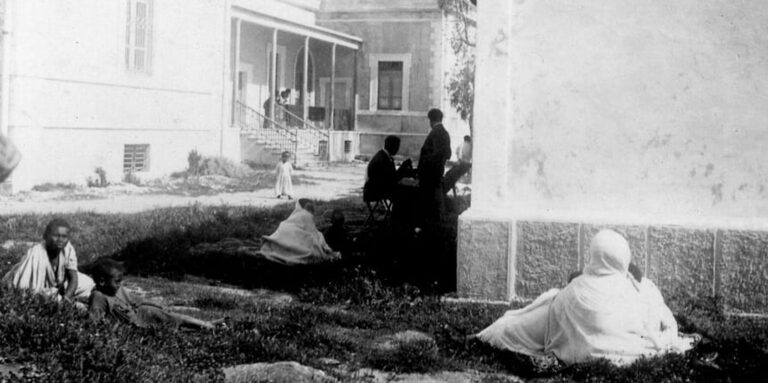
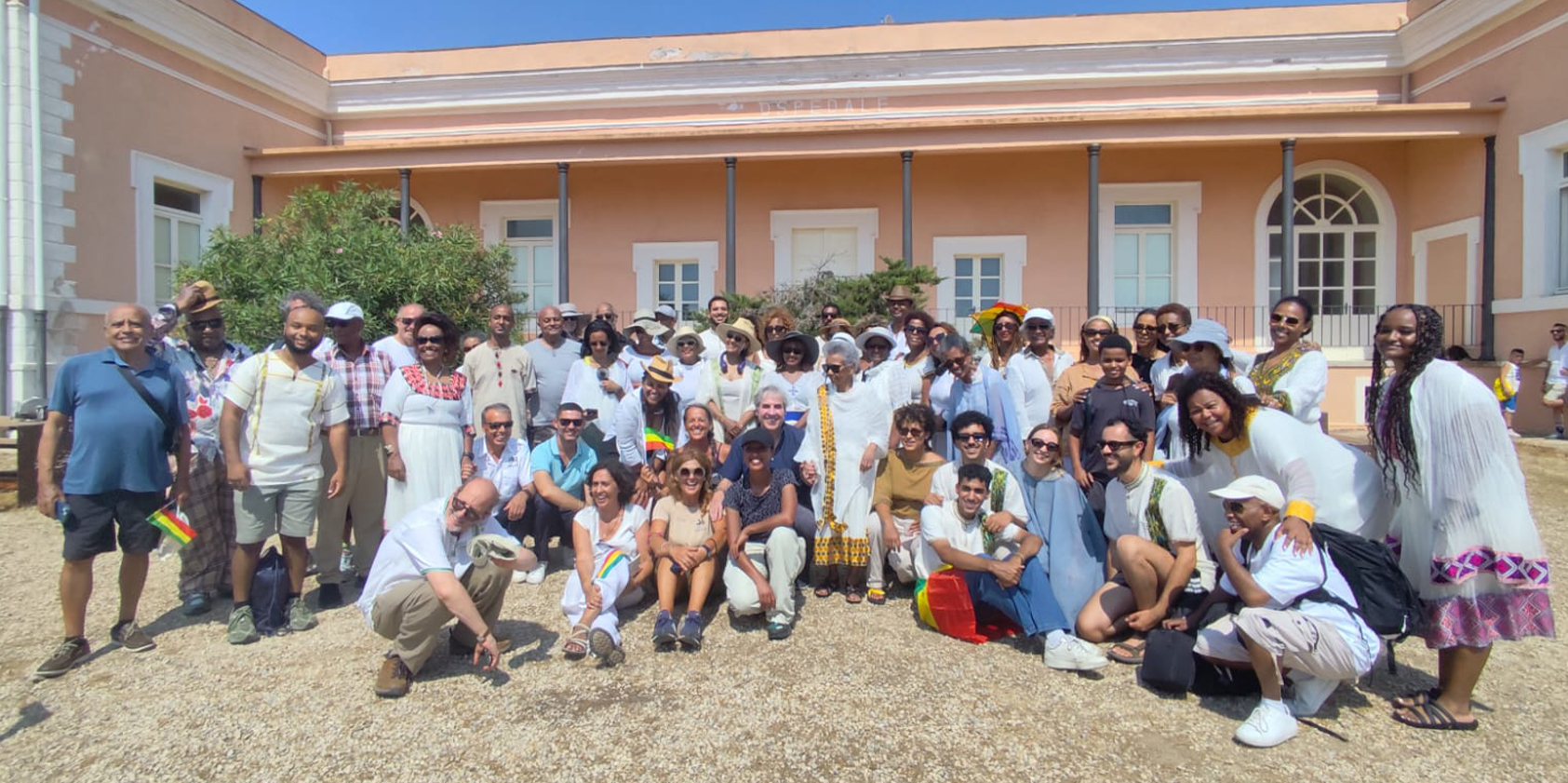
Rather than breaking the Ethiopian spirit, this massacre ignited the heroic patriot movement that eventually led to the expulsion of the Italians in 1941. However, “it must be clarified that Ethiopian political prisoners and members of the educated elite were deported not only to remote islands such as Asinara, but also to other detention sites in Italy under fascist rule,” say the descendants. “The psychological scars of this mass imprisonment, displacement, and exile remain unhealed for many families.”

Consequently, through their new publication, descendants are calling for the collection of oral histories from victims’ families, official recognition of the massacre by international institutions, and the inclusion of the occupation’s history in global educational curricula.

PIC

Abreha Deboch and Moges Asgedom