Thursday, November 26, 2026
Home Blog Page 527

NBE MPC to hold 5th meeting amid stable policy outlook

0

The Monetary Policy Committee (MPC) of the National Bank of Ethiopia (NBE) will hold its fifth meeting in the coming days. Financial analysts expect minimal changes to the current monetary policy, despite recent improvements in the country’s foreign exchange reserves, which now cover approximately 2.8 months of imports.

This upcoming meeting follows a prior session in which the committee chose not to fully lift the credit growth cap, a measure initially indicated for relaxation.

Instead, the cap was raised from 18 percent to 24 percent. Market experts widely anticipate that the MPC will maintain this 24 percent credit ceiling in the upcoming meeting.

In a recent public address, NBE Governor Eyob Tekalegn reaffirmed the central bank’s commitment to a tight monetary policy aimed at curbing inflation, which was recorded at 10.9 percent in November. The goal is to bring inflation down to a single-digit target within the current fiscal year. “We will continue to pursue the goal of achieving a single-digit inflation rate,” Governor Eyob stated.

A notable policy shift occurred in June when the MPC eliminated the mandatory requirement for banks to purchase bonds equal to 20 percent of every loan disbursement.

While this change has improved liquidity in the banking sector, analysts point out that the ongoing credit cap still encourages banks to seek alternative investments, such as government securities.

Data shows increased activity in the money market since the bond purchase rule was lifted, with both Open Market Operation (OMO) volumes and Treasury bill (T-bill) auctions experiencing significantly higher demand, leading to recent T-bill auctions being oversubscribed.

Given the declining trend in inflation and strong demand for government securities, some analysts suggest that the MPC may consider revising the National Bank Rate (NBR), currently set at 15 percent.

They argue that the high cost of borrowing, acknowledged by the government, indicates a potential need for a policy rate adjustment to stimulate credit flow.

Governor Eyob presented an optimistic view of macroeconomic stability, noting a positive current and capital account balance during the first five months of the fiscal year.

He announced that the NBE’s international reserves have already exceeded projections, reaching 2.8 months of import cover—a target originally set for the next 18 months.

This performance surpasses the benchmarks established in the 2024/25 macroeconomic reform program, which aimed for 2 months by the end of the current fiscal year.

The Governor attributed this reserve buildup to successful economic reforms, a significant rise in export earnings—particularly from gold—and strict measures against illegal remittance activities.

He urged banks to participate judiciously in the bi-weekly foreign currency auctions, aligning their bids with actual payment needs based on a published three-month schedule, and to adapt their foreign currency management practices according to new capital adequacy directives.

In a forward-looking statement, Governor Eyob hinted at potential government measures to incentivize the repatriation of foreign currency held abroad, signaling a policy shift aimed at building public confidence and attracting inflows.

Experts have indicated to Capital that the upcoming MPC decision is anticipated against a backdrop of improved external reserves and moderating inflation, yet persistent constraints on private sector credit growth.


Experts warn 90% administrative land allocation threatens urban access for low-income citizens

0

Experts are raising alarm over Ethiopia’s urban land governance practices, warning that the current system—where more than 90 percent of city land is allocated administratively—is creating a deep equity crisis that threatens access to land for low- and middle-income citizens.

Despite rapid city growth and large-scale infrastructure developments, researchers say the imbalance between administrative allocation and open auctions has frozen the land market and distorted affordability.

During the 3rd Ethiopian Land Day Forum organized by Land for Life Ethiopia, academics and policymakers warned that Ethiopia’s land leasing system is overly dominated by direct government allocation to large industrial, institutional, and housing projects.

“Between 90 and 95 percent of urban land is pre-booked for industrial or institutional use,” a representative from Bahir Dar University’s Institute of Land Policy and Governance said. “This leaves barely 5 to 10 percent for competitive auctions, inflating prices and shutting out ordinary citizens.”

Experts argue that this system fosters a speculative market dominated by brokers and politically connected investors while depriving civil servants and small business owners of viable access to affordable land.

Forum participants also highlighted the social cost of rapid urban expansion. When rural land is reclassified for urban use, farmers are often compensated based on agricultural value rather than urban market prices, deepening income inequality.

Musa, a representative from the Benishangul-Gumuz Land and Investment Bureau, described the scenario vividly, “An uneducated farmer who once managed two hectares suddenly receives 200 square meters of living space and is called a ‘city dweller,’” he said. “Without income or urban job skills, many end up selling their small plots and fall into poverty.”

Scholars emphasized governance fragmentation as a core problem, noting the absence of a centralized body overseeing land administration nationwide. They urged the government to establish a National Land Commission or an independent Ministry of Land to harmonize rural and urban land management.

“Land is a shared national wealth,” one expert noted. “Allowing it to be administered by multiple bodies has hampered rural-urban connectivity and deepened inequality.”

Participants also questioned whether Ethiopia’s push for “smart city” development—especially through corridor transformation projects in Addis Ababa and regional capitals—adequately protects the rights of low-income residents in older and informal settlements.

“The pursuit of beauty and investment is displacing the poor,” a participant said. “We are creating glittering corridors where the poor cannot afford to live.”

Melesse Damtie, Chairperson of Land for Life Ethiopia, said the forum underscored the need for inclusive reform, “This event reaffirms our commitment to building sustainable and equitable land governance systems that safeguard community rights and improve livelihoods,” he stated.

Experts also linked effective land management to broader food system resilience, arguing that equitable land laws are central to agricultural productivity, sustainability, and food security.

According to Bizualem Admassie, CEO of Urban Land Administration at the Ministry of Urban Planning and Infrastructure, strategic investment in agriculture—through research, infrastructure, and private partnerships—can enhance productivity and stabilize food access.

Speakers further highlighted the plight of pastoralist communities, whose mobility and traditional grazing rights are under pressure from land privatization and commercialization. Although Ethiopia’s constitution recognizes pastoral land rights, experts said these protections are rarely implemented.

They urged a shift toward Participatory Rangeland Management, integrating community knowledge systems and legal frameworks to ensure sustainable land use and animal movement rights.

Flipper labour dispute, campus closure fears raise questions over education quality

0

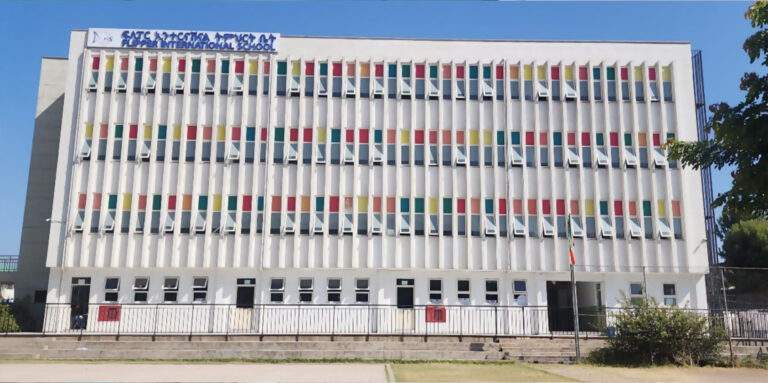
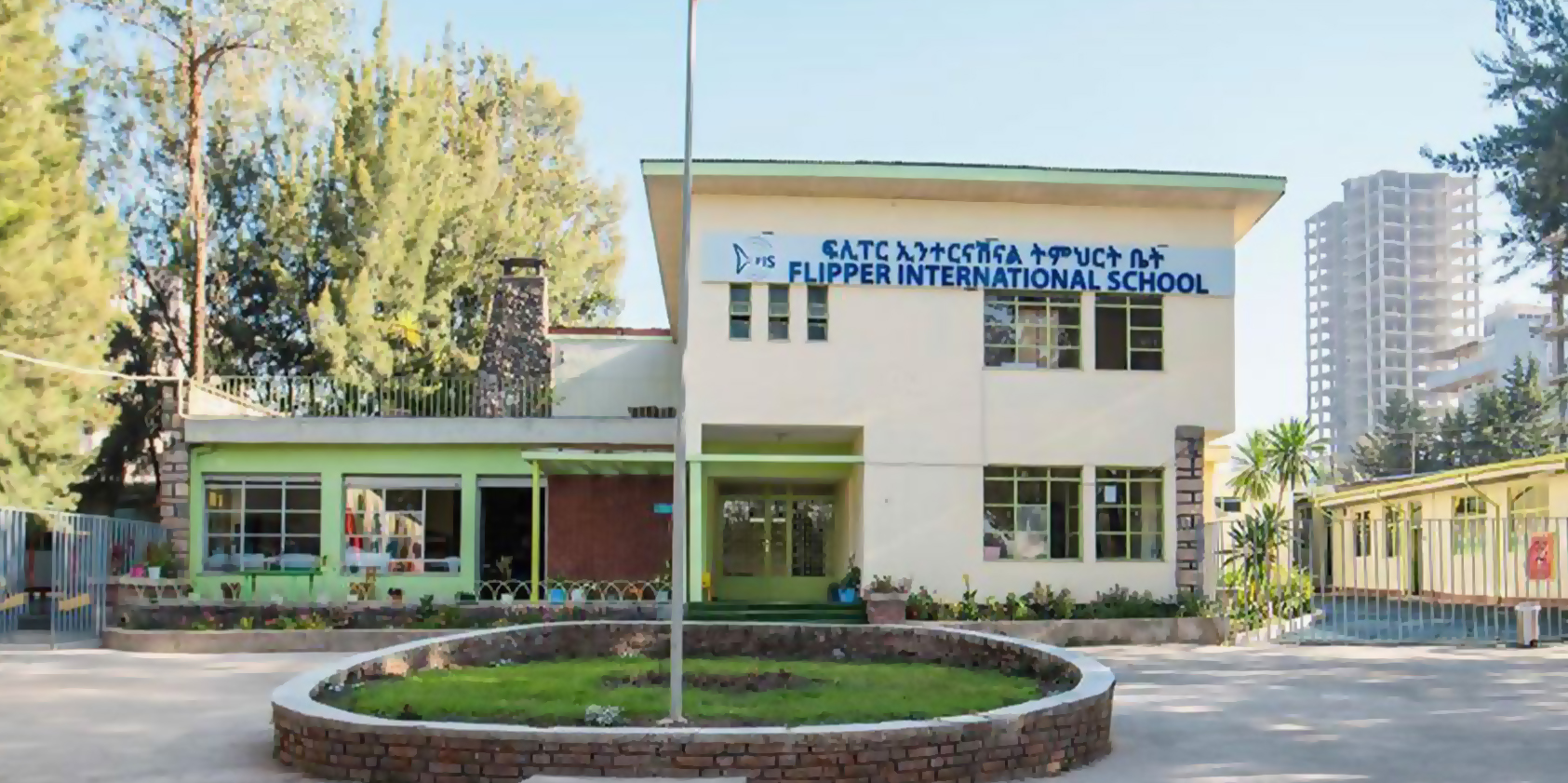
Flipper International School, one of Ethiopia’s private schools, is embroiled in a deepening labour dispute that parents and staff say is undermining educational standards and threatening the future of at least one campus. The standoff pits school management against a teachers’ trade union at a time when the South Africa‑based ADvTECH Group has just completed a full acquisition of the five‑campus institution for USD 7.5 million.

The school, which serves more than 3,500 students across five branches in Addis Ababa, has been gripped for months by tensions over pay, workload and working conditions. Teachers accuse management of ignoring their demands for meaningful cost‑of‑living adjustments despite steep fee hikes charged to parents this academic year. Several parents told Capital that a mood of “malicious obedience” now prevails on campus, with teachers “heartbroken” and demoralised, showing up physically but no longer teaching with commitment.

Union representatives say the dispute began over salary levels and rising workloads but has since escalated into a broader confrontation over respect for teachers’ rights and the quality of education children receive. They point to what they describe as a stark gap between the school’s high income and the relatively low wages paid to teaching staff, arguing that many are struggling to cope with Ethiopia’s soaring cost of living. Parents report that fees have risen by up to 100 percent for some returning families under a so‑called “fee balancing” exercise, pushing semester payments above 60,000 birr in many cases.

Despite this, management has rejected repeated union requests for more substantial pay rises and cost‑of‑living compensation, citing affordability constraints. “The school’s approach is a common act of profiteering to change human dignity with money,” one parent, who requested anonymity, told Capital. “The increase given to teachers when they demand a salary adjustment is very minimal and contemptuous,” the parent added, accusing the administration of prioritising profit over staff welfare.

Tensions peaked in early December when the union prepared to launch a strike, prompting the involvement of security forces and education officials. Under pressure from government bodies, the two sides agreed to suspend strike action and keep the school open on December 6, 2025, citing the broader national situation. However, in follow‑up talks on December 11, management again rejected key salary demands, leaving the core dispute unresolved and morale badly damaged.

Parents say the impact is already visible in classrooms. Reports of teachers being “forced to appear happy” while their grievances remain unaddressed have fuelled fears over learning outcomes. “A broken‑heart teacher can’t teach,” one parent said. “There are situations in which two or three sessions a day are not worthy of a teacher. Our faith in management has been lost.”

Alongside the labour dispute, growing class sizes and facility changes are reinforcing concerns about educational quality. Classrooms that previously held 20–25 pupils now reportedly accommodate 33–35 students, while science labs and libraries are said to be converted into ordinary classrooms to absorb enrolment. Parents also question the rapid opening of new branches, such as the Lancia campus, which they argue were launched without adequate infrastructure or staffing, stretching resources thin.

The Lancia branch faces an additional challenge: an impending forced closure due to land issues. According to General Manager Getaneh Asfaw, the campus sits on leasehold land earmarked by the Addis Ababa City Administration’s Bureau of Land Development and Administration to be handed over to the Oromia Police Headquarters. The school has been allowed to continue operating at the site until the 2025/26 academic year, after which it must vacate. Management says it has yet to secure an alternative location that meets safety and licensing standards, deepening uncertainty for parents and students at that branch.

Parents have also criticised the response of government regulators, including the Education and Training Authority and the Ministry of Education. They argue that official intervention has focused narrowly on whether the school remains open or closed, rather than addressing underlying issues of academic quality and labour rights.

In a response to Capital, Getaneh defended the school’s handling of the dispute, saying management “respects the role of all our employees and their unions” and has implemented wage increases in line with an approved pay equalisation plan. “The union has asked for more than what was given,” he said, adding that “teaching and assessments are ongoing, and we are focused on protecting students’ learning time. We are working with the community to develop a program to revitalise the students’ feelings.”

The controversy comes barely a year after ADvTECH, a major South African private education group, acquired 100 percent of Flipper International School for USD 7.5 million, adding the five Addis Ababa campuses and roughly 3,000–3,500 students to its African portfolio. The deal was touted as a strategic expansion into one of the continent’s fastest‑growing cities, with Flipper praised for its academic record and capacity of over 3,500 learners.

ZamZam’s profits soar, but complex risk models cloud true asset quality

0

Bank races past ETB 5 billion capital threshold, sidestepping NBE push for forced mergers

ZamZam Bank’s latest annual report shows impressive growth in assets, profit and capital, but also reveals a heavy dependence on complex risk models and management judgement that could mask future problems in its financing book. While the bank’s performance headline looks strong, analysts say the way it measures and times credit losses deserves close attention from shareholders. ​

The bank’s total assets jumped to ETB 16.6 billion as of June 30, 2025, up from ETB 9.4 billion a year earlier, driven largely by a 39 percent increase in financing to customers. Net profit after tax reached about ETB 940.8 million, with earnings per share climbing sharply from 5.9 to 41.4, underscoring a breakout year for the young full-fledged interest‑free bank. Deposits grew to ETB 11.62 billion and paid‑up capital rose to ETB 2.65 billion, supported by a rapidly expanding customer base and branch network. ​

Behind these results sits an elaborate Expected Financing Loss (EFL) framework that uses probability of default (PD), loss given default (LGD) and exposure at default (EAD), combined with forward‑looking macroeconomic scenarios. Management acknowledges that EFL outcomes depend on numerous assumptions and model inputs, including inflation, exchange rates and GDP projections, which are weighted across base, downside and optimistic scenarios for different portfolios. The bank concedes that changes in these parameters can materially alter loss allowances and, by extension, reported profit and capital, introducing significant model risk. ​

ZamZam uses the standard three‑stage approach under IFRS 9, with 12‑month EFL for Stage 1, lifetime EFL for Stage 2, and lifetime EFL for credit‑impaired Stage 3 exposures. The shift from Stage 1 to Stage 2 is based on what the bank calls a “significant increase in credit risk,” determined through a mix of quantitative factors (such as delinquency) and qualitative triggers (such as covenant breaches or forbearance), plus macro‑driven PD movements. The report explicitly notes that this assessment involves management judgement and that the criteria are periodically reviewed to ensure they do not flag exposures “too early” or cause “unwarranted volatility” in loss allowances. ​

Critics argue that such flexibility can cut both ways: it allows the bank to smooth earnings by delaying upgrades to Stage 2 and Stage 3, thereby postponing higher lifetime loss recognition on weakening financings. At June 30, 2025, gross financing to customers totalled about ETB 6.81 billion, with Stage 3 non‑performing exposures of ETB 356.7 million and total loss allowances of ETB 140.1 million; how much sits in Stage 1 versus Stage 2 is heavily shaped by these staging judgements. ​

The annual report outlines a clear policy on restructured or forborne financings, stating that loans renegotiated due to borrower difficulties are treated as credit‑impaired unless there is evidence of sustained improvement. When a loan is modified but not derecognised, the bank requires a “probation period” during which the customer must demonstrate good payment behaviour before the exposure can migrate back to 12‑month EFL treatment. ​

However, the document concedes that some indicators of increased risk, such as past delinquency or forbearance, may continue to signal elevated default risk even after they are no longer present, leaving room for management to decide when that risk has truly subsided. Analysts warn that largely qualitative probation criteria can introduce optimism bias, keeping reported non‑performing levels and EFL charges lower than underlying risk in an environment of economic and FX volatility. ​

The bank’s risk note emphasises that EFL calculations are “outputs of models with a number of underlying assumptions” and that macro‑scenario weights and parameters are reviewed by internal experts at least annually. While this reflects a sophisticated risk framework for the Ethiopian market, it also means small shifts in assumptions could materially change future profit trajectories and capital buffers, especially if macro conditions deteriorate more than the base case anticipates. ​

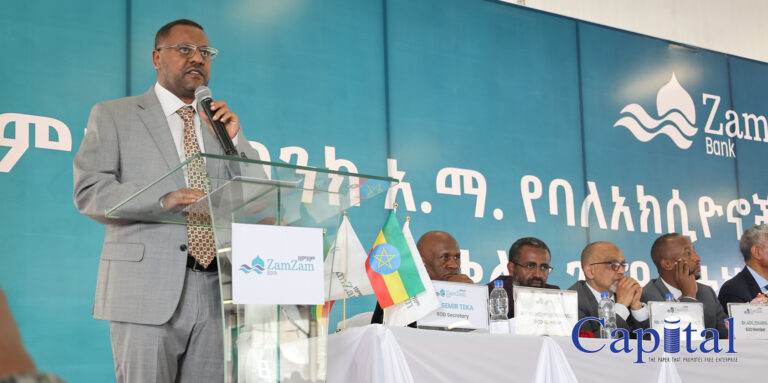
At the same time, ZamZam Bank has scored a major strategic milestone on the capital side. Ethiopia’s first full-fledged interest‑free bank has now met the ETB 5 billion paid‑up capital requirement set by the National Bank of Ethiopia (NBE), well ahead of the June 2026 deadline. ​

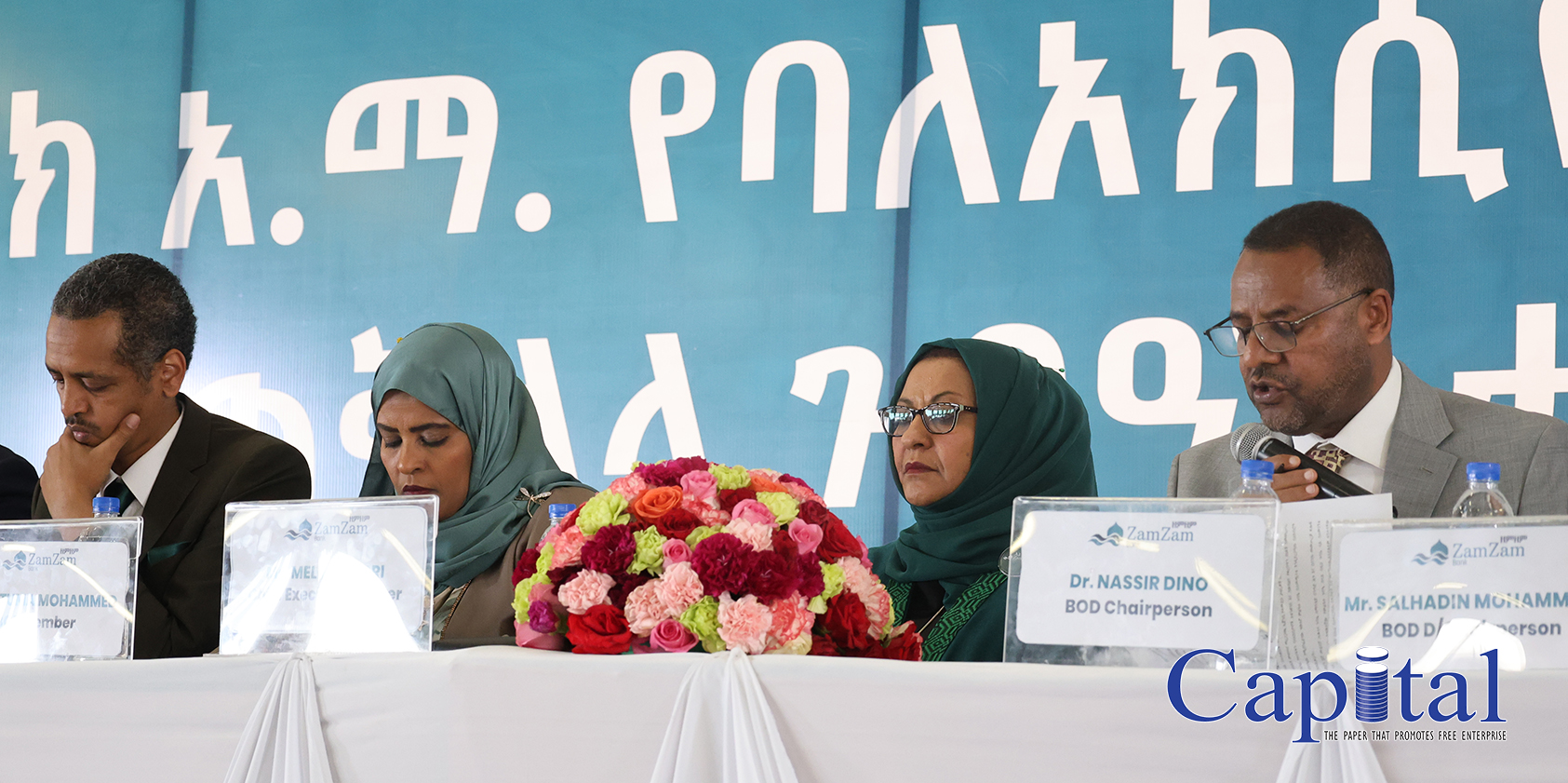
According to disclosures at the bank’s General Meeting, paid‑up capital—initially around ETB 1.5 billion when the current Board took over—has doubled and reached the NBE’s ETB 5 billion threshold through an aggressive share sale that raised more than ETB 2.5 billion in just two to three months. Board Chairperson Nassir Dino told shareholders that two months earlier the NBE had called the bank for talks and floated a proposal for a merger with Hijra Bank, another interest‑free institution, in case ZamZam failed to meet the capital requirement. ​

“We were offered a proposal from the National Bank, you and Hijra Bank to join,” Nassir said, “but we did not accept the request because we knew our capabilities and the commitment of the Ummah (Muslim community).” ​

Under a 2021 directive, all 32 banks operating in Ethiopia are required to raise their paid‑up capital to ETB 5 billion by June 2026, a target that has placed intense pressure on smaller institutions. Regulators have indicated that banks unable to meet the threshold may be subject to forced mergers with stronger peers, with the stated aim of reducing the number of institutions and creating a smaller group of well‑capitalised, more competitive banks. ​