

At Goalkeepers Abu Dhabi, leaders from government, philanthropy, business, and civil society issued a unified call to accelerate progress on child survival and infectious disease eradication. The appeal was anchored by US$1.9 billion in commitments to advance polio eradication announced earlier in the day at Abu Dhabi Finance Week.
The Gates Foundation contributed US$1.2 billion, reflecting its long-term commitment to a future where no mother, baby, or child dies from preventable causes, and where deadly infectious diseases like polio are eliminated forever.
Co-hosted by the Gates Foundation and the Mohamed bin Zayed Foundation for Humanity, Goalkeepers Abu Dhabi brought together more than 500 global leaders. The leaders delivered a clear message: the world must act now to reverse rising child deaths, stop preventable maternal deaths and finish the job of ending preventable diseases, starting with polio.
With Child Deaths Projected to Rise for the First Time in a Century

Western Indian Ocean faces $1.14 billion maritime security threat
The vital economic engine of the Western Indian Ocean which is the “Blue Economy,” is being severely undermined by maritime threats that are costing the region a staggering USD 1.14 billion annually.
This dramatic figure, equivalent to 5.7% of the region’s gross marine product, was revealed today at a regional meeting in Mauritius, co-convened by the United Nations Economic Commission for Africa (ECA) and the Indian Ocean Commission (IOC).
The three-day event, hosted at the Sofitel Hotel, centers on three activities: launching the 2025 report on the cost of maritime insecurity in the Western Indian Ocean, validating a Financial Sustainability Mechanism—a critical plan to secure long-term funding for the region’s maritime security structures, and validating the IOC Blue Economy Action Plan 2026-2030.
The recent ECA-IOC report entitled “Rocking the Boat: The Socio-Economic Impact of Maritime Threats in the Western Indian Ocean (2025)” lays bare the immense value and corresponding vulnerability of the WIO.
APRM, ECA, and UNDP Africa welcome credit rating upgrades for African countries

The African Peer Review Mechanism (APRM), the United Nations Development Programme (UNDP), and the United Nations Economic Commission for Africa (ECA) have welcomed the recent upgrades in sovereign credit ratings for Ghana, Zambia, and South Africa, along with positive outlook improvements for Nigeria and Uganda by major global ratings agencies, in a joint Press Statement.
The three organisations are collaborating on the Africa Credit Ratings Initiative, led by UNDP. This initiative aims to help African countries understand and appreciate credit rating systems and methodologies. It provides technical support, capacity-building, and policy discussions to assist officials in effectively managing credit ratings, thereby fostering greater national ownership of the process used by international agencies such as Moody’s, Fitch, and S&P.
In November, S&P Global Ratings upgraded Ghana’s credit rating from CCC+ to B– due to improved liquidity and reduced risks. Moody’s upgraded Ghana’s rating from Caa2 to Caa1 in October 2025, and Fitch raised it from Restricted Default to B– in June 2025, both with stable outlooks. These upgrades reflect progress in debt restructuring and fiscal management, particularly a $13.1 billion Eurobond restructuring, indicating increased investor confidence.
The right moment to boost India-Ethiopia ties
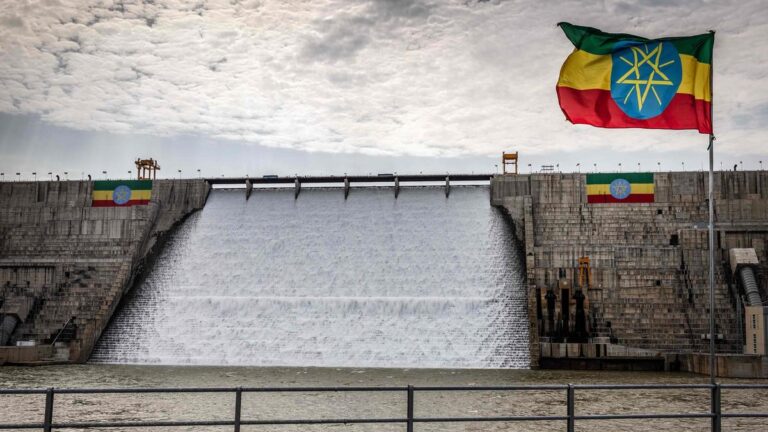
With Ethiopia attempting to build a new national consensus, its engagement with India can be developed across multiple domains
By GURJIT SINGH
Ethiopia, with a population of around 109 million (2024) and as one of Africa’s fastest-growing economies, is of growing strategic and economic interest to major partners, including India. Its substantial manufacturing base, large domestic market, and geographic position in the Horn of Africa make it one of the continent’s pivotal states.
Despite internal challenges, Ethiopia continues to be viewed as a regional anchor of stability with an effective military, and a central role in the evolving politics of a subregion marked by conflict. It is also the headquarters of the African Union and a potential renewable-energy powerhouse, especially in hydropower, positioning it to become an important regional energy exporter.
Although landlocked, Ethiopia has traditionally relied on Djibouti for access to the Red Sea. Recent efforts to diversify access through Somaliland and Eritrea underline its desire to secure strategic autonomy in trade and logistics. Politically, the country is emerging from the traumas of civil conflict and is attempting to build a new national consensus. This regeneration provides an important window for enhancing India-Ethiopia engagement across multiple domains.
Deep ties with India
India’s relationship with Ethiopia has deep and long-standing roots. For more than a century, Indian teachers and university professors have formed the backbone of Ethiopia’s education system, shaping generations of students and earning enormous respect. Although the number of Indian teachers has declined, Ethiopia’s interest in educational collaboration remains high. Ethiopia was the pilot country for the Pan-African e-Network project in 2007 and has maintained long-term cooperation with IIT Delhi for tele-education, demonstrating strong receptivity to modern educational technologies.
Today, Ethiopia sends one of the highest numbers of African students to India, often through government-funded programmes. Remarkably, it has the largest number of PhD students from Africa studying in India. Ethiopia also successfully used graduates from the Pan-African e-Network’s Master’s programmes to help staff newly opened universities and academic departments.
Expanding this education partnership — through digital learning, vocational training, university linkages and new scholarship frameworks — remains one of the most promising avenues for bilateral cooperation.
Investment and defence cooperation
Indian investment in Ethiopia is another pillar of the partnership. Indian businesses first ventured into Ethiopia in the 1950s, but the real surge came after India extended major lines of credit beginning in 2006. These catalysed a wave of private investment that surpassed $4 billion. Ethiopian leaders continue to acknowledge the positive developmental impact of Indian investors, particularly at a time when International Monetary Fund (IMF) conditionalities require the country to mobilise new capital. While earlier investments focused heavily on agriculture, many investors withdrew due to taxation and operational issues.
Today, the most promising opportunities lie in mining — especially gold, critical minerals, and rare earth elements — which is an area where Ethiopia has vast but underexplored potential. The Indian Embassy’s recent comprehensive mining survey identifies key opportunities while noting regulatory, infrastructural, and logistics constraints that must be addressed. If India can work with Ethiopia to commission and operate selected mines, this could help secure supplies for India’s fast-growing renewable energy, battery, and semiconductor sectors. Mining cooperation could become a core element of a strategic economic partnership.
Defence cooperation is another promising frontier. Ethiopia was one of the first foreign countries to receive Indian military assistance, beginning with the establishment of the Harar Military Academy in 1956. Since 2009, Indian defence teams have supported the training of Ethiopian forces. After years of demanding internal deployments and operations in Somalia, the Ethiopian military requires fresh training and modern equipment to replace aging Soviet-era systems. India, with its competitively priced and battle-tested platforms, is well placed to become a key supplier.
A new MoU on defence cooperation and the first meeting of the Joint Defence Cooperation Committee held this year provide an institutional framework for expanding training, capacity building, and defence exports. Ethiopia, which has responsibly repaid earlier Indian lines of credit under the Indian Development and Economic Assistance Scheme (IDEAS) programme, could be considered for new defence-related lines of credit within IMF guidelines.
Potential for a new phase
As both countries enter new phases of development, and with Ethiopia now a member of BRICS, the moment is ripe to redefine the partnership. Ethiopian officials repeatedly express strong interest in attracting Indian investment, especially in pharmaceuticals, agro-processing, light manufacturing and mining.
India could help by updating bilateral agreements such as the Double Taxation Avoidance Agreement (DTAA) and the Bilateral Investment Treaty to support private-sector engagement. Ethiopia, in turn, needs to address long-standing investor concerns related to foreign exchange availability, taxation, approvals, and consistency of regulations. The 2,500-strong and influential Indian diaspora, represented through the India Business Forum, continues to highlight foreign exchange accessibility as a key bottleneck.
At the multilateral level, expanding cooperation through BRICS, G-20 platforms, and South-South frameworks strengthens political convergence. Demonstrating success stories of Indian investment within Ethiopia and across Africa could help both countries build wider regional partnerships. Under the African Continental Free Trade Area (AfCFTA), Ethiopian-based Indian companies can now access East African and continental markets more easily, making Ethiopia an attractive hub for Indian enterprises. In a rapidly changing global economy — marked by tightening regulations in the United States and European Union and uncertainty around arrangements such as African Growth and Opportunity Act — India’s duty-free tariff preference scheme for Ethiopian exports remains important. Ethiopia can leverage this preferential access by welcoming more Indian investors, including in export-oriented manufacturing with buy-back arrangements.
Overall, the prospects for India-Ethiopia relations are bright. With renewed political will, targeted reforms, and strategic alignment, the partnership can evolve into one of the most dynamic and mutually beneficial relationships between India and Africa in the coming decade.
The meeting between Prime Minister Narendra Modi and Ethiopian Prime Minister Abiy Ahmed Ali at Johannesburg during the G-20 summit has catalysed the relationship again.
Gurjit Singh is is an author and a former Ambassador to Ethiopia and the African Union
