Amhara Bank declared a remarkable financial turnaround for the year ending June 30, 2025, posting a gross profit before tax of Birr 655 million—a notable 85% jump from Birr 354 million the previous year. This achievement is particularly striking considering the bank began the year with a substantial first-quarter loss of Birr 924 million, which it successfully reversed through strategic discipline and operational resilience.
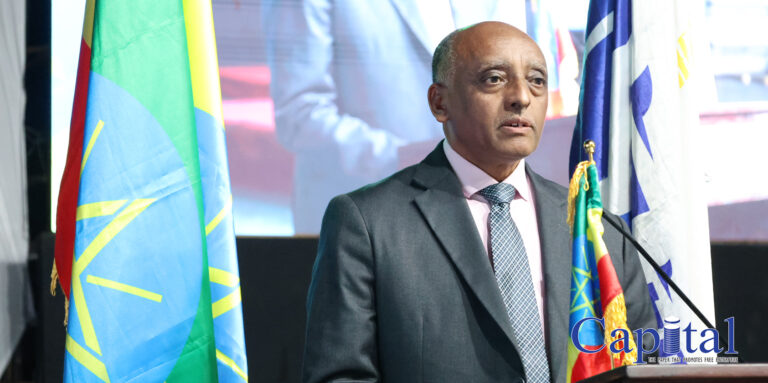
Gashaw Debebe, Board Chairperson of Amhara Bank, attributed this success to the bank’s steadfast commitment amid a challenging global and domestic economic landscape. “This achievement reflects our ability to maintain strategic direction in an ever-changing environment,” he said.
CEO Yohannes Ayalew explained the bank’s early-year crisis involved several factors, including an $18 million foreign debt, halted loan projects, sluggish export trade, and eroded customer confidence. The Birr 924 million Q1 loss was a significant risk. However, aggressive debt collection and recovery efforts reduced the bank’s non-performing loan ratio dramatically from 15% to below 4% by fiscal year-end.
The bank’s total assets grew 23% to Birr 43.4 billion, while total revenue rose 29% to Birr 5.6 billion. Interest income, including loans and down payments, formed 80% of total earnings at Birr 4.5 billion. Deposits increased by 26% to Birr 31.5 billion, raising total capital by 21% to Birr 8.6 billion. Paid-up capital grew 14% to Birr 7.4 billion, exceeding regulatory minimums, in part supported by the release of Birr 890 million in capital held by the National Bank of Ethiopia.
Amhara Bank expanded its customer base by over 612,000, ending the year with 2.4 million customers—a 34% increase. Mobile banking saw explosive growth, with 897,000 active users, while the physical branch network expanded to 315 locations.
The bank disbursed Birr 1.8 billion in loans to 95,796 customers, with 90% of funds directed to female borrowers, underscoring its commitment to women’s financial inclusion through technology.
Fiscal 2024/25 also marked approval of a new five-year strategic plan aimed at propelling Amhara Bank to rank among Ethiopia’s top four commercial banks by 2030 and Africa’s top 40 by 2040.
To support growth ambitions, Amhara secured 10,500 square meters of land from the Addis Ababa City Administration for its upcoming headquarters.
Gashaw reiterated the bank’s dedication to realizing its full potential through “bold and forward-looking strategies” designed to ensure sustained success and amplify its contribution to the national economy.
The Ethiopian Ministry of Trade and Regional Integration (MoTRI) has introduced a new mandate requiring that all payments for export crops grown under contract and investment farming be routed exclusively through the Ethiopian Commodity Exchange (ECX). The circular, issued on December 3, 2025, focuses primarily on oilseeds and pulses and will take effect from December 10, 2025, aiming to foster transparency and improved market regulation.
Under the new system, exporters must deposit the full purchase price for their oilseed or grain products into a designated ‘Pay-In’ bank account established by ECX. Upon a joint written request from both the buyer (exporter) and seller (producer), ECX is obligated to transfer the agreed payment from the ‘Pay-Out’ account to the supplier’s bank account the next business day.
This reform represents a fundamental shift from the earlier model, stipulated in Directive No. 929/2015, which required crops to be weighed and verified at ECX delivery centers but permitted direct bank payments between exporters and suppliers. By centralizing payments through ECX, the government intends to eliminate loopholes in the previous system.
Industry experts welcome this development, noting that previous contract and investment farming programs operated under a less regulated framework compared to Ethiopia’s standard direct trade system managed by the Ministry of Commerce. Typically, exporters would weigh products at ECX but then handle storage and payments independently, which the new directive seeks to change.
“The financial transaction now routed through ECX provides a powerful monitoring tool,” said an industry analyst. The system links payment directly to accurately weighed and registered product volumes, effectively preventing practices like overreporting production or undervaluing exports for tax evasion.
Centralizing payment through ECX also addresses frequent payment delays historically faced by producers, ensuring suppliers receive timely and guaranteed payments. This reinforcement of the direct and pre-agreed relationship between producers or cooperatives and exporters aligns with the central goal of contract farming programs.
The structured procurement model assured by this policy also helps validate legitimate producers, ensuring farmers themselves, rather than unauthorized middlemen, benefit directly.
MoTRI emphasized that the measure aims to curb illegal trade activities, ensure accuracy in export data, foster a fair and competitive trade environment, and ultimately bolster foreign exchange earnings from vital export crops like oilseeds and pulses.
In a transformative announcement signaling a new era of ambition and financial strength, Hibret Insurance Company, one of the country’s most trusted insurance institutions, has revealed a dual strategy focused on aggressive capital expansion and operational enhancement, supported by record-breaking financial results for the fiscal year.
The company’s 31st general assembly, characterized by strong shareholder support and a forward-looking vision, served as the platform for this significant declaration, approving an unprecedented capital acceleration plan within the Ethiopian insurance industry.
The assembly’s resolutions reflect a strategic masterstroke aimed at elevating Hibret to the top tier of industry leaders. This will be achieved by substantially reinforcing its balance sheet through a significant capital infusion, establishing a solid foundation for future growth, market penetration, and competitive dominance.
The capital strategy comprises a bold, two-phase approach. First, the company will promptly finalize the collection of the outstanding 98 million birr from a previously authorized 500 million birr capital increase, with plans for complete subscription by the first week of January 2026.
According to Meseret Bezabih, the company’s long-serving and successful CEO, this initial step leads to the core of the announcement: an ambitious plan to expand the total paid-up capital by one-third. This substantial increase will be executed within a remarkable timeframe of less than ten months, with a target completion date of October 10, 2026.
This accelerated timeline is a strategic response to current economic realities, positioning the company to act swiftly and seize immediate opportunities.
Upon successful completion of this capital program, Hibret Insurance will boast a strengthened paid-up capital base of 2 billion birr, positioning it among the largest and most financially robust entities in the insurance sector. This will convey a powerful message of stability and ambition to the market, its clients, and competitors.
Board Chairperson Wondwossen Teshome clearly articulated the rationale behind this aggressive capital mobilization.
He framed the decision as a critical strategic move in a dynamic and sometimes volatile macroeconomic environment.
“The value of the birr is facing persistent erosion, while foreign exchange rates show concerning volatility. In such conditions, prudent and ambitious corporate stewardship cannot afford a passive approach,” he stated. “We have made a conscious decision to strengthen our capital foundation without delay, acting now with speed and determination.”
“This capital increase is essential, not only as protection against inflationary pressures but also as the vital fuel needed for significant expansion of Hibret’s operational footprint, enhancing our service capabilities, and securing the company’s long-term competitiveness and market leadership,” Wondwossen emphasized, highlighting the proactive nature of the strategy.
This ambitious growth blueprint is strongly supported and financially backed by Hibret Insurance’s exceptional performance in the 2024/25 financial year, during which the company set new profitability records.
The most notable achievement was the first-ever profit before tax exceeding one billion birr in the company’s history.
This profit before tax surged by an impressive 79 percent year-on-year, rising from 563 million birr in the previous period to an astonishing one billion birr.
This remarkable profitability was fueled by outstanding top-line results, with gross written premiums across life, non-life, and takaful businesses increasing by 40.3 percent to reach 2.7 billion birr. The traditional non-life segment remained the primary revenue driver, contributing a substantial 2.58 billion birr of the total.
Additionally, this profit surge was achieved alongside a strong focus on operational efficiency and cost management, significantly enhancing the quality of earnings.
In contrast to broader industry trends, Hibret strategically reduced its insurance service expenses, excluding reinsurance costs, by nearly 10 percent, bringing them down to 1.2 billion birr.
This deliberate cost optimization resulted in a remarkable 77.6 percent increase in the insurance service result, which jumped to 765 million birr from 431 million birr.
The company’s investment arm also performed exceptionally, with net investment income rising by 38 percent to 544 million birr.
The final outcome for shareholders was equally impressive, as after-tax profit mirrored the 79 percent growth, reaching 843 million birr. This significantly boosted earnings per share (EPS) by 68.5 percent, a substantial 43 percent increase from the previous year’s strong figure of about 48 percent.
Meseret linked this historic financial achievement to the newly announced capital ambitions, creating a compelling narrative of reinvestment and cyclical growth.
“This exceptional financial success provides an ideal platform and strong rationale for the upcoming capital increase. We are confident that our shareholders, having witnessed the company’s ability to generate outstanding returns, will support this capital initiative,” Meseret stated, framing the capital call as a natural and strategic next step in the company’s growth trajectory.
A detailed analysis of business segment performance reveals a narrative of strategic portfolio management. While the core non-life business continues to thrive, the life insurance segment has undergone a strategic recalibration.
Despite a 39 percent reduction in generated premiums to 142 million birr, primarily due to losing a major customer to competitors, the underlying health of the segment has improved significantly.
Revenue from the life business rose by an impressive 72 percent to nearly 216 million birr, and net investment income increased by close to 34 percent to 78 million birr, indicating a successful shift towards more profitable and sustainable policy structures.
At the same time, the company reported promising developments in its emerging Takaful (Sharia-compliant) insurance business, which caters to a growing niche of customers and represents a strategic initiative for market diversification and inclusive product offerings.
The National Bank of Ethiopia (NBE) has issued an ultimatum to exporters who have failed to repatriate foreign exchange earnings from commodity trade. Analysts suggest that some exporters have employed various tactics to evade this requirement, driven by severe hard currency shortages, exchange rate fluctuations, and the misuse of the Cash Against Documents (CAD) payment system to facilitate capital flight.
During a high-level consultation on December 1st with exporters from the coffee, sesame, and pulses sectors, Governor Eyob Tekalegn highlighted ongoing issues with foreign currency repatriation.
The central bank emphasized that constructive engagement will precede enforcement, reaffirming its commitment to collaborating with the private sector to address challenges, improve regulatory compliance, and protect Ethiopia’s economic interests.
“The NBE remains committed to enforcing accountability, promoting ethical export practices, and strengthening the integrity of our foreign exchange regime,” stated a post-meeting announcement.
The bank also stressed the importance of safeguarding the nation’s foreign exchange reserves and ensuring the prompt and transparent return of export revenues.
Exporters and international trade specialists interviewed by Capital revealed that some established exporters are engaging in malpractice, while buyer defaults also require government intervention.
One exporter pointed to the instability of global trade, worsened by the U.S. administration’s fluctuating tariff policies. “Frequent tariff changes undermine buyers’ confidence in price stability, leading them to insist on strict timelines. Any shipment delay can result in defaults or demands for price renegotiation,” he explained, while also acknowledging exploitation by certain foreign entities.
Additionally, there was consensus among exporters and experts that the increasing reliance on the inherently risky CAD payment system, as opposed to the more secure Letter of Credit, is distorting the market.
“Inexperienced exporters are particularly vulnerable to this payment method,” noted one trade expert. “However, both new and established exporters are manipulating the CAD framework to illicitly transfer capital abroad.”
Experts further explained that some exporters are routing payments through foreign companies registered under the names of relatives. Motivations for this capital flight include domestic security concerns and the desire to evade outstanding loans from local financial institutions.
The newly enacted tax law, which imposes a minimum 2.5 percent revenue levy, has also been identified as a contributing factor.
“Given the typically low profitability and the large transaction volumes in exports, this tax significantly affects profit margins. As a result, many exporters prefer to conceal their earnings offshore rather than repatriate them,” a consultant disclosed.
He added that some exporters exploit a loophole in NBE regulations. “According to NBE law, exporters must repatriate foreign currency within three months, but they can request an additional three months if they justify the delay. They use this time to trade in foreign currency within the six-month window,” he noted.
Capital has learned that the central bank has issued a final ultimatum to transfer foreign currency within a short timeframe, although it has not disclosed the exact deadline.
It is worth noting that the government had initially facilitated the export of goods through CAD, but as of May 2024, exports to Somalia and Sudan, as well as to Egypt about seven months ago, now only proceed under Letter of Credit or advance payment schemes due to persistent defaults.
Experts indicate that it may be challenging for the government to take action against new exporters operating with shadow licenses that have no legitimate connection to their businesses.