Wednesday, November 25, 2026
Home Blog Page 597

Cotton Village Ethiopia: Pioneering Regenerative Cotton for Sustainable Growth

0

The Cotton Village Initiative (CVI), also known as Cotton Village Ethiopia, is an innovative national program designed to empower communities, restore ecosystems, and enhance Ethiopia’s position in the global textile value chain through sustainable and regenerative practices.

Founded and directed by Pedram Jahanshiri, the visionary behind the initiative, Cotton Village Ethiopia is being implemented in collaboration with the Ethiopian Cotton Association (ECA) to support Ethiopia’s sustainable industrial and agricultural transformation. The program aims to promote inclusive industrial development and climate-resilient agriculture, particularly benefiting the population of the Afar Region.

Closely aligned with national priorities, the Cotton Village / Afar Corridors Program supports the strategic goals of the Ministry of Industry, the Ministry of Agriculture, and the Afar Regional Government, with strong backing from the Afar Bureau of Industry & Investment.

Spanning a 350-kilometre corridor averaging 30 kilometres in width between Amibara and Semera, the initiative integrates regenerative cotton farming, circular textile manufacturing, and large-scale desert-greening infrastructure into a self-sustaining industrial ecosystem.
Led by the Cotton Village Initiative (CVI) in collaboration with the ECA, the Afar Bureau of Industry & Investment, and the Afar Regional Government, this corridor program encompasses a 100,000-hectare core hub and nearly 900,000 hectares dedicated to regenerative agriculture, biodiversity restoration, and climate-resilient desert rehabilitation.

Key impact areas include regenerative agriculture, carbon-positive land restoration, community development (including housing, education, healthcare, and pension systems), and the empowerment of women and youth through inclusive employment and cooperative participation. Wages within the program average three times higher than the industry standard across Africa’s cotton sector, underscoring its commitment to socio-economic upliftment.

Pedram Jahanshiri highlighted the initiative’s mission:

“Cotton Village Ethiopia was created not for personal gain but to serve and uplift Ethiopia’s people — empowering farmers, workers, and families through fair value, modern infrastructure, and a circular economy that gives back to the land.”

To advance this vision, Cotton Village Ethiopia is engaging with key development and industry partners such as GIZ, UNIDO, UNDP, ICAC, and ICA Bremen. The program aligns with Ethiopia’s national development agenda, the African Union’s Agenda 2063, and the African Continental Free Trade Area (AfCFTA) framework, fostering regional value addition and sustainable economic growth.

It also aligns with regional connectivity and sustainability priorities, including initiatives under the European Union’s Global Gateway strategy — particularly the Ethiopia–Djibouti transport and trade corridor — offering a regenerative and circular industrial complement to ongoing logistics and infrastructure developments in the Horn of Africa.

— Cotton Village Ethiopia is being developed in close collaboration with the Ethiopian Cotton Association and the Afar Regional Government, under the visionary framework authored by Mr. Pedram Jahanshiri.

A 13-minute presentation film introducing the Cotton Village / Afar Corridors vision — produced by Pedram Jahanshiri, Founder and Director of the initiative, through the Cotton Village Initiative channel in collaboration with the Ethiopian Cotton Association (ECA) — is available on YouTube: 🎥 https://www.youtube.com/watch?v=qg_Gx4rPCK0

By integrating innovative agricultural and industrial practices with environmental restoration and community empowerment, Cotton Village Ethiopia serves as a forward-looking model for sustainable development in Africa’s cotton sector — with global significance.
Debt restructuring, currency challenges highlighted in IMF’s review

0

An International Monetary Fund (IMF) delegation is currently in Ethiopia to conduct the crucial fourth review of the country’s Extended Credit Facility (ECF) program, which serves as a key benchmark for the nation’s economic reform agenda.

Led by Alvaros Piris, the delegation has been in Ethiopia since late October, overseeing the ECF program that Ethiopia initiated approximately a year and a half ago.

During their visit, the delegation has met with officials from various government offices and engaged with key economic stakeholders and entities.

A meeting with officials from financial institutions, including the state-owned Commercial Bank of Ethiopia, was also part of their itinerary. This bank is undergoing its own reforms as part of a broader macroeconomic initiative launched in July 2024.

Sources indicate that these meetings are a continuation of discussions held during the IMF and World Bank annual meeting in Washington D.C. last month.

The Ethiopian government is reportedly seeking additional support from international partners, separate from the four-year, $3.4 billion ECF arrangement approved in July 2024, which is currently being disbursed.

This program aims to support Ethiopia’s economic reforms, addressing macroeconomic imbalances, improving stability, and indirectly alleviating foreign currency shortages while boosting reserves.

According to IMF documentation, the fourth review will assess Ethiopia’s progress against specific quantitative performance criteria and structural benchmarks, including targets for net international reserves set for the end of June 2025.

Experts note that this review coincides with several advancing reform processes, particularly debt restructuring negotiations with both official creditors and private bondholders, which are nearing finalization.

They also highlight challenges arising from the fluctuating gap between official and parallel market exchange rates.

In response, the government has been intensively working over the past few weeks to dismantle illegal market activities, including illicit remittance networks and the illegal gold trade.

However, some traders monitoring the market report a decrease in foreign currency availability at commercial banks, which they suggest could be seasonal or related to banks’ business dealings with the Ethiopian Petroleum Supply Enterprise.

Banks prefer to work with the Enterprise because it offers local currency in exchange for foreign currency, leveraging its ample liquidity.

Additionally, experts note that this period marks the beginning of the harvest season for upcoming exports.

Upon the successful completion of this fourth review, Ethiopia will be eligible to draw an additional SDR 191.7 million (approximately US$262.3 million) from the IMF.

COMESA court of justice rules in favor of Ethiopian lawyer, invalidates judge appointment

0

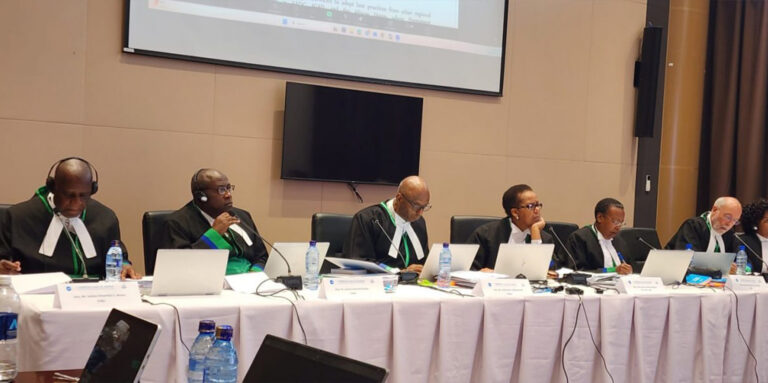
In a landmark ruling with significant ramifications, the Common Market for Eastern and Southern Africa (COMESA) Court of Justice has ruled in favor of a legal challenge presented by prominent Ethiopian lawyer, identifying errors in the appointment of a judge by the COMESA Secretariat.

The verdict, announced in Lusaka, Zambia, nullifies the election and appointment of Justice Chui Yew Cheong from Mauritius.

This decision concludes a lengthy legal battle initiated by Ethiopian lawyer Tewodros Getachew, who questioned the fairness and procedural integrity of a judicial election held in November 2024.

The controversy began when Tewodros, who placed eighth in that election, raised concerns about procedural irregularities.

The situation escalated when Justice Chui Yew Cheong, the seventh-place candidate, withdrew from the position.

Rather than offering the role to the next candidate in line, COMESA leadership selected another nominee from Mauritius, prompting Tewodros to file a formal lawsuit.

After considering his request for a preliminary injunction, the COMESA Court of Justice issued a historic ruling on April 16, 2025, prohibiting the Secretariat and the Secretary General of COMESA from proceeding with the appointment and swearing-in of judges.

For the first time in the organization’s history, a court order prevented the newly elected 12 judges from being sworn in.

As the litigation progressed, the East African Law Society intervened as an interested party on behalf of eight member countries.

In its final judgment, the court identified significant procedural irregularities throughout the election process, including the failure to properly notify Ethiopia of the election schedule, not circulating Tewodros’ CV to the Council of Ministers, confusing his name with that of the minister, denying receipt of Tewodros’ CV despite prior acknowledgment from the Secretary General’s office, late submission of his credentials, and the last-minute addition of another candidate who lacked proper vetting and credentials.

The court’s most crucial finding addressed the eligibility of Justice Chui Yew Cheong. It ruled that, as a retired Supreme Court judge who was beyond the official age limit for high judicial office in Mauritius, she was ineligible for appointment under the COMESA Treaty.

Additionally, the court sharply criticized the Secretary General for overstepping their authority. When Mauritius withdrew Justice Cheong and later indicated her willingness to serve again, the Secretary General unilaterally decided that no vacancy existed.

The court asserted that the power to determine vacancies resides not with the Secretariat, but with the Electoral College of COMESA Justice Ministers and Attorneys General.

Consequently, the court has directed this Electoral College to resolve the resulting vacancy within the next 60 days.

While the injunction against the other judges was lifted, allowing them to be sworn in, the ruling prohibits Justice Cheong from assuming her post.

The court also awarded half of the legal costs to Tewodros and the intervening law society, acknowledging their partial success in upholding the rule of law within the regional bloc.

Following the ruling, a pleased Tewodros, who also serves as President of the Pan African Lawyers Union (PALU), remarked that this case has transformed the process of electing judges, not only for COMESA but across the continent.

In a text message to Capital, he stated, “This is a huge statement for the rule of law, not just in COMESA, but across the globe.”

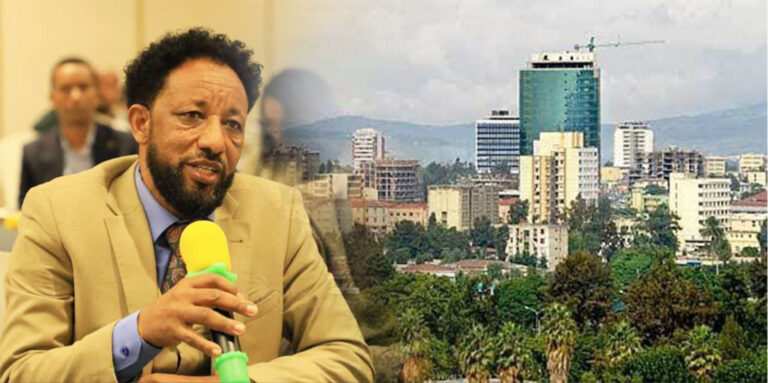
Addis Ababa Business Forum urges government to act against fraudulent “Business” gangs exploiting youth

0

The Addis Ababa Investors Forum (AAIF) has issued a strong call for the government to take decisive and swift measures against criminal gangs operating under the guise of legitimate business, allegedly committing fraud, robbery, and abuse—particularly targeting the country’s youth.

Ashenafi Muse, President of the Forum, condemned these groups for defrauding citizens and tarnishing the reputation of genuine investors working toward Ethiopia’s economic development. “While the vast majority of investors and business community contribute constructively, a small but unscrupulous minority exploits legal frameworks to engage in illegal business activities,” he said.

AAIF highlighted how these criminal enterprises often lure young Ethiopians, who represent the hope and engine of the country’s growth, with deceptive schemes—ranging from false real estate offers and purported car imports to fraudulent promises of lucrative opportunities abroad. Victims, many drawn in by celebrity endorsements or misleading advertisements, often lose their savings and assets, sometimes leading to deeper poverty or even illegal migration attempts.

The forum expressed particular concern about scams involving religious institutions’ sanctity and the extensive use of media campaigns that fabricate unrealistic hopes among the public, even falsely displaying endorsements from government officials and ambassadors to build trust.

Though refraining from naming specific entities, AAIF warned it may pursue legal action against perpetrators and urged the government to also investigate and sanction any officials shielding these fraudulent actors.

“The actions of these deceptive groups are damaging public trust in the business community and disrupting normal trade systems,” Ashenafi Muse stated. He described the groups as dangerous networks with local and abroad agendas that pose a threat to national security if not stopped promptly.

The AAIF called on relevant government bodies to cooperate closely with the public to dismantle these criminal operations and protect honest investors and citizens from further harm.