Wednesday, November 25, 2026
Home Blog Page 632

Field visit in Melkasa highlights approved BT Maize amid opposition boycott

0

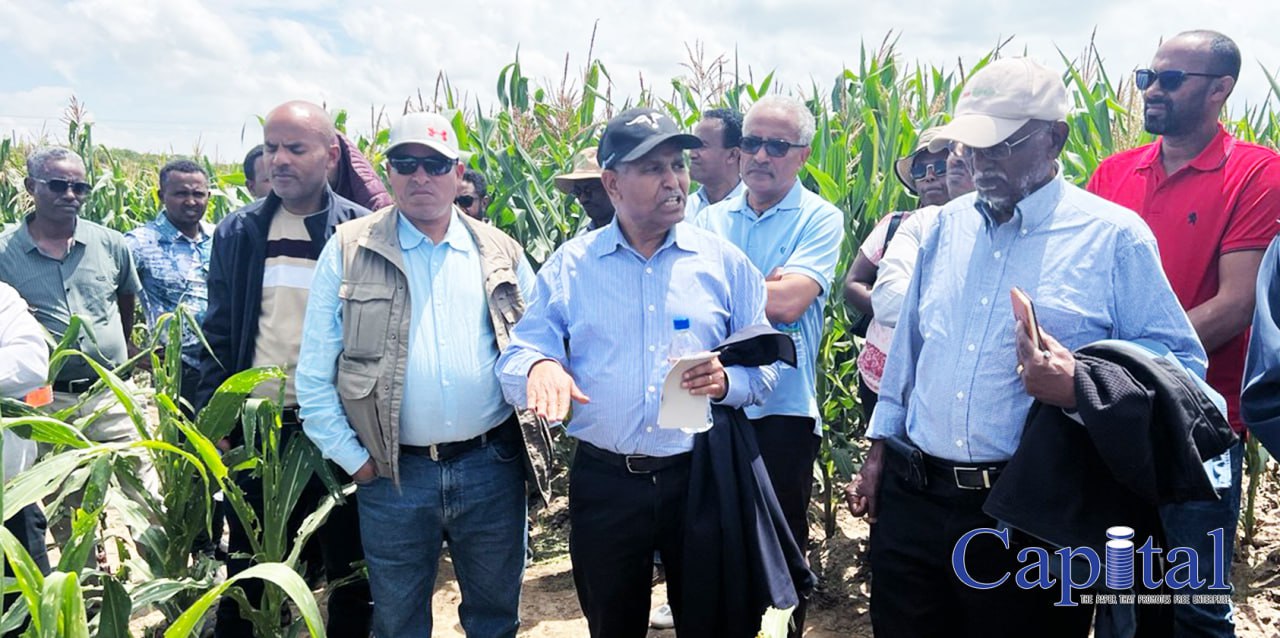
Despite a boycott by opposition groups, a field visit on October 11th in Melkasa showcased the cultivation of BT maize in lowland areas, garnering praise from scientific experts, including seasoned professionals in the field.

The event allowed specialists to witness firsthand the crop recently approved for commercial use, emphasizing a “seeing is believing” approach. Organized by the Science Technology Innovation platform, the visit highlighted the contributions of Ethiopian experts in genetic engineering and showcased developments across various sites.

In March, the National Variety Release Committee (NVRC) granted commercial release for intermediate altitude and lowland BT maize varieties after seven years of rigorous testing.

Professor Firew Mekbib, President of the Biotechnology Society of Ethiopia, contextualized this achievement during the visit, stating, “Previously, we lacked the capacity and sourced maize from Zimbabwe and Kenya, relying predominantly on a composite-based variety system.”

Firew noted that Ethiopia ranks second in productivity on the continent, following South Africa, and third in production volume after South Africa and Nigeria.

He emphasized that while Nigeria dedicates 6 million hectares to maize, Ethiopia has achieved a nearly 94% hybrid maize adoption rate on just 2.5 million hectares.

A senior biotechnician and chairman of the NVRC acknowledged that although BT maize was commercialized globally 27 years ago, Ethiopia opted for a meticulous evaluation process.

He confirmed that while donors supported the project, they did not influence decision-making. After seven years of assessment, three varieties were approved from an initial four tested, with more varieties currently in the deregulation pipeline.

Organizers reported that groups with differing views on GMOs were formally invited to the field visit but chose not to participate.

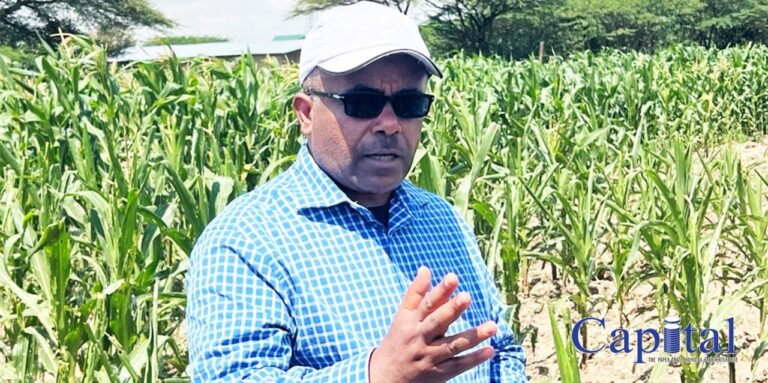
A farmer involved in the trials emphasized the urgent need for the technology, stating, “Pests are adapting to chemicals, which are also becoming more expensive. When infestations are high, we have to increase the dosage, which is a costly cycle.”

During the visit, sector leaders and experienced scientists acknowledged Ethiopia’s growing capacity and the encouraging emergence of young scientists in biotechnology.
They recommended further in-depth research in food science to enhance public confidence.

Drawing an analogy, they likened the GMO debate to questioning the necessity of surgery in medicine, noting that GM technology now spans 200 million hectares globally, up from less than one million in 1996.

They urged a shift away from foundational arguments.

One agricultural science expert remarked, “We, including those who oppose this, are already consuming food products derived from GM agricultural inputs.”

Others pointed out that scientific discourse in Ethiopia can often be unprofessional, stressing the importance of field visits for building an informed critical mass.

Firew observed that opposition groups have occasionally disparaged those involved in regulation, noting that society can be conservative. Both he and other veteran scientists called on opponents to engage in formal debates rather than amplify one-sided views in the media.The approved maize varieties—WE3106B for intermediate altitudes and WE7210B and WE8216B for lowland areas—were developed through the public-private TELA Maize project. These varieties are engineered to resist destructive pests such as stem borers and fall armyworms, which have long affected Ethiopian farmers.

Nationwide trials conducted over seven years show that these new varieties can provide a yield advantage of up to 60% compared to conventional maize.

Experts highlight that this transgenic maize enhances grain quality, reduces the need for chemical insecticides, lowers production costs, and minimizes environmental and health risks.

Tesfaye Disasa, PhD, a senior scientist and the TELA Maize project country coordinator at the Ethiopian Institute of Agricultural Research (EIAR), described the commercial approval as a significant milestone for Ethiopian agriculture.

The TELA maize seed will be provided to smallholder farmers royalty-free through local seed companies, potentially saving farmers at least USD 750 per hectare in pesticide costs.

Ethiopia retains seat on FIATA board

0

Ethiopia has solidified its position as a key player in the global logistics community at the recent International Federation of Freight Forwarders Associations (FIATA) World Congress.

Held in Hanoi from October 6-10, this premier event not only allowed Ethiopia to retain its exclusive seat on the FIATA board but also led to the renewal of its flagship training program.

The congress included important elections for the organization’s global leadership, resulting in the appointment of Thomas Sim as the new FIATA President for the 2025-2027 term, succeeding Turgut Erkeskin. Additionally, a new group of senior vice presidents, vice presidents, and board members was inaugurated.

A significant achievement for Ethiopia was the re-election of Dawit Woubishet from the Ethiopian Freight Forwarders and Shipping Agents Association (EFFSAA) to a key leadership role. Dawit will continue as Chair of FIATA’s Air Freight Institute (AFI) for another two-year term, building on his distinguished four-year tenure.

Dawit’s re-election was decisive, garnering an impressive 84% of the vote, defeating nominees from Canada and Australia. Reflecting on his successful term, Dawit highlighted his efforts to strengthen the partnership between the AFI and the International Air Transport Association (IATA). “Since I took on the AFI leadership four years ago, I have significantly enhanced our collaboration with IATA, which was previously underdeveloped,” he stated.

In another strategic victory, Ethiopia’s FIATA Diploma Program, first accredited in 2010, received a crucial four-year reaccreditation.

Dawit acknowledged the challenges of maintaining this certification, which is subject to FIATA’s stringent requirements. “We successfully met several conditions, and the international body approved the renewal despite existing obstacles,” he told Capital.

This renewal forms the foundation of EFFSAA’s ambitious plan to establish a regional logistics academy in Addis Ababa.

“The increasing recognition of EFFSAA has created an unprecedented pipeline of trainees. It is essential to cultivate a new generation of professionals,” Dawit explained. The proposed academy aims to become a central hub for capacity building, serving not only Ethiopia but also neighboring countries lacking FIATA-accredited programs.

“This initiative aligns with our formal request to the Addis Ababa city administration for land allocation to create the institution,” Dawit added.

He emphasized that such a center of excellence is crucial for training FIATA-certified logisticians, vital for implementing the African Continental Free Trade Agreement (AfCFTA).

Highlighting the importance of these developments, Dawit stated, “Human capital development is the key driver for maintaining Ethiopia’s—and Africa’s—prominent voice in the global logistics sector.”

In recognition of his contributions, Dawit received a FIATA Silver Pin at the annual conference, an honor awarded to institute chairs with over four years of dedicated service.

Looking ahead, Addis Ababa is set to host the 2027 FIATA World Congress, the logistics sector’s most prestigious global gathering, following a successful bid to become the future host city.

Tigray faces escalating irregular migration and gang violence amid fragile peace

0

The Tigray region of Ethiopia is grappling with a mounting security and social crisis, more than two years after the 2022 Cessation of Hostilities Agreement (CoHA) marked the official end to widespread conflict. Despite the return of formal peace, new waves of gang activity and irregular migration among youth are transforming the landscape, as profound socio-economic challenges threaten to destabilize the region.

A recent Conflict Analysis Report, commissioned by Shalom Training and Advisory Services for CST-Ethiopia and the European Union Trust Fund (EUTF) project, sheds light on the region’s deepening unrest. The findings—based on detailed assessments across eight Tigrayan districts including Mekelle and Adigrat—point to high unemployment, institutional collapse, and pervasive hopelessness as drivers of environmental degradation, criminal activity, and renewed insecurity.

The persistence of war’s destructive legacy is seen in weakened governance and systemic corruption, especially in land administration where disputes over land, water, and grazing rights have intensified. This power vacuum has derailed efforts to resolve local conflicts, leaving communities vulnerable and giving rise to new forms of violence and lawlessness.

Economic collapse has hit youth and former combatants hardest, leading to a spike in crime and illegal enterprises such as gold mining, which has sparked new confrontations between unemployed youth and local farmers. Ex-combatants, lacking reintegration support, have been linked to rising insecurity and violence as they struggle for economic survival.

Urban centers like Mekelle are seeing marked increases in gang-related incidents, armed robberies, and revenge killings, with night-time crimes becoming commonplace. The normalization of violence among young people signals a disturbing shift in the post-war reality.

During the National Peacebuilding Learning Symposium—held under the theme “Partnerships for Peace: advancing social and economic stabilization in conflict-affected communities”—CST Ethiopia’s Country Director Teamrat Belai underscored the inextricable link between peace and development. He emphasized that sustainable peace requires both economic opportunity and social cohesion, especially for vulnerable groups such as women, youth, and displaced persons.

However, the complete breakdown of justice and security institutions has allowed criminality to flourish unchecked. Interviewees expressed alarm that crimes once regarded as alarming have become routine, reflecting the loss of social order.

Desperate youth are increasingly turning to irregular migration toward countries like Saudi Arabia, particularly in districts such as Irob and Gulomakeda, often facing exploitation by human traffickers. Border towns like Rama have become transit points for illegal weapons, smuggling, and trafficking, further complicating the crisis.

As the region faces this fragile crossroads, the report calls for comprehensive interventions that go beyond humanitarian assistance. It urges systematic investment in youth, including vocational training and tailored job creation programs for landless youth, as vital steps to restore hope, address root causes, and prevent a relapse into widespread internal conflict.

Ministry of Finance plans urgent consultations after failed Eurobond talks

0

In a significant development, the Ministry of Finance (MoF) announced on October 14, 2025, that high-stakes negotiations with private creditors regarding Ethiopia’s $1 billion Eurobond due in 2024 have collapsed without reaching an agreement. This setback exacerbates the country’s debt restructuring crisis amid its IMF program, prompting plans for urgent consultations with the Official Creditor Committee (OCC) and the IMF to determine a way forward.

The negotiations, which took place from September 25 to October 13, failed to reconcile differences over financial terms. However, both parties expressed hope for future discussions to resolve the deadlock.

This announcement highlights Ethiopia’s ongoing struggle with a growing debt crisis, worsened by economic pressures such as inflation, currency devaluation, and external shocks stemming from the COVID-19 pandemic and regional conflicts.

Ethiopia has been actively seeking relief on its external debts to stabilize its economy and fulfill IMF requirements for continued support under the Extended Credit Facility (ECF).

The Ad Hoc Committee, representing bondholders, rejected Ethiopia’s initial proposal and responded with terms that included higher recovery mechanisms, leading to a series of negotiations with counteroffers.

At the beginning of the negotiation period, Ethiopia proposed a restructuring plan that included a 16% nominal haircut on the bond’s principal (excluding past due interest), resulting in a new $840 million bond maturing in June 2030 with a 4.75% coupon paid in cash. Past due interest (PDI) of $132.5 million from four missed coupons (from December 2023 to June 2025) would be settled in two installments, along with a 0.5% consent fee.

In response, the Ad Hoc Committee proposed a less severe 10% haircut, suggesting a $900 million bond maturing in July 2029 with the original 6.625% coupon and full payment of three missed coupons ($99.375 million) at settlement, plus a 2% consent fee. They also introduced a Value Recovery Instrument (VRI) linked to Ethiopia’s goods exports, allowing bondholders to receive additional payments if exports exceed IMF baselines—5% of excess from FY 2024/25 to 2027/28, and 2% thereafter until FY 2039/40.

Ethiopia then revised its offer, increasing the haircut to 15% with an $850 million bond, lowering the coupon to 6.125%, and introducing a downside adjustment that would reduce the final amortization if FY 2027/28 exports fell below 85-95% of IMF projections.

Their VRI was also more modest, offering 1.5% of export excesses from FY 2026/27 to 2035/36, capped at $30 million annually, with a $180 million notional.

The committee’s final counteroffer matched the 15% haircut and 6.125% coupon but extended the VRI to FY 2035/36 with higher percentages (4.75% initially, then 2%), a $400 million notional, and a $65 million cap on the first payment.

The downside adjustment has been revised to aggregate exports over the IMF program period from FY 2024/25 to FY 2027/28. While non-financial terms, including covenants and reporting requirements, were acknowledged, they remain unresolved.

Despite the impasse, the Ministry highlighted “substantial progress” and expressed gratitude to the committee for its constructive engagement. The statement emphasized Ethiopia’s strong commitment to the principle of comparability of treatment, ensuring that private creditors receive terms no less favorable than those offered to official creditors, such as the Paris Club. The country intends to consult with its Office of the Chief Economist (OCC) and the IMF to explore potential options.

This development occurs amidst Ethiopia’s IMF-supported reforms, with the latest Extended Credit Facility (ECF) reviews forecasting external financing needs and export growth. Annex B of the Ministry of Finance’s press statement provides macroeconomic details, including IMF assumptions for multilateral and bilateral financing. For example, exports of goods and services are projected to increase from $14.6 billion in FY 2024/25 to $72.1 billion by FY 2038/39 under the third review scenario.

As of June 2024, before restructuring, total external debt data shows a figure of $30.9 billion, with multilateral creditors holding $15.3 billion, bilateral creditors from the OCC $3.4 billion, and Eurobond obligations totaling $1.1 billion (including missed payments). Pre-restructuring service schedules indicate significant principal and interest burdens extending into the 2040s, particularly from Chinese commercial loans and multilateral institutions.

Comparability indicators from the OCC Memorandum of Understanding (MoU) specify a 12.5% present value (PV) debt relief, a three-year duration extension, and a 34% reduction in debt service during the IMF program.

For FY 2024/25, actual export performance indicates merchandise exports reached $8.3 billion, driven primarily by coffee ($2.7 billion) and gold ($3.5 billion), with net services contributing an additional $1.3 billion.

Analysts warn that the failure to reach an agreement could delay Ethiopia’s access to international markets and extend its default status, as the bond has been in default since December 2023. However, the willingness to resume negotiations suggests the possibility of a deal before the year’s end.

Ethiopia is advised by White & Case LLP and Lazard, while the committee is represented by Weil, Gotshal & Manges and Ankura, though the names of committee members have not been disclosed.

For context, Ethiopia’s debt challenges date back to 2021 when it sought relief under the G20 Debt Service Suspension Initiative (DSSI) and subsequently entered discussions under the Common Framework. In July 2024, the IMF approved a $3.4 billion Extended Credit Facility (ECF), contingent upon restructuring.