Monday, May 11, 2026
Home Blog Page 646

EIH unveils plans to address government budget deficit in five years

0

Ethiopian Investment Holdings (EIH), the entity responsible for managing 34 state-owned enterprises, has announced an ambitious initiative to fully fund the government’s budget deficit within the next five years. This plan comes at a critical time as Ethiopia grapples with significant budget shortfalls exacerbated by various global and domestic economic pressures.

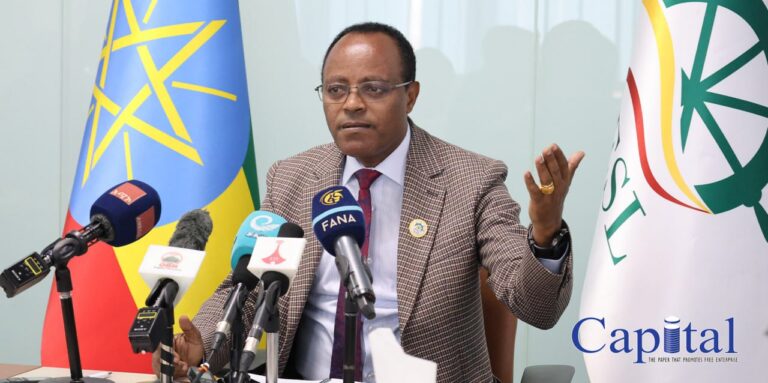
EIH is currently contributing to offsetting the deficit through its profits and projects a substantial increase in revenue that will enable it to close the gap entirely. “Our state-owned enterprises should be the main driving force for economic growth,” said EIH CEO Brook Taye (PhD). He emphasized the importance of these enterprises in strengthening the country’s finances and highlighted past contributions, including a dividend payment of 5.8 billion birr to the government in the last quarter, with plans to increase this to 14 billion birr this year.

The initiative reflects a shift towards an autonomous approach to fiscal management, aiming to reduce reliance on foreign borrowing and create a sustainable financial environment. However, achieving this goal will require significant improvements in the performance and profitability of state-owned enterprises, addressing issues such as operational inefficiencies and governance challenges.

The success of EIH’s plan could have far-reaching implications for Ethiopia’s economy by alleviating the budget deficit burden and freeing up resources for critical investments in infrastructure, education, and health. This initiative also underscores the government’s commitment to enhancing the role of state-owned enterprises as engines of growth within the economy.

In a related development, EIH is set to acquire a stake in Scandinavian company Ethno Mining, which has commenced gold production in Ethiopia’s Akobo district. This strategic move marks a significant expansion into the gold mining sector and reflects EIH’s broader goals of diversifying its investment portfolio.

ESL achieves record financial results amid regional challenges

0

Ethiopian Shipping and Logistics (ESL), the state-owned logistics giant, has reported impressive financial results for the first half of the 2024/25 budget year, exceeding its revenue targets and achieving significant operational milestones.

Despite having to concentrate on feeder services for Ethiopian cargoes stored at nearby ports, ESL generated over a quarter of a billion dollars in foreign currency earnings from its cross-trade operations during this reporting period.

In a further demonstration of its strong financial health, the company paid a dividend of three billion birr to its parent organization, Ethiopian Investment Holdings (EIH).

According to the report, ESL recorded total income of 46.8 billion birr, surpassing its target of 44 billion birr by 106%. Expenses for the period were 37.5 billion birr, closely aligning with projections.

The company’s gross profit for the six months exceeded expectations by 50%, while its pre-tax profit reached 9.3 billion birr, significantly higher than the anticipated 6.2 billion birr.

Berisso Amallo, CEO of ESL, attributed this success to macroeconomic reforms that established a market-based exchange system, as well as growing revenues from cross-trade activities. He also noted that resolving challenges in the Red Sea region could further enhance cross-trade commerce.

One of ESL’s notable achievements was its performance in cross-trade operations, generating USD 271 million—16% more than its goal of USD 234 million for the specified time frame.

The logistics company prioritizes the cross-trade sector due to its capacity to generate substantial hard currency revenue. Over the fiscal year ending July 7, 2024, ESL secured USD 421 million from this business segment.

As the only deep-sea vessel operator on the African continent, ESL primarily focused on feeder services for Ethiopian cargoes during this period, as its partner vessel operators avoided the Red Sea for security reasons.

ESL’s vessels transported goods from ports such as King Abdullah in Saudi Arabia and Salalah in Oman to Djibouti, Ethiopia’s main maritime outlet. The company currently operates a fleet of ten vessels.

Experts note that ESL’s ability to achieve significant foreign currency earnings underscores its strategic adaptability and operational efficiency, even amid the constraints of focusing on feeder services. ESL’s cross-trade business, which involves transporting goods between foreign ports, has become a key revenue driver, significantly contributing to its overall financial success.

However, ESL has faced operational challenges due to the ongoing Ukraine-Russia crisis and hostilities in the Red Sea region involving Ansar Allah, also known as the Houthi militants of Yemen.

Despite facing obstacles, the company has successfully maintained its operations and achieved significant milestones.

One of the key accomplishments during the reporting period was the completion of audit reports for the past five years, a task that had previously been challenging for the corporate division. “We have completed the four-year audit report, starting with the 2019/20 fiscal year. We are now finalizing the audit report for the previous fiscal year in accordance with international standards,” said Berisso.

He emphasized that these audit reports would allow the company to expand into various sectors and uphold its global standing.

In addition to its financial achievements, ESL transferred three billion birr to its parent company, EIH, during the review period. EIH, a sovereign wealth fund, owns 34 large and strategically important public enterprises. This dividend payment follows a similar payout of three billion birr in the previous fiscal year.

Operationally, ESL transported over two million tons of freight in the first half of the budget year and successfully moved approximately 60,000 TEU containers using multimodal transportation.

Looking ahead, the company aims to handle 819,877 tons of cross-border freight and 4.3 million tons of import marine freight by the end of the fiscal year, as announced by the CEO in July of last year.

ESL’s strong performance underscores its critical role in Ethiopia’s logistics and trade sectors, even amidst regional and global challenges. With its continued focus on operational efficiency and strategic growth, the company is well-positioned to maintain its leadership in the maritime industry.

Global Bank launches innovative digital banking center

0

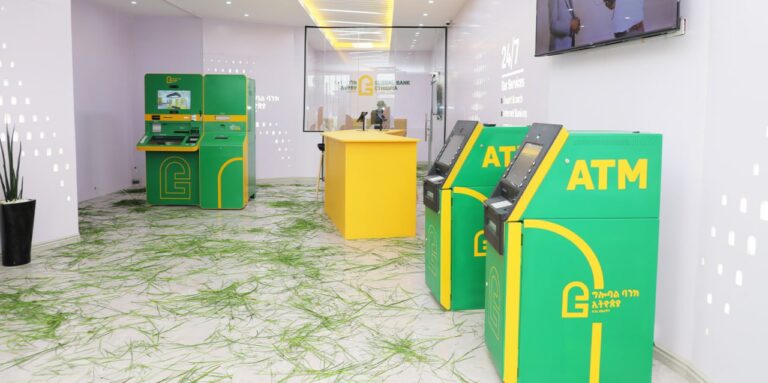
Global Bank Ethiopia has officially launched a state-of-the-art digital banking service center aimed at enhancing customer experience and streamlining operations. The new center will offer 24/7 banking services, including account openings, deposits, withdrawals, foreign exchange transactions, and bill payments. Additionally, it features a video conferencing room for enterprise customers to access remote video banking services.

CEO Tesfaye Boru emphasized the bank’s commitment to technological advancement and customer satisfaction, stating that this initiative is designed to increase efficiency and better serve its growing customer base of 1.7 million. The bank has experienced significant growth recently, reporting a pre-tax profit of 757.6 million birr this year, attributed to strategic branch expansion and technological innovation.

Global Bank is also focused on meeting the minimum capital requirements set by the National Bank of Ethiopia and expanding its reach across the nation. With total deposits exceeding 20.6 billion birr and total assets surpassing 26.6 billion birr, the bank is well-positioned for further growth.

In a move to solidify its status as a leading financial institution in Ethiopia, Global Bank plans to construct a new headquarters on a 5,550-square-meter site acquired from the Addis Ababa City Administration. This ambitious project is expected to enhance the bank’s operational capacity and service delivery.

Ethiopia advocates for reclaiming cultural heritage through international cooperation

0

Ethiopia’s tourism minister has emphasized the importance of reclaiming cultural assets, asserting that these resources are best protected in their countries of origin. Sileshi Girma, State Minister of Tourism, stated that African nations have a fundamental right to reclaim their cultural heritage, highlighting the deep connection between cultural resources and national identity.

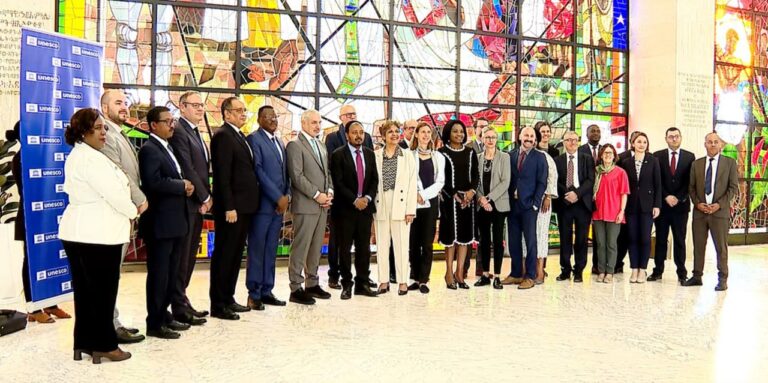
During a recent forum hosted by UNESCO in Addis Ababa, Sileshi stressed the necessity of strong international cooperation to combat the trafficking of cultural heritage. He reaffirmed Ethiopia’s commitment to collaborating with the global community to facilitate the return of looted artifacts.

The forum was organized by the Economic Commission for Africa (ECA) and aimed to address the challenges surrounding the recovery of cultural heritage across the continent. Sileshi noted that while previous efforts under the 1970 agreement to recover artifacts have seen some success, more work is needed.

Ethiopia is taking a leading role in advocating for international cooperation to restore looted cultural heritage, which Sileshi described as essential for healing historical wounds and achieving sustainable development. He called for “new forms of cooperation and agreements” to enhance efforts in restoring African cultural property.

Rita Bissoonauth, UNESCO Liaison Office representative in Ethiopia, highlighted the critical role of culture in Africa’s sustainable development. She pointed out that the cultural and creative sector significantly contributes to the global economy, supporting over 48 million jobs and emphasizing youth job creation.

Bissoonauth acknowledged ongoing challenges, including looting and human trafficking, and outlined UNESCO’s strategic approach to promoting cultural diversity and preserving heritage. She urged stakeholders to intensify efforts to protect these invaluable resources.