
Saturday, April 4, 2026
Home Blog Page 653

Trust

0

I have been fortunate to travel to some foreign destinations during the past year. When visiting another country, I usually try to make the most of my time there and see places of interest and write up for some outdoor activities. Most recently I went trekking with a group of ten, through an area marked with valleys, hills, mountains, rivers and waterfalls. Some of the views were spectacular and some of the rivers and waterfalls provided idyllic locations for a well-deserved rest and refreshments. Carrying a backpack with basic necessities, we walked through the countryside but also had to cross rivers and climb our way up or down some steep rocky formations, holding on to tree roots and branches and rocks. Some of these passages were so challenging that I needed support from one of our guides. Our guides were real professionals who knew the landscape well and kept a close eye on us, lending a hand when necessary. Hopping from stone to stone to cross a river, I really needed such help, and my guide led me safely across with a firm grip and clear instructions where to step, avoiding slippery stones and maintaining my balance. At some point we faced a steep rock formation, which we had to climb down from. Our guide ensured us that we could do it, but he said that we had to believe in us as a team and more so, we had to believe in him and follow his instructions as we climbed down. As we could not always look down and see where to land our foot, we indeed had to listen carefully to his instructions where to hold the ridge of the rock and where to place our foot. There were a few more such challenges but we made it. Later that evening as we relaxed over dinner, I came to realize that without the help, support and instructions of our guide, I would perhaps not have made it. Mind you, the other trekkers were much younger than I, and needed less support, but at nearly 70 I could not have done it without. I then realized that at some point in life, and as we grow older, we come to depend on younger people, like our guide, and believe in their capability, knowledge and experience to lead us. I then realized again how important it is, during our lives and careers, to teach, coach and grow younger people, to eventually take over leadership. Letting go and leaning on younger women and men, becomes therefor an important challenge as we grow older; a challenge many find difficult to accept while clinging on to their position and responsibilities.

Next, I registered for paragliding, whereby one sits in a harness attached to a parachute. In tandem paragliding, you go together with the pilot, who operates the parachute to steer it into the right directions and to make it to a safe landing. I believe, it is done in Ethiopia as well, but I did this abroad. When all is secured, you run together down the slope of a hill or mountain, until the parachute catches the wind and carries you along. Before taking off, the pilot gave clear instructions how to run down the slope and most importantly, not to stop or hesitate at any moment, else we risk falling down the hill or the mountain. I had to confirm clearly that I understood the instructions and affirm that I would push on and not hesitate once underway. And so, we waited a few moments for the wind to pick up and off we went, running down the slope and then the parachute picked us up – we were flying! What an experience! Now it was possible to relax and enjoy the ride.

Even more than during the trekking, I depended on somebody else, who had the knowledge and experience, that I did not have. I had to fully trust this person, which I did as he gave me the feeling that he was fully in control and confident during the half hour we got to know each other, while preparing for take-off. But here another dimension came into play as well: he had to fully trust me as well and have the confidence that I followed his instructions without hesitations. Me failing, would put his life in danger as well. As we trusted each other, we were able to fly over the hills and along the coast, shooting pictures all the way, enjoying the ride and landing safely. What an experience!

Now, what both the trekking guide and the paragliding pilot had in common was that they knew what they were doing, were trained professionally, had the right equipment, and had the communication skills to give clear instructions. I could also see that they enjoyed what they were doing and were happy to provide their best services.

These are in fact the three basic essential qualities for anybody to do something right: knowledge, skills and motivation. And so, it is the responsibility of managers to equip workers or their staff, to teach and coach them on the way, so that they build enough confidence to takeover and for the manager to step back, let go, hand over and trust that the job will be done.

Ton Haverkort   
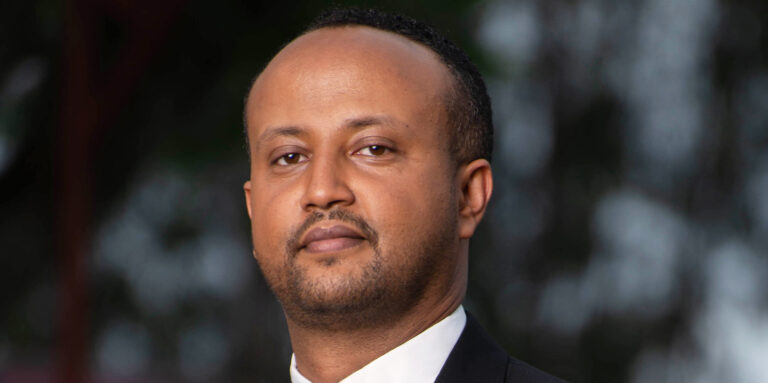
Nebil Ahmed Yimer

0

Name: Nebil Ahmed Yimer

Education: Bachelor’s Degree

Company name: FHL Trading PLC

Title: Co-Founder and Managing Partner

Founded in: 2015G.C.

What it does: Signage & Brand Impressions

Hq: Addis Ababa

Number of Employees: 15
Startup capital: 105,000 birr

Current Capital: Growing

Reason for starting the Business: Filling a gap and creating positive impact

Biggest perk of ownership: Impact, Flexibility, Autonomy & Skill Development

Biggest strength: Strategist, Courteous and Solutionist

Biggest challenge: FX & Payment Delinquency

Plan: Growing to the neighboring countries market

First career: Customized giveaways
Most interested in meeting: Vusi Thembekwayo

Most admired person: My Mother

Stress reducer: Prayer & Introspection

Favorite pastime: Intentional conversations and focused family shared moments

Favorite book: Bible

Favorite destination: Singapore and Japan (Okinawa)

Favorite automobile: Austin Mini Cooper

Short stories on Journalism in Ethiopia, by Tamrat Hailu

0

BY FITSUM GETACHEW

A few days ago, I came across a book filled with intriguing stories related to the journalism profession in our country. The title, “Zero Experience and Other Stories,” references a job vacancy announcement seeking fresh graduates with “zero year experience.” The main narrative revolves around a journalistic institution that placed this announcement, aiming to hire recent university graduates. The rationale behind this approach is that institutions prefer to mold new employees according to their specific mission and objectives, believing it is easier to shape inexperienced individuals into “good employees” than to reform those with entrenched habits from previous jobs. They argue that this strategy minimizes the risks associated with hiring seasoned professionals who may have developed poor work ethics, such as arriving late or making excuses for absenteeism. As a result, both public and private organizations often publish such vacancy announcements.

The author shares several short stories that primarily explore his experiences in journalism over more than two decades. He presents these narratives as if they are true, offering readers accounts that are “based on true stories.” While some tales feature real names and events, many others incorporate elements of fantasy to enhance their appeal and make them more engaging.

As a journalist with a similar background to Tamrat, I found myself resonating with many of the stories he shared. Upon reading the book, I was thoroughly entertained and finished it in record time, captivated by the author’s writing style and the amusing aspects of the journalism profession. The author vividly portrays journalists, the environments in which they work and live, and the diverse experiences they encounter.

Regarding his writing journey, Tamrat mentions that he has contributed numerous stories and articles to newspapers like “Addis Admas” before establishing his own monthly magazine, “Kumneger.” This magazine did not primarily focus on political content, unlike many others; instead, it aimed to entertain and celebrate culture. It highlighted arts and culture, featuring films, actors, musicians, sculptors, directors, composers, authors, journalists, photographers, fashion designers, and models. Additionally, it covered major current affairs, including interviews with political and diplomatic figures, filling the pages of many newspapers.

“Kumneger” was a well-regarded monthly magazine that enjoyed substantial readership over a long period, by Ethiopian standards. However, it had about forty pages until the cost of printing became prohibitively expensive. Those involved in publishing books and journals frequently express frustration over the high cost of printing and hope that the government will take measures to address this issue. Many authors believe that the limited number of enthusiastic readers in Ethiopia, compared to the levels necessary for the expansion of publications seen in various other African countries, discourages them from writing more.

Most of our journals and magazines focus on political matters rather than social issues, as readers tend to show greater interest in political events and government affairs. Consequently, they are often unwilling to pay for publications that cover only social topics, such as art and culture.

Particularly during election seasons, like in 2005, the number of publications surged, and public interest in reading increased significantly. The charged atmosphere of the election campaign fueled this excitement. Even books related to political issues saw a boom in publication. “Opposition parties” and their leaders became the focal point of nearly all publications, which contributed to a rise in readership. People were captivated by televised debates featuring opposition leaders challenging the incumbent government.

Rallies and campaigns generated significant headlines, marking what can be described as the “golden age” of the private press, in contrast to government or public publications. Had social media platforms existed then, it is likely that the atmosphere would have been even more electric, perhaps chaotic and difficult to manage.

In this context, Tamrat has authored a book based on his extensive experience in media, which has helped him refine the “art of storytelling.” He has had the opportunity to interview three prime ministers, including the current Prime Minister, Abiy Ahmed (Ph.D.). In his writings, he recounts asking questions that went beyond policy and political issues, focusing instead on personal stories that might intrigue his readers.

He inquired about the health of the prime ministers and their wealth, suggesting that the public was interested in knowing what kind of individuals they were beyond their political personas. He felt it was essential to ask such questions since other political figures might follow their leaders’ examples and combat potential corruption. According to his account, the responses he received were often interesting and humorous, as not all journalists are afforded the opportunity to ask their questions due to various constraints.

Many private press journalists have expressed frustration over the limited opportunities they have to access certain ‘official events’ that could provide valuable stories for their publications. They argue that the ‘private press’ is often viewed unfavorably in some government circles. Critics have accused these publications of focusing on negative and exaggerated stories, some of which may be completely unfounded. Despite these claims, Tamrat has raised important issues of professional ethics in journalism in several stories throughout his book, highlighting the need for accountability in the field.

When discussing journalism in Ethiopia, few are more qualified than Tamrat, who has been active in the industry for over twenty years. Throughout his career, he has attended countless press conferences and conducted thousands of interviews with various personalities, primarily in the arts and culture sectors. It is difficult to find a prominent figure or ‘celebrity’ who has not featured in his magazine, where he served as managing editor and owner. In addition to his own contributions, he collaborated with several regular contributors, enriching the magazine’s content and making it more diverse and engaging.

Tamrat is therefore well-suited to write short stories that are relatable and based on real events he experienced. His presentation of these stories is so captivating that readers will find it hard to put down the book, which consists of 131 pages and twenty compelling narratives.

Most of the stories are only a few pages long, with the exception of one, which discusses the ‘zero experience employee’ and is comparatively lengthy. The writer skillfully describes the characters in a way that connects them to people we know or have heard about through others’ observations or experiences. In journalism, one encounters numerous individuals and incidents, and the book serves as a collection of these observations. Almost all the stories are believable, reflecting real-life experiences. The names of the prime ministers he interviewed are authentic, and both the questions he posed and the answers he received are true. His approach often elicited smiles from interviewees, who appeared relaxed while responding, likely because they were not accustomed to such questions.

Some stories include hypothetical scenarios that did not actually occur but nonetheless entertain readers because they involve real personalities, such as the former president of Libya. From a certain perspective, all the stories in the book are engaging, and at times they feel too brief for the reader. For instance, it took me less than two hours to read the book during my commute to the office.

The language in the book is simple and clear, with short, straightforward sentences and paragraphs. This clarity creates an element of suspense, making readers curious about what will happen next and eager to continue reading. Tamrat’s skillful storytelling reflects his extensive experience as a journalist, which has shaped his narrative technique. His long years in the field have contributed to his development as a writer.

While some may criticize the book for seemingly mocking certain individuals in the profession, all the stories are plausible, even if they do not directly reference specific, real-life people. A disclaimer is provided at the beginning of the book, acknowledging this, except for the genuine experiences he has shared with the country’s leaders.

I personally look forward to reading Tamrat’s future publications, despite the challenges associated with the costs of printing. He mentioned that most of the stories in this book were written years ago, but it is only now that they have come to light.

Assad’s collapse was coming – everyone just looked away

0

Starvation, sanctions, and military disintegration broke the former leader’s hold on Syria – but no one was paying attention

By Vitaly Ryumshin

Until a few weeks ago, the skies over Syria seemed deceptively cloudless. That illusion shattered on 27 November when the armed group Hayat Tahrir al-Sham (HTS) and the Turkish-backed Syrian National Army (SNA) launched a sudden offensive on Aleppo.

By last Monday, they had seized the city. Three days later, the official Syrian army abandoned the strategic city of Hama. In the south and southeast, dormant rebel cells rose up, striking a final blow against Assad’s hollowed-out regime. On Sunday, opposition forces stormed Damascus from several directions. Bashar al-Assad, whose regime withstood over a decade of civil war, finally fell from power.

The speed of the collapse invites parallels with Afghanistan three years ago, when Ashraf Ghani’s US-backed government crumbled like a house of cards. But unlike Ghani, whose weakness was obvious, Assad was still widely perceived as Syria’s dominant force – making his sudden downfall all the more staggering.

So what went wrong? Everything.

Assad’s Syria had been rotting from within for years. The country was locked in a perpetual humanitarian and economic crisis, with 90% of Syrians living in poverty and widespread malnutrition. Desperate families took out loans just to buy food but couldn’t pay them back. Power outages crippled even Damascus, sometimes leaving the capital dark for 20 hours a day. Electricity prices soared by up to 585% in the spring of 2024 alone, pushing an already destitute population deeper into despair.

The Assad government offered no solutions – only mounting repression. Under crushing sanctions, Damascus couldn’t secure foreign loans, and with its oil fields under US-Kurdish control, there was nothing left to trade. Even Syria’s illicit drug trade, once a lifeline, couldn’t plug the gaping holes in state finances. Profits disappeared into the pockets of warlords and traffickers, not the state treasury.

Meanwhile, Assad’s underpaid, demoralized army, bled dry by years of civil war, continued to disintegrate. For a time, Iranian proxies like Hezbollah propped up his forces, but by 2024, they’d shifted their attention to fighting Israel. Attempts to draw Russia further into Syria’s quagmire fell flat. Moscow, busy elsewhere, had no interest in bailing Assad out.

So when the final crisis hit, Assad found himself alone. His allies stayed away, his army scattered, and an enraged, starving populace turned on the government. There was no one left to protect him.

What happens next?

Assad’s fall leaves Syria’s future dangerously uncertain. HTS has already staked its claim for power, likely aiming for a Taliban-style takeover backed by its patron in Ankara.

But Syria is not Afghanistan. The country is a mosaic of hostile factions, many with longstanding grudges. The SNA and HTS themselves once battled for dominance in Idlib, despite both being pro-Turkish. There are also the Kurds in the northeast, the Alawites on the coast, the Druze in the south, and various US-backed factions in the southeast. Then there’s ISIS, still lurking in the desert, ready to exploit the chaos.

Syria seems destined to follow Libya’s post-Gaddafi trajectory: a failed state fractured into zones of influence, ruled by warlords and foreign proxies. This would be a disaster not only for Syrians but for the Middle East as a whole.

But that is a subject for another conversation.

This article was first published by the online newspaper Gazeta.ru