Wednesday, November 25, 2026
Home Blog Page 661

IATA study confirms SAF technology rollout as key bottleneck to achieving net zero emissions

0

The International Air Transport Association (IATA), in collaboration with Worley Consulting, released a study on September 23, 2025, confirming that the main barrier to achieving the airline industry’s goal of net zero carbon dioxide emissions by 2050 is not a shortage of sustainable aviation fuel (SAF) feedstock but rather the slow pace of rollout for SAF production technologies. According to the study, sufficient sustainable feedstock exists globally, meeting strict environmental standards without causing adverse land use changes, to support the required 500 million tonnes of SAF annually by 2050.

Currently, most commercial SAF production relies on hydroprocessed esters and fatty acids (HEFA) technology, which converts waste oils into fuel. The study pointed out the need to accelerate the development of new technologies to diversify SAF production methods, especially power-to-liquid (PtL) technologies that rely on renewable electricity, green hydrogen, and carbon capture infrastructure. It also highlighted competition for biomass feedstock among various hard-to-decarbonize sectors, stressing the importance of prioritizing aviation in feedstock allocation.

IATA’s Director General, Willie Walsh, emphasized that feedstock availability should no longer be viewed as a limiting factor. He urged industry stakeholders to accelerate investments and build the infrastructure necessary to scale up SAF production rapidly. “We now have unequivocal evidence that the challenge lies in technology deployment, not feedstock,” Walsh said. “To meet net zero goals by 2050, shovels must be in the ground now.”

The study projects that biomass feedstock could sustainably supply over 300 million tonnes of bio-SAF annually by mid-century, with the remainder of the 500 million tonnes coming from PtL fuels. However, unlocking the full potential will require coordinated global policies, enhanced supply chain logistics, infrastructure investment, and technological innovation.

Marie Owens Thomsen, IATA’s Senior Vice President for Sustainability and Chief Economist, highlighted SAF’s potential to create jobs, boost local economies, and support energy security. She stressed the critical need for governments, investors, and industry stakeholders to collaborate on policy frameworks and investment incentives to de-risk projects and hasten the development of a fully functioning SAF market.

The report underscores regional leadership from key global players such as North America, Brazil, Europe, India, China, and ASEAN countries as vital to scaling up production and meeting global demand. Energy producers and investors are called upon to align their strategies with global decarbonization goals to ensure the rapid commercialization of SAF technologies.

The study serves as a critical reminder that while SAF feedstocks are abundant, turning this potential into actual production hinges on the acceleration of technologies, infrastructure readiness, and cross-sector collaboration. With only 25 years remaining to meet the ambitious net zero target, timely action and focused investments are paramount to decarbonizing the aviation sector and securing a sustainable future for air travel.

IMF forecasts tepid global growth; Ethiopia focuses on macroeconomic stability

0

Ethiopia continues to engage actively in addressing economic challenges amid a complex global environment marked by uncertainty, shifting trade dynamics, and the need for sustained reforms. According to the International Monetary Fund’s (IMF) 2025 Annual Report, Ethiopia, like many low-income countries, faces significant external pressures but remains focused on fostering macroeconomic stability and growth with IMF support.

The IMF report highlights the global economy’s tepid growth forecast of 2.8 percent for 2025 and 3.0 percent for 2026, pointing out challenges such as trade tensions, debt burdens, and the impacts of technological transformation including artificial intelligence. Low-income countries, Ethiopia among them, are implementing reforms to restore fiscal stability and enhance economic resilience despite harsh external shocks.

Ethiopia benefits from IMF capacity development efforts that strengthen crucial economic institutions including finance ministries, central banks, and revenue authorities. These efforts equip policymakers with tools to design effective policies aimed at improving public finance management, revenue mobilization, and financial sector stability.

The IMF has approved lending arrangements for Ethiopia under concessional frameworks, supporting the country’s endeavors for balance of payments stability and growth-friendly fiscal adjustments. Continued collaboration focuses on strengthening macroeconomic frameworks, expanding digital infrastructure, and improving regulatory environments to attract investment and boost productivity.

The report underscores the importance of Ethiopia’s structural reforms aimed at easing bureaucratic hurdles, increasing economic participation, and deepening capital markets. It calls for Ethiopia to maintain fiscal discipline while investing strategically in infrastructure and innovation to sustain growth momentum.

Ethiopian authorities are also encouraged to pursue international cooperation to secure a stable trade environment and facilitate debt restructuring to manage vulnerabilities amid uncertain global financial conditions.

As Ethiopia progresses on its economic reform path, IMF engagement remains strong through technical assistance, surveillance, and supportive lending facilities. These efforts are integral to Ethiopia’s quest to transform its economy, reduce poverty, and increase resilience to external shocks in a rapidly changing global landscape.

Africa’s Persistent Energy Poverty: A Crisis of Access, Opportunity, and Lives Lost

0

Despite global progress towards universal electricity access, hundreds of millions of Africans continue to live without reliable power, relying on kerosene lamps, candles, and firewood for basic needs. This energy poverty exacts a heavy toll, manifested in stunted economic growth, lost opportunities, and an estimated 700,000 preventable deaths each year due to household air pollution.

The oft-repeated statistic that some 600 million Africans lack electricity access has become a familiar but sobering refrain. While it risks becoming a figure that fades into the background, the real-world impacts remain starkly visible in communities across the continent. Household reliance on polluting fuels releases toxic fumes that endanger health, particularly for children. The World Health Organization attributes 3.2 million deaths annually worldwide to indoor air pollution, with over 237,000 children under five among the victims. In Africa, the number reaches approximately 700,000, including deaths from pneumonia, heart disease, respiratory illnesses, strokes, and lung cancer.

Nigeria shoulders the greatest burden with over 80 million of its population still without electricity— the highest number globally. The Democratic Republic of Congo and Ethiopia collectively add about 130 million more people facing power shortages. Together, these three countries represent nearly a third of the continent’s population living in the dark.

The absence of dependable electricity hampers prospects for industrialization, job creation, value-added manufacturing, and competitive exports that could transform African economies and improve living standards.

For Damilola Ogunbiyi, CEO and UN Special Representative for Sustainable Energy for All (SEforALL), the foundational challenge lies in policy frameworks and financing mechanisms. Ogunbiyi stresses that translating lofty commitments into tangible implementation is critical. SEforALL tracks progress annually on electrification initiatives, infrastructure like electric vehicle charging stations, and quantifiable impacts to livelihoods. Though many countries’ energy transitions will be gradual, Ogunbiyi encourages Africa to capitalize on the opportunity to forge a green energy future from the ground up.

Yet, this opportunity risks slipping away. Claver Gatete, Executive Secretary of the UN Economic Commission for Africa (ECA), laments that despite Africa’s vast solar potential accounting for 60 percent of the world’s total, the continent receives less than three percent of global energy investment. He warns that financing gaps risk locking Africa into short-term energy fixes rather than resilient long-term solutions.

To address these challenges, Robert Lisinge, Director for Technology, Innovation, Connectivity and Infrastructure at ECA, highlights collaborative efforts with the African Union and regional bodies like the Southern African Development Community (SADC) to develop harmonized energy frameworks. These policies aim to align continental priorities with international goals such as the Sustainable Development Goals (SDGs) and Africa’s Agenda 2063, ensuring the continent’s energy needs remain central in global discussions.

Despite daunting obstacles, progress is evident in several African countries. Kenya stands out for producing more than 80 percent of its electricity from renewable sources, serving as a replicable model. Morocco’s Noor Ouarzazate solar complex is among the world’s largest solar power facilities, demonstrating large-scale renewable energy deployment on the continent.

Discussions around integrating nuclear energy into Africa’s energy mix are ongoing. More than 20 countries are considering small modular reactors and microreactors to boost rural electrification, though concerns about costs, safety, and waste persist. Proponents argue that countries like France and Canada have successfully harnessed nuclear power as part of their low-carbon energy portfolios and that, with appropriate regulation, nuclear could complement renewables in providing stable baseload power essential for growth.

Private sector engagement is also pivotal. Osayande Igiehon, CEO of Heirs Energies, emphasizes the firm’s dual strategy of improving the efficiency and cleanness of existing oil and gas assets while expanding renewable energy projects. This approach aims not only to reduce emissions but also to facilitate socio-economic development by bringing infrastructure such as schools, clinics, and roads to underserved communities. He recognizes hydrocarbons continue to meet present energy demands but stresses renewables must drive Africa’s future growth.

Young innovators across the continent—from Kenya, Rwanda’s capital Kigali, Ghana, to Nigeria—are driving grassroots advances. Solar start-ups and community-led clean energy initiatives are gaining traction, generating localized solutions to close energy gaps and foster sustainable development.

Closing Africa’s electricity access gap will shape the pace of the continent’s industrialization, the success of the African Continental Free Trade Area (AfCFTA), and realization of the ambitious vision laid out in Agenda 2063. Most critically, it will determine whether millions continue to suffer and die unnecessarily from energy poverty or whether Africa’s immense renewable resources are harnessed to power a more equitable and sustainable future.

Leading figures such as Damilola Ogunbiyi, Robert Lisinge, and Osayande Igiehon recently discussed these issues in the Economic Commission for Africa’s Sustainable Africa Series, highlighting the urgency of coordinated action and innovative financing to unblock energy access and fuel Africa’s transformation.

While the challenge is immense, Africa’s experience in rapid electrification elsewhere, combined with global advancements in renewable energy technologies and growing private sector dynamism, indicate that the continent’s energy revolution is within reach, provided sustained political commitment, smart investments, and inclusive policies are prioritized.

Utilities and policymakers must learn from regions like South and Central Asia, which dramatically reduced electricity deficits within a decade by emphasizing decentralized solutions such as mini-grids and solar home systems. With over 50 million off-grid solar products sold across Africa in recent years, these models offer efficient, resilient pathways to power remote and underserved areas that traditional grid expansion may not reach quickly.

To avoid losing the race against time and climate change, Africa must seize existing knowledge, mobilize financing at scale, and champion technological innovation to electrify homes, businesses, and public services across its vast and diverse landscapes.

The future of millions of Africans depends on turning these challenges into opportunities, ultimately ensuring reliable, affordable, and clean electricity for all.

Workshop highlights urgent need for support in investigative journalism

0

Investigative journalists emphasize the importance of collaboration with media houses to enhance their impact, shape public opinion, and address misconduct.

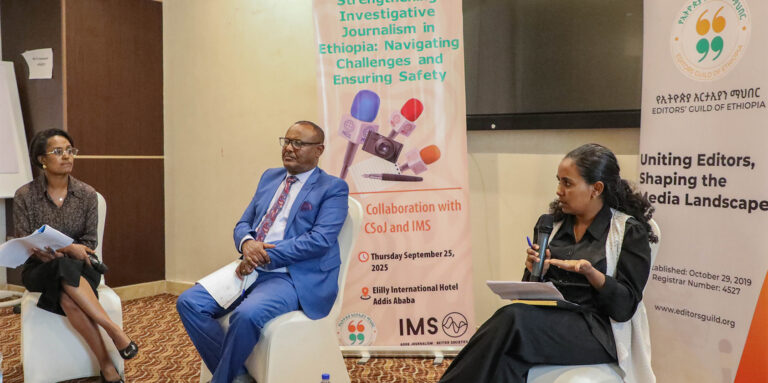
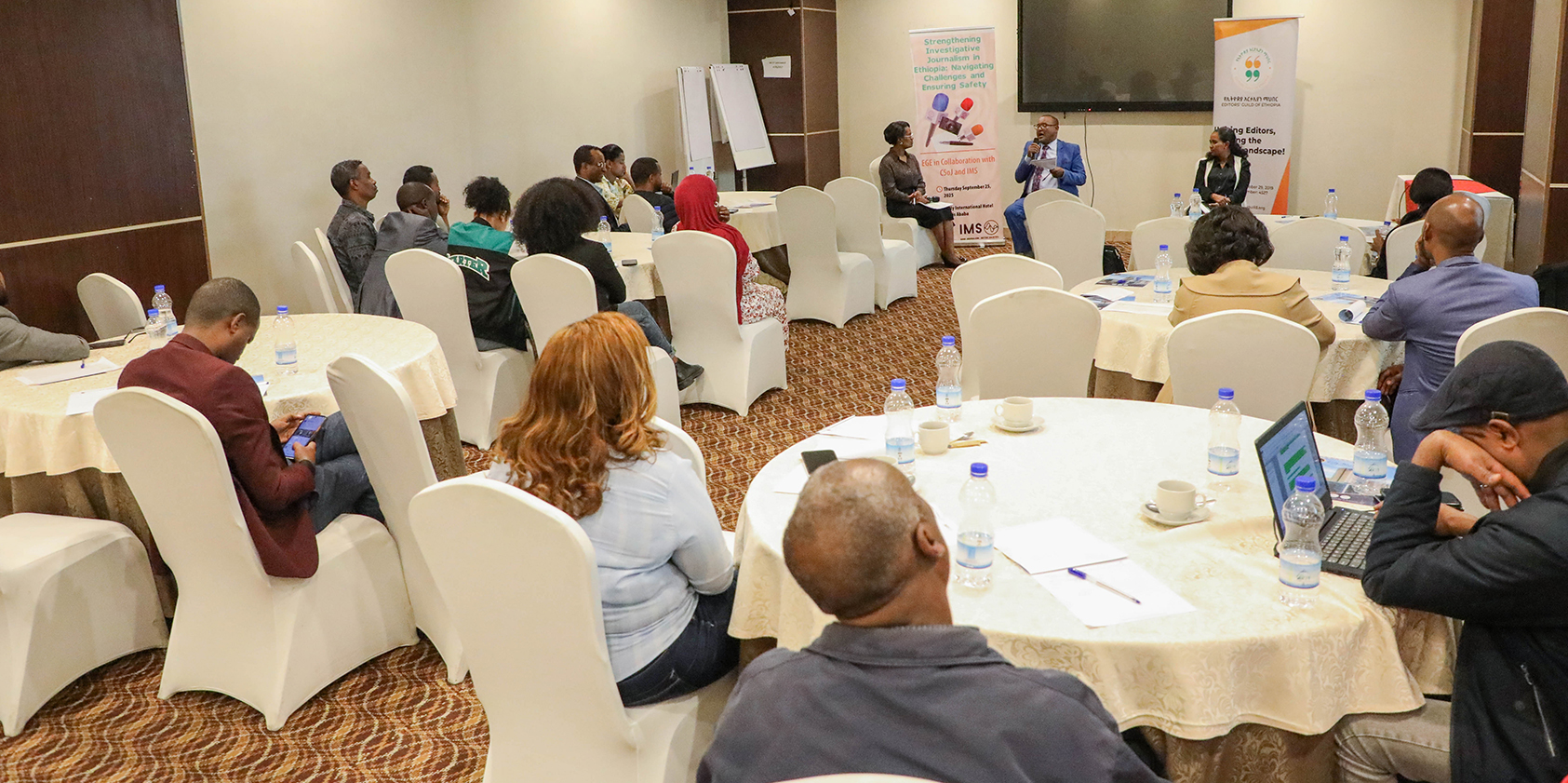
On Thursday, September 25, a workshop convened media professionals to discuss the current trends, challenges, and future of investigative journalism in Ethiopia. This event highlighted the urgent need for increased institutional support to facilitate this critical form of reporting.

Organized by the Editors’ Guild of Ethiopia, the Consortium for the Safety of Journalists, and the international organization IMS, the workshop aimed to develop strategies for strengthening investigative reporting by addressing significant obstacles and ensuring journalist safety.

Participants, including reporters and editors from both public and private media outlets, shared personal experiences regarding the challenges they face in their work. A recurring theme was the considerable cost—both financial and in terms of personal safety—that has deterred Ethiopian media houses from pursuing investigative journalism.

Discussions centered on practical strategies for overcoming these challenges. A key conclusion was the essential role of stakeholders, especially the government, in creating an environment where a free and independent press can flourish, allowing journalists to operate without fear of reprisal.

The workshop underscored a shared commitment to revitalize and strengthen investigative journalism, recognizing its vital role in promoting accountability and transparency in the country.