Playwright Banna Desta has brought to life an often-overlooked ancient African civilisation in her latest work – a compelling audio drama about an increasingly tyrannical queen and her scheming twin sons.
“As well as wanting the audience to be entertained – because the play is good fun – I wanted to add another dimension to people’s understanding of Africa,” Desta tells the BBC.
“I wanted to write about a time when the continent wasn’t afflicted by colonialism and there were thriving societies,” she says.
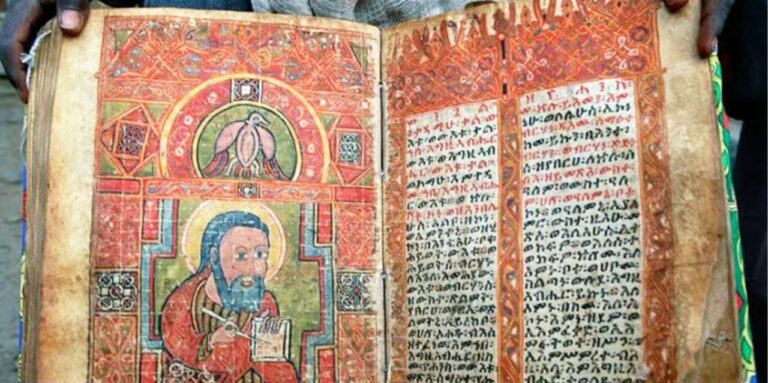
The Abyssinians is set in the 5th Century in the Aksumite Empire, also known as the Kingdom of Aksum.
Aksum was a wealthy and influential monarchy that at its height spanned what is now northern Ethiopia, Eritrea, Sudan, southern Saudi Arabia and western Yemen. It lasted almost 1,000 years, from approximately 100BC to AD960.
It was where Christianity first came to Africa and where some of the continent’s earliest coins were minted.
It lay at the heart of a trade network between India and the Mediterranean and its ships controlled the Red Sea trade through the port of Adulis and the inland routes of north-eastern Africa.
In the third century, it was considered one of the world’s four great powers, alongside Persia, Rome and China.
“I feel like Aksum is completely excluded out of that picture. Ethiopia is a cradle of civilisation – and yet I feel that it is never really included in our understanding of global history,” says Desta.
She chose that part of the world and that period of history because of her personal connections. She was born in the US to a mother from Tigray in northern Ethiopia and a father from Eritrea – the very areas that were at the heart of the old Aksumite empire.
“The impulse was really just wanting to learn more about a pre-colonial era – and I thought a wonderful place to start is my own heritage and ancestral lineage.”
The Abyssinians, released by Audible and directed by Shariffa Ali, is Desta’s first audio play. It is a tragicomedy that mixes historical fact with the author’s imagination.
The play is “really also about the ways in which people hold on to their humanity in periods of immense change”, Desta says.
It tells the story of a monarchy at a crossroads in history.
Queen Yodit must decide which of her twin sons – Kaleb or Negus – must succeed her to the throne, just as she is contending with social and economic upheaval and clashing beliefs about religion and rights. There is also romance.
“Queen Yodit is… complex, regal, cunning, raw, sensual and compelling,” says Danielle Deadwyler – the Bafta-nominated movie star who played the role.
The character of Yodit was loosely inspired by the real Queen Yodit – or Judith – who reigned at a different time to the period in which the play is set.
She is a figure shrouded in mystery because of the lack of historical records and conflicting folklore about who she was.
She is seen by some as dictatorial and instrumental in Aksum’s downfall, says Desta – who travelled to Ethiopia as part of her research for the play.
“I thought that she was a good jumping-off point for that type of character,” Desta says.
“I think a lot of times the characters of female leaders have to be so ‘on point’ – and I love the idea of a woman being a tyrant in this period of history.”
Writer James Baldwin once said that artists are “emotional or spiritual historians” – and those words resonated profoundly with Desta as she wrote the play.
“I wanted to explore the full spectrum of human emotions – the characters’ private feelings, the things that they struggle with as human beings that have nothing to do with their public roles,” she tells the BBC.
Queen Yodit was a character who Desta felt did not have much love in her life.
“A lot of her reactions to the world are coming from that place of not being cherished as a partner and not really necessarily feeling like she has a place or that she has chosen to be a leader,” Desta says.
Another female character written to break stereotypes is Makeda, played by Arsema Thomas of Bridgerton spin-off Queen Charlotte fame.
She is sent to work as a servant in the royal household to pay off her father’s debts. But she is also someone “who can think for herself, can think bigger than her station in life and is a global thinker”.
Despite being set in a world of antiquity, the dialogue and dry humour in The Abyssinians makes it feel modern and relevant.
Queen Yodit, especially, is fond of dropping a snide comment right in the middle of a serious moment.
The production features an original Ethio-jazz score by DA Mekonnen, an Ethiopian-American musician, and Andrew Orkin – and features the Ethiopian-born multi-instrumentalist Kibrom Birhane.
“The score parallels and complements the tone of the play,” says Desta “because I feel like a lot of Ethiopian music has that ancient quality and then jazz is that sort of contemporary spin.”
Tony-winner André De Shields described being in The Abyssinians as an “opportunity of returning to one’s ancient culture” and an illustration of “the power of art to transform lives”.
It was crucial to Desta that actors of the black diaspora play the characters.
The cast also includes Zainab Jah, who in 2021 won the best actress award for Farewell Amor at Fespaco, Africa’s leading film festival.
Chukwudi Iwuji, who began his acting career with the Royal Shakespeare Company in the UK, and Phillip James Brannon, best known for his Broadway roles and the movie Contagion, also star.
“The talent was amazing,” Desta says, “I know that that doesn’t really happen for a lot of early playwrights, so I’m especially grateful.”
Desta’s next goal is to get The Abyssinians on to the stage with, she hopes, the same cast. (BBC)
Coffee is one of the most important agricultural commodities globally and serves as the backbone of Ethiopia’s economy. In addition to the farmers, there is also a lot of illegal coffee trading that is testing the traders who are engaged in the market. This requires an urgent solution and can lead to price instability and limited market access, so all stakeholders should be supported.
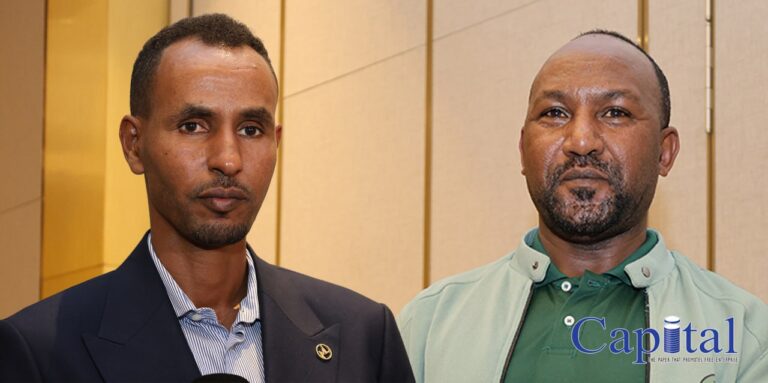
In an interview with Capital, Cheru Koru, CEO of Market Intelligence at the Ethiopia Coffee and Tea Authority, discussed the increase in coffee production driven by microeconomic transformation and the government’s crackdown on illegal trade.
Another pressing concern in the country is the illegal distribution of unregulated drugs. While some of these products are produced domestically, insufficient imports mean that over 80 percent of pharmaceutical products must be imported at high prices. The sector has been urged to focus on the fact that it is not being adequately monitored and inspected. Worku Bedada, PhD, a lecturer and pharmacist, shared his insights during his time with Capital on the challenges and ongoing issues surrounding the illicit drug trade.
Capital: The illegal coffee trade in the country continues. What is the government doing about it?
Cheru: Illegal coffee trafficking has been an ongoing issue, presenting challenges to the growth of coffee exports. To combat this, the Authority is collaborating with various agencies in the sector to prevent illegal immigrants from originating in legal destinations. One of the strategies is to enhance the profitability of the coffee sector and to bring illegal operations into compliance.
As a result, the control system that was previously managed manually has now been automated and integrated with new software. We are actively monitoring the legality of coffee from its source to its destination. If any illegal activities are detected, we are taking appropriate action according to established regulations.
In this approach, a percentage of the product involved in illegal transportation will be allocated to those who helped prevent it. Specifically, 20% will be given to the agency that physically oversees the operation, 20% will go toward the development of the area where the product was stored, and 20% will be dedicated to capacity building. We are providing incentives to the organizations directly involved in these efforts.
Capital: What distinguishes the quality of Ethiopian coffee from that of other countries?
Cheru: The quality of Ethiopian coffee is non-negotiable. We are raising awareness, particularly among those directly involved in the marketing chain. Given the current competitive economic landscape, there are ongoing efforts to promote coffee production in the country. Historically, no more than 25% of specialty coffee was exported, but this figure has increased year on year to 46% of all coffee exports.
Capital: What challenges does the supply chain face regarding the export of goods and services in the country?
Cheru: It is challenging to determine the exact amount of coffee stock currently available in the country because coffee transactions occur daily, making verification difficult. If today’s production volume increases, tomorrow’s may decrease. Coffee will be transported from the regions to Addis Ababa for export. There are no supply issues with coffee at this time.
This year, we expect to export about 400,000 tonnes of coffee, projecting around $2 billion in revenue.
In this context, there is an inverse relationship between domestic consumption and exports. According to national laws, most of the coffee produced is designated for export. As a nation, we face a currency shortage and are one of the largest importers of foreign exchange from agricultural commodities. Therefore, whenever exports increase, domestic consumption tends to decrease, leading to price increases due to supply shortages.
It’s important to note that coffee is not directly supplied to the country; rather, by-products from the export process allow it to be sold domestically. The law permits us to use 15% pure coffee content and 85% blended coffee in the country, meaning that pure coffee content is essential for export and exchange.
Capital: Today, the country’s coffee production is increasing. What is driving this rise? Is there a shortage of resources?
Cheru: One reason for the increase in domestic coffee production is a recent economic reform. This reform has nearly doubled the profits for exporters. Previously, the price of coffee was 57 birr, but it has now soared to 120 birr. As a result, exporters are reluctant to let any product go to waste. With these profits in mind, they quickly send the coffee abroad. There are between one and five quality levels within this sector, and coffee that was once sold locally as a by-product can now be improved to achieve a level five export quality.
This shift means that coffee previously designated for domestic consumption is now being exported at lower quality levels. Consequently, domestic production is declining, which will likely continue to drive up prices in the market.
Capital: What is the extent and nature of the illicit drug trade in Ethiopia?
Worku: Currently, we lack a comprehensive national study to determine the size of the illicit drug trade. However, several studies indicate that it is a significant concern. For instance, a recent examination of malaria drugs in Gambella revealed that most of these drugs are not legally registered and do not meet required standards. This suggests that the country is struggling with a major crisis. These findings indicate that drug activity in Ethiopia is predominantly illegal and requires urgent attention.
Capital: What are the implications for the supply and movement of illegal drugs in Ethiopia, particularly from an economic perspective?
Worku: Essentially, Ethiopia does not produce or export drugs, meaning that most drugs are imported and sold for foreign currency. As a result, Ethiopia only derives 8 to 12 percent of the market from domestic production, while up to 88 percent comes from imports.
This situation means that the economy suffers significantly when billions of dollars are lost to smugglers trafficking drugs into the country. Furthermore, these drugs are often of low quality and pose serious health risks. The impact on public health could be severe, potentially leading to unprecedented deaths. Economically, the prices of illegally imported products will increase due to a lack of regulation. Additionally, their penetration into the community may make them more affordable, but they will not be readily available.
Capital: What are the causes of illicit drug trade?
Worku: Illegal traders involved in this sector are well aware of its potential. They identify prevalent health issues in the country and take steps to exploit them. For example, many drugs were repeatedly exposed during the coronavirus pandemic, and now illegal malaria drugs are widespread.
The Ethiopian Food and Drug Authority recently announced that seven types of illegal drugs have been identified. This indicates that these illicit products are almost infiltrating our households.
Capital: Who is responsible for the illicit drug trade?
Worku: The responsibility likely falls on both the regulatory body and the manufacturing companies. First, there are only 14 factories in the country that are functioning properly, all of which are limited in capacity and owned by the Joint. Second, the pharmacies that have received these illegal drugs share part of the blame. Some private pharmacies, which were registered to sell only in government hospitals, have been found to be involved, indicating that the government is both issuing and receiving drugs through unofficial channels. If there were a robust regulatory system in place, these parties could be held accountable.
Capital: What should be the role of law enforcement in combating illegal drug trade?
Worku: The Federal Police and the Customs Commission play significant roles in prevention. However, both entities have repeatedly stated that this issue is beyond their control due to the disproportionate power and influence involved. This challenge is exacerbated by the close monitoring of the situation by the Food and Drug Authority of Ethiopia.
We struggle to control the drugs that are even released from government facilities, making it unlikely we can stop the flow from other sources. Therefore, the first step must be to enhance efforts and establish a strict regulatory system, particularly to manage critical medications that may be taken from government facilities into private homes.
As an expert in this field, I find the regulatory framework problematic at both the federal and state levels. For instance, the Federal Food and Drug Authority lacks direct communication with state authorities, creating a significant gap. In my view, establishing a single unified federal agency for the drug control system could lead to meaningful change.
Bulcha Demeksa, a distinguished veteran politician and prominent figure in Ethiopian opposition politics, passed away on January 6, 2025, at the age of 94. His death marks the end of a remarkable life dedicated to public service, advocacy for democracy, and the rights of the Ethiopian people.
Born in 1930 in Bojji Diremeji Woreda of the West Wollega Zone, Bulcha was the fourth child and only son in his family. He pursued his education at Gimbi Adventist School and Kuyera Adventist Church before earning a BA in economics from Haile Selassie I University. His academic excellence earned him a scholarship to Syracuse University, where he obtained a master’s degree in public finance.
Bulcha’s political career began during the reign of Emperor Haile Selassie, where he served as Vice-Minister of Finance for nearly a decade. His expertise led him to represent Ethiopia on the World Bank Board and work as a policy analyst at the United Nations for 17 years. Upon returning to Ethiopia, he co-founded Awash Bank SC in 1993 and served as its president until 2000.
In 2005, Bulcha founded the Oromo Federalist Democratic Movement (OFDM), advocating for the rights of the Oromo people within a democratized Ethiopia. He served as a vocal member of parliament from 2005 to 2010, known for his fearless debates and unwavering convictions. Prime Minister Abiy Ahmed described him as “an elder statesman and a true public servant,” acknowledging his relentless efforts to unite people and speak his truth.
Throughout his life, Bulcha was committed to fostering political engagement and democracy in Ethiopia. He was instrumental in forming Medrek, a coalition of opposition parties aimed at promoting democratic principles. His critiques of government policies made him a prominent voice in Ethiopian politics, often covered by local and international media.
Bulcha’s contributions extended beyond politics; he was recognized for his role in advancing Ethiopia’s economy during challenging times. Colleagues remembered him as a man of integrity who dedicated his life to public service and family.
His legacy will endure through the institutions he helped build and the movements he inspired, serving as an example for future generations committed to democracy and social justice. Bulcha Demeksa leaves behind a profound impact on Ethiopian society, remembered not only for his political achievements but also for his unwavering dedication to his country and its people.