Sunday, May 10, 2026
Home Blog Page 681

Ethiopia moves closer to WTO membership amid concerns over smuggling

0

Ethiopia is on the verge of becoming a member of the World Trade Organization (WTO), but officials are warning that illicit trade practices could pose significant challenges to this goal. As the country prepares for its fifth round of international trade negotiations in Geneva, scheduled to take place in less than two months, the government is keenly aware of the hurdles it faces in combating smuggling and ensuring compliance with global trade standards.

Ethiopia’s bid to join the WTO has been stalled for two decades, primarily due to delays in implementing necessary economic and policy reforms. The Minister of Trade and Regional Integration, Kassahun Gofe, emphasized that the upcoming negotiations represent a critical opportunity for Ethiopia to advance its membership application. “It is time for Ethiopia to join the World Trade Organization,” he stated, highlighting the nation’s readiness to engage with global trade partners.

During previous negotiations in 2020, approximately 181 questions were raised by member states regarding various issues, including foreign exchange regulations, industrial parks, and investment policies. Addressing these concerns will be crucial as Ethiopia seeks to demonstrate its commitment to adhering to WTO standards.

Despite the optimistic outlook for WTO membership, Kassahun cautioned that the prevalence of smuggling remains a serious obstacle. He warned that if smugglers are not apprehended and held accountable, they could undermine Ethiopia’s efforts to establish a healthy trade system. “If we cannot punish individuals engaged in smuggling, it will be a challenge to our membership,” he noted.

The impact of smuggling on Ethiopia’s economy is profound. Illicit trade not only distorts market dynamics but also deprives the government of much-needed revenue. In the fiscal year 2023/24 alone, authorities seized contraband and illicit money worth over 15.5 billion birr. This staggering figure underscores the urgency of addressing illegal trade practices as Ethiopia navigates its path toward WTO membership.

Kassahun called on the international community to collaborate in combating illegal trade, emphasizing that while there are legitimate traders contributing to national development, those engaged in illicit practices are harming the economy. His remarks came during the opening of the 3rd National Conference on Illegal Trade organized by the Ethiopian Chamber of Commerce and Sectoral Associations in Addis Ababa.

Kenenisa Lemi, Secretary-General of the Ethiopian Chamber of Commerce and Sectoral Associations, echoed this sentiment, stating that consultations involving stakeholders are being prepared to mitigate the impact of illicit trade on Ethiopia’s business environment.

Ethiopia’s aspirations for WTO membership align with broader efforts to implement economic reforms that can enhance macroeconomic stability. The government is committed to aligning its policies with global trade standards while fostering an environment conducive to legitimate business activities.

The ongoing reforms aim not only to facilitate Ethiopia’s entry into the WTO but also to promote sustainable economic growth that benefits all citizens. By addressing issues related to smuggling and illegal trade, Ethiopia can create a more equitable marketplace where businesses can thrive without fear of unfair competition.
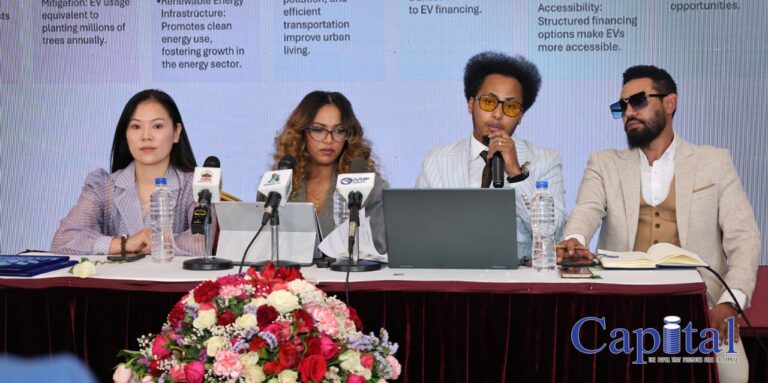
Innovative Electric Car Financing System launched

0

Utopia Technology has unveiled Ethiopia’s first integrated electric car financing system, the “Utopia Green Fund,” alongside a dedicated app designed to facilitate access to electric vehicles. This groundbreaking initiative aims to promote sustainable transportation and make electric cars more accessible to the Ethiopian public.

The Utopia Green Fund combines interest-free lease payments with savings options, allowing customers to finance their electric vehicle purchases in a way that is both affordable and practical. The app is designed with the goal of enabling 10,000 customers to own electric cars while also planning the establishment of electric vehicle battery charging stations across the country.

Adonic Werku, Founder and Managing Director of Utopia Technology, emphasized that the financing system is structured to accommodate all sectors of society. “We are facilitating interest-free car leases for up to 10 years, making it easier for Ethiopians to transition to electric vehicles,” he stated.

To enhance the payment process, Utopia Technology has partnered with the Commercial Bank of Ethiopia and Tele Birr, enabling seamless digital transactions for customers. This collaboration is expected to streamline payments and improve the overall customer experience when purchasing electric vehicles.

In addition to financing, Utopia Technology is also launching “Utopia Automotive,” a service focused on the assembly, supply, and repair of electric vehicles powered by renewable energy. Furthermore, plans are underway for “Utopia Electric Car Charging,” which aims to construct charging stations utilizing renewable energy technology.

The introduction of this electric car financing system reflects Ethiopia’s commitment to advancing sustainable transportation solutions. As the global demand for electric vehicles continues to rise, Ethiopia is positioning itself as a player in the green mobility sector.

The initiative comes at a crucial time as countries around the world are increasingly recognizing the importance of reducing carbon emissions and promoting environmentally friendly practices. By investing in electric vehicle infrastructure and financing options, Ethiopia aims to create a more sustainable future for its citizens.

Utopia Technology plans to launch “Utopia Electric Car Taxi,” further expanding its impact on the transportation landscape in Ethiopia. This initiative will not only provide residents with convenient transportation options but also contribute to job creation within the green economy.

As Ethiopia embraces this transition toward electric mobility, it is essential for all stakeholders—government officials, businesses, and consumers—to work together to ensure a successful implementation of these initiatives. By fostering an environment conducive to innovation and sustainability, Ethiopia can pave the way for a cleaner and more efficient transportation system.

Oromia Bank reports loan reserves exceeding 43 billion birr

0

Oromia Bank has announced a significant increase in its loan reserves, reaching over 43 billion birr. The bank reported the disbursement of new loans totaling more than 1 billion birr in the last fiscal year, contributing to this impressive figure.

In its annual report for the fiscal year 2023/24, Oromia Bank revealed that its total revenue climbed to 9.5 billion birr, reflecting an increase of 1.01 billion birr compared to the previous year. Despite facing challenges such as supply disruptions, rising commodity prices, and increased costs associated with opening new branches, the bank has managed to maintain robust growth.

Teferi Mekonnen, CEO of Oromia Bank, noted that the costs associated with opening 176 branches over the past two fiscal years, combined with stringent monetary policies, hindered the bank from achieving its projected results. He stated that the bank’s total capital has risen to 9.5 billion birr while expenditures for the current fiscal year reached 8.5 billion birr.

The bank reported a pre-tax profit of 1.01 billion birr for the fiscal year, although this represents a 50% decrease compared to the previous year. At the end of the reporting period, Oromia Bank’s interest-free banking wing recorded deposits of 8.15 billion birr, marking a 4% increase from the same period last year.

During this fiscal year, total deposits surged to 56.42 billion birr, reflecting a growth of 4% compared to the previous year. The report also highlighted that foreign currency (FCY) deposits amounted to $327.2 million, which is a decrease of 12% from the prior year.

The bank’s total expenditures for 2023/24 amounted to 8.5 billion birr, representing a substantial increase of 35% from last year’s total of 6.27 billion birr. This rise in expenses was primarily driven by personnel costs (37.3%), interest expenses (35.4%), other operating expenses (16.8%), amortization of right-of-use assets (4.9%), and depreciation and impairment of property and equipment (2.9%).

Oromia Bank is also making strides in infrastructure development, announcing that construction is well underway for its new headquarters at Goma Kuteba. The structural work has been completed, with approximately 31.33% of the project finished.

Additionally, the first phase of the Gelan Excellence and Convention Center construction project has been completed, with the second phase commencing during the current fiscal year.

The bank has seen significant growth in its digital user base, now reaching 3.77 million customers—a remarkable annual growth rate of 47%. This expansion reflects Oromia Bank’s commitment to enhancing its digital services and improving customer engagement.

Newly refurbished National Palace set to open after Christmas

0

The public will soon have the opportunity to visit the newly refurbished National Palace, a project resulting from a collaboration between the public and private sectors. This revitalization includes several tourist attractions, such as a luxurious hot spring spa, and will be open after Ethiopian Christmas.

Thanks to financial and technical assistance from the French government, the palace—originally built in 1955 and named Jubilee to honor Emperor Haile Selassie I’s Silver Jubilee—has undergone significant renovations over the past five years.

The palace, managed by Unity Park, which also oversees the Grand Palace of Menelik II, is set to open after Gena (Ethiopian Christmas) on Tuesday, January 7, according to information obtained by Capital from the Office of the Prime Minister (OPM).

Covering over 27 hectares, the National Palace is located in the heart of Addis Ababa, directly opposite the Economic Commission for Africa and near the Filwuha hot spring.

The palace has welcomed numerous notable international figures, including French President Charles de Gaulle and Yugoslavian President Josip Broz Tito. It now hosts a variety of tourist attractions, including the emperor’s collection of luxury cars and train wagons.

According to data obtained by Capital from OPM, Emperor Haile Selassie amassed over 80 limited edition and vintage luxury cars as gifts and purchases.

Alemtsehay Paulos, Minister of Cabinet Affairs and Head of the Prime Minister’s Office, noted that the museum within the palace’s main building will feature a number of priceless artifacts.

She added that additional items will be stored in four warehouses constructed on the property as part of conservation and restoration efforts, stating, “The display may include only up to two percent of the emperor’s collections.”

“The private sector development scheme was a key component of the renovation work,” she explained.

For example, Debabe Coffee Garden invested 110 million birr to renovate one of the compound’s oldest buildings, offering guests a selection of Ethiopian coffee.

The property also includes several dining options and a clothing store.

Among the facility’s main features is a wellness center, built on the western side of the estate, covering a total area of 8,000 square meters.

The facility, which cost 1.38 billion birr to complete in less than five months, will provide VIPs with a variety of spa services utilizing the local natural hot spring.

The Ethiopian government has allocated a substantial, undisclosed amount for the rehabilitation, primarily to construct the car display facility, while the French government has contributed 25 million euros towards the renovations.

According to OPM, tourist revenue from Unity Park has been used to fund government expenses. Although the exact entrance fee has not been disclosed, it is expected to be significantly higher than the current charges at Unity Park.
