Mycetoma, a neglected tropical disease, poses a significant health threat to many individuals in Ethiopia, particularly in impoverished and rural areas. Characterized by chronic wounds and severe deformities, mycetoma can have devastating health and financial impacts on those affected. However, the extent of this disease remains poorly understood due to a lack of comprehensive data.
Wendemagegn Enbiale, an expert on mycetoma, emphasizes the urgent need for awareness and research regarding the disease’s prevalence in Ethiopia. To better understand the situation, a national survey was conducted in 2022 that reviewed hospital records from 13 hospitals across the country for cases of mycetoma and similar diseases from 2015 to 2022. The findings revealed that mycetoma is present in almost every region of Ethiopia, with the highest incidence reported in the northern regions of Tigray and Amhara. These two regions accounted for over two-thirds of reported cases, despite comprising only about a quarter of the country’s population.
In comparison to neighboring Sudan, where over 9,600 cases have been reported over 30 years, Ethiopia recorded only 143 cases in five years. This disparity suggests that many cases may go unreported or misdiagnosed, highlighting the need for further community-based studies to accurately assess the scale of the problem.
Patients with mycetoma typically first notice a persistent wound that does not heal and gradually enlarges over several years. The affected area may swell and ooze discharge from multiple spots. While the foot is the most commonly affected site, mycetoma can also manifest on the hands, back, or buttocks, potentially damaging skin, deeper tissues, and even bones.
A distinctive feature of mycetoma is pus containing grains that may be black, white, yellow, or red. Most affected individuals are farmers who work barefoot, increasing their risk of infection from contaminated soil.
The impact of mycetoma extends beyond physical health; it significantly affects the financial stability and social well-being of those infected. The disease primarily impacts individuals in their working years—farmers, daily laborers, and wood collectors—who often lack protective footwear or gloves. When fungus enters through cuts or injuries, the disease can spread slowly if not treated early.
Many patients face barriers to accessing healthcare due to financial constraints or geographic distance from medical facilities. The disease is often not painful initially, leading to delays in seeking medical help. However, untreated mycetoma can result in severe complications such as chronic discharge and deformities that hinder patients’ ability to work.
Cultural beliefs and attitudes significantly influence treatment outcomes for mycetoma patients. Many individuals are unaware of the disease’s seriousness and often resort to home remedies instead of seeking professional medical help. Education about mycetoma is crucial; communities need to understand that it does not heal on its own and that proper treatment—which can take up to a year—is essential for recovery.
Ethiopia’s Health Extension Program offers an effective platform for educating communities about mycetoma. Strategies could include teaching the importance of wearing shoes and seeking early treatment for wounds and training healthcare workers to recognize signs of mycetoma and refer patients appropriately.
Mycetoma remains a significant public health challenge in Ethiopia that requires concerted efforts from healthcare providers, policymakers, and researchers alike. Addressing this neglected tropical disease involves improving awareness, enhancing diagnostic capabilities, and ensuring access to effective treatments.
In a startling development that has sent shockwaves through Ethiopia’s economic landscape, public sector debt has surged to more than half of the country’s Gross Domestic Product (GDP) following a fresh influx of funding in the first quarter of the fiscal year. This alarming trend raises questions about the sustainability of Ethiopia’s financial health and the implications for its citizens as the government grapples with mounting fiscal pressures.
In the past three months, the government sold Treasury bonds totaling 15.8 billion birr to banks.
According to the Ministry of Finance’s (MoF) debt bulletin, approximately USD 1.6 billion was issued in the first quarter of the 2024/25 budget year, representing a 20% increase over the total amount disbursed in the entire 2023–2024 budget year.
A MoF study published a week ago revealed that, as of September 30, public sector debt—both external and domestic—accounted for over 50.3% of nominal GDP.
The external debt now represents 30.9% of the total, having increased from 13.9% of GDP as of June 30.
The MoF report indicates that both the external and total debt percentages exceed the debt sustainability criteria for low-income countries, which are set at 35% for total public sector debt in a weak debt-bearing nation and 30% for external debt.
The report noted, “Debt sustainability with export-related thresholds is still an issue.”
Since 2017, Ethiopia’s debt load has been classified as high risk, prompting the government to avoid commercial loans. The country’s low debt-to-GDP ratio has also been affected by minimal new disbursements from bilateral and international partners over the past four years.
It is worth noting that the last time the public debt exceeded half of GDP was on June 30, 2022, when the debt-to-GDP ratio stood at 50.3%. In recent years, the debt has significantly decreased due to negative inflows and high service costs.
At the end of the last budget year, total public sector debt was approximately 32.9% of nominal GDP, with external debt making up over 13.9%. Both figures were well below the debt sustainability thresholds for low-income countries.
Furthermore, the proportion of external debt has surpassed that of domestic loans, a change driven by the macroeconomic reforms implemented post-reform, substantial support from international partners such as the World Bank and the International Monetary Fund (IMF), and the nearly 100% decline in the birr’s value due to exchange rate floating.
The report states that as of September 30, 2024, total public sector debt by source comprised 39% domestic debt and 61% external debt, an increase from 42% external debt as of June 30, 2024.
The government’s stock of foreign debt rose significantly following the major reforms implemented on July 29, which enabled it to secure substantial assistance from international partners.
According to the Ministry of Finance (MoF) report, total external debt rose from USD 28.9 billion on June 30 of last year to USD 31 billion on September 30, 2024.
The report noted, “Disbursements during this quarter were significantly higher compared to principal payments, resulting in a 7.4% increase in debt between the two periods, which can be partially attributed to exchange rate fluctuations.”
The International Monetary Fund (IMF) and the International Development Association (IDA) of the World Bank accounted for the majority of the over USD 1.7 billion in foreign public sector debt disbursements during the reported three-month period. This amount represents a 120% increase compared to the funding distributed in the previous full budget year. From July 1, 2023, to June 30, 2024, external public sector debt disbursements totaled USD 1.4 billion.
Debt Relief
The administration has expressed its strong expectation that macroeconomic reforms will facilitate debt repayment rescheduling through the G20 communique on the Common Framework (CF) and with private creditors.
Debt restructuring negotiations under the CF have been ongoing for the past four years. The agreement is expected to be finalized by December; however, the New Year has begun without further developments.
The administration stated that a significant amount of debt re-profiling would accelerate macroeconomic transformation.
According to MoF documents, the government estimates that the residual financing gap of USD 10.7 billion for the 2024/25–2027/28 program will be addressed with “USD 3.4 billion from the IMF, and a budget of USD 3.75 billion from the World Bank, which has been approved in July.”
It also noted that financing related to debt treatment under the CF would cover the remaining USD 3.5 billion deficit.
The MoF bulletin reminded readers of the substantial short-term relief provided by the debt service standstill arrangement with the members of the Official Creditor Committee.
The projections include re-profiling USD 1.4 billion in debt payments owed to all official bilateral creditors in 2023 and 2024. However, the expected USD 3.5 billion in debt treatment under the Common Framework brings the total debt relief to USD 4.9 billion.
“The forecasts incorporate re-profiling of debt payments of USD 1.4 billion due to all official bilateral creditors in 2023 and 2024. However, the debt treatment under the Common Framework is estimated at USD 3.5 billion, resulting in a total of USD 4.9 billion in debt relief,” the report stated.
Domestic Debt
Following the reform of the foreign exchange market, which is now market-governed, the total domestic debt in USD has decreased from 40 billion to over 19.8 billion.
As of September 30, 2024, the total domestic and foreign public sector debt fell by 26.11 percent, reaching USD 50.8 billion, down from USD 68.8 billion on June 30, 2024, due to changes in the exchange market.
The use of a market-determined exchange rate for converting domestic debt from birr to USD has resulted in a 7.4% increase in public sector foreign debt, while domestic debt has decreased by 101.3% in USD terms, according to the Ministry of Finance (MoF) report.
To manage the repayment of domestic debt, the government has examined various debt profiles as part of the reform process.
Consequently, the central government now controls over 98% of the total domestic debt, which was previously held by state-owned enterprises.
To facilitate this transition, the government issued 845.3 billion birr in 10-year government securities to settle the 263.3 billion birr debt owed by Ethiopian Electric Power and the 582 billion birr claims from the Commercial Bank of Ethiopia (CBE) against the Liability Asset Management Corporation.
During the review period, the government restructured Treasury bills held by the Private Organization Employees’ Social Security Administration (POESSA) and the Public Servants Social Security Agency (PSSSA) into 10-year government bonds.
According to the statement, “this is due to the restructuring of PSSSA’s Treasury bills amounting to 176.8 billion birr and 89.5 billion birr of POESSA.”
As a result of this restructuring, the total outstanding Treasury bills decreased from 447.8 billion birr on June 30, 2024, to 125.6 billion birr on September 30, 2024.
Following the 2022 directive No. MFDA/TRBO/001/2022 from the National Bank of Ethiopia, which mandates all commercial banks to purchase a five-year treasury bond at 20% of their new loan disbursements, the stock of these bonds reached 109.6 billion birr by the end of September.
The stock of Treasury bonds increased from 93.8 billion birr at the end of the previous budget year to 109.6 billion birr.
The government announced that the bond established on November 1, 2022, will be phased out by the end of June 2025, while banks are required to purchase 50 billion birr worth of bonds. During the reported period, Treasury bonds increased by 15.8 billion birr.
As of September 30, 2024, there was no balance remaining because the MoF reported that the entire amount of Direct Advance, which stood at 242 billion birr as of June 30, 2024, was converted to government bonds.
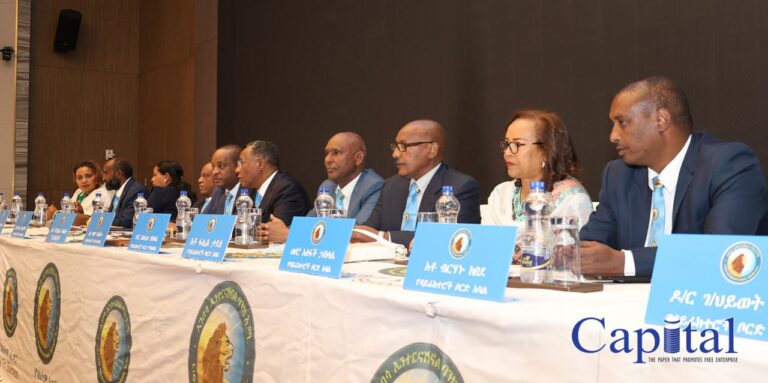
Lion International Bank has announced a pre-tax profit of 940.7 million birr for the recently concluded financial year, marking a significant growth of 26% compared to the previous year. This robust performance underscores the bank’s resilience and commitment to serving its customers amid challenging economic conditions.
The bank’s financial report highlights that it provided loans totaling 5.4 billion birr during the fiscal year, successfully recovering the same amount from loan repayments. This effective management of loans has contributed to the bank’s impressive profit figures.
Lion Bank’s paid-up capital has reached 3.1 billion birr, while its total assets stand at an impressive 43.1 billion birr. The bank also raised 8.3 billion birr in deposits, bringing its total deposits to 35.6 billion birr as of June 30, 2024.
In a significant achievement, Lion Bank opened over 310,000 new accounts in the last fiscal year, increasing its total number of depositor customers to more than two million. This growth reflects the bank’s ongoing efforts to enhance customer engagement and accessibility.
Furthermore, the bank reported a surge in users of its digital and agent banking services, which now number approximately 998,000. The launch of the “Lion School Pay” app has facilitated tuition payments for parents, showcasing the bank’s commitment to leveraging technology for improved customer service.
In addition to its financial achievements, Lion Bank is dedicated to fulfilling its social responsibilities. During the fiscal year 2023/24, the bank allocated approximately 28 million birr—about 2% of its pre-tax profits—to support various organizations and initiatives within the community.
To further enhance its services, Lion Bank has opened 18 new branches, bringing its total number of branches to 306 by June 30, 2024. The bank is also focused on improving cash flow services by installing 80 cash payment ATM machines in various locations across the city.
With a workforce of 6,365 employees, Lion Bank is contributing significantly to job creation in Ethiopia. The bank’s expansion and commitment to customer service are expected to have a positive impact on the local economy while providing essential banking services to a growing population.
In a bold move to harness the untapped potential of Ethiopia’s lowlands, the government is initiating a series of irrigation projects designed to capitalize on the region’s abundant natural resources. With a focus on sustainable development and climate resilience, these initiatives aim to transform the agricultural landscape and improve food security for millions of Ethiopians.
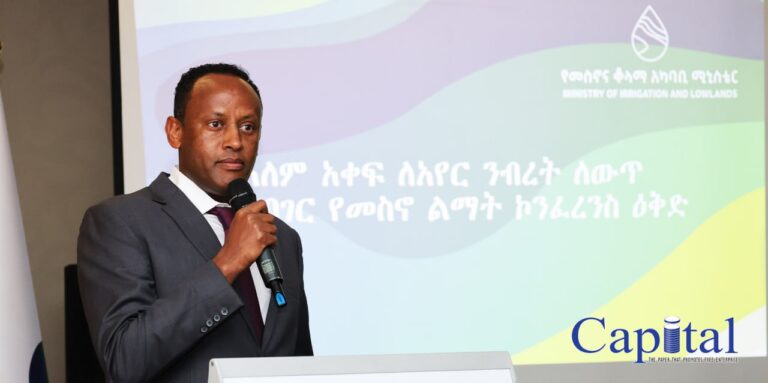
The lowlands of Ethiopia are rich in resources suitable for irrigation, yet they have remained largely underutilized. Recognizing this potential, the Minister of Irrigation and Lowland Areas, Abraham Belay, has announced the first International Irrigation and Climate Change Resilient Productivity Conference in Ethiopia. This landmark event aims to bring together experts, policymakers, and stakeholders from around the globe to discuss innovative strategies for irrigation development.
“The country has the experience to fully develop its natural resources,” Abraham stated, emphasizing Ethiopia’s commitment to leveraging its agricultural potential. The conference is expected to serve as a platform for sharing knowledge and best practices while fostering collaboration among various sectors.
The upcoming conference will attract a diverse audience, including former heads of state, current leaders from African nations, and senior officials from international organizations such as the World Bank and the African Union. This high-profile gathering underscores the importance of addressing irrigation challenges in the face of climate change and food insecurity.
State Minister Tesfaye Yigezu highlighted that the conference will not only enhance irrigation development but also address macroeconomic ruptures that have hindered progress in the past. By focusing on sustainable practices and innovative solutions, Ethiopia aims to position itself as a leader in climate-resilient agriculture.
Ethiopia has made significant strides in developing its capacity to implement large-scale irrigation projects efficiently. The Ministry of Irrigation has established internal standards and implementation strategies that are ready to be deployed across various regions. This readiness is crucial as the nation seeks to expand its agricultural output and ensure food sovereignty for its growing population.
The commitment to strengthening coordination systems reflects a broader strategy aimed at fulfilling the Ethiopian pastoral development policy and strategy. By enhancing infrastructure and resource management in lowland areas, the government hopes to create a more resilient agricultural sector capable of withstanding climate-related challenges.
Food sovereignty remains a pressing issue in Ethiopia, where many communities rely heavily on agriculture for their livelihoods. The new irrigation projects are designed not only to increase crop yields but also to empower local farmers by providing them with the tools and resources needed to thrive.
As Ethiopia grapples with rising food prices and supply chain disruptions exacerbated by climate change, ensuring access to water for irrigation becomes increasingly critical. The government’s proactive approach aims to mitigate these challenges by investing in sustainable water management practices that benefit both farmers and consumers alike.
While optimism surrounds these initiatives, challenges remain. The success of irrigation projects will depend on effective implementation, ongoing support from international partners, and engagement with local communities. It is essential that farmers are included in the planning process to ensure that their needs are met and that they can fully benefit from these developments.
Moreover, addressing potential environmental impacts will be crucial as Ethiopia embarks on this journey toward sustainable irrigation. Balancing agricultural expansion with ecological preservation will require careful planning and monitoring.
By prioritizing sustainable practices and empowering local communities, Ethiopia can pave the way for a more resilient agricultural sector capable of meeting the demands of its growing population. As global leaders gather in Addis Ababa to discuss these critical issues, there is hope that Ethiopia’s commitment to harnessing its natural resources will lead to lasting positive change for its people and its economy.
With determination and strategic vision, Ethiopia can transform its lowlands into thriving agricultural hubs that not only ensure food security but also contribute to economic growth and social stability. The time for action is now; let us embrace this opportunity to build a brighter future for all Ethiopians through sustainable resource management and innovation.