Thursday, April 2, 2026
Home Blog Page 686

Urgent need for enhanced legal frameworks to combat workplace sexual harassment

0

Ethiopia is grappling with significant challenges related to workplace sexual harassment, highlighting the urgent need for comprehensive legal frameworks to protect workers, particularly women, from gender-based violence in the labor market. A recent report “Mapping Legal Protections Against Workplace Sexual harassment in Africa” by the World Bank underscores the pervasive nature of sexual harassment across various sectors, including employment, education, and public spaces, emphasizing that many employees remain vulnerable due to inadequate legal protections.

The report reveals that while Ethiopia has made strides in addressing gender equality, gaps remain in the legal prohibitions against sexual harassment in the workplace. This issue is compounded by a lack of enforcement mechanisms and societal attitudes that often tolerate such behavior. As of 2024, nearly half of African countries have some form of law prohibiting sexual harassment; however, Ethiopia’s legal framework still requires significant improvement to effectively address this pervasive issue.

Experts note that the absence of robust laws not only diminishes women’s economic opportunities but also perpetuates a culture of impunity for perpetrators. The International Labour Organization (ILO) Convention 190 on Violence and Harassment in the World of Work offers a roadmap for reforming national laws and policies. However, Ethiopia has yet to ratify this critical treaty, which aims to provide comprehensive protections against workplace harassment.

In Ethiopia’s hospitality sector, for example, women have reported facing numerous challenges, including revealing dress codes that contribute to their objectification and a lack of financial security that leaves them vulnerable to exploitation. These conditions highlight the intersection of poverty and workplace harassment, where marginalized individuals often endure harassment as a means of survival.

The Ethiopian government has been urged to take decisive action by ratifying international conventions and implementing effective legislation that not only prohibits sexual harassment but also provides clear pathways for victims to seek justice. Advocacy groups emphasize that creating a safe working environment is essential for fostering economic growth and ensuring gender equality.

As Ethiopia continues its journey towards development and modernization, addressing workplace sexual harassment must become a priority. By strengthening legal frameworks and promoting a culture of respect and equality in the workplace, Ethiopia can take significant steps toward protecting its workforce and enhancing women’s participation in the economy.
Funding shortfall poses challenge to achieving SDGs

0

Despite the ambitious goal of achieving the 2030 Sustainable Development Goals (SDGs), Ethiopia faces a significant funding shortfall that jeopardizes its progress, particularly in the area of water, sanitation, and hygiene (WASH). A recent report indicates that 43% of the necessary funding for SDG 6, which aims to ensure availability and sustainable management of water and sanitation for all, remains unallocated.

The One Wash National Program, which requires a total of $6.8 billion to implement effectively, is currently lacking $2.9 billion in funding. This financial gap has serious implications for the country’s ability to provide adequate water facilities, with many existing facilities deteriorating due to insufficient resources. According to surveys, only 57% of respondents reported being able to access necessary water services, highlighting the urgent need for increased investment.

Research has identified several critical challenges hindering the implementation of effective WASH policies, including low capacity for policy execution and a lack of financing for new facility developments and sanitation initiatives. In response to these issues, Aqua for All has stepped in to provide financial assistance aimed at bridging the funding gap.

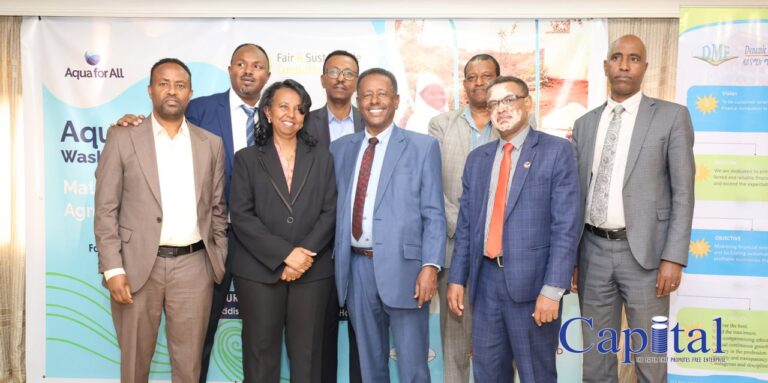
A representative from Aqua for All in Ethiopia stated that the organization is committed to “narrowing the financial gap in WASH.” The initiative involves collaboration with five microfinance institutions and has allocated a total budget of 2 million euros for the program. Of this amount, 25,000 euros have been distributed as grants to support local organizations.

Aqua for All is a non-profit organization that has been working across Africa and Asia for two decades to promote innovative and sustainable water and sanitation solutions. The current program aims to enhance the capacity of approximately 101 indigenous civil society organizations and networks involved in WASH efforts across various regions in Ethiopia, including Amhara, Afar, Oromia, and Benishangul-Gumz.

As Ethiopia strives to meet its SDG commitments by 2030, addressing the funding shortfall in WASH services is critical. Without adequate financial resources and effective implementation strategies, the country risks falling short of its development goals, ultimately impacting millions of citizens who rely on these essential services.

The collaboration between Aqua for All and local organizations represents a proactive step toward overcoming these challenges and ensuring that all Ethiopians have access to safe water and sanitation facilities. As discussions around sustainable development continue, it is clear that concerted efforts are needed from both national and international stakeholders to secure the necessary funding and resources.

Dispute over tax receipts at Merkato remains unresolved amid business closures

0

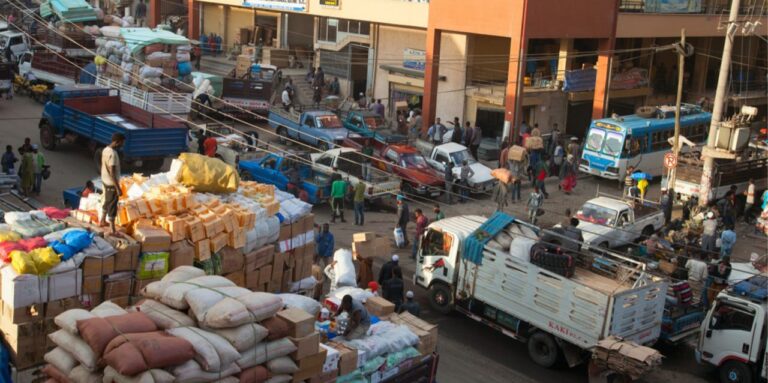
The ongoing dispute between traders and the city administration regarding tax receipts at Merkato, Africa’s largest open-air market, remains unresolved. The disagreement centers on the enforcement of tax regulations and the requirement for traders to issue receipts for their transactions.

Merkato, a bustling hub for commerce in Ethiopia, has seen a significant decline in business activity as traders respond to a mandatory directive from the city administration. Sources indicate that shops began closing and operating in shifts starting Monday, November 18, following the city’s insistence on compliance with tax regulations. While trading resumed on Thursday, it has been limited to morning and afternoon shifts.

A recent meeting between city officials and merchants ended without an agreement, leading to warnings that shops could be shut down if they remained closed. Traders expressed frustration over the government’s refusal to negotiate terms that would allow them to operate effectively. “We have not been able to reach a consensus on the issue for several days,” one trader stated, noting that the government’s stance has made it difficult for them to manage their inventory.

On November 20, 2024, the city administration reported that Merkato shops had returned to normal operations, but sales remained stagnant. Mayor Adanech Abebei addressed concerns regarding tax compliance during a recent city council meeting, stating that the administration is closely monitoring transactions at Merkato. “We have seen a lot of illegal practices in our process of charging taxes and issuing receipts,” she explained.

The situation has been further complicated by recent fires at Merkato, which have raised safety concerns among traders. A fire broke out last Sunday at the Jabulani building in the Dench Berenda area, causing significant damage. Few weeks back another fire occurred near the Shema Tera building, prompting the Addis Ababa Fire and Disaster Risk Management Commission to intervene.

In response to these incidents, the city administration announced it would provide 20 million birr to assist merchants affected by the fires. The funds are intended for temporary rehabilitation efforts while plans are developed for a more sustainable shopping center that addresses congestion and safety issues in the area.

High costs of ICT services in Africa hinder digital access, experts warn

0

The high cost of Information and Communication Technology (ICT) services in Africa is a significant barrier to achieving meaningful change in the sector, according to a recent report. The International Telecommunication Union (ITU) revealed that 63% of Africa’s population remains without internet access, with only about 37% enjoying connectivity. This stark reality underscores the urgent need for affordable ICT services across the continent.

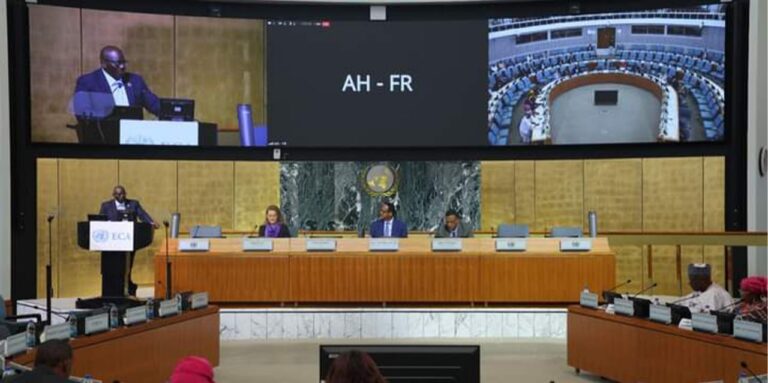
During the 13th African Internet Governance Summit held at the United Nations Economic Commission for Africa (UN-ECA) in Ethiopia, experts called for the development of legal frameworks to address the challenges that have led to widespread exclusion from digital services. The summit, themed “Building Our Multistakeholder Digital Future,” brought together African parliamentarians, policymakers, and experts to discuss key issues affecting the continent’s digital landscape.

With over 800 million Africans currently offline, participants emphasized that robust laws and regulations are essential to facilitate digital development and ensure that all citizens can benefit from technological advancements. Mactar Seck, Head of the Technology and Innovation Sector at UN-ECA, highlighted the need to focus on reducing ICT service costs. “Compared to other regions, the fees for ICT services in Africa are prohibitively high,” he stated. “We must work on making these services more affordable.”

The summit also stressed the importance of creating regulatory and policy frameworks that support a secure and accessible internet. Participants advocated for empowering individuals and businesses in the digital economy through enhanced digital literacy and skill development, alongside strengthening reliable internet connectivity.

Belete Molla, Ethiopia’s Minister of Innovation and Technology, emphasized the necessity of bolstering cybersecurity and data protection measures to ensure that African nations can fully leverage the benefits of digital technologies.

Negeri Lencho, Chairperson of the Standing Committee on Human Resources and Technology Affairs of Ethiopia’s House of Peoples Representatives, noted that parliamentarians play a crucial role in establishing legal and regulatory frameworks. He underscored that these tools are vital for implementing programs and projects that can directly benefit communities across Africa.

The discussions at the summit reflect a growing recognition of the need for collaborative efforts among African nations to tackle the challenges posed by high ICT service costs. By working together to create an inclusive digital environment, African countries can unlock significant economic opportunities and improve overall quality of life for their citizens.