Ethio Telecom has officially launched teleStream, a next-generation digital service set to transform Ethiopia’s media landscape and modernize fixed broadband connectivity through advanced fiber-optic infrastructure and fully digital “Zero-Touch” operations.
The launch marks a major milestone in the company’s “Next Horizon: Digital & Beyond 2028” strategy, an ambitious roadmap designed to accelerate national digital transformation and drive inclusive economic growth. Powered by cutting-edge fiber, 4G, 5G, and TeleCloud technologies, teleStream enables customers to access high-quality local and international content seamlessly via home Wi-Fi — delivering low-latency streaming without the need for satellite dishes.
The platform debuts with more than 60 live television channels and over 350 video-on-demand (VOD) titles. It also includes a Set-Top Box (STB) device that converts conventional televisions into smart TVs, expanding accessibility for households across the country.
Beyond entertainment, teleStream promotes educational, ethical, and family-friendly programming through an integrated Parental Control system. For media houses and content creators, the service offers a reliable domestic distribution platform, opening new revenue streams while eliminating foreign currency expenditures previously required for satellite leasing — a “Zero-Forex” advantage that strengthens the national economy.
The initiative also supports the country’s Smart City ambitions by reducing the visual clutter of satellite dishes in urban areas and reinforcing digital sovereignty through secure local data hosting on TeleCloud infrastructure.
In parallel, according to Ethio Telecom, it is accelerating the modernization of fixed broadband services. More than 79,000 customers have already been migrated from legacy copper lines to high-speed fiber connections. The company has further introduced Fiber to the Room (FTTR) technology, delivering ultra-fast internet directly to individual rooms within homes and offices — laying the foundation for advanced applications such as Artificial Intelligence (AI) and smart home systems.
To enhance customer experience, Ethio Telecom says it has also implemented a fully digital “Zero-Touch” service model. Through the telebirr SuperApp, customers can request new Wi-Fi installations or report service issues without visiting service centers, ensuring faster, more efficient support.
Collectively, these initiatives represent a significant step toward realizing Ethiopia’s Digital Ethiopia 2030 vision it said — positioning teleStream and next-generation fiber connectivity at the heart of the nation’s digital future.
Top financial institutions and business leaders meeting in Addis Ababa warned that for the African Continental Free Trade Area (AfCFTA) to succeed and transform the continent into an industrial hub, the primary obstacles are not just capital, but “Non-Tariff Barriers” (NTBs) and fragmented regulatory systems.
At the recently held 9th Africa Business Forum, representatives from the Trade and Development Bank (TDB), UNCTAD, and the Africa Business Council stated that the “true demon” facing continental trade is not a lack of money. Rather, it is the invisible walls—varying quality standards, inconsistent industrial policies, and bureaucratic hurdles—that prevent small African markets from merging into a single, attractive investment zone.
Admassu Tadesse, Group President and Managing Director of the Trade and Development Bank, noted that investors always seek large markets.
While a few countries like Ethiopia and the Democratic Republic of Congo have vast domestic markets, most African nations are too small individually to attract significant investment, making market scale a major persistent bottleneck.
“Investors and lenders can only come efficiently when our markets are sufficiently large, seamless, and integrated,” Admassu stated.
Explaining why addressing non-tariff barriers is so critical, he noted: “When we established cement factories across five countries, the work was easy in the larger countries, but the obstacles in the smaller ones were extremely exhausting.”
This market fragmentation leads investors to lose hope and focus only on large countries, leaving smaller nations trapped in a cycle of investment scarcity.
Samaila Zubairu, President and Chief Executive Officer of the Africa Finance Corporation (AFC), explained that Africa is currently “exporting jobs” along with its raw materials, describing this as a value-addition crisis.
Highlighting the “value gap” that has harmed the African economy, Samaila pointed out that Africa exports USD 5.7 billion worth of cocoa beans, while the global chocolate industry is valued at over USD 217 billion.
Despite the continent having 400 million head of cattle, it exports raw hides to Italy and Spain while importing dairy products. Furthermore, while Africa sends USD 12 billion worth of raw gemstones to India and Thailand, the global finished jewelry market is valued at USD 400 billion.
“We must change our mindset,” said the Council representative, emphasizing that all financial support should lean toward industrial construction and value addition. He further warned that it will be impossible to fully implement the AfCFTA without strengthening our own private sector.
According to UNCTAD data, African countries pay interest rates on debt repayments that are 4 to 8 times higher than those paid by Germany or the United States.
This disparity means Africa pays an 11.6% average financing cost—8.5 points higher than US rates—squeezing budgets, with many countries spending more on interest than on health or education.
Currently, only 22 African countries have formal credit ratings; the remainders are perceived as high-risk simply due to a lack of available data.
Ola Brown, Founder and General Partner of HealthCap Africa, argued that the narrative of “political risk” in Africa is exaggerated. She contended that it is unfair to focus solely on Africa, especially at a time when government intervention in technology companies is increasing in Europe and the United States.
Experts at the forum urged Africa to utilize domestic capacity and long-term capital to solve its financial challenges.
Brown added that it is essential to support Small and Medium Enterprises (SMEs) and focus on equity rather than debt.
The Trade and Development Bank (TDB) and Afreximbank noted that they are looking beyond traditional Western financial hubs for alternatives. By participating in Japanese and Chinese debt markets, they have been able to access financing at a lower cost than in London or New York.
“At the very least, we must fix the African side of things that is within our hands, because we have better control over that,” emphasized Admassu.
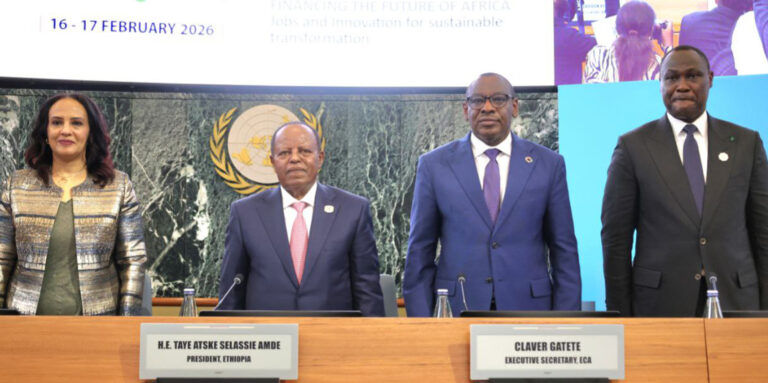
Claver Gatete, UN Under-Secretary-General and Executive Secretary of the Economic Commission for Africa (ECA), revealed during the forum that Africa currently possesses over USD 1.1 trillion in domestic institutional capital.
This capital—held in pension funds, insurance, and sovereign wealth—represents a massive, untapped reserve that could shift the continent’s economic trajectory. However, despite this internal wealth, Africa still faces a significant infrastructure financing gap and loses billions of dollars annually to illicit financial flows.
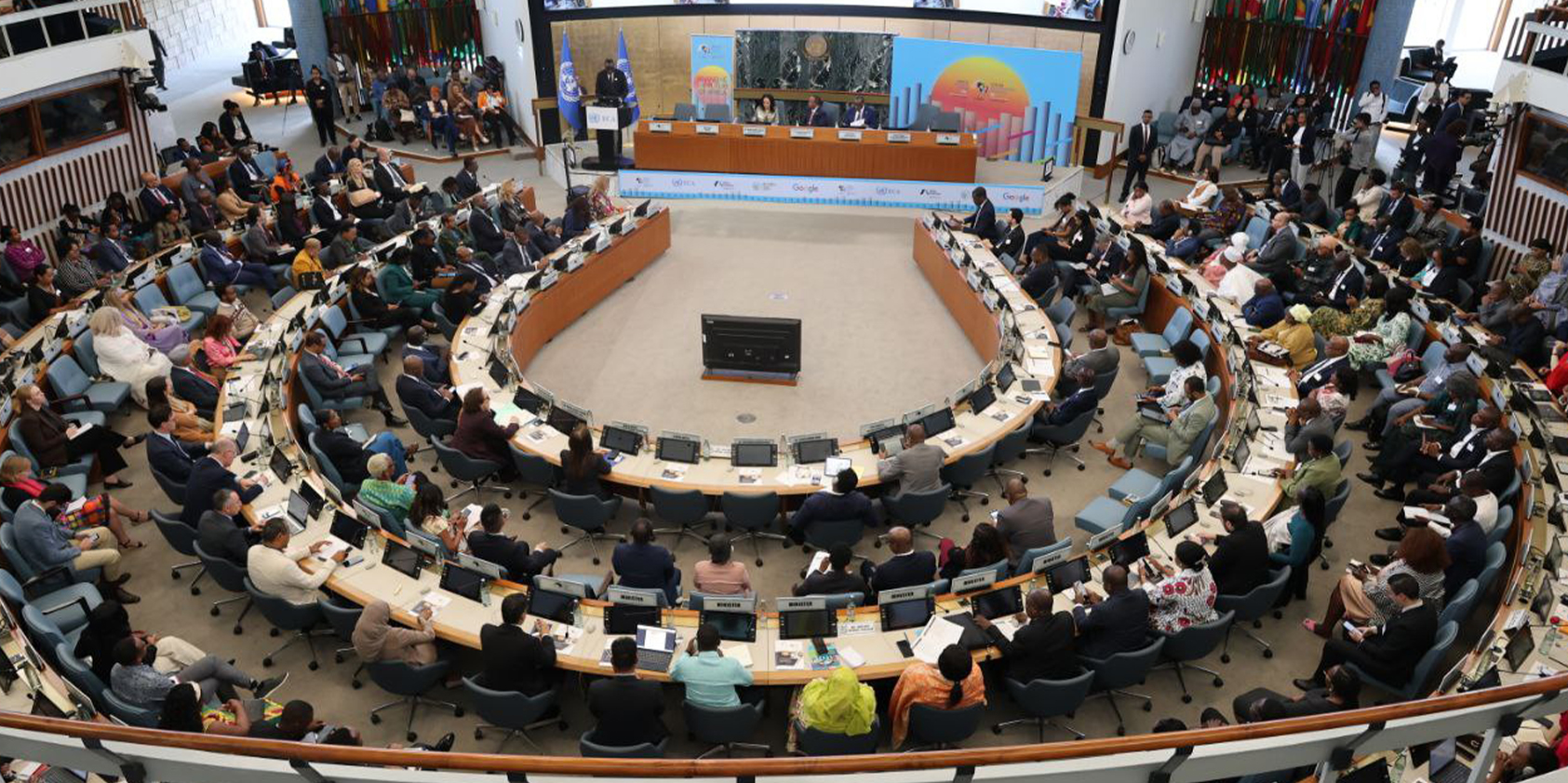
The central theme of the forum, “Financing the future of Africa: Jobs and Innovation for a Sustainable Transition,” highlighted that a lack of money is not the primary bottleneck for growth. In his briefing to heads of state and business leaders, Gatete asked, “The real question is: where will the world’s next growth engine come from?”
He concluded “global capital has not disappeared; rather, it has become increasingly selective, looking for scale, security, and future market potential.”
Quote:
According to UNCTAD data, African countries pay interest rates on debt repayments that are 4 to 8 times higher than those paid by Germany or the United States.
Senior Ethiopian officials have issued a grave warning over the rise of what they describe as “legal contraband” — an organized smuggling scheme that exploits investment and business licenses as cover for large-scale illicit trade.
Security and trade authorities say the practice is severely damaging the national economy, forcing legitimate manufacturers out of the market and channeling funds to anti-peace and terrorist groups.
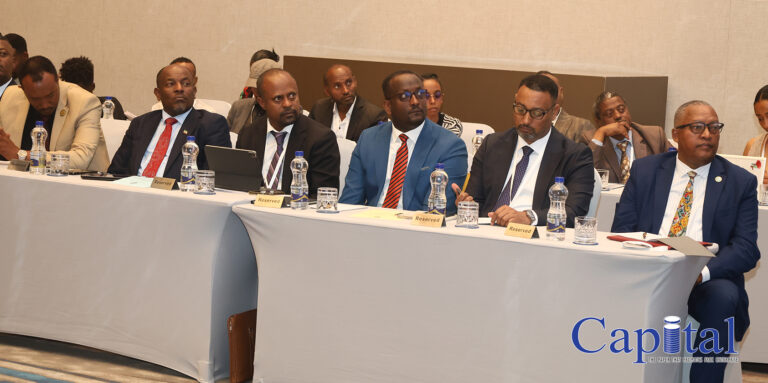
The warning came during a panel discussion at the 4th National Anti-Illicit Trade Conference organized by the Ethiopian Chamber of Commerce and Sectoral Associations. The session brought together senior representatives from the National Intelligence and Security Service (NISS), the Ministry of Trade and Regional Integration, the Ethiopian Customs Commission, the Ethiopian Federal Police, and the Information Network Security Administration (INSA).
A NISS representative disclosed that individuals are acquiring investment licenses not to operate legitimate businesses, but to access foreign exchange privileges and import rights that are then used to facilitate smuggling operations. Despite ongoing digital reforms, gaps in post-licensing monitoring have allowed such networks to expand.
Officials said domestic industries — particularly steel and corrugated iron manufacturers — are bearing the brunt of the impact. Criminal networks, operating under the guise of legality, import goods at predatory prices and flood the market, undercutting local producers and distorting competition.
In a striking admission, the NISS representative acknowledged that elements within government institutions tasked with prevention, including security bodies, have been implicated. “When we examine the data, the involvement of government bodies assigned to prevention is significant,” the official said.
The problem is compounded by deceptive practices in the marketplace. Smuggled goods are being repackaged with counterfeit “Made in Ethiopia” labels, misleading consumers and further eroding the competitiveness of genuine domestic products.
Authorities also warned that contraband networks are emerging as major sources of financing for anti-peace forces. While such groups have often been associated with diaspora funding, intelligence findings indicate growing self-financing through the smuggling of locally sourced gold, hashish, and fuel.
An INSA official cautioned that without stronger oversight mechanisms, digital trade systems could inadvertently become tools that facilitate — rather than prevent — contraband activities.
Law enforcement officials detailed increasingly sophisticated tactics by illicit traders. Aman Hoboro, Deputy Commander and head of the Tax and Customs Crimes Investigation Department at the Federal Police, said smugglers are storing goods in small consignments inside national parks, exploiting protected areas to evade detection.
“These activities are causing serious destruction to both natural ecosystems and public health,” he said, noting confirmed environmental damage and harmful health impacts linked to the operations.
Police investigations have also uncovered schemes in which brokers use the identities of homeless youth who have migrated from various regions to obtain business licenses. In many instances, the individuals named on the licenses are unaware that their identities are being used to facilitate illegal trade.
Data presented by the Ministry of Trade and Regional Integration underscored the scale of the challenge. Over the past year, authorities inspected approximately 3.12 million business entities. Of those, 482,092 — about 15.4 percent — were found to be in violation of legal procedures.
Product quality inspections revealed further concerns. Of 126 factories producing 26 categories of consumer goods, all were found to be operating below mandatory standards, prompting administrative action. Three factories are facing legal proceedings for manufacturing products deemed highly hazardous to human health.
Import controls have also intensified. Of more than 3.1 million metric tons of goods imported by over 15,000 traders last year, 1,504 metric tons failed to meet mandatory standards and were returned to their countries of origin.
The forum concluded with a consensus that contraband and illicit trade now constitute a multi-dimensional threat to national security, economic stability, environmental protection, and public health. Officials pledged to strengthen regulatory oversight and enforcement measures to dismantle the deeply entrenched criminal networks operating under the cover of legality.
The Ministry of Women and Social Affairs (MOWSA) has announced the completion of the draft Integrated Child Law, a transformative legislative framework designed to unify and strengthen the protection of children’s rights across Ethiopia. By consolidating scattered provisions from existing criminal, civil, labor, and family statutes into a single instrument, the new law aims to eliminate legal inconsistencies. Its most significant and debated feature is an explicit, strict prohibition of all forms of physical and mental punishment, marking a historic shift in the country’s approach to child welfare.
Zebider Bogale, Lead Executive for Child Rights and Protection at MOWSA, told Capital that existing laws have failed to keep pace with modern challenges. The new proclamation specifically addresses contemporary threats such as cyberbullying, online grooming, and technology-facilitated abuse—areas previously left in a legal vacuum. Central to the draft is the “Best Interests of the Child” principle, which requires all judicial, legislative, and religious institutions to prioritize a child’s safety and well-being independently of family interests. Historically, treating children’s issues merely as an extension of family matters has hindered independent legal protection.
Article 47 of the proclamation serves as its most radical element, outlawing any act intended to punish, correct, or control a child that causes physical pain or discomfort. The ban is absolute, regardless of whether the punishment is deemed “light” or “severe.” The law further prohibits mental punishment, including belittling, mocking, or any action that inflicts fear or a sense of inferiority. In place of force, the draft requires parents, teachers, and guardians to adopt positive discipline and counseling methods.
Despite its humanitarian goals, the draft has met with significant resistance from parents who view physical discipline as a cultural and religious necessity. Asgedom Gebremariam, a father of seven, expressed deep concern over potential state interference, citing traditional proverbs like “A child who is not punished will not learn.” He warned that the threat of up to three months’ imprisonment for parents could destroy traditional family boundaries. Similarly, Woyneshet Kefyalew, a mother of five, argued that the law clashes with spiritual teachings, stating that correcting a child is a “commandment from the Creator.” She expressed fear that the proclamation imposes foreign values and could lead to children intimidating their parents with legal threats.
MOWSA’s extensive impact assessment preceded the draft, finding that existing laws often conflate children’s issues with adult perspectives. The new prohibition applies to parents, guardians, teachers, and anyone responsible for a child’s care. Instead of force or humiliation, the draft mandates the use of counseling and positive teaching methods. It defines a child as anyone under 18 and mandates special protection for vulnerable groups, including children with disabilities, those with chronic illnesses like HIV/AIDS, and displaced minors.
The law also introduces a holistic framework for protection, formally recognizing Children’s Parliaments to grant minors the right to be heard. It establishes legally binding accountability for alternative care systems, such as adoption and foster care, and requires child-friendly environments in police stations and courts to reduce psychological trauma during legal proceedings.
The drafting process was a collaborative effort involving the Ministry of Justice, Federal Police, and the Human Rights Commission, with technical support from SOS Children’s Villages Ethiopia. The draft, which underwent five rounds of public consultation, is now in its final stages. It will soon be presented to the Council of Ministers and the House of Peoples’ Representatives for approval. While the law marks a major step toward meeting international human rights conventions, officials acknowledge that the real challenge lies in shifting deep-seated public perceptions through ongoing awareness campaigns.