Monday, November 23, 2026
Home Blog Page 877

Awash Insurance celebrates customers’ week with enhanced benefits 

0

Awash Insurance, one of Ethiopia’s leading private insurance companies, has announced special benefits for its customers as part of its annual Customers’ Week celebration. The event, held under the theme “Thank you for putting your trust in us,” highlights the company’s commitment to rewarding loyalty and enhancing customer satisfaction.

Having joined the insurance industry over three decades ago, Awash Insurance has reaffirmed its position as the market leader among Ethiopia’s private insurers. The company reported gross premium revenue exceeding 3.1 billion birr for the 2023/24 fiscal year, a significant achievement despite challenging market conditions. Its General Insurance segment alone contributed more than 2.6 billion birr in revenue, leading the market by a wide margin among Ethiopia’s 17 private insurance companies.

Awash Insurance also celebrated its success in life insurance, collecting 443.7 million birr in premium revenue and surpassing all 18 companies operating in Ethiopia. These accomplishments reflect the company’s resilience and dedication to excellence.

As part of Customers’ Week, Awash Insurance is offering enhanced benefits for mandatory third-party coverage. Customers who purchase full vehicle insurance or renew their existing policies during this week will enjoy increased compensation limits without additional premiums. For property damage coverage it increased from 200,000 birr to 300,000 birr and Third-Party death and injury compensation is raised from 250,000 birr to 300,000 birr.

These benefits are valid for all customers who visit Awash Insurance’s headquarters, branches, or liaison offices during the celebration period.

Jibat Alemneh, CEO of Awash Insurance, emphasized the company’s focus on meeting customers’ evolving needs. “Since our inception, we have recognized our customers as the foundation of our success,” he stated. With over 90,000 loyal customers, Awash Insurance continues to prioritize reliability and innovation in its services.

Tadesse Gemeda, Chairman of the Board of Directors, echoed this sentiment: “Customers are the foundation of our existence. We are committed to improving our services by collecting feedback through regular customer visits and implementing detailed plans to enhance customer satisfaction.”

In addition to enhanced coverage benefits, Awash Insurance has also organized various activities to engage and reward customers.

These initiatives reflect Awash Insurance’s gratitude toward its customers while reaffirming its commitment to providing better service in the future.

Awash Insurance’s success story is built on a foundation of trust and innovation. With total assets exceeding 7.7 billion birr and plans for a new headquarters featuring state-of-the-art facilities, the company is poised for continued growth and leadership in Ethiopia’s insurance industry.

Birr depreciation highlights challenges of market-driven exchange rate system 

0

Ethiopia’s transition to a floating exchange rate regime in July 2024 marked a significant shift in its economic policy, aimed at addressing long-standing distortions in the foreign exchange market, according to the Ethiopian Economics Association’s Quarterly Macroeconomic Updates. However, the Ethiopian Birr (ETB) has experienced steady depreciation against the US Dollar since the reform, with an 11.5% decline recorded between mid-September and December 2024. This trend underscores the complexities of adapting to a market-driven exchange rate system and signals the need for coordinated policy measures to stabilize the currency.

Following the implementation of the floating exchange rate system, the ETB stood at 114.72 ETB/USD on September 16, 2024. Over the next few months, it depreciated significantly, reaching 127.92 ETB/USD by December 31, 2024. The depreciation was driven by factors such as speculative behavior, inflationary pressures, and structural challenges within Ethiopia’s economy.

The initial post-reform period saw modest fluctuations as the market adjusted to the new policy framework. However, beginning in October, depreciation accelerated due to rising inflation and heightened demand for foreign currency. By November, the government’s decision to ban the Franco Valuta system—a mechanism allowing importers to source foreign currency independently—added further volatility to the market.

The depreciation of the ETB has had significant implications for inflation. As import costs rise due to a weaker currency, consumer prices for essential goods have increased, exacerbating inflationary pressures. Headline inflation rose from 1.2% in August to 2.4% in September 2024, reflecting the pass-through effects of exchange rate adjustments.

This dynamic poses challenges for policymakers as they balance efforts to stabilize inflation with the need to support economic growth. Tight monetary policies aimed at curbing inflation have led to liquidity constraints, making it difficult for businesses to access foreign exchange for imports.

Ethiopia’s transition to a market-driven exchange rate system represents a bold step toward economic reform but comes with significant risks that require careful management. The steady depreciation of the ETB highlights the need for coordinated efforts to stabilize key macroeconomic indicators and ensure that structural reforms translate into tangible benefits for businesses and households.

IMF concludes final quarterly review of Ethiopia’s economic reform program

0

The International Monetary Fund (IMF) team recently conducted its final quarterly review under Ethiopia’s Extended Credit Facility (ECF) program, evaluating the government’s progress on key economic reforms. Authorities have successfully met several critical benchmarks required for the third review, demonstrating their ongoing commitment to the program.

As part of these reforms, the Commercial Bank of Ethiopia (CBE) is set to receive funding pledged by the World Bank, with disbursements expected to begin this month.

Since July 29, Ethiopia has been implementing an extended macroeconomic reform program supported by international partners, including the IMF and World Bank.

Under the 48-month ECF arrangement, the IMF approved a loan of USD 3.4 billion, disbursed in installments contingent on achieving reform milestones.

An IMF delegation, led by Alvaro Piris, visited Addis Ababa this week to engage with government officials, financial sector representatives, and private stakeholders. Discussions focused on Ethiopia’s homegrown economic reform agenda and broader economic challenges.

This visit marks the final quarterly review under the ECF. Since the reform was implemented, the IMF delegation has conducted two visits: one in September and another at the end of 2024. Moving forward, assessments will transition to a semi-annual schedule until the program concludes.

Ethiopia has already received nearly half of the funding allocated under its four-year program, which aims to address macroeconomic imbalances, ensure external debt sustainability, and promote private sector-driven growth.

Experts note that the National Bank of Ethiopia (NBE) has made significant progress in line with its agreement with the IMF, including efforts to finalize and publish audited financial statements.

Additionally, the central bank achieved a positive real policy rate ahead of the third review, primarily due to declining inflation rather than an increase in the policy rate.

A major focus of the IMF and World Bank’s support is strengthening Ethiopia’s financial sector. A key aspect of the reform involves the financial giant CBE, which has secured a government commitment to settle debts that public enterprises were unable to pay, a process that has already begun.

Under the agreement with international partners, the Ethiopian government will inject 54.7 billion birr into CBE for capital reinforcement, while the World Bank will contribute USD 650 million.

A World Bank delegation is expected to visit Ethiopia soon, with funds anticipated to start being released before the end of the month.

With the IMF’s final quarterly review completed, the executive board is expected to approve the next disbursement of over a quarter of a billion dollars, bringing Ethiopia closer to achieving its four-year reform objectives.

Global trade crisis as ICC calls for system revamp 

0

The global trade system is facing unprecedented challenges as the United States implements sweeping tariff hikes, disrupting international commerce. In response, the International Chamber of Commerce (ICC) has called for an urgent overhaul of the multilateral trade framework, emphasizing the need for resilience in the face of economic nationalism. Against this backdrop, Ethiopia’s accession to the World Trade Organization (WTO) is being hailed as a critical step toward integrating into global trade and unlocking economic opportunities.

The recent tariff hikes announced by the United States have sent shockwaves through the international trade system. With the U.S. accounting for 13% of global trade, these measures have introduced new barriers that threaten to destabilize economies worldwide. ICC Secretary-General John Denton expressed concern over these developments, stating, “The rest of the world—87% of economies—wants to maintain this system. Our job is to revive it.”

Denton emphasized that the multilateral trade system must evolve to remain relevant in the 21st century. He warned that if institutions like the WTO continue to erode, their ability to deliver benefits to member states will be compromised.

Ethiopia’s accession to the WTO comes at a pivotal moment for the country’s economy. The ICC has actively encouraged Ethiopia to accelerate its membership process, highlighting the “tremendous benefits” it could bring. Denton noted that Ethiopia’s integration into the global trade system would strengthen its ability to attract investment and foster economic growth.

However, Denton cautioned that Ethiopia’s membership must coincide with efforts to revitalize the WTO itself. “If the institution is eroding, there is little point in joining,” he remarked. To ensure success, ICC is collaborating with Ethiopia and other African nations to advocate for a stronger and more inclusive multilateral trading system.

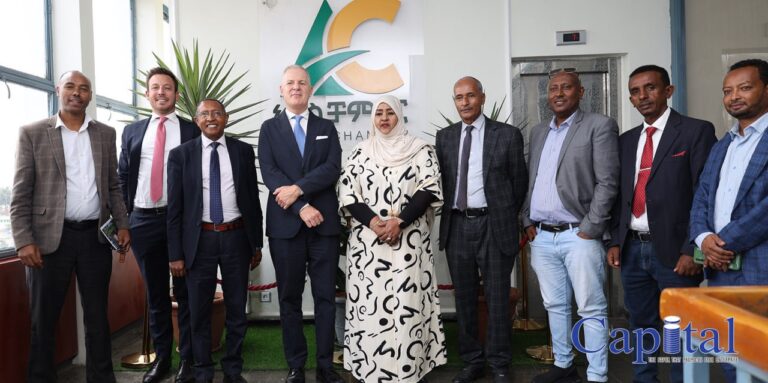
During discussions with the Addis Ababa Chamber of Commerce and Sectoral Association (AACCSA), ICC outlined plans to deepen partnerships with Ethiopian businesses and institutions. AACCSA President Zehara Mohamed emphasized her commitment to transforming this relationship into tangible business and investment activities.

ICC also highlighted its focus on dispute resolution services through its arbitration tribunal and low-cost dispute resolution hub. These initiatives aim to facilitate smoother business operations for companies of all sizes, including small and micro enterprises in Ethiopia.

The ICC’s broader agenda includes reforming global trade frameworks to address challenges posed by protectionism and economic nationalism. Through initiatives like “Making Global Justice Accessible to All,” ICC aims to deliver practical solutions for businesses navigating complex international markets.

As part of its efforts in Ethiopia, ICC is establishing an organizing committee to strengthen ties with local chambers of commerce. Special emphasis will be placed on supporting Ethiopian businesses in leveraging international trade opportunities while navigating disputes effectively.