Monday, November 23, 2026
Home Blog Page 884

Experts call for urgent policy changes to combat WASH crisis

0

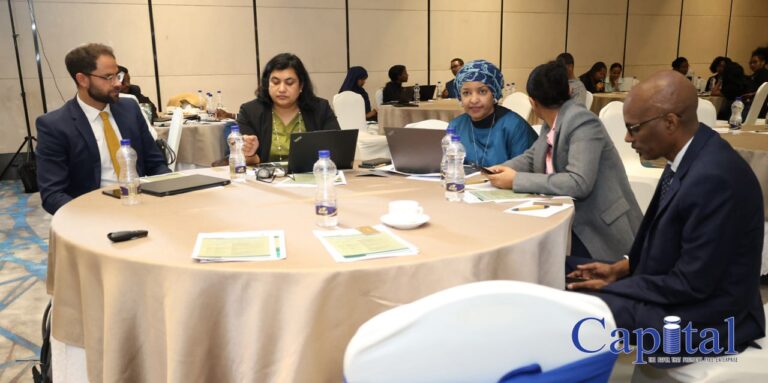
In a recent forum organized by Aqua for All in collaboration with the Hilton Foundation, experts emphasized the need for significant policy changes to address Ethiopia’s water, sanitation, and hygiene (WASH) crisis. The WASH sector, often overlooked, is described as a “silent killer” that should be prioritized in the national development agenda.

Ethiopia faces severe challenges in the WASH sector, including severe water shortages, inadequate sanitation, and the negative impacts of climate change. Despite progress in recent years, 43% of the population lacks access to improved water sources, and 28% practice open defecation, leading to significant health risks.

Experts highlighted the underfunding of the WASH sector and the need for immediate government intervention. Salfiso Kitabo, Innovative WASH Finance Advisor at FINISH MONDIAL, emphasized the importance of a collaborative approach involving government, financial institutions, and the private sector to address the funding shortage.

Salfiso suggested that the National Bank of Ethiopia should mandate commercial banks to allocate a portion of their loans to WASH initiatives, similar to agricultural loans. “If the government prioritizes agricultural fertilizer, why not give it to WASH?” he asked, noting that water and sanitation shortages have more severe consequences than fertilizer shortages.

Aarno Keijzer, Impact Finance Lead for Aqua for All, underscored the urgent need to address water scarcity and sanitation problems, especially in rural areas. “Climate change, floods, droughts are affecting water supplies. In addition, there is a lack of safe sanitation in rural areas,” he said.

Josien Sluijs, Managing Director of the Aqua for All Foundation, echoed these concerns, emphasizing the importance of mobilizing private capital in partnership with banks and small financial institutions. Government budgets alone cannot meet the sector’s needs, he noted.

The forum emphasized the importance of co-developing programs with financial institutions. Successful partnerships require the collaboration of various stakeholders, including regulators and technology companies. Institutions are called upon to prioritize the strategic status of WASH and build capacity to sustain portfolio growth over time.

Aqua for All has announced the WASH Finance Program, designed to raise private capital for the sector in partnership with the Hilton Foundation. The program aims to work with local banks and small financial institutions to create lending products for WASH-related products and services.

Experts stress that addressing the WASH crisis should not be limited to the Ministry of Health or the Ministry of Water but should be a priority across all ministries and financial institutions in the country. By adopting a collaborative and multi-stakeholder approach, Ethiopia can effectively combat its WASH challenges and ensure a healthier future for its population.

Foreign banks face high capital requirements

0

Ethiopia’s newly proposed directive on banking licensing and renewal reinstates a three-year-old policy framework governing the re-entry of foreign banks into the country. However, financial experts caution that the mandated capital requirements may deter potential investors from entering the Ethiopian market.

The draft directive, issued this week for public consultation, states that foreign bank subsidiaries and branches seeking to operate in Ethiopia must meet the same minimum paid-up capital threshold set by the National Bank of Ethiopia (NBE) for domestic banks.

This requirement aligns with the “Policies and Strategies: Investment of Foreign Nationals in the Ethiopian Banking Sector,” a document approved by the Council of Ministers nearly three years ago, which signals the government’s intent to reopen the financial sector to international players after decades of restrictions.

Under this policy, foreign entrants must provide a foreign currency equivalent of at least five billion birr, the current minimum capital requirement for domestic banks.

The document explicitly states: “Initially, the minimum capital requirement for a subsidiary of a foreign bank shall not be less than the current minimum capital requirement for a domestic bank.”

While this amount was anticipated, analysts argue that it could discourage potential investors, particularly from economies comparable to Ethiopia’s.

One expert noted, “The NBE’s proposed capital requirement is substantial, and it may dissuade foreign banks, especially those from peer economies, from entering the market.”

The draft directive also revises shareholding limits, increasing the maximum allowable stakes for different investor categories: natural persons and juridical persons can hold up to 7% and 10%, respectively, up from the previous 5%.

Strategic investors, defined as foreign banks or institutional entities, may hold up to 40%, with aggregate foreign ownership capped at 49%.

A strategic investor is characterized as a foreign bank or banking group with a strong reputation, a government-owned bank, an international development finance institution, or a private equity fund meeting the NBE’s vetting criteria.

Additionally, the directive implements further restrictions: natural persons (individually or collectively) may hold a maximum of 15% of a bank’s total shares, while juridical persons can hold up to 20%. The combined holdings of natural and juridical persons cannot exceed 20%.

Foreign banks seeking to invest in Ethiopia must also possess a favorable credit rating from internationally recognized agencies, ensuring that only well-established institutions enter the market.

This directive represents a significant step in modernizing Ethiopia’s banking regulations, aiming to balance openness to foreign investment with safeguards for financial stability and domestic control. However, its success will depend on clear communication, consistent enforcement, and ongoing engagement with industry stakeholders.

While the policy seeks to attract reputable global players, the high capital threshold remains a contentious issue, potentially limiting the pool of foreign banks willing—or able—to enter Ethiopia’s financial sector.

U.S. tariffs expected to boost Ethiopian exports 

0

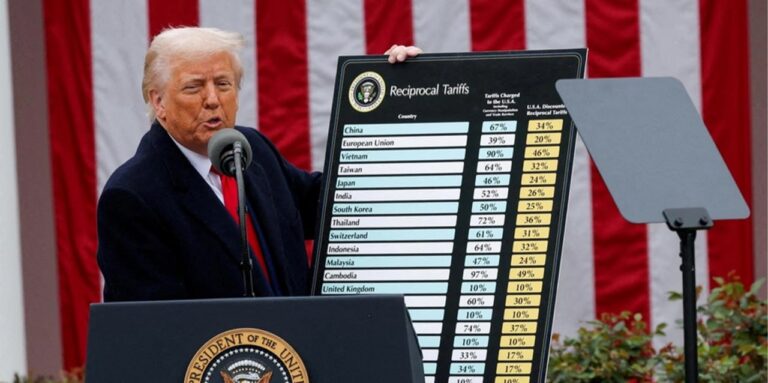
In a surprising turn of events, the imposition of tariffs by the U.S. on imports from various countries, including Ethiopia, is expected to have a positive impact on Ethiopia’s export sector. Despite a 10% tariff on Ethiopian goods entering the U.S. market, experts believe this move will enhance the competitiveness of Ethiopian exports.

The U.S. tariffs are part of a broader strategy to reduce the nation’s trade deficit and protect its economy from what are seen as unfair trade practices. Under the “America First” theme, the U.S. has imposed tariffs ranging from 10% to 49% on imports from several countries. Ethiopia, along with countries like Ghana, Kenya, Tanzania, Uganda, Senegal, and Liberia, faces a baseline tariff of 10% on its exports to the U.S.

Ethiopian exports such as flowers, coffee, leather, and clothing are subject to this additional tax. However, experts argue that this tariff structure will actually make Ethiopian products more attractive to U.S. consumers and businesses. The low tariff rate compared to higher prices from other countries like Vietnam and Bangladesh is seen as a competitive advantage.

Ethiopia benefits from the African Growth and Opportunity Act (AGOA), which provides preferential access to the U.S. market. This advantage, combined with the relatively low tariff rate, positions Ethiopian exports favorably in the U.S. market. Experts note that other countries without AGOA benefits cannot compete as effectively due to higher tariffs.

Both the Ethiopian government and industry experts welcome the new tariff structure as an opportunity to increase the competitiveness of exports. They believe that the increased demand and investment in the export sector will strengthen trade relations between the U.S. and Ethiopia.

Green finance instruments pave way for sustainable development

0

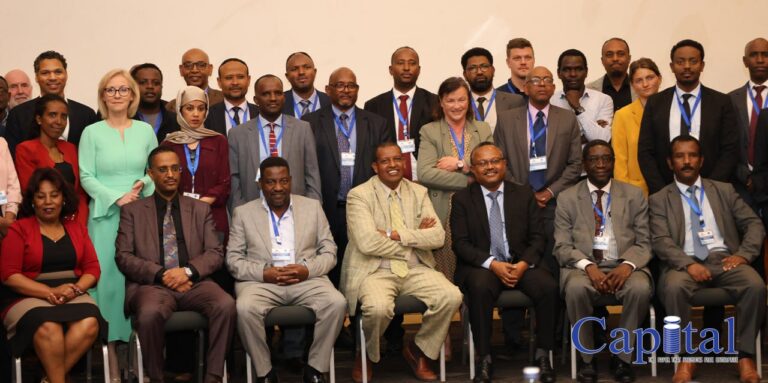
Ethiopia has embarked on a promising journey towards a green economic transition, leveraging green finance instruments to accelerate sustainable development. A recent Horizons study, presented at a workshop organized by FSD Ethiopia in collaboration with the Ethiopian Capital Market Authority (ECMA), FSD Africa, and the United Nations Development Programme (UNDP), highlights the potential of green bonds and carbon credits in advancing Ethiopia’s sustainable development agenda.

The study emphasizes that Ethiopia’s vast natural resources and cultural heritage can attract both domestic and foreign investment by transitioning to carbon-free and environmentally friendly financing methods. Creating conducive conditions is crucial to realizing this potential, including building capacity to monitor and report on green development activities, developing coherent policy frameworks that encourage green investment, and fostering active public-private sector partnerships to mobilize necessary capital.

Esayas Kassa, ECMA Deputy Director General, underscored the responsibility to the environment and future generations, calling for an economic system that harmonizes with nature and ensures societal well-being. The workshop discussions focused on adjusting economic strategies, increasing resilience to climate change, creating incentives for green innovation, and leveraging the private sector to develop a pathway for green development.

Belinda Kaimuri, a senior consultant at Genesis Analytics, noted that the study clearly demonstrates the potential of green bonds and carbon credits in Ethiopia. Stakeholder feedback is crucial to ensure the success of these financial instruments. The study explored various fundraising methods, offering new hope for the country’s sustainable development.

Ethiopia’s green economy strategy is part of a broader vision to achieve middle-income status by 2025 while minimizing greenhouse gas emissions and promoting sustainable development. The Climate-Resilient Green Economy (CRGE) initiative focuses on four key pillars: improving agricultural practices, protecting and re-establishing forests, expanding renewable energy, and adopting energy-efficient technologies in transport and industry.