Monday, November 23, 2026
Home Blog Page 912

Ethiopia opens doors to Kenyan businesses, but challenges persist

0

Ethiopia has extended an open invitation to Kenyan businesses, highlighting the vast potential of its emerging market, particularly in sectors like banking, imports, and retail. However, despite this optimism, significant obstacles remain in translating policy reforms into tangible trade benefits.

The second Ethiopia-Kenya Business Conference, held in Addis Ababa, underscored the importance of collaboration between the two nations. George Orina, Ambassador of Kenya to Ethiopia, noted the historic decision to allow foreign investment in the Ethiopian banking sector, stating, “The doors have opened for Kenyan banks to come here in Ethiopia and do business.” However, this opportunity is tempered by ongoing challenges.

Despite existing trade agreements, such as the 2012 Special Status Agreement, trade volumes between Ethiopia and Kenya remain below expectations. “We need to improve on translating agreements into concrete action,” Ambassador Orina emphasized.

The conference highlighted severe foreign exchange shortages and bureaucratic obstacles as major hurdles to trade between the two countries. While recent reforms by the National Bank of Ethiopia allowing for freely negotiated foreign exchange rates are expected to alleviate these issues, their practical impact remains to be seen.

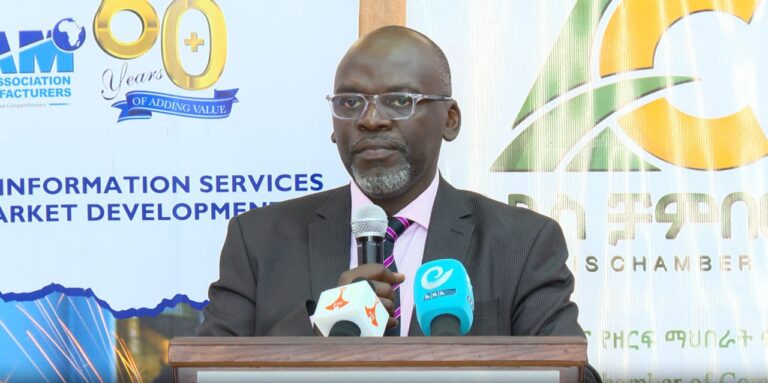
Tobias Alando, CEO of the Kenya Association of Manufacturers (KAM), emphasized Ethiopia’s strategic importance in accessing North African markets through the African Continental Free Trade Area (AfCFTA). He urged Kenyan businesses to form joint partnerships with Ethiopian counterparts to navigate the complex market environment and seize emerging opportunities.

“We would like to see such discussions create more trade agreements between us,” Alando said, highlighting the focus on business-to-business partnerships.

The Ethiopian market presents a compelling opportunity for Kenyan businesses, but they must navigate significant operational challenges. The success of this economic partnership will depend on both governments’ commitment to addressing these barriers and facilitating smooth trade flows.

As Ethiopia continues to open up its sectors, including banking, to foreign investment, there is potential for increased collaboration and mutual benefit. However, overcoming bureaucratic and foreign exchange challenges is crucial for realizing these opportunities.
Addis to host 6th COMESA Women’s Business Fair

0

The 6th Business Fair and Business Conference of the Common Market for Eastern and Southern Africa (COMESA) is set to take place in Addis Ababa from May 7 to 9, 2025. Organized by the Ministry of Trade and Regional Integration (MoTRI) in collaboration with COMESA, the event aims to empower women entrepreneurs and youth by creating market opportunities and fostering skills development.

Held under the theme “A Thriving COMESA Through Gender-Responsive Regional Integration: Unlocking Opportunities in Green Investments, Value Chains, Tourism, and Mining,” the conference will focus on sectors such as agribusiness, textiles, tourism, digital marketing, intellectual property services, and financial delivery, with a special emphasis on green development and sustainable growth.

The event is expected to attract over 500 participants, including 300 women entrepreneurs, 100 government officials, and 100 representatives from partner organizations. Additionally, more than 200 business-to-business (B2B) discussions will be held during the conference, which is projected to generate $260 billion in GDP across the region.

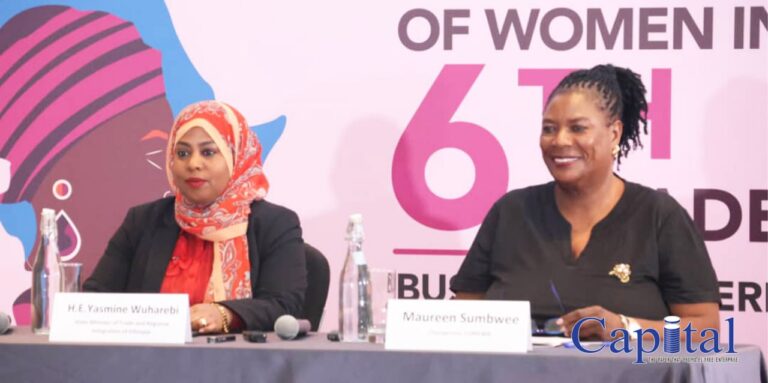
Despite its ambitious goals, the conference highlights ongoing challenges faced by women entrepreneurs and youth in the COMESA region. Speaking at a media briefing ahead of the event, Yasmin Wohabrebbi, State Minister of Trade and Regional Integration, acknowledged that women and youth are key drivers of innovation and economic growth but continue to face significant barriers.

“Limited access to financing, market shortages, and socio-cultural barriers have hindered women’s ability to fully contribute to trade and investment in the region,” Yasmin noted. She emphasized that addressing these challenges is critical for achieving sustainable regional economic integration.

Maureen Sumbewe, Chairperson of the COMESA Federation of Women in Business (COMFWB), echoed this sentiment. “While this program will significantly enhance the empowerment of businesswomen and entrepreneurial youth, more efforts are needed to overcome persistent obstacles,” she said.

The COMFWB Trade Fair is recognized as one of Africa’s largest gatherings of women and youth entrepreneurs. It provides a platform for networking, knowledge sharing, business pitching, matchmaking, and B2B interactions. The event also aims to strengthen economic ties among member nations while showcasing products and services from across the region.

This year’s fair will feature participation from women’s business associations across COMESA’s 21 member states. Exhibitors will include representatives from various industries such as agribusiness, textiles, tourism, cutting-edge technologies, digital commerce, and financial services. The focus on green investments aligns with global sustainability goals while promoting inclusive economic growth.

The event underscores the importance of regional integration in unlocking opportunities for women entrepreneurs. By fostering collaboration among member states through initiatives like the COMESA Free Trade Area (FTA), which serves a market of over 600 million people with a combined GDP of $260 billion, the fair seeks to enhance intra-regional trade and investment.

“We look forward to seeing African women entrepreneurs connect with international buyers and partners,” Sumbewe added. “This is an opportunity to create business linkages that will drive growth across borders.”

Private banks reassess loan rates following CBE’s policy shift

0

Private financial institutions are reevaluating their loan interest rates in response to a significant policy change by the Commercial Bank of Ethiopia (CBE), the largest state-owned bank in the country.

This shift follows CBE’s announcement last week of a major overhaul of its lending rates, marking the first adjustment in four years.

Effective March 7, CBE raised its loan interest rates due to increasing costs associated with fund mobilization and the need to enhance competitiveness within the financial sector.

The new rates, which range from 11% to 18%, have increased from the previous 7% to 17% and apply to nearly all loan categories, with the exception of agriculture and government-backed housing programs, such as the 40/60 and 20/80 condo initiatives.

In its statement, CBE noted that this adjustment aligns with the government’s broader strategy to promote economic competition, grounded in the principles of supply and demand.

The bank also expressed its commitment to introducing innovative strategies and new loan products to strengthen its competitive position.

However, CBE acknowledged that despite ongoing efforts to reduce operational costs, the high expense of attracting deposits remains a major barrier to profitability.

CBE’s decision has prompted private banks to reassess their own interest rate structures.

Industry experts indicated that while CBE’s lending rates have historically set the benchmark for private banks, recent trends have seen these institutions taking the initiative in rate adjustments.

In recent weeks, several private banks have raised their interest rates, which now average between 8% and 23%.

Analysts anticipate that private banks will likely make further adjustments, particularly to their minimum rates, to maintain profitability in an increasingly competitive market.

A senior executive at a private bank remarked, “CBE’s rates play a pivotal role in shaping the market,” highlighting the policy bank’s influence on the financial sector.

A banking expert from one of the private institutions confirmed that other banks are also reassessing their rates in light of CBE’s decision, stating,

“I have learned that several banks are revisiting their interest rates following the policy bank’s latest move.”

These interest rate adjustments reflect the broader challenges facing Ethiopia’s financial sector, including rising costs of deposit mobilization and the delicate balance between profitability and competitive lending practices.

ESL retains exclusive cargo management rights

0

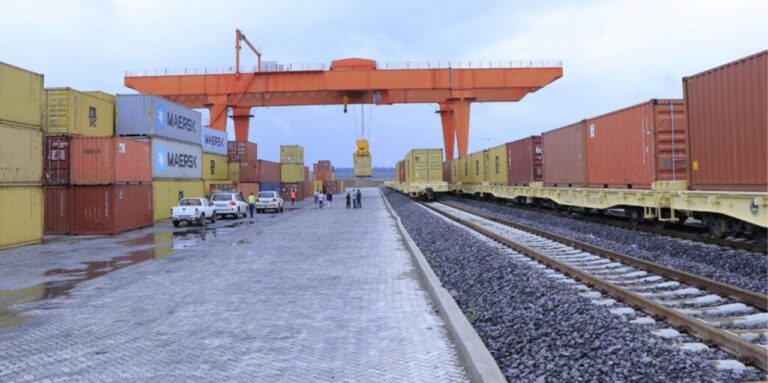
Ethiopian Shipping and Logistics (ESL) has been granted exclusive rights to manage cargo from key international trade routes.

The Ethiopian Maritime Authority (EMA) has issued a long-anticipated notice to industry stakeholders, marking a significant milestone in the deregulation of Ethiopia’s multimodal transport industry.

This development comes one year after the government granted permits to new entrants, ending ESL’s nearly 15-year monopoly in the sector.

The notice, addressed to both domestic and international stakeholders, officially permits five licensed multimodal transport operators (MTOs) to enter the market. Gulf Ingot FZC, a Sharjah-based firm, has also been included as the sixth operator.

The initiative to liberalize the multimodal transport system began in 2020 as part of broader industry reforms aimed at increasing participation in the logistics sector. Previously, ESL was the sole operator under the MTO framework that had been in place for nearly 15 years.

The recent notification letter, sent to stakeholders such as the Djibouti Ports and Free Zones Authority (DPFZA), requests cooperation to ensure a smooth transition for the new operators.

 “Your cooperation in this matter will be instrumental in ensuring a smooth and efficient transition,” stated Abdulber Shemsu, Director General of EMA, in the letter.

The letter also informed the Ethiopian Customs Commission about the compliance requirements for the newly selected MTOs, which include Panafric Global, Tikur Abay Transport, Cosmos MTO, Ethio-Djibouti Railway Standard Gauge Share Company, and Gulf Ingot FZC.

Gulf Ingot FZC, a UAE-registered company operating in the Jebel Ali Free Zone, Ethiopia, Djibouti, and other African countries, is a notable addition to the list of licensed operators.

Its inclusion has drawn interest from industry observers, as the government initially planned to permit only four additional operators alongside ESL.

Sector experts have raised concerns about the competitive landscape, particularly since ESL retains exclusive rights to handle cargo from major import destinations such as China and the UAE, which account for over 60% of Ethiopia’s imports.

 Critics argue that this exclusive arrangement creates an uneven playing field. Yared Shiferaw, an international maritime lawyer and partner at Cosmos MTO, has previously expressed concerns about fair competition, suggesting that while ESL should continue as the national carrier, other operators should be allowed to compete on all trade routes.

 “Even though ESL will continue as a leader in operations, it is important to allow us to compete on all destinations,” Yared told Capital last year.

Despite these concerns, EMA has clarified that ESL will retain exclusive rights on key trade routes, limiting opportunities for new operators. Additionally, significant import cargoes, such as fertilizers, are excluded from the multimodal scheme, further restricting prospects for the newly licensed companies.

Experts warn that this could hinder the sector’s growth and the competitiveness of new entrants.

During a recent CEO networking event organized by the European Chamber in Ethiopia, Brook Taye, CEO of Ethiopian Investment Holdings (EIH), which oversees ESL and other major public enterprises, emphasized the importance of fair competition.

Drawing parallels with the liberalization of Ethiopia’s telecom sector, Brook emphasized how increased competition has strengthened Ethio Telecom. “The full opening of the multimodal sector will enable the state-owned operator to become stronger and more competitive,” he stated.

Fraol Tafa, Deputy Director General of EMA, reiterated the authority’s commitment to supporting the growth of new entrants. “We have achieved our goal of expanding the multimodal transport sector to include more participants,” he told Capital last week.

He added that the licensed companies must complete their preparations, including strengthening relationships with Djibouti Port authorities and resolving banking issues, before commencing operations.

However, some companies have urged EMA to formally notify the National Bank of Ethiopia, financial institutions, and other relevant stakeholders, including the Ministry of Health and security agencies, about the new MTOs to ensure seamless operations.

The liberalization of the multimodal transport sector represents a significant shift in Ethiopia’s logistics industry. While the inclusion of new operators is a positive step toward diversification, concerns about fair competition and market restrictions persist.