Monday, November 23, 2026
Home Blog Page 929

NBE rule limits small banks’ access to SEZs, experts see merger push

0

The National Bank of Ethiopia (NBE) has issued a draft directive that excludes small and newly established financial firms from operating branches in Special Economic Zones (SEZs).

Experts suggest this decision is part of a broader strategy to encourage mergers among banks.

Released this week alongside two other directives—one addressing insurance business regulations and another related to minimum reserve requirements for banks—the draft directive stipulates that only banks with a market share of at least 2% of the total assets in the banking sector can open branches in SEZs.

According to Article 4.6.1 of the directive, a bank’s total assets must constitute at least 2% of the sector’s total assets, based on the latest fiscal year-end calculations.

Industry experts estimate that a bank seeking to operate in an SEZ would need a total capital of at least 66 billion birr, based on last year’s figures. As of the end of the 2023/24 financial year, the total assets of Ethiopia’s banking sector stood at approximately 3.3 trillion birr, reflecting a 15.2% increase from the previous year. Loans, advances, and bonds were the primary drivers of this growth, accounting for 66.9% of total assets.

However, experts note that very few banks, apart from state-owned institutions like the Commercial Bank of Ethiopia (CBE) and the Development Bank of Ethiopia (DBE), meet the 2% threshold.

The CBE, Ethiopia’s largest bank, holds 43.5% of the sector’s total assets, with its assets reaching 1.35 trillion birr as of June 30, 2024, according to its annual report and the NBE’s Financial Stability Report.

Critics argue that the new directive discriminates against smaller banks and is part of a broader effort to consolidate the banking sector.

The NBE has been granted authority under the recently approved banking business proclamation to enforce mandatory mergers, aligning with the government’s plan to strengthen the financial sector ahead of its opening to foreign players.

With 32 banks currently operating in Ethiopia, officials have emphasized the need for mergers and acquisitions to create stronger, more competitive institutions.

The NBE’s Financial Stability Report reveals that the combined assets of the five medium-sized banks in the sector account for 28.9% of the total assets, while the combined assets of the 25 small banks, excluding the DBE, account for 23.3% of the entire banking sector—an annual increase of 0.8%.

Meanwhile, the central bank has also released a draft directive revising reserve requirements, which have been amended eight times over the past three decades.

Additionally, a new corporate governance directive for the insurance industry has been proposed, requiring that one-third of board members be independent. A similar directive was introduced for the banking sector in June 2024.

“These regulatory changes reflect the NBE’s efforts to streamline and strengthen Ethiopia’s financial sector, though smaller banks may face significant challenges in meeting the new requirements,” experts say.
PPS to introduce new directive enhancing client role in public procurement

0

The Public Procurement Service (PPS) has announced an upcoming directive aimed at enhancing the role of clients in securing procured goods and services, following the recent amendments to the procurement proclamation. This directive is expected to be issued in the coming weeks.

This development was discussed during a meeting with suppliers and central government offices to review operations for the first half of the 2024/25 budget year.

The PPS also emphasized its ongoing implementation of the electronic government procurement (eGP) system, a crucial initiative designed to modernize procurement processes and combat illegal activities.

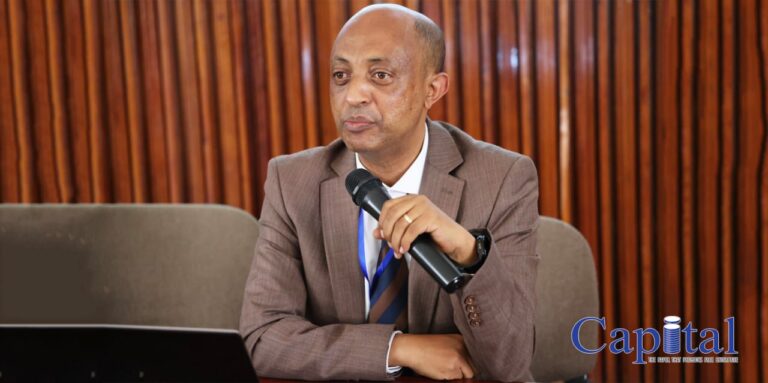
Asmare Yigezu, the Director General of PPS, acknowledged that while the transition to eGP has faced initial challenges, it is a significant advancement in improving transparency and efficiency.

“We had planned to manage even more procurement during this period, but our limited experience with the new system slowed us down. Last year, we barely utilized the modern procurement scheme due to our unfamiliarity with it,” Asmare explained.

He also addressed concerns regarding delayed payments by some public offices for services or products received, expressing optimism that the new directive will help resolve these issues.

The forthcoming directive, expected to be issued by the Public Procurement and Property Authority within a month, will introduce call-off contracts.

These contracts will enable individual public offices to directly manage their procurement of commonly used items, while the PPS will oversee the process as the higher authority.

“The new directive will allow clients to communicate directly with suppliers for commonly used items, thereby reducing waste and minimizing delays in supply or payment,” Asmare told Capital.

The directive, which has undergone more than three years of revisions, is set to transform the public procurement system. This follows the ratification of a new proclamation last year, which amended the 2009 “Procurement and Property Administration Proclamation 649/2009.”

The updated proclamation aims to align Ethiopia’s procurement practices with international standards and improve the country’s procurement rating.

State-owned enterprises (SOEs), including Ethiopian Airlines, Ethiopian Shipping and Logistics, and Ethio Telecom, have expressed concerns about the applicability of the proclamation, particularly in relation to their competition with private sector players.

These concerns are anticipated to be addressed in the upcoming directive.

In the first six months of the 2024/25 budget year, the PPS successfully executed procurement worth 3.2 billion birr for central government offices and universities. Notably, all framework agreement procurements during this period were carried out through the eGP system, marking a milestone in the modernization of Ethiopia’s procurement processes.

Asmare acknowledged that although the PPS was intended to lead the adoption of the eGP system, delays linked to inadequate handling by previous leadership hindered its implementation.

He underscored the system’s significance in tackling challenges associated with framework agreement procurement, despite facing initial operational obstacles. “The eGP system was not originally designed with these specific procedures in mind, which led to some difficulties,” he noted.

Looking forward, Asmare expressed confidence that the new directive will address most existing issues in the public procurement system.

The eGP system is expected to streamline processes, reduce inefficiencies, and enhance accountability. As the PPS adapts to the new system, it aims to expand procurement activities and improve service delivery to government institutions and higher education facilities nationwide.

The shift to electronic procurement signifies a major transformation in Ethiopia’s public procurement landscape, aligning with global best practices and promoting greater transparency in government operations. With the new directive, Ethiopia is well-positioned to make significant strides in modernizing its procurement system and ensuring efficient service delivery.

Ethio Telecom unveils innovative Digital Solutions

0

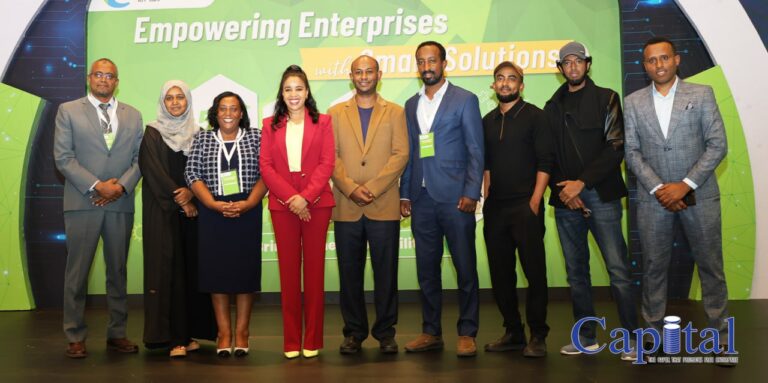
Ethio telecom has introduced a series of groundbreaking digital solutions aimed at modernizing and enhancing various sectors in Ethiopia. The company’s latest offerings include a digital cattle tracking system, cloud-based services for enterprise customers, a Tele PTT/V solution for businesses, a core banking solution for microfinance institutions, a learning management system for schools, and a One-Office collaboration platform.

Digital Cattle Tracking Solution

Ethio telecom’s digital cattle tracking solution utilizes IoT technology to monitor livestock in real-time, allowing farmers and ranchers to track the location of their cattle, assess their health status, and access financial services. This innovation is poised to transform the livestock sector in Ethiopia, Africa’s largest livestock resource. According to Frehiwot Tamiru, CEO of Ethio telecom, this solution will improve animal welfare, increase productivity, and enhance financial participation for rural communities.

Cloud Service-Based Digital Solutions

Ethio telecom has also announced the delivery of cloud service-based digital solutions designed to build and modernize the capabilities of enterprise customers and institutions. These services are part of the company’s broader strategy to leverage technology to drive economic growth and development in Ethiopia.

Tele PTT/V Solution

The new Tele PTT/V solution provides fast, reliable, and secure team communication to enterprises. This cloud-based service works on any smartphone on the mobile network, replacing traditional radio systems. It enhances team efficiency, security, and collaboration, making it ideal for industries requiring real-time coordination, such as logistics, security, transportation, and emergency response.

Cloud-Based Core Banking Solution

Ethio telecom has launched a cloud-based core banking solution that empowers microfinance institutions (MFIs) and savings and credit cooperatives (SACCOs) with digital financial instruments. This platform addresses the growing demand for efficient, reliable, and scalable financial management solutions, allowing institutions to streamline operations, enhance customer experience, and engage financially.

Cloud-Based Learning Management System (LMS)

The company has also unveiled a cloud-based learning management system (LMS) that streamlines school practices, enhances connectivity, and transforms the learning experience. This centralized, user-friendly system manages enrollment, academics, administration, and student engagement, integrating school administration, teachers, students, and parents into a seamless digital ecosystem. According to Frehiwot Tamiru, LMS enhances efficiency, ensures transparency, and encourages collaboration, empowering institutions to focus on providing quality education and enhancing student success.

One-Office Collaboration and Productivity Solution

Ethio telecom has introduced a new One-Office collaboration and productivity solution to its customers. This all-in-one digital platform integrates multiple workflows into a single, secure cloud-based ecosystem. It enables seamless collaboration anytime, anywhere, and across devices, providing access to real-time shared resources, automated processes, and intuitive communication tools. Teams can work smarter, stay organized, and speed up decision-making with this solution.

Eliminating unjustified power cuts

0

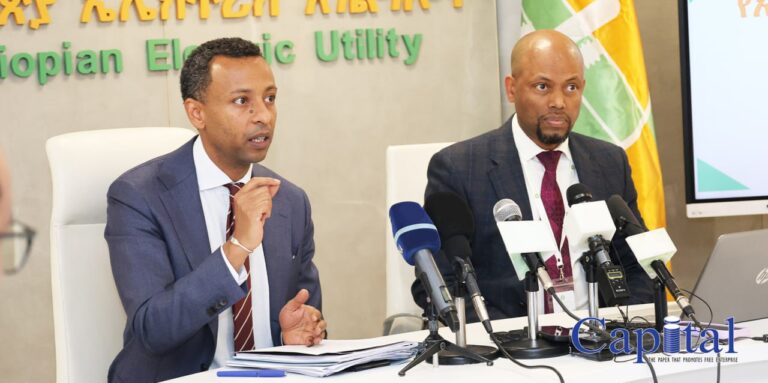
Ethiopian Investment Holding (EIH) has unveiled an ambitious plan to eradicate unjustified power disruptions in the Ethiopian Electric Utility (EEU). This initiative, announced by EEU’s newly appointed CEO, Getu Geremew, and EIH CEO, Brooke Taye, aims to replicate successes from other countries in achieving a “Zero-power disruption” scenario.

Brooke Taye emphasized that power outages caused by preventable factors, such as tree growth and branches interfering with power lines, should become a thing of the past. “We want to see the changes that have been made by other government agencies replicated in the Ethiopian electricity service,” Dr. Brooke stated. They also underscored the importance of not only addressing the causes of power cuts but also promptly notifying the public of the estimated restoration time.

EIH, which oversees EEU as part of its portfolio of state-owned enterprises, has developed a comprehensive plan to enhance the efficiency and reliability of the country’s energy supply. This initiative follows a change in management at EEU, with Getu Geremew succeeding Shiferaw Telila, who had been CEO since 2018.

One of the immediate priorities outlined by EEU is clearing trees and branches that interfere with power distribution lines. Getu noted that 47% of reported power cuts were due to plant-related issues. He added that the tree control initiative launched two months ago has reached 50% implementation levels in Addis Ababa and 30% nationwide. The EEU is committed to completing the remaining work within a 100-day action plan.

In addition to plant management, EEU is also addressing infrastructure theft and vandalism, which significantly contribute to power outages. “As you will soon notice, we have suffered massive infrastructure damage in various parts of Ethiopia, including Ambo, Gondar, Woldiya, and Kombolcha, leading to long-term power cuts for our customers,” the CEO said.

To improve customer service and combat corruption, EEU has launched a new mobile app that allows customers to report cases of malpractice and corruption anonymously. This digital platform, which includes a Telegram bot and website, promotes greater transparency and accountability by ensuring the confidentiality of whistleblowers.

The collaborative efforts of EIH and EEU indicate a renewed commitment to improving the reliability and efficiency of Ethiopia’s energy sector, ultimately benefiting families and businesses across the country.