Africa’s climate and development debate is shifting from promises to delivery, with leaders at the 12th African Regional Forum on Sustainable Development (ARFSD-12) calling for a stronger focus on implementation, financing, and accountability as the continent prepares for COP32.
At the heart of the discussions in Addis Ababa this week was a blunt message: Africa does not lack ambition. What it lacks is a global and domestic system capable of delivering climate and development commitments at the scale required. That concern ran through the 7th Africa Climate Talks, where Claver Gatete, Executive Secretary of the UN Economic Commission for Africa (ECA), said the world’s climate response is falling behind the urgency of the crisis and that trust is eroding because commitments are too often not matched by action.
Gatete said the global climate system is under strain just as climate impacts are intensifying faster than responses. Emissions cuts remain insufficient to keep the world on track for the 1.5 degrees Celsius target, while finance for vulnerable regions continues to lag far behind promises made in successive negotiations. For Africa, the stakes are especially high. The continent contributes less than 4 percent of global greenhouse gas emissions, yet it faces worsening droughts, floods, rising seas, and unpredictable weather that are already disrupting food production, water supply, infrastructure, and public finances.
The financing gap is one of the most glaring challenges. African countries need an estimated 277 billion US dollars a year through 2030 to implement their nationally determined contributions, yet the continent receives only about 11 percent of the funding required. Gatete argued that Africa should not be defined only by its vulnerability. The continent also holds some of the most important climate solutions, including abundant renewable energy resources, biodiversity for nature-based action, and a young population capable of driving innovation, green growth, and new forms of industrial development.
That broader vision is shaping Africa’s approach to COP32, which Ethiopia is preparing to host in 2027. Leaders in Addis Ababa said the conference must not become another stage for pledges without delivery. Instead, it should be an implementation-focused summit built around measurable outcomes, stronger finance tracking, and accountability systems that can close the gap between ambition and action. The call is for climate finance to move from commitment to deployment, with adaptation given far greater priority than it has received so far.
Adaptation is increasingly being framed not as a side issue, but as a core development priority for Africa. For countries facing climate shocks, investing in resilient agriculture, infrastructure, early warning systems, and water security is essential to protecting lives and sustaining growth. Yet adaptation remains underfunded, undertracked, and often excluded from the kind of predictable financing that could make a lasting difference. Gatete said even low-cost tools such as early warning systems are still not widely available across the continent.
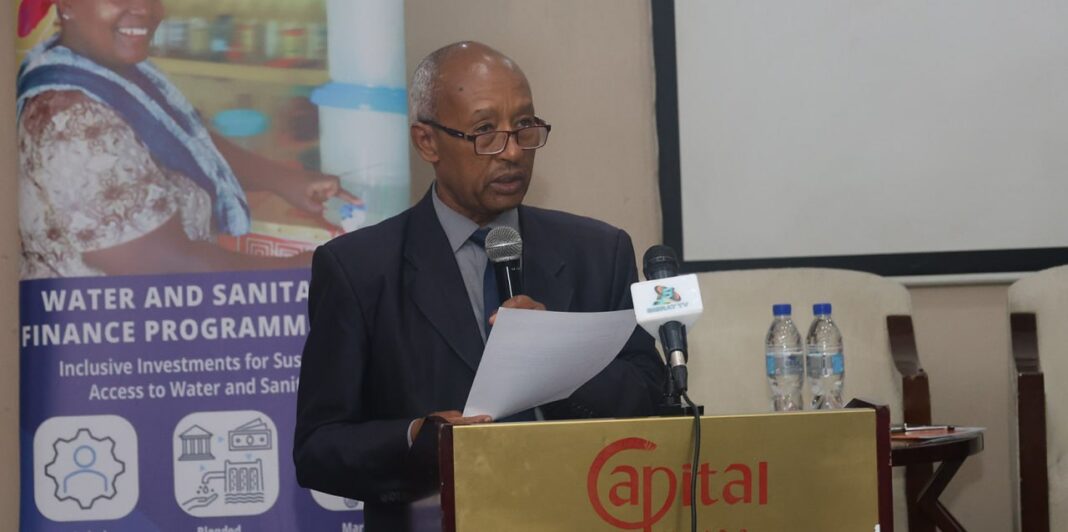
Water emerged as one of the most powerful themes of the forum. In a high-level session on clean water and sanitation, Gatete said water must be treated not only as a basic human need but as critical economic infrastructure. He noted that water underpins health, food systems, energy production, cities, industry, and regional integration. That framing reflected growing concern that water insecurity is no longer an isolated challenge, but a systemic risk that can slow industrialization, strain public health systems, and deepen inequality.
The numbers show both progress and persistent gaps. Since 2015, nearly 300 million Africans have gained access to basic drinking water and close to 190 million to basic sanitation. But only 40 percent of Africans currently have access to safely managed drinking water, while just 30 percent have safely managed sanitation. In 2024, more than 200 million people still practiced open defecation, a situation that carries serious consequences for health, productivity, and dignity. Gatete said Africa’s industrial future depends on securing its water base, pointing out that hydropower, thermal energy, green hydrogen, agro-processing, mining, and manufacturing all rely on reliable water systems.
Climate change is making the problem worse. More frequent droughts, floods, and hydrological variability are intensifying stress on already fragile systems, while rapid urbanization is stretching services in many cities beyond capacity. Informal settlements remain especially vulnerable, with weak sanitation and poor water access compounding health and economic risks. The pressure is not only environmental but financial, and speakers at the forum said Africa needs about 64 billion US dollars annually to achieve water security and universal sanitation, far above current investment levels.
Across the forum, the financing debate remained central. Speakers said Africa’s development ambitions are being constrained not by a lack of ideas, but by the scale, cost, and structure of available finance. High borrowing costs, limited concessional resources, and a global financial architecture that often penalizes African countries are making it harder to invest in climate resilience, infrastructure, and social development. The region’s cost of capital remains too high, while domestic resource mobilization and public financial management systems continue to face serious constraints.
Panelists called for more blended finance, debt-for-climate swaps, risk-sharing mechanisms, and better project preparation so that African countries can build pipelines of bankable investments. They also pointed to the need for stronger public-private partnerships and more credible data systems to improve confidence and attract capital. Discussions highlighted examples from Rwanda, where climate resilience has been more tightly linked to national planning, as well as debt-for-development swap initiatives in Senegal, The Gambia, and Ghana. These were presented as examples of how innovative finance can help expand fiscal space and support long-term investments.
The private sector also featured prominently in the debate, with sessions at the forum emphasizing that public resources alone will not be enough to deliver the Sustainable Development Goals. Leaders said the private sector must be seen not only as a source of capital, but as a driver of jobs, technology, and industrial transformation. But to mobilize that capital at scale, Africa needs clear rules, stronger institutions, better pipelines, and partnerships that can turn promising ideas into investable projects.
As the forum drew to a close, the message was clear: Africa is ready to lead, but it needs a financial system and a climate regime that deliver at the same pace. With Ethiopia preparing to host COP32, the continent is positioning itself to push for a more credible climate agenda rooted in implementation, justice, and measurable results. For Africa, the test ahead is not whether it can make the case for action. It is whether the world will finally help turn that case into delivery.