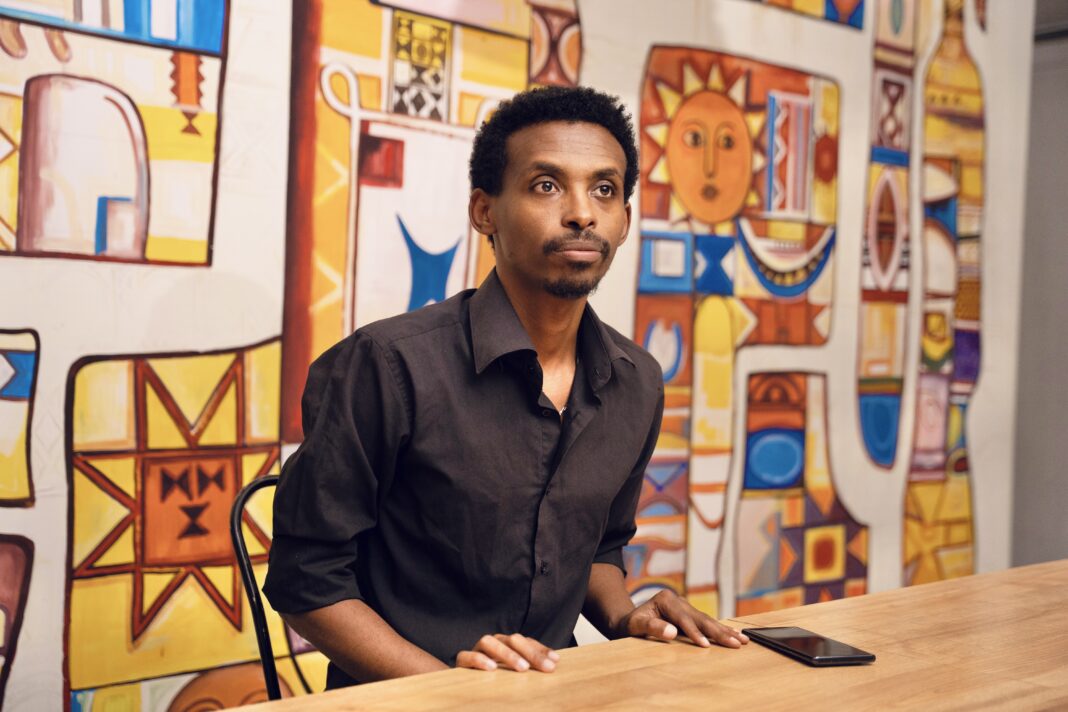
Adolescents in Ethiopia are often overlooked in food systems work, even though they are at a formative age for building lifelong eating habits. A new game-based toolkit, including the card and board game Gursha, aims to change that by turning Ethiopia’s food-based dietary guidelines into something young people choose to engage with, rather than something delivered at them.
Yared Endale, Co-Founder and Chief Communication Officer of Efuyegela Consultants, explains how the team behind Gursha is using gamification, co-creation with students and rigorous evaluation to make nutrition education more relevant, enjoyable and effective in Addis Ababa secondary schools. Excerpts;
Capital: What inspired the development of Gursha and the wider serious-game toolkit focused on Ethiopia’s food-based dietary guidelines?
Yared Endale: The starting point was a simple but persistent problem: Ethiopia has comprehensive, scientifically sound food-based dietary guidelines, and school feeding policy has even been aligned to them ; but getting those messages to actually land with adolescents is a different challenge entirely. Young people are often the group most overlooked in food systems work, even though they’re at a formative age for building lifelong habits. We wanted to close that gap by turning static guidance into something adolescents would choose to engage with, not something delivered at them.
Capital: Why did the team choose a game-based approach, rather than conventional classroom lessons, to engage adolescents on nutrition and healthy eating?
Yared: Nutrition education often struggles because it’s information-heavy and one-directional. Games flip that. They create a space where a student has to apply a concept; matching foods to food groups, collecting servings, making decisions in a simulated food environment; rather than just memorizing it. That’s the core belief behind our approach at Efuye Gela: gamification isn’t decoration on top of a lesson, it’s a different learning mechanism entirely, built on tension, competition, surprise, and repetition, which happen to be exactly the things adolescents already respond to.
Capital: How were Addis Ababa secondary-school students involved in designing, testing and refining the game?
Yared: They were there from day one, not brought in at the end to react to a finished product. Through co-creation workshops in September 2025, students played and ranked existing games to tell us what already worked for them, mapped out their real versus aspirational diets, learned the dietary guidelines and basics of game design, and then built and playtested their own game concepts with peers. That process repeated across multiple rounds of prototyping and refinement before we arrived at the final toolkit.
Capital: What important feedback from students changed the game’s rules, design, food choices or learning messages?
Yared: The clearest signal from students was around what makes a game worth playing again: elements of speed, tension, surprise, physical engagement, and rules simple enough to pick up quickly. That preference shaped how mechanics like collecting food-group servings or navigating the urban food environment were built into gameplay, rather than being left as flat, quiz-style content.
Capital: What key nutrition lessons does Gursha aim to teach, and how are these woven into the gameplay without making the experience feel like a lecture?
Yared: Across the toolkit, the games cover food groups, dietary diversity, recommended servings, sugar and salt limits, water intake, physical activity, and food safety. In Gursha specifically, the cultural practice of giving gursha ; feeding someone a mouthful of food as a gesture of love and care ; is built into the experience itself, so the lesson is carried through a familiar cultural act rather than stated outright.
Capital: How did the developers ensure that the game reflects Ethiopia’s food-based dietary guidelines while remaining relevant to what young people actually eat and encounter in Addis Ababa?
Yared: That balance came from combining three kinds of expertise at once: the nutrition science behind the guidelines, game design craft, and the adolescents’ own lived knowledge of their diets and city. Context-specific elements; like decision-making within the urban food environment; were included precisely so the guidelines wouldn’t feel abstract or imported, but grounded in choices students actually face.
Capital: The toolkit is being tested in six secondary schools. What is the trial measuring, and what would count as evidence that the game is working?
Yared: The randomised control trial is looking at the effect of three months of weekly gameplay on adolescents’ knowledge, awareness, and behaviour related to healthy diets. Results will be shared over the coming year.
Capital: What early reactions have you received from students, teachers and school leaders who have played or observed Gursha?
Yared: Evaluation with the workshop participants showed high satisfaction in terms of enjoyment. One student summed it up well: “I learned that games can be more than just entertaining – they can also be educational” (Boy, Age 17, Grade 11). Beyond enjoyment, participants also reported gains that went past nutrition knowledge; new friendships, stronger communication and collaboration skills, more confidence, and a sense of their own capacity to create something.
Capital: If the trial shows positive results, what would be needed to expand Gursha to more schools in Addis Ababa and across Ethiopia?
Yared: The long-term ambition already points that way; the games are intended for eventual use by the Ministry of Education, the Addis Ababa City Education Bureau, the Ministry of Health, and EPHI, to support integrating the food-based dietary guidelines into the national curriculum. Scaling would build on that institutional partnership.
Capital: Could Gursha be adapted into a mobile or digital game, translated into additional Ethiopian languages, or expanded to address other issues such as food safety, climate-resilient diets and adolescent health?
Yared: Yes, on both fronts. A digital version of the game is currently being built, which will let us extend the reach of the toolkit well beyond the physical card and board formats. On language, Gursha already exists in Amharic and English, and we’re now working to adapt it into Oromiffa and Tigrigna, so the game can speak to adolescents in more of the languages they actually use day to day. That multilingual approach matters a lot to us; a game only works as a behaviour-change tool if it feels like it belongs to the player, and language is a big part of that. As for further thematic expansion ; into areas like climate-resilient diets or broader adolescent health ; the toolkit already touches on food safety alongside diet and physical activity, so there’s a solid foundation to build on as the trial results come in and we understand more about what resonates.