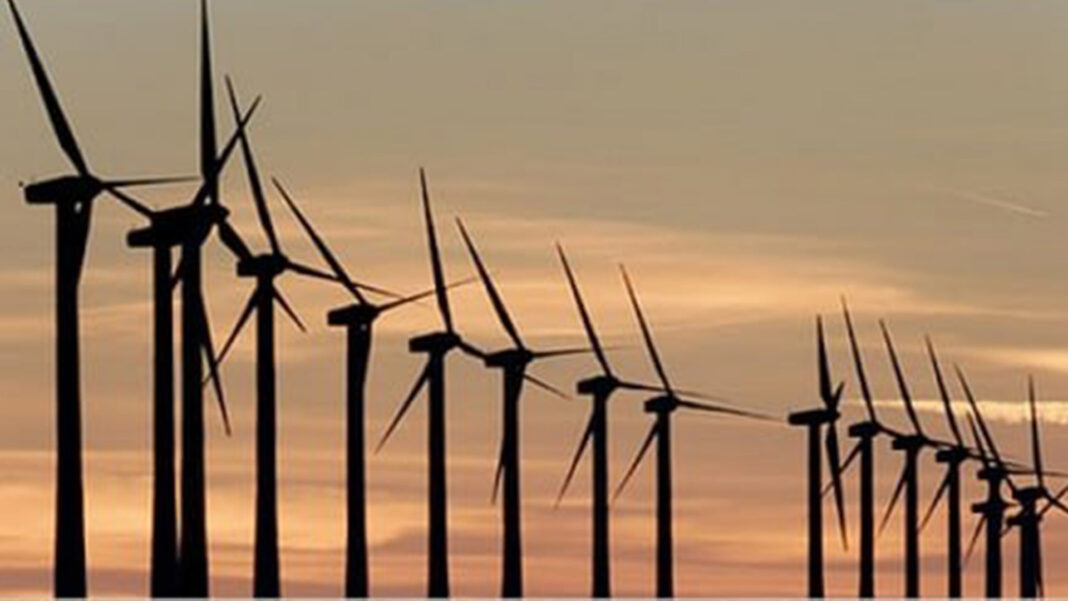
Gode, Mega, Arerti and Sela Dingay have been identified as promising locations for utility-scale wind power development in Ethiopia, according to research presented at the 3rd Ethiopian Water and Energy Week in Addis Ababa.
The study found that Gode and Mega have the strongest wind resources among the five locations assessed. However, it recommended prioritising Arerti for near-term development because of its proximity to major electricity consumers and existing transmission infrastructure.
Dr. Solomon Feleke of Debre Berhan University presented the findings during the event, held from October 26 to 30, 2026, at the Addis Ababa Science Museum.
The research assessed Gode in the Somali Region, Mega in Oromia, and Arerti, Sela Dingay and Debre Berhan in the Amhara Region. It examined how wind generation could diversify Ethiopia’s electricity supply and complement its predominantly hydropower-based system.
According to figures presented with the study, Ethiopia has 8,419 megawatts of installed hydropower capacity, representing 94.1 per cent of total generation capacity. Wind power accounts for 504 megawatts, or 5.6 per cent.
The assessment drew on meteorological mast measurements, NASA data and the Global Wind Atlas. Researchers analysed wind speed, power density, wind frequency and statistical distributions to evaluate the suitability of each location.
Gode and Mega recorded the highest wind power density, at approximately 500–600 watts per square metre. At a height of 100 metres, Gode had a mean wind speed of about 8.6 metres per second, while Mega also demonstrated strong wind potential.
The study estimated the annual electricity output of a three-megawatt turbine at each site, assuming an 80-metre hub height and a 20 per cent loss factor to account for turbulence, mechanical and electrical losses, and downtime.
Under those assumptions, a turbine in Gode could generate approximately 9,461 megawatt-hours annually, with a capacity factor of 36 per cent.
Mega followed with an estimated 9,040 megawatt-hours and a capacity factor of 34.4 per cent, while Arerti could produce 8,619 megawatt-hours, with a capacity factor of 32.8 per cent.
Estimated annual output was 7,358 megawatt-hours per turbine in Sela Dingay and 5,886 megawatt-hours in Debre Berhan.
The figures are modelled estimates, not measurements from operating wind farms.
The study also found relatively stable wind patterns in Gode and Arerti, while Mega’s winds frequently came from a dominant direction. These characteristics could inform turbine orientation, spacing and wind farm design.
Despite the stronger wind resources in Gode and Mega, the research recommended Arerti as a priority for near-term investment.
Its proximity to major electricity users and existing 132-kilovolt and 230-kilovolt transmission lines could reduce the need for additional transmission infrastructure and associated costs.
The study also recommended pursuing large-scale commercial investment opportunities in Gode and Mega.
For Debre Berhan, where wind resources at a height of 100 metres were assessed as marginal, researchers suggested considering taller turbines to improve generation potential.
Gode, Mega, Arerti and Sela Dingay were identified as viable candidates for utility-scale commercial generation, although further assessments would be required before projects could proceed.
The research highlighted wind power’s potential to complement hydropower, particularly during dry seasons when reduced water availability may constrain hydroelectric generation.
A more diversified generation mix could help reduce exposure to drought and changes in rainfall while supporting energy security.
The presentation recommended further work to optimise turbine placement, assess wind farm layouts and determine how additional wind generation could be integrated into the national grid.
Titled Assessment of Potential Wind Sites for Power Integration in Ethiopia: A Case Study of Arerti, Sela Dingay, Debre Berhan, Mega, and Gode, the study was presented during a high-level session on universal electrification, energy security and affordable energy access.
The findings identify potential development sites rather than approved projects. Decisions on which plants to develop will rest with the Ministry of Water and Energy as it assesses options for meeting electricity demand and expanding access.