The Ministry of Finance has announced that it will assume the debt of the Ethiopian Railway Corporation following the conclusion of restructuring talks with Chinese creditors, in a move that signals a new government approach to managing the liabilities of state-owned enterprises.
Finance Minister Ahmed Shide told Parliament that rising domestic and external debt levels remain a concern, but said the government is committed to a sustainable financial model that aligns repayment capacity with national economic growth. He said the railway corporation’s inability to generate enough revenue to service loans tied to the Addis Ababa-Djibouti railway and light rail projects had created major financial bottlenecks.
The debt will now be transferred to the Ministry of Finance and formalized in the budget document for the coming fiscal year, according to the minister.
The decision follows reports that Ethiopia Investment Holdings was negotiating with Chinese creditors to convert ERC’s large external liabilities into sovereign debt. The corporation, which is among eight state-owned enterprises under EIH, is currently reported to be carrying losses of 264 billion birr.
Asma Redi, a portfolio manager at EIH, had previously said discussions were focused mainly on debt owed to China. After high-level talks in Beijing led by Ahmed Shide last month, the process reached what officials described as its final stage, moving from temporary payment pauses to a revised long-term repayment plan.
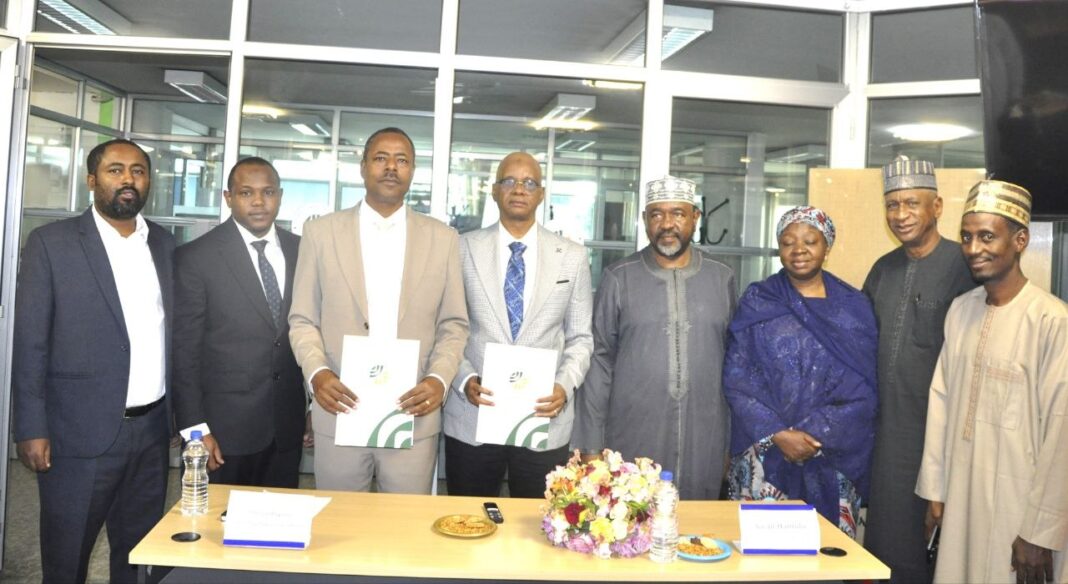
ERC Deputy CEO Getu Gizaw said the corporation is also looking for alternative financing models to reduce dependence on traditional borrowing. While the company continues to pursue external loans, it is also exploring private investment opportunities. In December 2024, ERC signed a memorandum of understanding with Italy’s COIPA Capital OU to strengthen logistics capacity. Getu warned that delays in resolving the debt burden could worsen the situation further.
The Ministry of Finance said the debt transfer is intended to give ERC a clean slate so it can focus on maintaining existing infrastructure and completing ongoing projects. The ministry also disclosed that 463.4 billion birr has been allocated for debt servicing in the 2025/26 fiscal year. Of the 277.3 billion birr planned for the first nine months, 226.8 billion birr, or 81 percent, had already been paid. Overall performance for the year stands at 48.9 percent, partly because negotiations under the G20 Common Framework for Debt Treatment are still ongoing.
Beyond debt restructuring, ERC is also trying to widen its commercial activities. The corporation is advancing a major redevelopment plan for its La Gare headquarters site in central Addis Ababa. The project is expected to include a 35-story headquarters building, a 21-story hotel, 27 residential towers ranging from 25 to 36 floors, and five large shopping malls.
ERC is also seeking to position itself as a multimodal transport operator. To address gaps in infrastructure and human resources, the corporation has submitted technical and financial proposals to form a consortium with private firms including PanAfric Global, Tradepath International, and Awash Cargo Ride in order to obtain a multimodal transport license.