The promising economic recovery seen across Africa is threatened by a daunting “wall of debt” that could reverse decades of developmental progress, warns the Executive Secretary of the Economic Commission for Africa (ECA). As of May 2026, the continent’s total external debt has surged to $1.2 trillion, representing not just a financial liability but a critical barrier to Africa’s future.
In many countries, the debt burden has surpassed sustainable levels, with over 25% of total government revenue allocated to interest and principal payments. This diversion strips essential funds from services such as healthcare, education, and infrastructure.
Claver Gatete, UN Under-Secretary-General and Executive Secretary of the ECA, highlighted that this escalating crisis has put 16 African nations at high risk of debt distress, with 7 already in full-blown crises. Data shows that financial pressures are reaching unprecedented heights; in 2026 alone, Africa is expected to make debt payments exceeding $90 billion.
This overwhelming debt is creating a cycle that discourages new investments, stifles private sector growth, and diminishes the fiscal capacity of governments, leaving them unable to shield their citizens from global economic volatility or climate emergencies. Speaking on May 6, 2026, at the opening of the Second Africa Sovereign Investors Forum in Addis Ababa, Gatete emphasized that while Africa’s macroeconomic foundation remains resilient—with growth projected at 3.9% in 2025 and 4.0% in 2026—the $1.2 trillion debt overhang jeopardizes this progress.
Financial experts caution that without swift intervention and structural reforms in Africa’s access to international capital, the continent’s hard-won developmental achievements could fade, turning a decade of promise into a “lost decade” for millions. Addressing the forum under the theme “Enhancing Fiscal Capacity and Ensuring Debt Sustainability,” Gatete urged global leaders to recognize the disproportionate and “exaggerated cost of capital” shouldered by African nations, often termed the “Africa Premium.”
Despite housing twelve of the world’s fastest-growing economies, Africa confronts the highest interest rates globally. ECA research reveals that at least 16 African countries face debt servicing costs that far exceed their economic capabilities.
This “systemic mispricing” has led to a cumulative loss exceeding $74 billion—funds that could have addressed significant infrastructure deficits. “Are we accurately measuring risk, or are we systematically mispricing Africa?” Gatete questioned, noting that currently, only Mauritius and Morocco hold investment-grade credit ratings, while 19 countries have no ratings at all. This lack of transparent data allows global markets to label African debt as “high risk” by default, despite substantial reform efforts.
In response, the ECA is working toward establishing an African Credit Rating Agency. This institution aims to deliver transparent, forward-looking, and data-driven assessments that reflect the continent’s economic realities. By providing alternative narratives to traditional international rating agencies, the ECA seeks to lower risk costs and secure affordable, long-term financing for development.
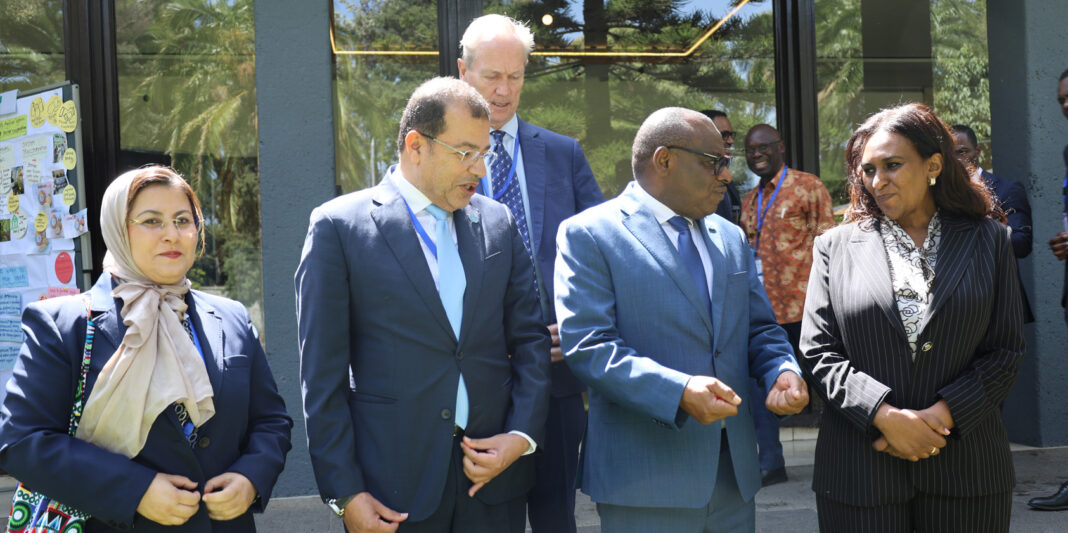
The forum, organized by the ECA in collaboration with FSD Africa, also outlined a strategic roadmap for African debt managers. This includes integrating climate and development goals into debt strategies to access specialized “green” capital and equipping Debt Management Offices (DMOs) with improved analytical tools to oversee debt portfolios.
Additionally, State Minister of Finance Semereta Sewasew noted during the forum that Ethiopia has implemented comprehensive reforms, including transitioning to a market-led foreign exchange system. These efforts enabled Ethiopia to secure over $3.5 billion in debt relief under the G20 Common Framework, demonstrating that the “credibility of policy frameworks” is as crucial as the size of the debt itself. As Ethiopia prepares to represent the continent by hosting COP32, the connection between finance and climate resilience has reached a critical juncture. Gatete stressed that “climate goals require massive amounts of financing,” which remains nearly unattainable under the current inequitable international financial system.