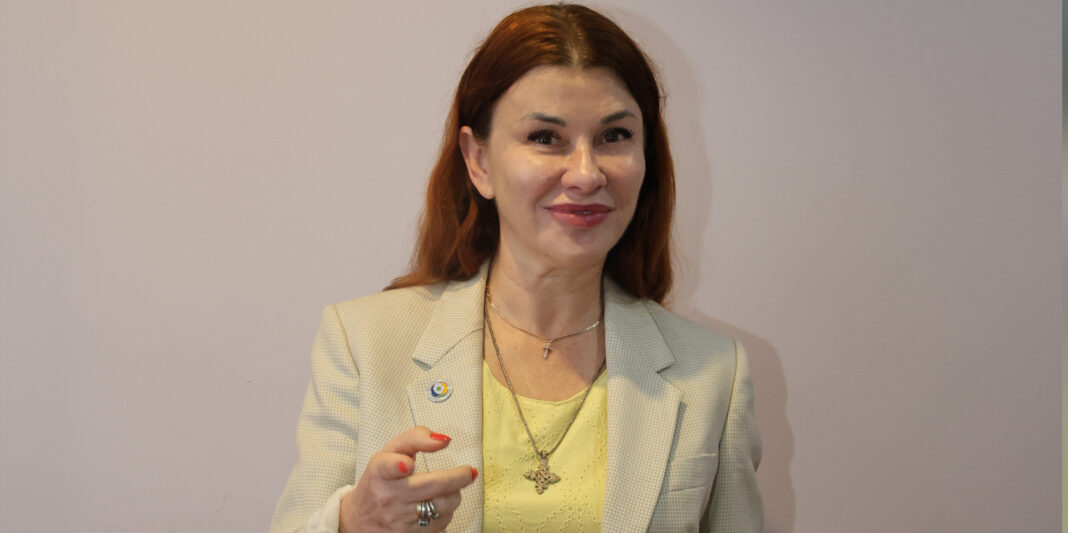
Following the World Public Summit Africa in Addis Ababa (July 29-30, 2026), Capital sat down with Yanina Dubeykovskaya—communications strategist, founder of WCFDavos and the Women Influence Forum, and Head of the WPS Africa Organizational Committee. In this candid conversation, Dubeykovskaya discusses the power of the summit’s “Unity” contemporary African art exhibition, shares insights from the groundbreaking study “The Zambezi River: Economy, Society, Soul,” and explains why soft power and shared heritage are central to the continent’s diplomatic agenda. Excerpts;
Capital: With 16 African nations and the Afro-Brazilian diaspora represented, how does your work challenge the idea of a single ‘African narrative’ while still capturing a sense of unity?
Yanina Dubeykovskaya: Our curatorial approach intentionally avoids creating a generalized image of Africa or seeking a universal visual language, as this would reduce the complexity of the continent’s artistic landscape to a false uniformity. A primary goal of the exhibition is to showcase the full diversity of contemporary African art. Therefore, it brings together artists from various countries, working across diverse media and exploring themes shaped by distinct cultural, historical, and social contexts.
Within this framework, unity is not based on identifying similarities; instead, it emerges from a deep respect for differences. Each artist articulates, in their unique way, the relationship between the individual and society, and between culture, inner integrity, and responsibility. This curatorial logic preserves the distinctiveness of each artistic voice while demonstrating that questions of memory, identity, human connection, and a shared future can create genuine dialogue across diverse cultural backgrounds.
Capital: The exhibition will move to Moscow after concluding in Ethiopia. What message or feeling do you hope audiences in Russia take away from contemporary African art?
Yanina: For several years, our Gallery of Contemporary African Art “I-A” has consistently introduced Russian audiences to contemporary African art. The “Unity” exhibition continues this tradition but on a considerably larger international scale, bringing together artists from sixteen African countries alongside an artist representing Afro-Brazilian culture. This offers Russian audiences a fuller encounter with the diversity and richness of the continent’s contemporary art.
Art remains one of the most effective tools for cultural dialogue, forging direct connections between countries, communities, and professional circles. We hope Russian audiences will leave not just with an impression of individual artworks, but with a broader panorama of contemporary African art: dynamic, conceptually rich, deeply rooted in local cultures, and an integral part of the global art scene.
We believe that exhibitions of this kind become meeting points for professional communities, cultural institutions, and audiences alike, generating new opportunities for cultural exchange and lasting cooperation between Russia and the countries of Africa.
Capital: How does a cultural centerpiece like ‘Unity’ change the tone of high-level diplomatic discussions at the summit?
Yanina: The summit is focused on global unity and what connects countries and people despite their differences. While economics, business, and international cooperation are naturally important agenda items, every lasting partnership is built on trust, and trust cannot be established at the negotiating table alone. It develops as people come to understand one another more fully. This is precisely why culture and art are so crucial at international gatherings of this scale.
One can speak at length about unity, mutual respect, and a shared future, but art allows people not just to hear these ideas but to experience them directly, fostering an emotional connection to universal values regardless of country of origin or cultural background. The “Unity” exhibition thus becomes a space where the summit’s guiding ideas take visual form, a reminder that education, culture, youth initiatives, and art are not peripheral concerns but essential foundations upon which trust, cooperation, and international partnership are built over time.
Capital: How does this event practically differ from traditional international summits?
Yanina: This summit’s primary distinction lies in its focus on launching concrete joint initiatives rather than merely discussing global challenges. Over 700 participants from government, business, science, civil society, and culture will convene to establish a foundation for cooperation that extends far beyond the event itself.
One key initiative is “The Zambezi River: Economy, Society, Soul,” an international interdisciplinary study bringing together experts from multiple countries.
The summit also expects leaders of non-governmental organizations to exchange proven practices and initiate new regional and cross-border projects. This will be supported by the development of an expert knowledge base on African NGOs, designed to foster continued cooperation across the continent.
Many African communities articulate their worldview through the principle of Ubuntu: “I am because we are,” reflecting the understanding that individuals cannot exist apart from their community. This emphasis on what connects people, rather than what divides them, is central to the summit’s philosophy.
Capital: The study titled ‘The Zambezi River: Economy, Society, Soul’ blends socioeconomic research with cultural identity. Why was it crucial to include the ‘soul’ aspect alongside economic development?
Yanina: Development cannot be measured solely by economic indicators. Any territory is fundamentally defined by its people—their way of life, values, traditions, and relationship with their environment. This is why “soul” is placed alongside economy and society in the study’s title.
For millions, the Zambezi River is more than just a natural resource or transport route; it shapes livelihoods, unites communities, informs cultural traditions, and contributes to a people’s sense of belonging to their land. Therefore, a meaningful account of long-term, sustainable development in the region requires understanding not only a territory’s economic potential but also what makes it significant and unique to its inhabitants.
Capital: With over 700 cross-sector leaders attending, what role do young African innovators and contemporary artists play in driving the summit’s vision forward?
Yanina: While political and business leaders help shape strategic decisions, young innovators and cultural representatives are crucial in defining how these ideas will evolve. The new generation is creating innovative development approaches by integrating technology, entrepreneurship, social initiatives, and cultural projects. They are finding novel solutions to current challenges, demonstrating that progress is achievable through cross-sector collaboration.
Contemporary artists are also vital to this process. They address central societal issues such as identity, memory, ecology, urban development, and the future of communities and generations. Through their work, artists not only reflect on social transformations but also create spaces for dialogue among people from diverse countries and cultural backgrounds. When innovation, social initiatives, and art converge, they lay the groundwork for new partnerships.
Capital: Precious, Selamawit, and Khalifa—your works touch on collective memory, natural symbolism, and future generations. How did the theme of ‘Unity’ specifically influence the pieces you brought to Addis Ababa?
Yanina: In developing the exhibition, it was essential to demonstrate that unity is a concept each artist interprets through their unique personal experience, cultural background, and creative method. This explains the plurality of interpretations presented in the exhibition.
Selamawit Gebretsadik: For Selamawit, unity is expressed through the image of a leaf, a universal natural form symbolizing the interconnectedness of all living things.
Precious Longret Samuel: Precious approaches culture as a repository of memory that binds generations and preserves collective identity.
Khalifa Mané: Khalifa’s work posits that unity is inextricably linked to the concept of a shared future, achievable only through collective responsibility and cooperation. These three artists, along with the broader group of participants, offer diverse interpretations of unity, drawing from personal histories, social experiences, cultural traditions, and the pursuit of inner harmony.
Capital: What was the first piece of African art that personally moved you, and how did it shape your perspective as a curator?
Yanina: The first piece of African art I encountered was Mulenga Mubanga’s rendering of the Last Supper, which I saw at an art fair in Lusaka, the capital of Zambia. What struck me was:
African artists embrace classical subjects.
They courageously interpret these subjects in a visually unconventional, vivid, and distinctly African manner.
Meeting Mulenga himself. He remains one of the key artists we work with, and I consider him a genius who will gain global recognition within the next five to seven years.
When working with African art, it’s essential to support artists who are not trying to emulate established Western artists. An artist’s unique personal story and style are their most valuable assets. I believe over 90% of African artists employ entirely different techniques, often combining them through mixed media that incorporates newspapers, restaurant menus, found objects, or textiles. For me, curating this art is an expression of freedom.
Capital: Was there a lighthearted or unexpected moment behind the scenes while bringing works from 16 different nations together?
Yanina: One unexpected and genuinely joyful moment occurred while we were assembling works from sixteen countries. I pay close attention to opportunities for women in art, and it was a real delight to discover, as we reviewed the pieces selected from our Open Call, how many were by women artists. From Madagascar alone, for instance, we ended up with two wonderful artists, both of whom are women. It’s a small detail, but one I was genuinely happy to share.
Capital: If you could share a casual cup of coffee with any of the featured artists, which piece of theirs would you ask about first?
Yanina: Let me highlight an artist I consider truly exceptional: Selamawit Gebretsadik, who recently had a very successful solo exhibition in Moscow. Whenever I sit with Selamawit over a cup of Ethiopian coffee in her studio, I always ask her about her newest work. Now that she’s back from Russia, the question I’d want to start with is simply: What has changed in her approach, her style, and her understanding of her own craft after being immersed in so much of the world’s art? I plan on asking her exactly that myself, today.